 With Trump’s 90-day tariff pause set to expire July 9, the US Lumber Coalition renews its attack on Canadian lumber. In other Business news: Tolko and Meadow Lake Tribal Council sign an MOU; BC builders welcome development cost changes; South Carolina turns to biomass to revive its forest economy; and Sweden’s VIDA names Måns Johansson as Vice Chair. Meanwhile: the USDA boosts mass timber capacity; North Carolina researchers develop Styrofoam packaging alternatives; Cincinnati unveils the first mass timber broadcast facility; and Finland’s Spinnova uses spiderweb science to turn wood pulp into textiles.
In Forestry news: FSC supports the EU’s anti-greenwashing directive; FSC Canada releases its annual report; SFI backs the G7 Wildfire Charter; Canada’s signature waterbomber gets a upgrade; BC faces tree canopy shortages; and Michigan trials assisted tree migration. In Wildfire news: the fire near Lytton, BC is being held, but a new fire grows to the north; and crews respond to an “out of control” blaze on Vancouver Island.
Finally, the EU will allow international carbon credits in its binding GHG emissions target.
Kelly McCloskey, Editor
 OTTAWA — The federal government is taking steps to help people who have lost important documents as a result of wildfires this year. Lena Diab, the federal minister of immigration, refugees and citizenship, announced special measures to help people displaced by wildfires and evacuations earlier this year. According to Diab’s announcement, Canadian citizens and permanent residents whose documents like passports, citizenship certificates and permanent resident cards were lost or damaged because of wildfires this year can apply for free replacements. …Temporary residents… who were impacted by wildfires can also apply to restore or extend their status in Canada or renew their permits free of charge. The 90-day requirement for temporary residents to apply for the restoration of their status is also being waived for people impacted by wildfires, and foreign emergency workers coming to help fight wildfires in Canada are having their application and biometric fees waived.
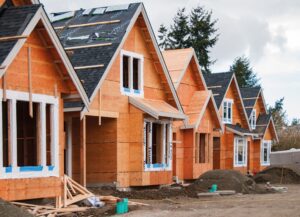 The NDP government is making changes to development cost charges that builders say could help reduce the burden they face as material and labour costs continue to increase and the number of projects under construction drop. Starting in 2026, builders will only have to pay 25 per cent of their fees to municipalities up front and will be able to defer the remaining 75 per cent for four years or until people move into the building. The fees help cover the cost of infrastructure such as community centres, roads, sewers and parks. The changes will also allow developers to use bonds instead of irrevocable letters of credit as financial guarantees, allowing them to preserve access to capital throughout the project. Wendy McNeil, CEO of the Homebuilders Association Vancouver, said the changes will allow builders certainty when it comes to the cost of the project and the timeframe for making payments to municipalities.
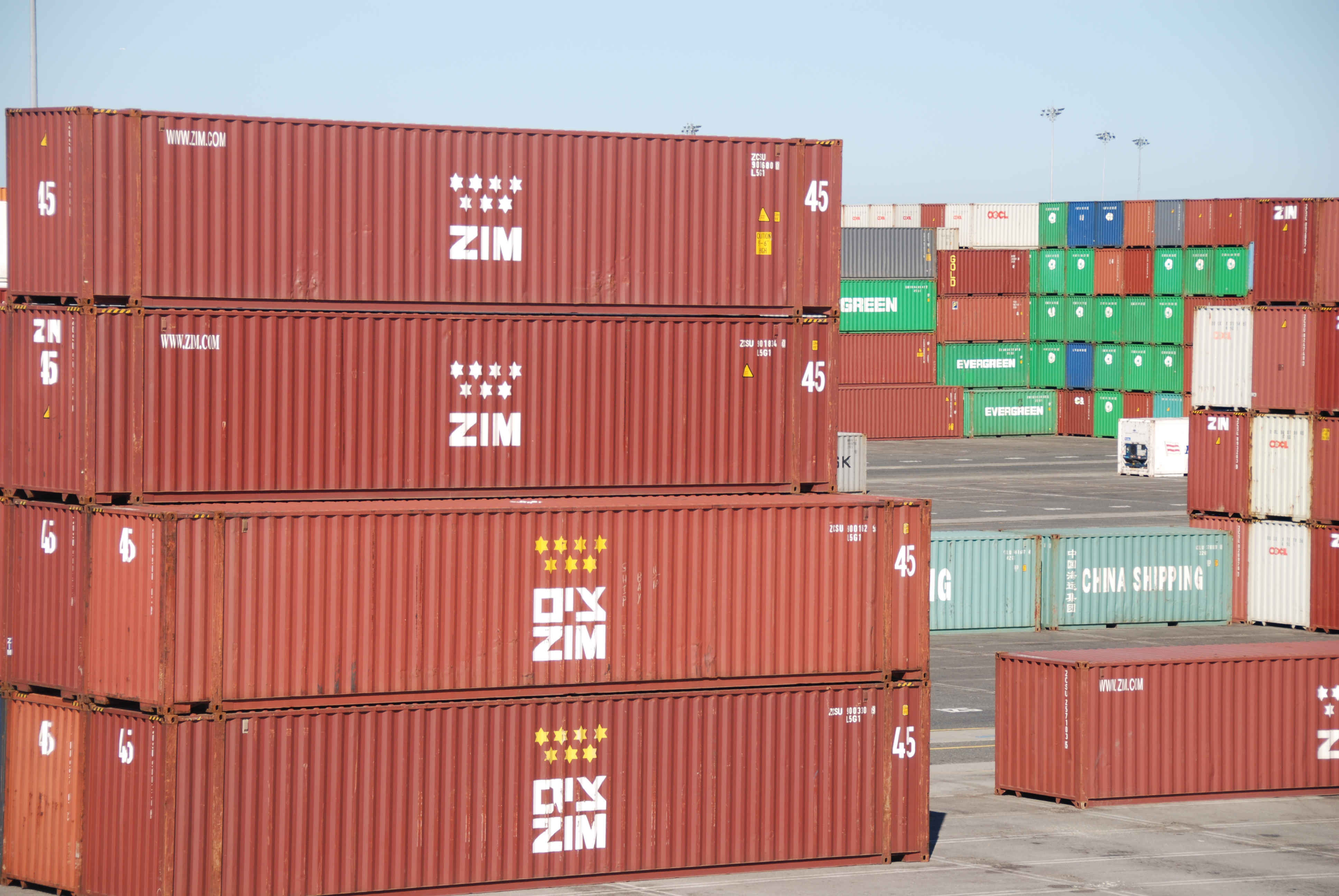 President Donald Trump’s trade war risks reigniting next week when a
 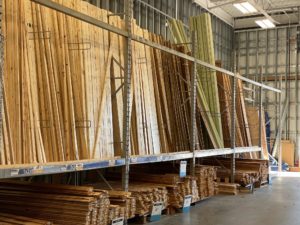 Simon Varney pre-ordered extra hardwood from Canada in February when President Donald Trump threatened broad 25 percent import tariffs on goods from that country. The next month, the administration exempted that wood. That left Varney, co-owner of Wells Wood Turning & Finishing in Buckfield, spending more money ahead of time and holding onto extra inventory, eating into cash flow. Ironically, the pearlescent gold pigment the company purchased from its Vermont supplier to make its famous wooden eggs for the White House Easter Egg Roll — a color specifically requested by the president in both of his terms in office — had to be imported from Germany and falls under Trump’s tariffs. “The tariffs were a real concern because they basically would raise our wood costs by 25 percent, which is pretty significant,” Varney said. “The wood manufacturing business is not a high margin or high profitability business.”
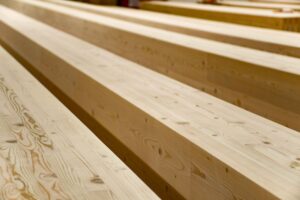 Mass timber is transforming how America builds—but supply hasn’t kept pace with demand. A gap in domestic manufacturing has slowed widespread adoption, leaving many developers with few options beyond overseas suppliers or traditional steel and concrete. Through strategic support from the USDA Forest Service Wood Innovations Program, the Forest Service is helping close that gap—boosting U.S. capacity, strengthening rural economies and growing new markets for American wood. One partner answering the call is SmartLam North America. Mass timber products like cross-laminated timber (CLT) and glued laminated timber (glulam) offer a carbon-storing, renewable alternative to conventional building materials. But even as the benefits are clear—strength, fire resistance, design flexibility—developers have faced supply constraints. Limited domestic production has slowed construction timelines, raised costs and stifled innovation.
 Researchers in the Department of Forest Biomaterials are developing a proprietary material that could serve as a sustainable alternative to one of the world’s most significant sources of pollution: plastic foam. “Our material eliminates polystyrene foam materials that are filling landfills and persisting as litter in the environment,” said Richard Venditti, the Elis-Signe Olsson Professor of Pulp and Paper Science and Engineering. Plastic foam, often known by the brand name Styrofoam, is used in many everyday products — from disposable food and beverage containers like cups and plates to shipping materials such as packing peanuts and protective packaging. While convenient, plastic foam presents a significant environmental challenge due to its lack of biodegradability and difficulty in recycling. Estimates indicate that plastic foam takes up to 30% of landfill space globally.
 The fashion industry is often seen as a voracious, thirsty villain that extracts billions of liters of water out of the environment. …These conditions are the biggest ‘WHY’ for Spinnova, a Finnish startup that works tirelessly to create technology for sustainable natural fibers to match its growing demand. …But before we delve into the details, would you believe the core idea for Spinnova was actually born from… a spiderweb? Back in 2009, Juha Salmela, a cellulose expert from Finland attended an Oxford University conference. He heard a presentation from a leading spider researcher, who explained the similarities between spiderweb’s protein and nanocellulose. And, that happened to be his Eureka moment. What if wood fiber could be spun into textile fiber in a similar manner? Fast forward to 2023, the wood-based Spinnova fiber was born. …The process at Spinnova starts with sourcing cellulose-rich raw materials such as FSC-certified wood pulp.

 Four years ago, British Columbia endured the deadliest weather event in recorded Canadian history. The 2021 heat dome claimed the lives of more than 600 people, many of whom died alone in overheated homes. As we mark the fourth anniversary of this devastating mass casualty event with record-breaking heat elsewhere in the country, we must confront a troubling truth: B.C. remains dangerously unprepared for the next one. Despite some advancements, including updated building codes, rebates for heat pumps and a now-depleted $30-million fund to provide vulnerable households with air conditioning units, one of the most critical aspects of climate readiness has seen little to no progress. In fact, it’s getting worse. Our communities are rapidly losing tree canopy, green space and permeable surfaces — the very elements that keep cities cooler during extreme heat.
 The other day, in the midst of a heat wave that suffocated central Canada, this newspaper brought us the story of a five-year-old at a public school in Ottawa, sent to hospital for heat exhaustion. The accompanying photo shows the child and his mother seated on a picnic table in the schoolyard, surrounded by grass and pavement – and one tree. As a forester, I volunteer with a program of Forests Canada called Forestry in the Classroom, whose goal is to connect ”the next generation of forest stewards with forestry and environmental professionals.” This spring I visited a school in north Toronto to take a class of Grade 5 students to a nearby forested ravine, to help them identify trees and to evaluate tree health. On my arrival at the school, I was shocked to find the playground a barren wasteland.
  The hills of Louis Creek Valley are covered in lovely, towering Douglas fir, healthy evergreens climbing from the grassy meadow at the valley floor up to the ridges where the mountains meet the sky. It’s lush, like much of interior British Columbia, where densely packed conifers line the innumerable wooded valleys, the heavy cone-laden branches reaching down to the ground. Joe Gilchrist, a fire steward of Secwepemc people, and a firefighter for more than 30 years, stands on the valley floor and looks at the beautiful trees. But what he sees first is danger. “It’s been over 100 years since it’s been illegal for Indigenous people to use fire on the land, and so in that time, the trees have overgrown the area, and some of the trees have got diseased,” he says.
  The clock is ticking to register and make plans for the 38th Forest Products Machinery & Equipment EXPO from August 6-8 in Nashville, and you do not want to miss it! EXPO is the epicenter of the entire wood products manufacturing sector – held only every other year – with numerous exhibitors showcasing state-of-the-art machinery and specialized services designed for the forest products industry. This event brings together thousands of industry leaders and decision-makers eager to explore cutting-edge products and solutions, spanning advancements in hardwood and softwood log processing, remanufacturing, pallet industries, bioenergy, engineered wood products, and pressure treatment. Seize this unparalleled opportunity to explore new machinery, engage with key decision-makers, reimagine your sawmill operations, and propel your business to new heights.
 More than half a million acres of trees spread across Washington were sick, struggling, or dead last year, according to the results of an aerial survey of forests by the state’s Department of Natural Resources. Surveyors identified about 545,000 acres with some level of tree mortality, defoliation, or disease, the department said this week. That’s less than 1% of the total forestland surveyed. The amount of forest with problems is up nearly 30,000 acres from 2023 and more than the 10-year average of 519,000 acres, but well below the acres mapped with diseased or dead trees in 2022, according to the Department of Natural Resources. The Department of Natural Resources and the U.S. Forest Service partnered to conduct an aerial survey of 22 million forested acres in Washington state to observe recently killed and damaged trees. They carried out the survey between June and September last year.

 The Forest Stewardship Council (FSC) reaffirms its support for the Green Claims Directive (GCD) and the Empowering Consumers Directive (ECD) and welcomes the European Commission’s recent decision not to withdraw the GCD proposal. These legislations are critical in the fight against greenwashing and ensuring that consumers have access to accurate, reliable, and verifiable information. FSC, together with ISEAL, has contributed concrete feedback into the GCD and ECD discussions since their onset, with the aim of raising the bar for environmental claims and ensuring the provisions will work in practice. Together, the two proposals offer a powerful framework to ensure that environmental claims and labels placed on the EU market are trustworthy and transparent. Labels rooted in robust, independent certifications like FSC, support companies to enhance accountability and consumer trust.
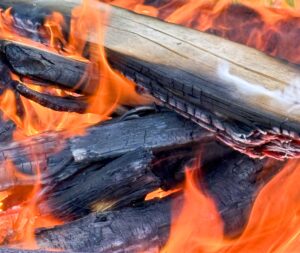
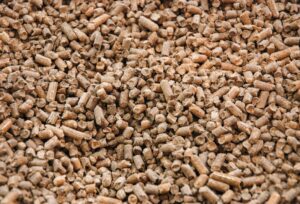 After Georgetown’s International Paper mill shut down at the end of last year, the pressure is on for South Carolina’s forestry industry to find new local markets. The solution may be as simple as burning wood, a type of renewable energy. …South Carolina produces wood pellets but much of the product is shipped abroad. …Some lawmakers hope wood biomass specifically could address two problems the state faces: the forestry industry’s need for new local markets and consumers’ demand for more energy. State lawmakers attempted to address the latter in the South Carolina Energy Security Act. The new law is aimed at generating more energy in the state. …Forestry industry leaders delivered
  The European Commission on Wednesday proposed an EU climate target for 2040 that for the first time will allow countries to use carbon credits from developing nations to meet a limited share of their emissions goal. The European Union executive proposed a legally-binding target to cut net greenhouse gas emissions by 90% by 2040, from 1990 levels – aiming to keep the EU on course for its core climate aim to reach net zero emissions by 2050. But following pushback from governments including France, Germany, Italy, Poland and the Czech Republic, the Commission also proposed flexibilities that would soften the 90% emissions target for European industries. Reflecting Germany’s public stance, up to 3 percentage points of the 2040 target can be covered by carbon credits bought from other countries through a U.N.-backed market, reducing the effort required by domestic industries.