 Canada defends forest industry support amid US Lumber Coalition pressure, says diversification will reduce lumber dependence. In related news: FPAC’s Derek Nighbor welcomes Canada’s diversification program; RBC Economics reviews the decades-long softwood dispute; FEA’s Paul Jannke updates the Section 122 duty implications for wood products; and more on BC Premier Eby’s trade mission to India. In other Business news: paper industry trends; lumber futures new low; and Q4 earnings reports from Stella-Jones, Drax and Cascades.
In Forestry news: Mosaic tests a new approach to forest management in Koksilah Watershed; a First Nations coalition prepares to take over Canfor’s timber allocation; and Bayer faces new court challenges after Roundup deal. Meanwhile: entries open for the Marcus Wallenberg Prize; news from SFI’s Project Learning Tree and the BC Forest Safety Council; annual convention updates by COFI (April 8-10), and OFIA (April 28-29); and CWC’s webinar on affordable housing and mass timber (March 5).
Finally, when firefighters choose to sleep in a wood building, that tells you something about how far mass timber has come.
Kelly McCloskey, Tree Frog News Editor
 The Forest Products Association of Canada responded to the federal government’s announcement to support and retool our forest sector to ensure it remains a pillar of national strength and prosperity. The Minister of Energy and Natural Resources, launched a national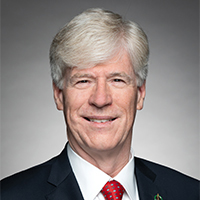
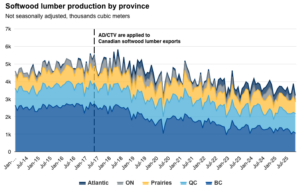 Anti-dumping and countervailing duties, and now additional tariffs on softwood lumber and derivative wood products add to a long history of trade measures applied to Canadian exports. …Recent trade data shows exports of targeted wood products to the US have declined by roughly 11% in 2025 from a year earlier with losses concentrated in Quebec and BC. Export gains elsewhere have only partially compensated for reduced US market access—in part reflecting the geographical constraints in shipping lumber and wood products. …Average industrial capacity utilization rate for wood product manufacturing has declined roughly 10 percentage points to 75% in 2025 Q3 from a decade earlier, while employment in sawmills and wood preservation fell roughly 20% between May 2017 and November 2025 with more pronounced declines in BC (-32%) and Quebec (-13%). …Reduced domestic supply could also put pressure on downstream industries such as pulp and paper mills and construction. The combination of weak demand and constrained supply raises the risk of further production curtailments and mill closures.
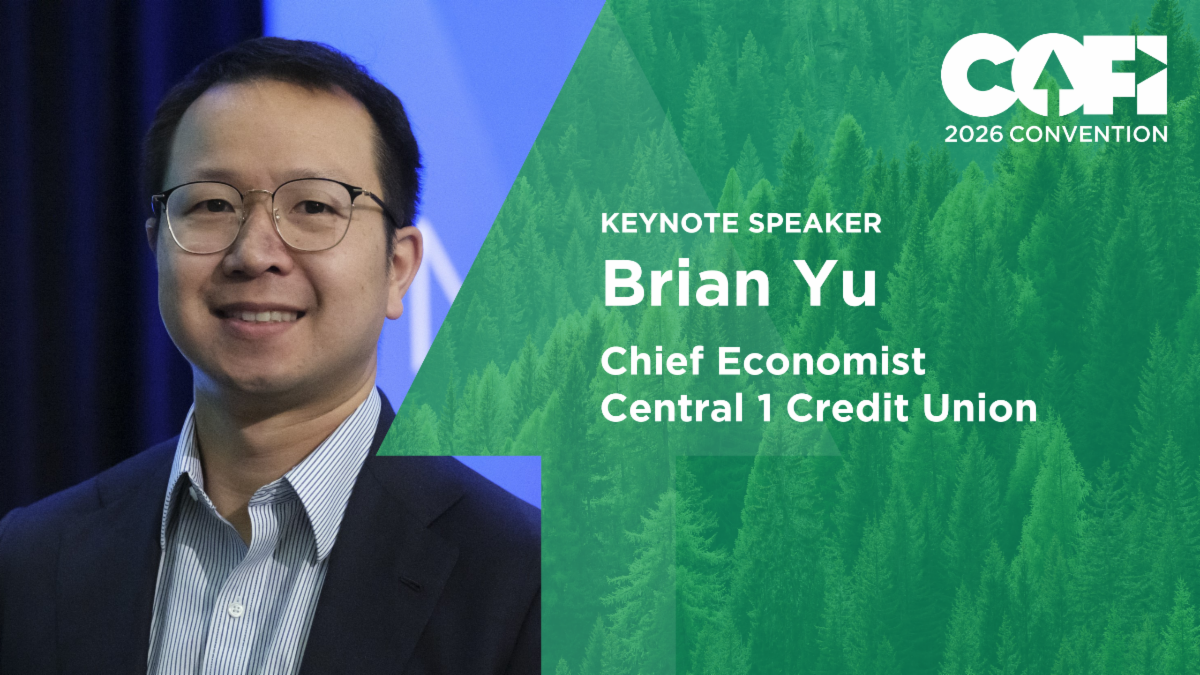 Join Bryan Yu, Chief Economist at Central 1 Credit Union, for a clear-eyed keynote on the economic forces shaping the year ahead. In his presentation, 2026 Macroeconomic Outlook he will examine trade uncertainty, global competition, and pressure at home. What’s ahead for BC and Canada’s economy? Hear what the outlook means for BC’s forest sector and the strategic decisions leaders will face in a rapidly changing economy. Mark your calendar for April 8 – 10, and register before March 6 to take advantage of Early Bird discounts.
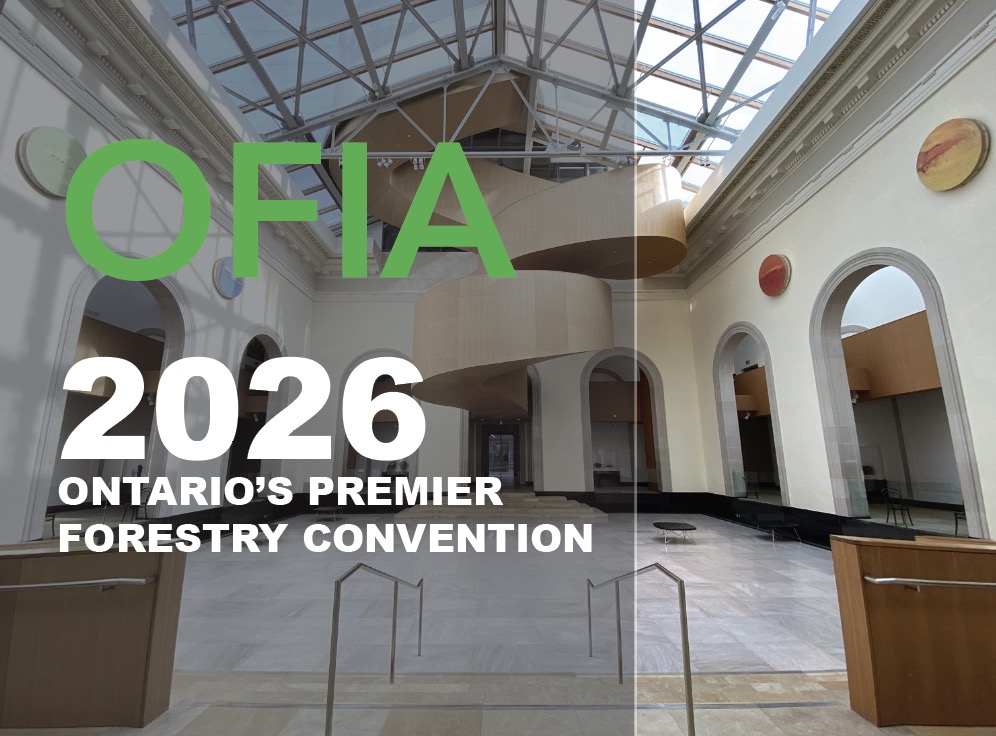 The Ontario Forest Industries Association is looking forward to welcoming you to our 83rd Annual Convention at One King West Hotel & Residence in Toronto, April 28 – 29, 2026. We are planning another high-impact event, and we want to ensure your visit is as smooth and enjoyable as possible. If you have not registered for the event, do so as soon as possible as limited spots remain. If you haven’t yet secured accommodations, we encourage you to do so as soon as possible. There are options at the One King West Hotel as well as several hotels within a short walking distance of One King West. The OFIA is a trade association representing Ontario’s sustainable forest industry and serves as a unified voice for forest products companies across the province — from timber producers to wood manufacturers — advocating on policy, market access, sustainability, and economic development issues. The Annual Convention is our flagship event, intended to bring together industry leaders, members, and stakeholders for networking, education, discussion, and celebration.

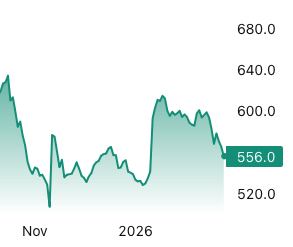 Lumber futures fell toward $550 per thousand board feet, marking a six-week low, as a stagnant North American housing sector failed to absorb heavy seasonal inventories. Demand weakened as January data showed a 7% year over year drop in single family starts and an 8.4% decline in units under construction. High 6.25% mortgage rates and a 5.8% slump in Canadian home sales during January 2026 further stalled new project starts. On the supply side, regional inventory remained bloated. While BC curtailments continued harsh winter storms in the US South halted jobsite activity more than mill output, creating a distributor logjam and forcing aggressive dealer discounting to clear yard space. Additionally, while Trump’s administration 45% softwood duties were meant to buoy prices they instead stifled demand by adding nearly $17,500 to average home costs. This eroded the builder confidence needed to clear current supply.

 Drax Group Plc’s profit declined last year but exceeded analyst estimates, helping lift the shares to their highest level in almost two decades despite significant impairment charges. Adjusted earnings before interest, taxes, depreciation and amortization totaled £947 million ($1.3 billion), beating analyst estimates for £913.7 million. Citigroup Inc. analyst Jenny Ping cited lower pellet costs and record generation at its main biomass plant as supporting the result. The figure was still 11% lower than a year earlier, which Drax attributed to weaker power prices. The company’s share price rose as much as 6.2% to the highest since October 2006 before paring gains. …Drax reaffirmed its target of £600 million to £700 million of annual adjusted EBITDA after 2027 and said it expects 2026 earnings to align with analyst forecasts of about £662 million. The company also expects to return £1 billion to shareholders through dividends and share buybacks from 2025 until 2031, with £2 billion invested in growth areas.



 It could take anywhere from six months to a year before a coalition of area First Nations can start logging following a timber acquisition deal made with the provincial government in January during a natural resources forum in Prince George. The wood, amounting to 1 million cubic metres, comes from a licence held by Canfor and was timber that the company was not logging itself. Called an ‘undercut’ because it amounts to less than what Canfor could cut, the timber will now be converted into a licence held by a coalition of Wet’suwet’en Hereditary Chiefs, the Witset First Nation, the Lake Babine Nation, and the Wet’suwet’en First Nation. When logging does start, the new licence will call for logging of 200,000 cubic metres a year for five years. Through regulations, an undercut can be transferred by the forests ministry from one entity to another.
 DUNCAN, BC — Mosaic Forest Management is launching a multi-year pilot on its private lands in the Koksilah watershed on Vancouver Island to demonstrate how working forests can deliver both economic performance and environmental resilience by integrating watershed services, carbon programs, renewable energy, recreation and real estate activities alongside timber production. This pilot supports the historic government-to-government agreement signed by Cowichan Tribes and the Province in May 2023 to develop BC’s first water sustainability plan in the Koksilah River which has experienced critically low summer flows in recent years. As part of the planning process, Mosaic sits on the Community Collaborative Advisory Table for the Xwulqw’selu / Koksilah Watershed and Water Sustainability Plan (XWWSP). “This pilot is about figuring out what works by combining sustainable forestry with watershed stewardship and other land solutions,” said Duncan Davies, President and CEO of Mosaic. “We’re committed to building the business model that makes this approach viable and scalable where the right conditions exist.”


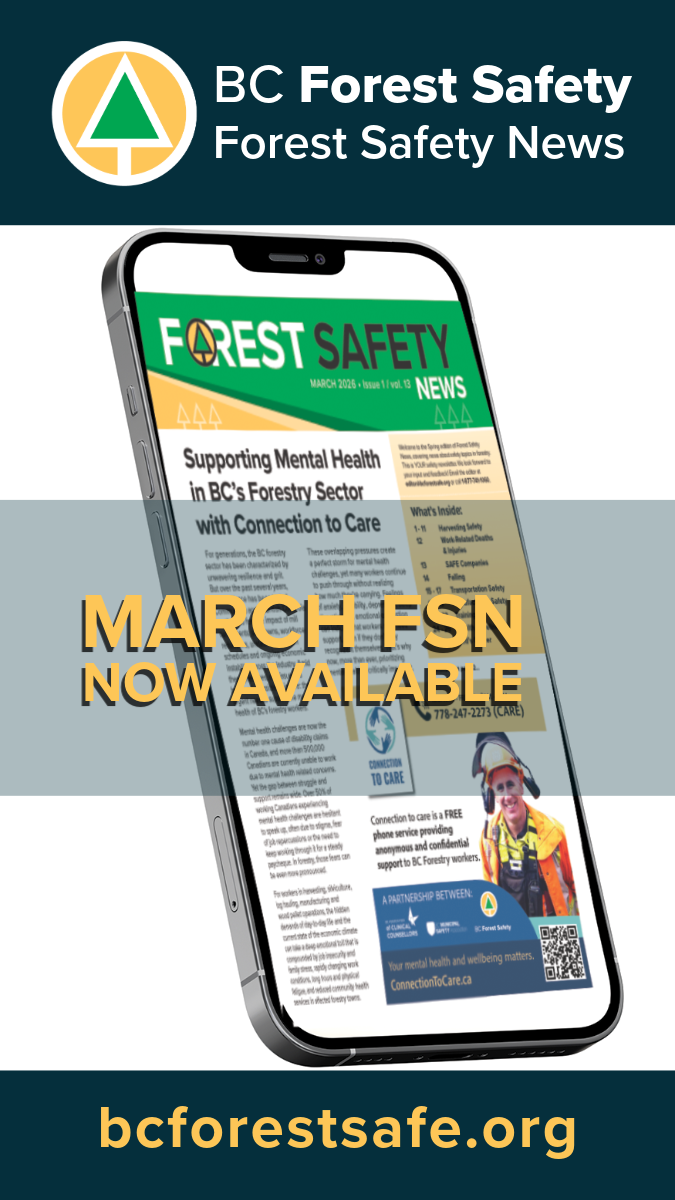 The March 2026 issue of Forest Safety News is out now — and it’s packed with important updates for everyone in the forest sector! From mental health resources to leadership changes and upcoming safety events, this edition focuses on building safer workplaces across British Columbia. This month’s lead story highlights the Connection to Care program, a FREE and confidential support service for forestry workers navigating stress, job pressures, or life challenges — because mental wellness is now a core part of workplace safety. We also mark a leadership moment as long-time CEO Rob Moonen retires after 16 years, and Cherie Whelan steps in as the new CEO, bringing deep experience in safety and industry engagement. Plus, don’t miss the Interior Safety Conference in Kamloops — a full day of sessions and networking for professionals across harvesting, silviculture, transportation, and manufacturing. There’s much more inside including safety alerts, training updates, and industry links you’ll want to see. Read the full issue for all the details!
 Wildfires have increased in frequency and severity over the past few decades. More fires are burning at the wildland-urban interface (WUI), where homes and other buildings meet the natural landscape—but our understanding of emissions from structure fires is still growing. New research led by the University of Colorado Boulder’s Cooperative Institute for Research in Environmental Sciences shows that common synthetic materials used in homes, like plastics and insulation, can release harmful compounds into the air when they burn. But synthetic materials make up only a small fraction of a home. Timber and wood panels make up the majority of the materials used, and the burning emissions from those are not so different from a vegetation fire. The work,