
More Republican lawmakers are demanding action from Canada as wildfire smoke continues to drift south. In related news: a Toronto columnist calls on Ottawa to ramp up its response; smoke lingers over Quebec despite a tame fire season; BC is faring well after 70,000 lightning strikes; Washington braces for an inevitable megafire; and wildfires force evacuations in Manitoba, Newfoundland, and France. In Forestry news: SFI backs American Forest Congress resolutions; Alaska operators decry lack of timber sales; and a Yale study finds trees host trillions of microbes.
In Business news: a fire damages Kalesnikoff Lumber’s Castlegar, BC mill; Weyerhaeuser celebrates 125 years in Mississippi; Riverside Forest Products plans a new sawmill in Forks, Washington; Domtar faces odour complaints in Tennessee; Cascades posts a Q2 loss, while Suzano reports gains; and concerns mount over housing supply in Canada and the US. Meanwhile: more commentary on Carney’s forestry aid package by journalist Rob Shaw, BC Forest Minister Ravi Parmar; Steelworkers’ Nicolas Lapierre; Carlton University’s Fen Osler Hampson; and forest industry experts Domenico Iannidinardo and David Elstone.
Finally, BC Wildfire Service warns of sharing AI-generated images of fires.
Kelly McCloskey, Tree Frog News Editor


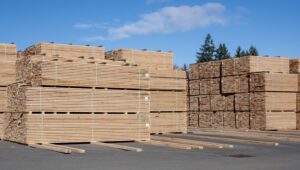 A $1.2-billion lifeline from Ottawa that’s being thrown to the forest industry is welcome news to northwestern Ontario mayors and the Canadian Wood Council. …The 37-member Northwestern Ontario Municipal Association (NOMA) called it a “significant and timely commitment to ensuring the long-term competitiveness of the forest sector” and comes at a crucial time when local jobs, economic growth and municipal stability is on the line. …“These measures recognize the vital role of forestry in Northwestern Ontario and across Canada,” said Marathon Mayor and NOMA president Rick Dubas in a statement, “helping our sector adapt to ongoing trade challenges, protect local jobs, and create opportunities for both Indigenous and non-Indigenous communities.”
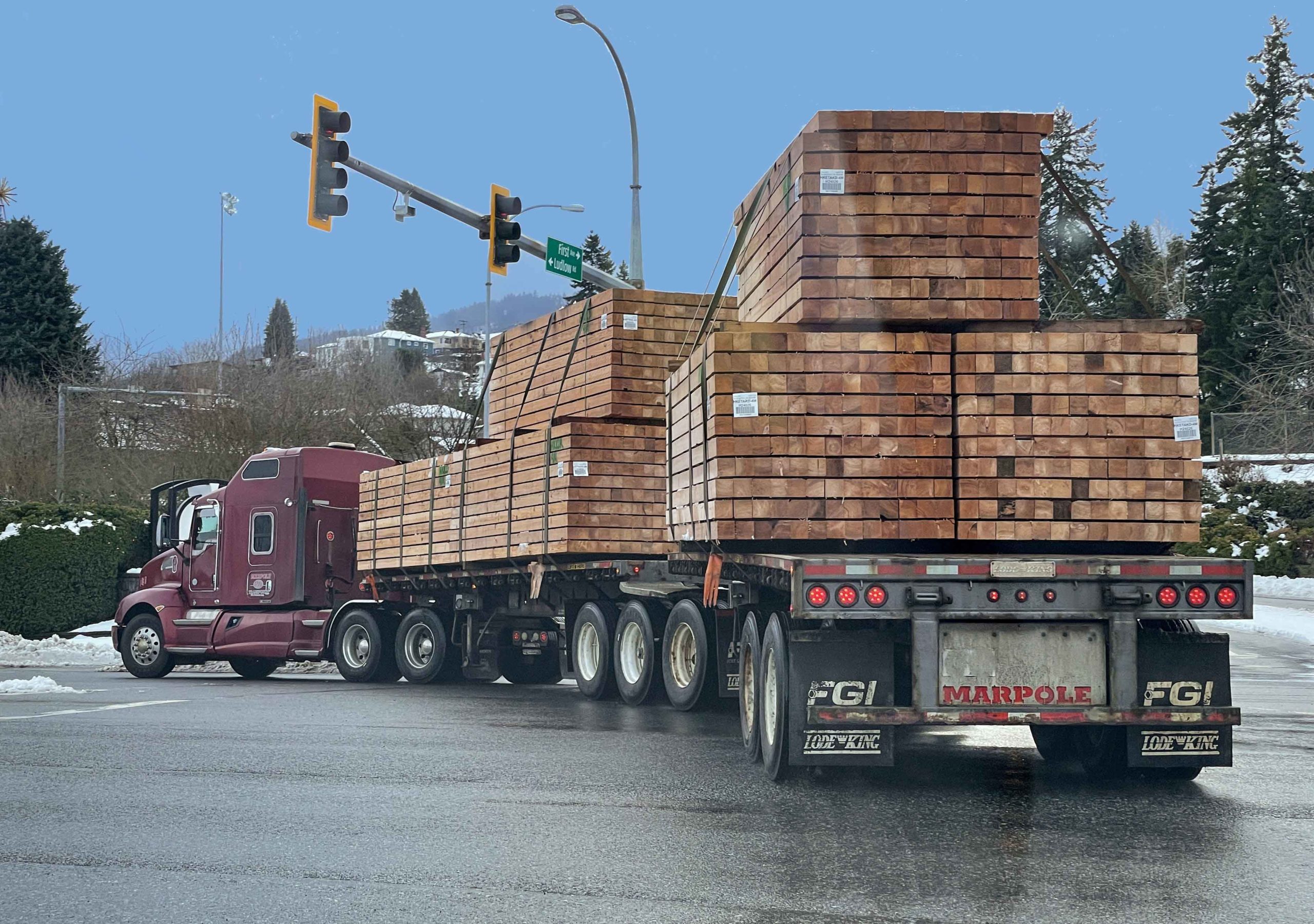 British Columbia’s forestry leaders offer a mix of praise and caution following the announcement of federal aid for Canada’s lumber industry. While both welcomed the support, they emphasized the urgent need for fiber access and resolving the US trade dispute. B.C. Forestry Minister Ravi Parmar called the federal funding package “really good news” and a long-overdue show of federal support for a sector that has long felt sidelined in Ottawa. …Parmar emphasized that B.C., as the world’s second-largest exporter of softwood lumber, must receive a proportional share of the funding to modernize its mills and build new global partnerships. …B.C. Conservative forestry critic Ward Stamer, welcomed the funding as a positive sign of federal commitment but warned that the underlying problems plaguing B.C.’s forestry industry remain unaddressed. …“It shows the federal government understands how important the forest industry is not just to B.C., but to the whole country,” said Stamer.
 CASTLEGAR, BC — No one was injured in a fire at Kalesnikoff Lumber this afternoon, but damage is described as “significant.” Tarrys Fire Chief Greg Patterson said five fire departments responded to the call at about 1 p.m. and spent three hours on the scene. The sawmill’s own fire brigade did their own initial attack, which was “a great benefit.” The cause was a fan bearing that overheated in a mechanical room at the southeast corner of the mill, Patterson said. Radiant heat spread the fire into walls. …“There’s definitely some significant damage to the mill, but things that can be repaired and replaced, and the structure itself is still sound.” …Castlegar provided aerial apparatus to give firefighters the height they needed to attack the fire. Patterson said Kalesnikoff is assessing the damage, but he didn’t think that it would prevent the mill from continuing to operate.
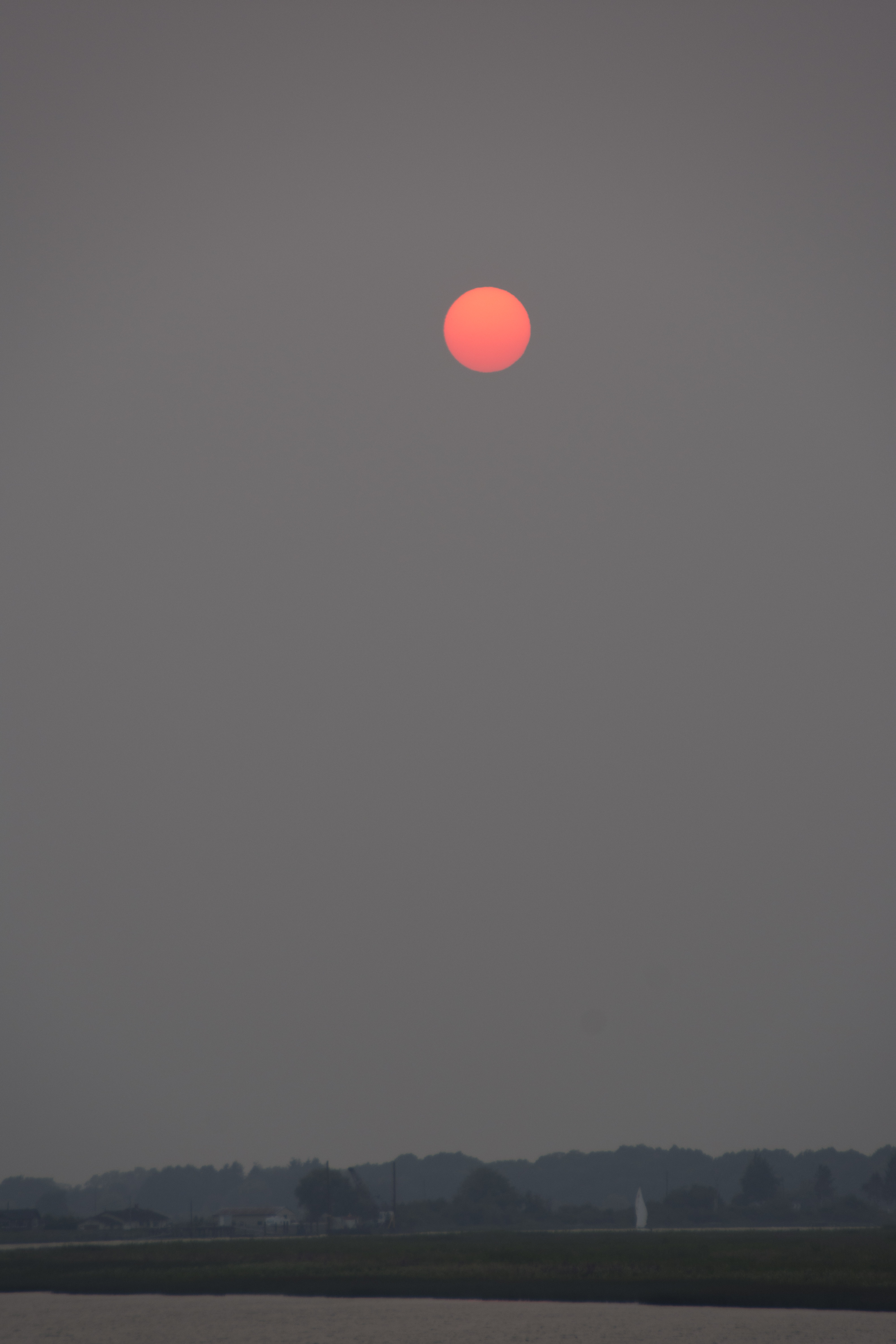 WASHINGTON — More Republican lawmakers are calling out Canada because of wildfires sending smoke billowing across the international border into their states. Wisconsin state Rep. Calvin Callahan has joined other Republican state lawmakers from Iowa, Minnesota and North Dakota in filing a formal complaint against Canada to the U.S. Environmental Protection Agency and the International Joint Commission. In a news release issued today, Callahan says that “if Canada can’t get these wildfires under control, they need to face real consequences.” He joins a chorus of Republican politicians at other levels of government who have been voicing concerns about Canada’s wildfires. Michigan Rep. Jack Bergman sent a letter to Canadian Sen. Michael MacDonald on Monday calling for stronger forest management policies and more accountability from Canadian officials. Michigan Rep. John James sent a letter to Prime Minister Mark Carney last week saying his constituents are choking on toxic wildfire smoke.

 KINGSPORT, Tennessee — Vera Gilmer, a 30-year Kingsport resident, arrived at the Kingsport Economic Development Board meeting for the update on Domtar’s packaging mill. She shared her frustration with the board about the mill’s odor over the last month. …Gilmer stressed that the smell has worsened recently. …Domtar mill manager Troy Wilson gave an update on the digester’s construction and addressed what could possibly worsen Domtar’s odor in the meantime. …Wilson said worsening odor is likely attributable to Domtar’s current wastewater treatment system, a lagoon system which he described as “antiquated” and sensitive to the weather. He also shared that the rainstorm that passed over Kingsport Wednesday last week put a strain on the wastewater system. …Domtar has spent $20 million on the digester so far. At its peak, the digester project will employ 140 people, according to Wilson.
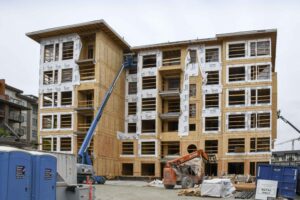 The Canada Mortgage and Housing Corporation (CMHC) has just issued a sobering warning to policymakers regarding the state of Canadian housing. Yet, governments do not appear to be getting the message, nor do they seem willing to take the necessary steps to address the crisis. In their


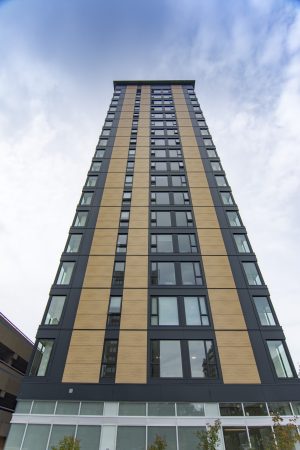 There may have been dissension surrounding the Morris Street bikeway, but the Halifax mayor and regional council found common ground with mass timber. Mayor Andy Fillmore tabled a motion at Tuesday’s council meeting to direct the chief administrative officer to prepare a staff report that, with changes to land-use bylaws and amendments to a municipal planning strategy, would knock down barriers to mass timber construction to help expedite housing builds. That would include the potential to increase the height of built-form requirements from 10 to 12 storeys for mass timber construction. The motion passed unanimously. “The principal reason (for supporting the mayor’s motion) is that this unlocks some newfound potential in local supply,” Coun. Jean St-Amand (Bedford-Wentworth) said. “I think that’s something that can have a very positive impact to the acceleration of our ability and our capacity to build.
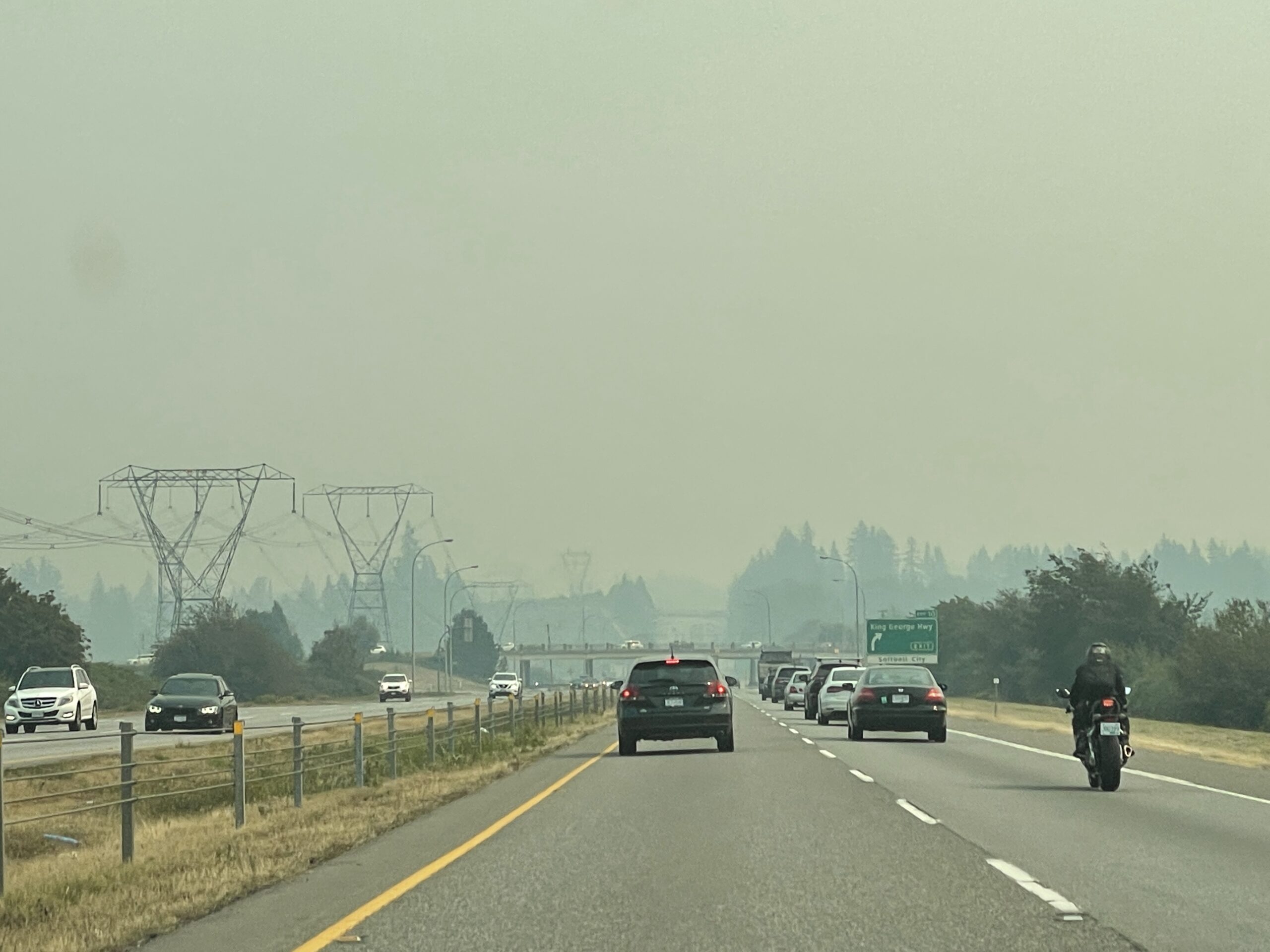 Growing up in the Greater Toronto Area, smog days were par for the course. …We’ve traded our smog days for smoke days. …Improving wildfire response should be an imperative of Prime Minister Mark Carney and his newly formed government. …Wildfires will burn no matter how many waterbombers Canada has, but there is no question there would be fewer homes destroyed, less First Nations forced to evacuate and fewer air quality alerts issued if Saskatchewan had 600 aircraft in action right now, rather than six. …Let’s turn this whole country into a waterbomber assembly line. The demand isn’t going anywhere — domestically or internationally. …In the meantime, the federal government needs to ramp up funding transfers to the provinces for wildfire fighter and pilot training programs and equipment purchases. …Getting forest fires under control is also an act of sovereignty.
 Fostering inclusive economic development and ensuring that local communities, including Indigenous partners, benefit from these opportunities are key priorities for the Government of Canada. Today, Claude Guay, Parliamentary Secretary to the Minister of Energy and Natural Resources, concluded a two-day tour of Northern Quebec, where he highlighted the importance of Quebec’s mining and forest sectors in building Canada’s supply chains and export opportunities, creating good jobs, and strengthening reconciliation… Parliamentary Secretary Guay concluded the trip with a visit to Les Chantiers Chibougamau’s Kraft Pulp Mill in Lebel-sur-Quevillon and their head manufacturing plant in Chibougamau. These sites are key examples of Quebec’s forest sector excellence and innovation in modernizing the industry, accelerating affordable housing and promoting green construction using value-added Canadian wood-based products.

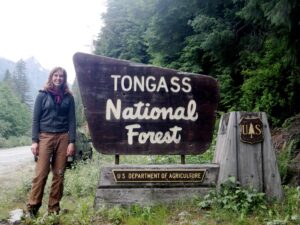 The Trump administration has announced plans to rescind the 2001 Roadless Rule, changing the political and timber industry landscape in the Tongass National Forest for the third time in five years. The Roadless Rule prevents logging, road building and mining on national forest lands. It was last repealed in 2020 and restored in 2023, and has been subject to decades of debate. Timber operators say the rescission could help a dying industry – if it passes through Congress. The U.S. Forest Service owns approximately 78% of the land in Southeast Alaska, meaning timber operators are dependent on the federal agency for a majority of their supply. Kirk Dahlstrom, co-owner of Viking Lumber Co. in Klawock, said the agency is nine years behind on offering timber supply for the Southeast industry. He said his business will not survive if land management remains under Forest Service control. “We got starved to almost nothing.”
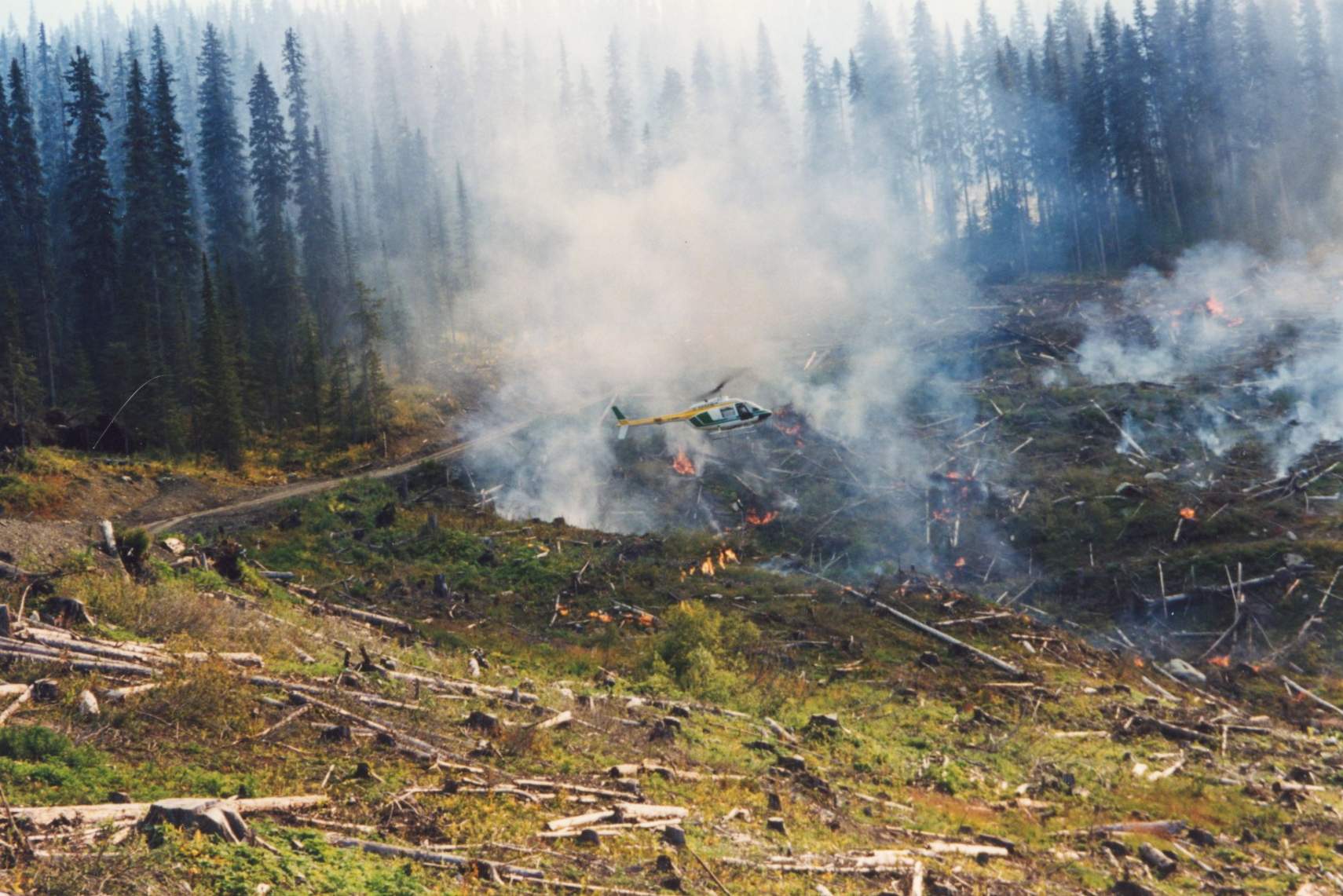 Western Washington state is one of the wettest places in the country. In the North Cascade mountains and on the Olympic Peninsula, lush cedars, ferns and mosses form classic Pacific Northwest rainforests. But even here, climate change is making wildfires more likely. And the state is figuring out how to respond. “It used to be that it really wasn’t until mid-August that fuels dried out in western Washington,” said Derek Churchill, a forest health scientist at the Washington Department of Natural Resources. “Now it’s July or earlier.” In fact, last month human activity started a wildfire in the Olympic national forest. As of Tuesday, it had grown to more than 5,100 acres and some campgrounds were under evacuation orders… But global warming is changing fire patterns in the state. Washington’s summers are growing longer, hotter and drier, resulting in an extended fire season with more desiccated fuel available. [A free account is required to read this article]
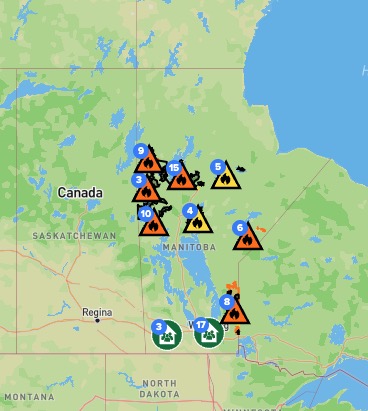 Rapidly growing wildfires in several provinces forced thousands of people from their homes and prompted air-quality warnings in cities thousands of kilometres away, while hot and dry conditions had other areas on high alert, including Nova Scotia, where the government banned most summertime activities in wooded areas. The deteriorating conditions have added up to a wildfire season that is on track to be one of Canada’s worst on record in terms of area burned, second only to 2023. As of Tuesday, at least 15,000 people were under evacuation orders in Manitoba, largely in the province’s north, while fires on Newfoundland and Labrador’s Avalon Peninsula had forced around 600 people from their homes. Across the country, more than 760 wildfires are burning, at least 205 of them deemed out of control. About 6.8 million hectares of land have burned so far this year.
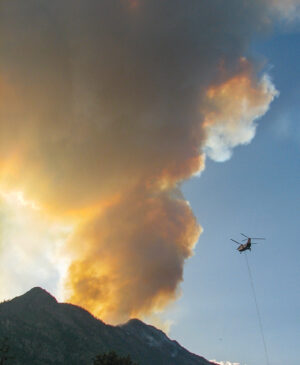 Forest Minister Ravi Parmar told reporters on Wednesday (Aug. 6) that in the past week, roughly 70,000 lightning strikes have hit B.C., leading to a “sudden increase” in fire activity. He also said that the B.C. Wildfire Service has largely been able to keep the fires from spreading. So far this season, more than 850 wildfires have sparked in B.C, but the province has kept 85 per cent of them smaller than four hectares, and only 120 were active on Aug. 6. As of Aug. 11 last year, there had been more than 1,300 fires, with almost 400 still active on that date. The only current “wildfire of note” is the Wesley Ridge fire on Vancouver Island. The fire is at Cameron Lake, between Parksville and Port Alberni, and is 530 hectares in size. Evacuation orders are in place for 400 homes, and 700 more are on evacuation alert.
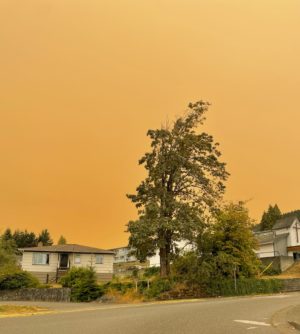 The air quality has finally improved after several days of wildfire smoke hanging over much of southern Quebec. Montreal, along with several other cities in the province, were dealt an air quality advisory starting Saturday and clearing up Monday evening. But this year, the smoke causing the poor air quality isn’t coming from within the province but rather from the fires raging in the Prairies. While Quebec is seeing a rather tame wildfire season, this year is still gearing up to be another intense season for other parts of Canada. So far, 2025 has seen wildfires consume 6.5 million hectares. Last year the number totalled 5.3 million, and in 2023 — Canada’s worst wildfire season on record — a little over 16 million hectares burned. “The thing that is quite exceptional right now is that we had three years in a row with very, very high fire activity in Canada,” said Boulanger. The three most active fire seasons since 1995 have been recorded between 2023 and 2025, he said.
 France’s biggest wildfire this summer was spreading quickly Wednesday in a Mediterranean region near the Spanish border after leaving one person dead, authorities said. The fire had burned an area larger than Paris. About 2,000 firefighters and several water bomber aircraft battled the blaze that broke out Tuesday afternoon in the village of Ribaute in the Aude region, a rural, wooded area that is home to wineries. The fire, which has burned 13,000 hectares (32,000 acres), remained ‘’very active” on Wednesday, the local administration said in a statement. The weather was hot, dry and windy, making it difficult for firefighters to contain the blaze. One person died in their home, and at least 13 others were injured, including 11 firefighters, local authorities said. One person who was initially described as missing has been located and is safe.