Raymond James upgraded the shares of West Fraser, Canfor and Interfor as ‘lumber conditions begin to improve’. In related news: US building material prices rose in November; and US remodelling strengthened in Q4. In other headlines: CPKC announced 16 union agreements; Kruger, Kamloops conducted emergency dredging; and more on the Domtar’s Ignace sawmill curtailment. Meanwhile: Prime Minister Carney re-ups agreements with Chinese on energy and lumber; registration opens for International Pulp Week 2026; and researchers make progress in the search for a better biodegradable plastic.
In Forestry/Climate news: the Fraser Institute contrasts preventing climate change versus adapting to it; the USDA invests to reduce wildfire risk in Colorado; Western Washington has a new forest health plan; a judge blocks logging in Oregon; and a new study on deciduous tree dominance and wildfire carbon losses.
Finally, the 81st Annual Truck Loggers Association Convention kicked off yesterday with panels on forest product markets and the economy; closing the gap on fibre supply; inside BC politics; BC government initiatives update; and improving workplace safety.
Kelly McCloskey, Tree Frog News Editor
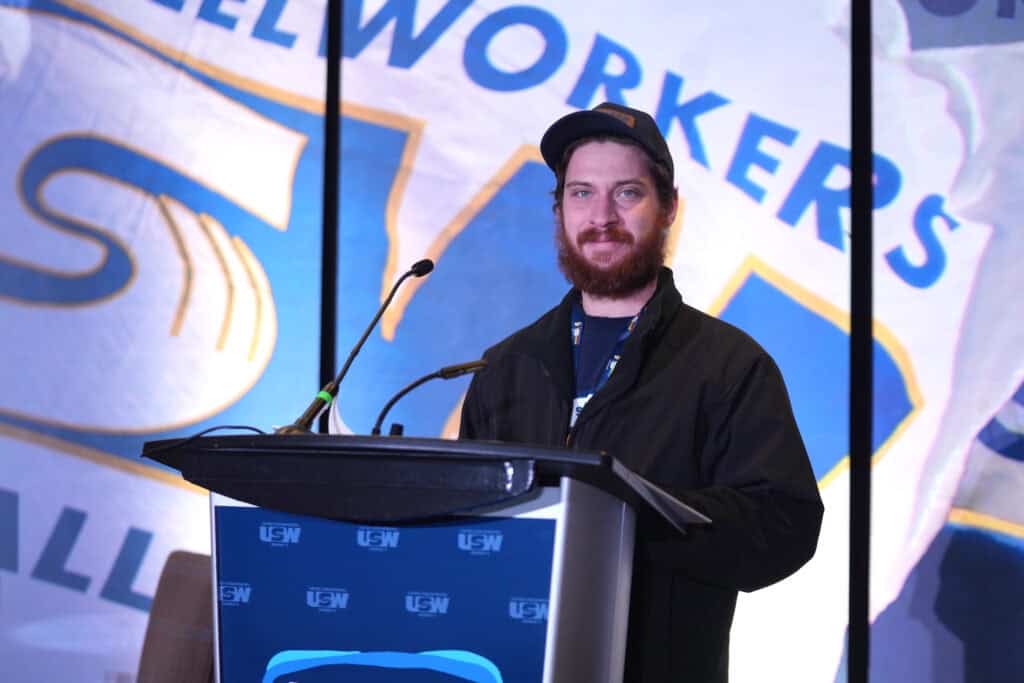
Day 1 of the TLA Conference concluded with the Improving Workplace Safety panel, examining how industry and regulators are addressing risk during a period of economic pressure and operational uncertainty. Moderated by Vaughn Palmer, the session featured Rob Moonen, CEO of the BC Forest Safety Council, and Todd McDonald, Head of Prevention Services at WorkSafeBC. Moonen, who noted he will retire at the end of March, warned that cost pressures and tighter margins are creating conditions that can undermine safety, stressing that the industry “cannot afford to wait for another crisis before acting.” He highlighted mental health as a growing concern and outlined the Council’s new Connection to Care counselling initiative. McDonald described WorkSafeBC’s prevention approach, emphasizing education and consultation alongside enforcement, and identified key risk areas including extreme weather, motor-vehicle incidents, ergonomics, and mental health. Both speakers underscored that sustained leadership and collaboration remain essential to protecting forestry workers.
Day 1 of the TLA Conference continued with the Government Initiatives Update panel, offering a detailed look at current policy work within the BC Ministry of Forests, reforms at BC Timber Sales, and longer-term system challenges. Moderated by Vaughn Palmer, the session featured Makenzie Leine, Deputy Minister of Forests; Melissa Sanderson, Assistant Deputy Minister; and Garry Merkel, Co-Chair of the Provincial Forestry Advisory Council. Leine outlined the ministry’s priorities, including tariff response, the Path to 45 initiative, and a shift toward management-unit-level problem-solving rather than broad, one-size-fits-all policy. Sanderson provided an update on the BCTS review, its expanded public-interest mandate, and early implementation steps, including Category 4 value-added supply, stewardship work, and measures affecting contractors. Merkel addressed longer-term structural issues, questioning why repeated reviews have failed to deliver lasting stability and calling for governance approaches that better align economic activity, communities, and forest stewardship.
The second session of the TLA Conference featured the Closing the Gap on Fibre Supply panel, examining the BC government’s Path to 45 target and what it means for contractors and operating companies. Moderated by Vaughn Palmer, the session brought together Jim Girvan, Associate at IFS; Paul Sadler, GM & CEO of Harmac Pacific; and Jonathan Armstrong, Vice President of Forestry and Fibre Supply at Western Forest Products. Girvan contrasted the 45-million-cubic-metre goal with current projections of roughly 28 million, stressing that the real issue is not volume alone but whether fibre is economically viable to harvest. Sadler focused on the operational realities facing mills and contractors, including cost, access, permitting timelines, and the need for predictable supply. Armstrong described how policy and regulatory layering has complicated planning and investment, particularly on the coast, and emphasized the gap between theoretical fibre and what can actually be brought to market.
Day 1 of the TLA Conference kicked off its technical program with the Markets & Economy panel, examining how trade disruption, shifting construction trends, and fibre supply constraints are reshaping Canada’s forest sector. Moderated by Vaughn Palmer, the session featured David Fell, Director of Research and Analysis at Forestry Innovation Investment (FII); Rick Jeffery, President and CEO of the Canadian Wood Council; and Don Wright, Senior Counsel at Global Public Affairs. Fell outlined BC’s reliance on export markets, the importance of diversification, and the role of building codes in supporting domestic demand. Jeffery focused on housing, industrialized construction, mass timber, and the need for supply-chain adaptation to capture future growth. Wright addressed the economics of competitiveness, pointing to declining harvest levels, policy-driven fibre constraints, and their implications for government revenue. In the discussion, Wright said restoring an economically sustainable harvest level was “job number one.”


With Canadian lumber producers facing crippling American duties and tariffs, Canadian sawmills that want to stay in business may have to develop markets outside the U.S. Since North America is the only major lumber market that still uses imperial measurements for lumber, this would require retooling logging and sawmill operations to metric. Some B.C. mills are already partway there. With Japan and China becoming saturated, Canadian lumber exporters will need to develop–or redevelop–markets beyond the Indo-Pacific. “We did this before,” said Rick Doman, chairman of Forest Innovation Investment (FII). In the 1990s and early 2000s, Canadian sawmills produced lumber for those markets, he said, but eventually lost them. “The North American market got so strong that we left those markets, and really the Nordic countries took over those markets,” Doman said. But the U.S. has since erected trade barriers in the form of duties and tariffs.
Day 1 of the TLA Conference featured the Politics over Lunch session, a wide-ranging and candid discussion of BC’s political landscape and its implications for the forest sector. Moderated by Vaughn Palmer, the luncheon brought together Rob Shaw, Political Correspondent with CHEK News, and Richard Zussman, Vice President of Public Affairs at Burson. The pair examined shifting government priorities, with Zussman arguing that economic growth and jobs are increasingly shaping policy decisions amid trade uncertainty and fiscal pressures, while Shaw highlighted inconsistent communication around those priorities. They explored the BC Conservative leadership race, the challenges of translating regional resource issues into urban political discourse, and ongoing uncertainty surrounding land use and DRIPA. Discussion also touched on the province’s projected $11-billion deficit, and the gap between government rhetoric and forestry realities. Delivered with humour and frankness, the session offered delegates a clear-eyed view of how politics, policy, and economic pressures are colliding in BC’s forest sector.


In the third quarter of 2025, the NAHB remodeling index (RMI) posted a reading of 64, increasing four points compared to the previous quarter. Most remodelers are finding reasonably strong market conditions, even with the normal seasonal slowdown during the holidays. The major headwinds the industry is experiencing continue to be rising costs and potential customers hesitating due to policy and economic uncertainty. Demand for remodeling is being supported by an aging housing stock, strong homeowner equity and increasing need for aging-in-place improvements. …In the fourth quarter of 2025, the Current Conditions Index averaged 71, increasing three points from the previous quarter. …The Future Indicators Index averaged 56, up four points from the previous quarter.
International Pulp Week (IPW) is the premier annual gathering of the global market pulp industry, hosted by the Pulp and Paper Products Council. As the leading event dedicated exclusively to the market pulp sector, IPW provides a unique platform for producers, end-users, and key stakeholders to exchange insights, strengthen relationships, and explore the trends shaping the industry’s future. 


Recent studies suggest that paper-based advertising may hold a more sustainable footprint than its digital counterpart. This revelation challenges the widely held assumption that ‘going paperless’ automatically equates to environmental responsibility. New data indicates that the full lifecycle impact of digital advertising – encompassing data centers, device manufacturing, and network infrastructure – generates a significantly larger carbon footprint than traditional print methods. The findings, originating from research conducted by the Öko-Institut in Germany and corroborated by analyses from The Telegraph, Emerce, and RetailTrends, highlight the often-overlooked environmental costs associated with the digital world. While paper production undeniably carries its own environmental burdens, advancements in sustainable forestry practices and paper recycling are mitigating these impacts. …Their findings consistently showed that paper-based advertising, particularly when utilizing recycled paper and responsible forestry practices, generated fewer greenhouse gas emissions than comparable digital campaigns.
Japan-based materials experts have made impressive progress in the search for a better biodegradable plastic. The breakthrough starts with an abundant material: cellulose from wood pulp. Takuzo Aida, RIKEN Center for Emergent Matter Science research lead, said in a news release that “about one trillion tons” are naturally produced annually. Using it successfully as part of a new plastic could have a widespread impact, because most types of the material take decades to hundreds of years to break down. “This technology will help protect the Earth from plastic pollution,” Aida said in the RIKEN report. …Unlike other biodegradable plastics, RIKEN’s innovation also eliminates harmful microplastics, tiny particles that have saturated our world — found in soil, oceans, and even our bodies.
Students and instructors at North Island College (NIC) say they’re disappointed following the institution’s recommendation to suspend 15 programs from its three main campuses on mid and north Vancouver Island. The recommendations were made as part of the college’s expedited program impact assessment that began last fall, and will go to the board of governors for approval on Feb. 5. …The suspensions are not permanent cuts, but create “opportunities to re-imagine how and what programs are delivered.” …NIC faculty president Jen Wrye says many of the programs have strong enrollment and offer good job opportunities for students at the Comox Valley, Campbell River and Port Alberni campuses — regions without other college-based post-secondary opportunities. The programs facing suspension include:
As climate change drives more frequent and severe wildfires across boreal forests in Alaska and northwestern Canada, scientists are asking a critical question: Will these ecosystems continue to store carbon or become a growing source of carbon emissions? New research published shows that when forests shift from coniferous—consisting mostly of pines, spruces and larches—to deciduous—consisting mostly of birches and aspens—they could release substantially less carbon when they burn. The study, led by researchers from the Center for Ecosystem Science and Society (ECOSS) at Northern Arizona University and published in Nature Climate Change, found that boreal forests dominated by deciduous species lose less than half as much carbon per unit area burned compared to historically dominant black spruce forests. Even under severe fire weather conditions, carbon losses in deciduous stands were consistently lower than those in conifer forests.
PUEBLO, Colo. — The Pike-San Isabel National Forests & Cimarron and Comanche National Grasslands began a 10-year partnership and $7.3 million investment to implement forest health treatments as part of the War Department’s Readiness and Environmental Protection Integration (REPI) program. The partners will use $3 million in REPI funds, along with $4.3 million in partner contributions, to treat 2,000 acres of National Forest System land and nonfederal lands near the U.S. Air Force Academy and Cheyenne Mountain Space Force Station. The REPI program preserves military missions by avoiding land use conflicts near military installations, addressing environmental restrictions that limit military activities and increasing military installation resilience.
Western Washington forests are vital to the identity, economy, and quality of life vital to the region. From the Puget Sound to the Olympic Peninsula and Columbia Gorge, healthy forests provide clean air and water, sustain fish and wildlife habitat, store carbon, and support local jobs in forestry, recreation, and tourism. …The Western Washington Forest Health Strategic Plan is the result of an holistic and collaborative effort by the Washington State Department of Natural Resources to bring partners representing all lands and stakeholder groups together to identify priorities and strategies for how to steward and manage western Washington forests at a landscape scale. This plan builds on lessons learned from the development and implementation of the
PORTLAND, Ore. — In a win for conservation groups, a federal judge
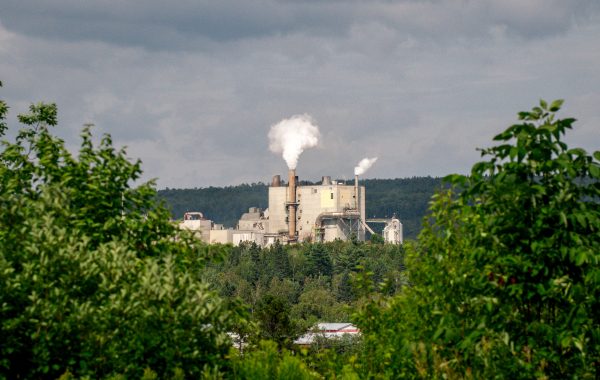
THUNDER BAY — The source of the bad smell detected across a broad section of the city last week remains unconfirmed. Residents of various neighbourhoods contacted the fire department and Enbridge gas the morning of Jan. 7 to report an unpleasant odour in the air. A spokesperson for the ministry of the environment, conservation and parks says it investigated after a complaint was filed with the Spills Action Centre. “No incidents or spills were reported to the ministry (that were) linked to the odour,” he told Newswatch, adding that the ministry would follow up if it received any new information. The spokesperson also said Thunder Bay Pulp & Paper confirmed it was operating normally at the time the bad smell occurred.