Click to Enlarge
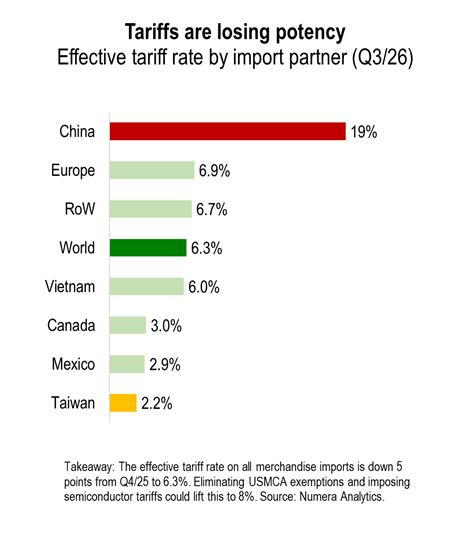
US tariffs are unlikely to provide a meaningful solution to the rising federal debt burden. As today’s chart shows, the effective tariff rate has fallen five percentage points from its 2025 peak to 6.3%. Duties currently bring in around 1% of GDP; even removing USMCA exemptions or imposing semiconductor tariffs would add no more than 0.2% of GDP in revenue. The tax base acts as a further constraint. Personal income taxes and payroll contributions account for 80% of federal receipts, but weak employment and wage growth have weighed on income tax revenues, while a shrinking labour force threatens payroll contributions. Extra tariff revenue is unlikely to offset those pressures or materially improve debt sustainability. We see limited fiscal upside from higher tariffs, with a risk of far greater downside in the event that tariffs weaken growth. In particular, semiconductor tariffs could slow AI investment, threatening the productivity gains that could help to keep the debt burden manageable.