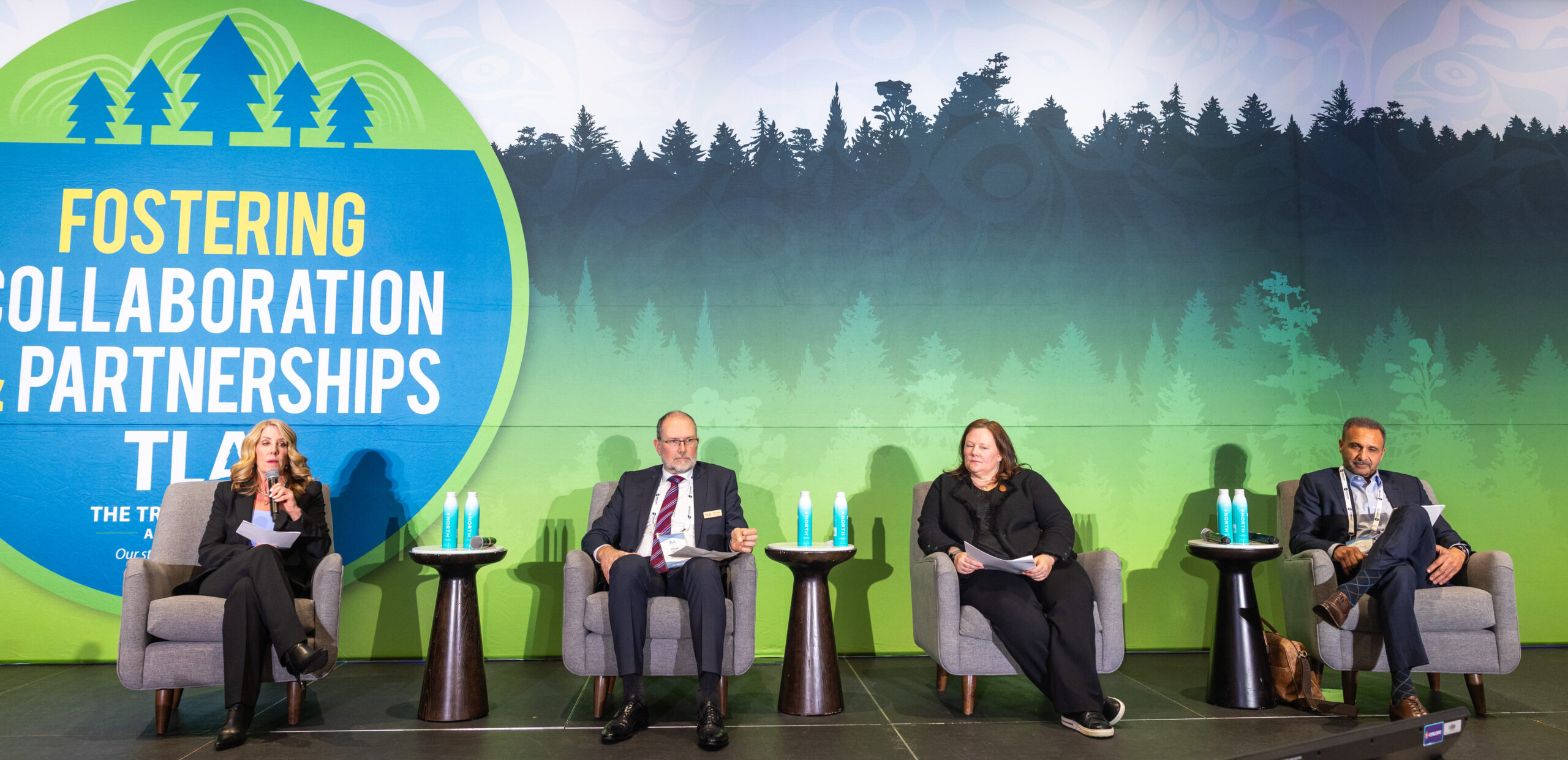
 The second “fostering collaboration” panel of Day 2 at the Truck Loggers Association Convention brought together senior representatives from forestry and the business community to present their respective perspectives on the challenges facing BC’s economy and forest sector. Moderated by Vaughn Palmer, the session featured Bridget Anderson, President and CEO of the Greater Vancouver Board of Trade; Peter Lister, Executive Director of the Truck Loggers Association; Kim Haakstad, President and CEO of the BC Council of Forest Industries (COFI); and Joe Nemeth, General Manager of the BC Pulp & Paper Coalition. Each speaker delivered a separate presentation focused on their organization’s priorities and concerns.
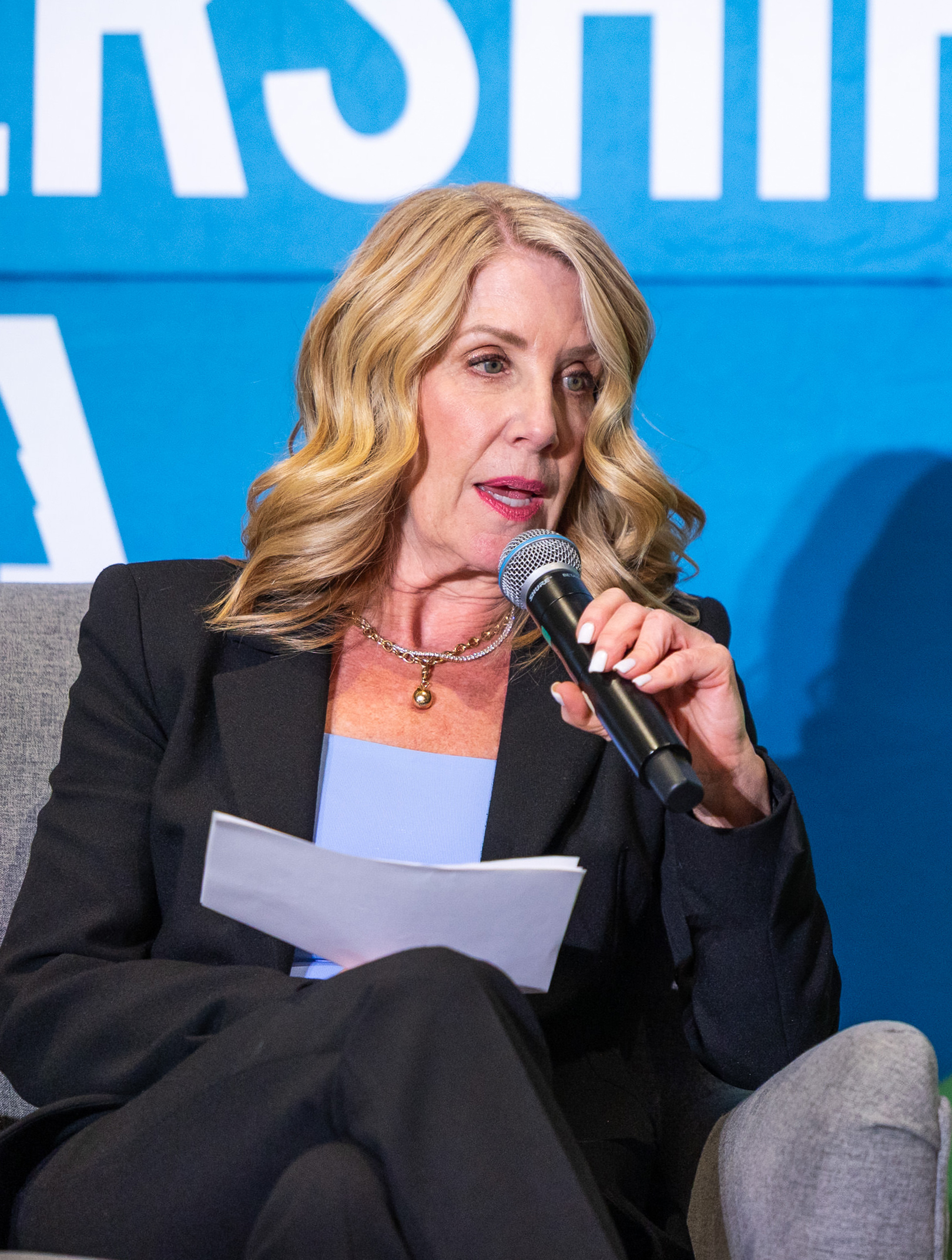 Bridget Anderson opened the panel by situating the forest sector within what she described as a difficult economic environment for the province as a whole. She pointed to slowing growth, with BC’s projected GDP increases in the range of roughly 1.2% to 1.4%, and noted that average growth over the current decade is well below that of earlier periods. She said this weak outlook is compounded by fiscal pressures associated with what she characterized as a historic operating deficit, making it harder for government to fund services while also trying to attract private investment. She highlighted taxation and payroll costs as material barriers, citing BC’s combined marginal personal income tax rate of 53.5% and the employer health tax as additional burdens. While acknowledging that business groups had pressed for threshold changes, she expressed limited confidence that meaningful relief would be forthcoming in the current fiscal environment.
Anderson also emphasized population trends as a growing economic concern. She said BC is experiencing a net outflow of people to other jurisdictions, particularly Alberta, and that changes to immigration and international student policies in 2024–25 further constrain the province’s ability to attract and retain talent. She cited figures showing that 14,000 people had left the province over a recent three-month period and said BC has seen the largest population decline of any province in Canada. In her view, slowing population growth creates a productivity challenge and raises questions about where skilled workers will come from to support economic expansion.
Against that backdrop, she described the Greater Vancouver Board of Trade’s call for a 3% annual GDP growth target. She argued that such growth could generate approximately $4 billion in additional government revenue and create tens of thousands of jobs. She said the Board has produced a series of reports outlining policy pathways to support growth, including land use, taxation, and major project development. While not forestry-specific, she said the recommendations apply broadly, including the need for faster and more competitive permitting, stronger Indigenous participation in collaboration with business, and an industrial policy that actively attracts investment.
Anderson concluded by pointing to technology as an additional source of opportunity, focusing on artificial intelligence. Citing a Board of Trade report, she said AI could deliver a major productivity boost, potentially saving workers significant time and increasing output. At the same time, she noted that a large majority of Canadian small and medium-sized enterprises have yet to adopt AI, with construction, transportation, and warehousing among the lagging sectors. She said that AI represents an opportunity that could support productivity, including in the forest sector, alongside government policy changes.
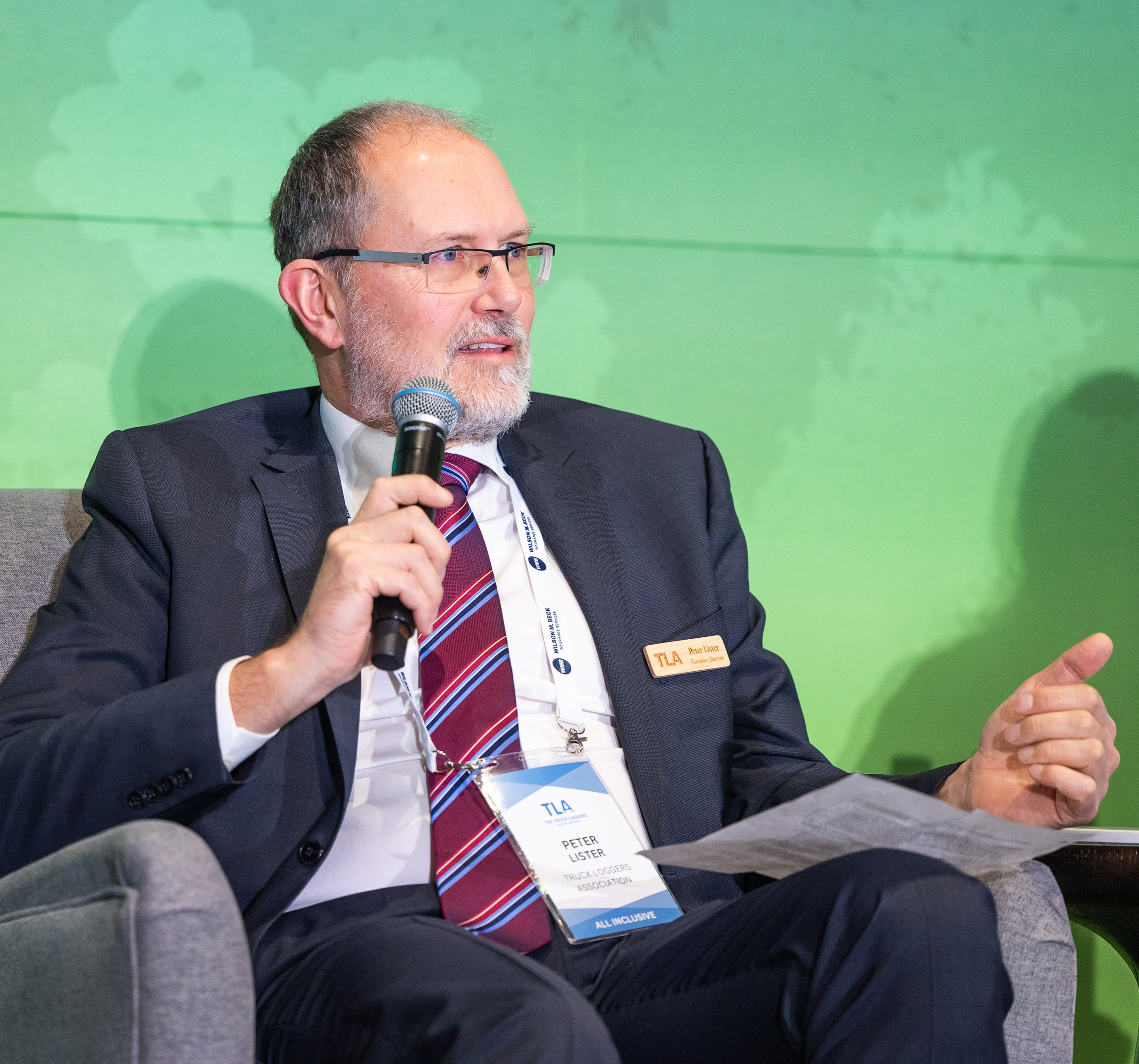 Peter Lister followed by addressing the condition of the forest industry directly, describing it as being in a state of crisis. He cited more than ten major mill closures on the coast since 2018, most recently Crofton, and more than 5,800 direct job losses, noting that the broader employment impact is much larger when indirect effects are considered. He emphasized that the consequences extend beyond individual communities, affecting suppliers, contractors, and businesses across the province. While acknowledging external pressures such as weak US lumber prices and high combined duties and tariffs, he said that many of the industry’s problems are structural and “made in BC,” rather than solely the result of market conditions.
Lister offered a specific example of cost escalation, describing how one member’s average cutting permit costs rose from $4 per cubic metre to $14 per cubic metre in a few years. He said that across a provincial harvest of roughly 30 million cubic metres, this translates into hundreds of millions of dollars in additional costs at a time when markets are already weak. He stressed that these are costs the province can influence and argued that access to working forests is fundamental: without fibre, there is no forest industry. He contrasted the provincial annual allowable cut of around 60 million cubic metres with recent harvest levels of just over 30 million, and on the coast an AAC of about 14 million against harvests closer to half that level. In his view, the much-discussed “path to 45” has not yet materialized in actual fibre flow.
He also focused on competitiveness, noting that BC was once among the lowest-cost lumber producers in North America but is now among the highest. In a commodity business, he said, high-cost producers are forced to shut down when markets weaken. Beyond mill operations, he highlighted the pressures facing contractors and small businesses, noting that even small contractors often carry $5–10 million in equipment that must be replaced every few years. In an environment of uncertainty, he questioned why operators would take on new debt, arguing that lack of predictability is suppressing reinvestment and discouraging capital from entering the sector. At the same time, he struck a more optimistic note by pointing to BC’s global advantages, including its timber resources, expertise, and capacity to design and build innovative wood structures. To realize that potential, he said the province must reduce costs, improve competitiveness, and restore certainty.
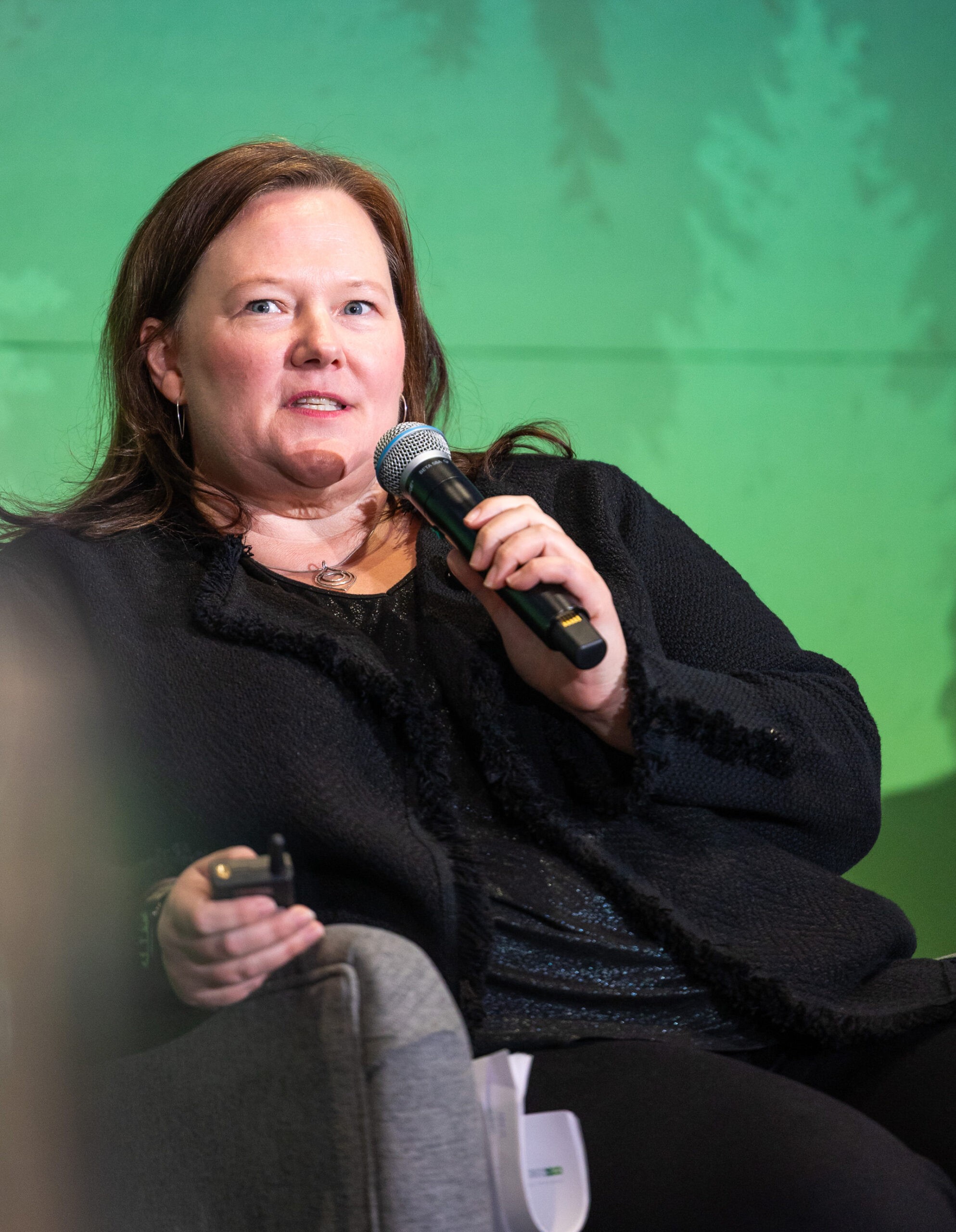 Kim Haakstad continued the discussion by focusing on competitiveness and cost growth, emphasizing that industry and government largely agree on the underlying data, which she described as an important foundation for progress. She said harvest levels continue to trend downward and that BC is now widely viewed as the highest-cost jurisdiction in North America for forestry. Using figures from the past decade, she highlighted how rapidly costs have risen and said that the current cost structure is undermining the sector’s ability to remain globally competitive.
She pointed in particular to tenure obligation costs, which she said have more than doubled since 2017. While acknowledging inflation and other pressures, she characterized the magnitude of the increase as primarily regulatory in origin. She explained that higher tenure obligations directly affect stumpage, because these costs are deducted from stumpage calculations. As a result, she said, a large portion of the provincial land base is now at zero or near-zero stumpage, making much of the timber uneconomic to harvest. She argued that reducing costs could create a “win-win” by making more areas viable, potentially increasing stumpage revenues to government, and supporting revenue-sharing with First Nations. She tied this directly to economic reconciliation, emphasizing the importance of both business participation and meaningful revenue flows to Indigenous communities.
Haakstad also linked declining harvest levels to employment losses, noting that since 2022 the sector has lost approximately 15,000 direct, indirect, and induced jobs, with a significant reduction in the workforce between 2024 and 2025. She said these figures do not yet fully reflect closures announced late in 2025 or the impact of ongoing curtailments. Beyond jobs, she stressed the broader community role of forestry operations, including their contributions to tax revenue, energy systems, wastewater treatment, and other infrastructure. She said the industry needs to do a better job of telling the full story of what forestry contributes to communities. Looking ahead, she referenced the Premier’s commitment at the COFI convention to treat forestry as a major project alongside other resource sectors, saying development should be framed as “and,” not “or.” She said that if a 45-million-cubic-metre harvest could be achieved, it would reverse the direction shown in recent data and generate additional government revenue, while expanding opportunities for economic reconciliation. While acknowledging the work underway in government, she said policy changes to date have not yet shifted the trajectory and stressed that meaningful collaboration requires having the industry fully involved in shaping the path forward.
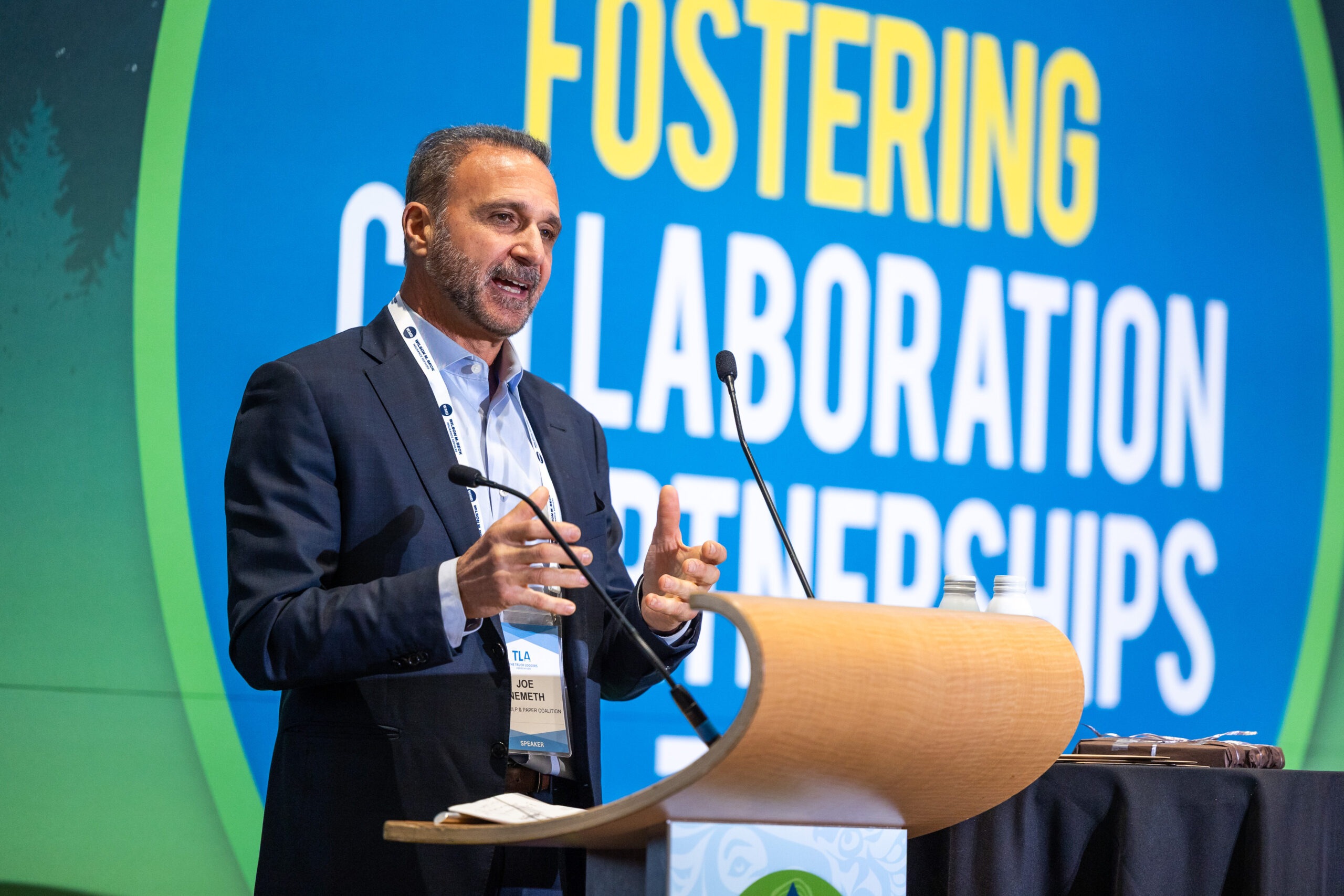 Joe Nemeth concluded by focusing on the pulp and paper sector and the conditions required for it to remain viable in BC. He said the province’s industry had once been globally competitive, built on an integrated model in which logging, sawmilling, and pulp production shared fibre and costs. That integration, he said, has weakened over time, with a growing share of pulp fibre now coming from whole logs or from outside the province, increasing costs and eroding competitiveness.
He pointed to the long-term contraction of the sector and said BC now faces a significant cost disadvantage relative to international competitors, attributing much of that gap to energy and other operating costs. He said that under current conditions the industry faces a choice between continued decline, including further mill closures, or a shift toward transformation. As an alternative, he described a path based on increasing harvest levels to at least 45 million cubic metres annually and said the pulp sector has identified approximately $3 billion in potential investments that could proceed if conditions improve.
Nemeth identified three priorities. First, liquidity: he said companies require short-term relief from the financial impact of softwood lumber duties. Second, fibre supply: he said the central issue is not a lack of timber but economic access to it, and argued that without a formal process, clear leadership, and accountability, the 45-million-cubic-metre target will not be achieved. Third, he pointed to broader “hosting conditions,” including taxation and transportation costs, and highlighted wildfire salvage as one area where additional fibre could be made available, while noting that further implementation and coordination among government, industry, and First Nations will be required.
Drafted with the assistance of digital tools to streamline the process.