 BC’s forestry sector has always been known for its resilience, strong work ethic and deep connection to communities. In recent years, though, that resilience has been tested. Mill curtailments, closures, workforce reductions and ongoing economic uncertainty have taken a toll on workers and communities across the province.
As we continue to adjust, one thing is becoming increasingly clear, supporting and prioritizing mental health is essential to keeping forestry workers safe.
Workers across harvesting, silviculture, log hauling, sawmills and wood pellet operations are no strangers to demanding work conditions. Long hours and physical work are part of the job. But when mental strain like job uncertainty and financial pressure are added to the mix, it creates another layer of stress that can quickly start to weigh on people.
Stigma and concerns about job security can make it hard to speak openly about mental health and many workers continue to push through without reaching out for support. It will take a collective effort across industry to close the gap between needing support and asking for it without feeling judged or like they have to tough it out on their own.
Use Connection to Care, it’s a simple way to get support
In January 2026, the BC Forest Safety Council launched the Connection to Care program in partnership with the BC Association of Clinical Counsellors. It’s a free, confidential mental health phone‑in service available to forestry workers across BC, no matter their role. Anyone can use it and it’s especially helpful for those who may not have access to support through extended health benefits, an Employee and Family Assistance Program or a regular healthcare provider.
Getting help is easy. Just call 778-247-2273 (CARE), Monday to Friday from 8:00am to 8:00pm. You’ll be connected with a trained professional who can listen, talk through what’s going on and help you figure out what to do next if needed.
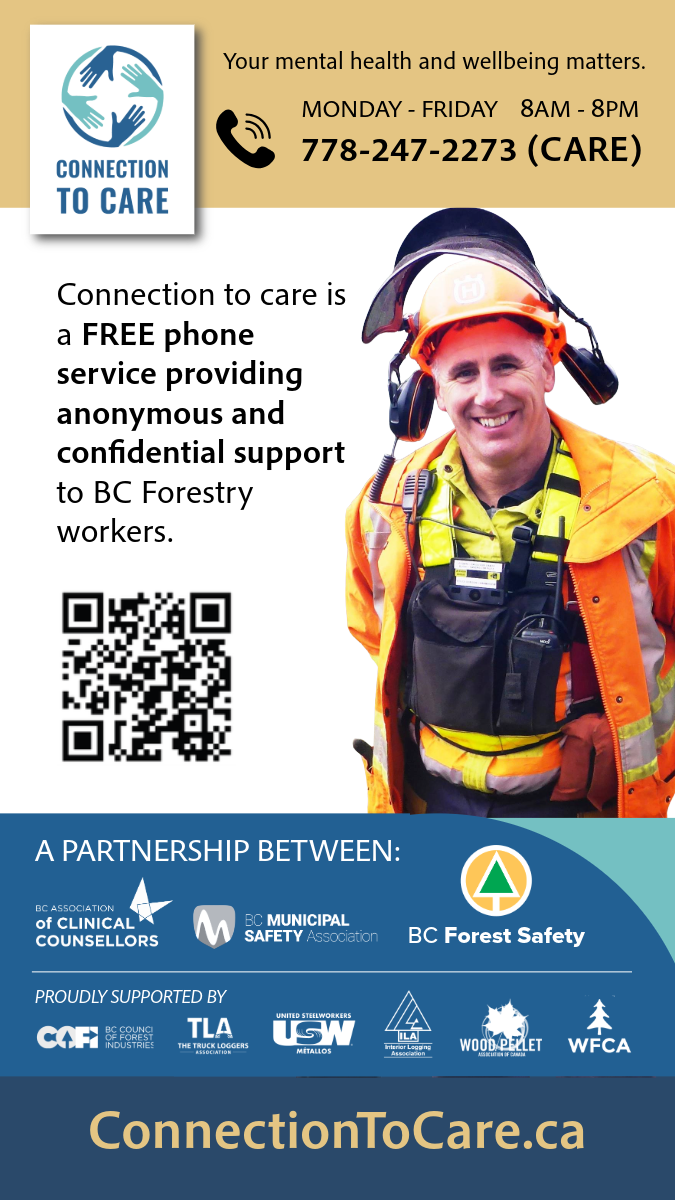 Connection to Care
778-247-2273 (CARE)
Monday to Friday, 8:00 am to 8:00 pm
www.connectiontocare.ca
What we are learning
Early results from the first quarter of 2026 show the service is being used and forestry workers are finding value in it. Many of the calls included requests for therapeutic support, highlighting the importance of access to professional counselling. The report also showed calls coming from across the province, from larger centres to rural and remote communities, which reflects how widespread the need is and reinforces the importance of having support available wherever workers are located.
Connection to Care is also reaching workers beyond the phone. Since January, the website has had more than 1,700 users, with people accessing resources focused on anxiety, depression, workplace stress and relationship challenges.
We need to make mental health part of safety
Mental health has a direct impact on workplace safety. When someone is struggling, it can affect focus, decision-making and communication, all of which are critical to job safety.
Creating an environment where people feel comfortable speaking up and getting support benefits everyone. When workers feel supported, crews work better together, worksites are safer and communities are stronger.
Together, we can support safer workplaces, stronger crews and healthier communities across BC’s forestry sector. No one should have to carry it alone. Reaching out takes courage and taking that first step can make all the difference.