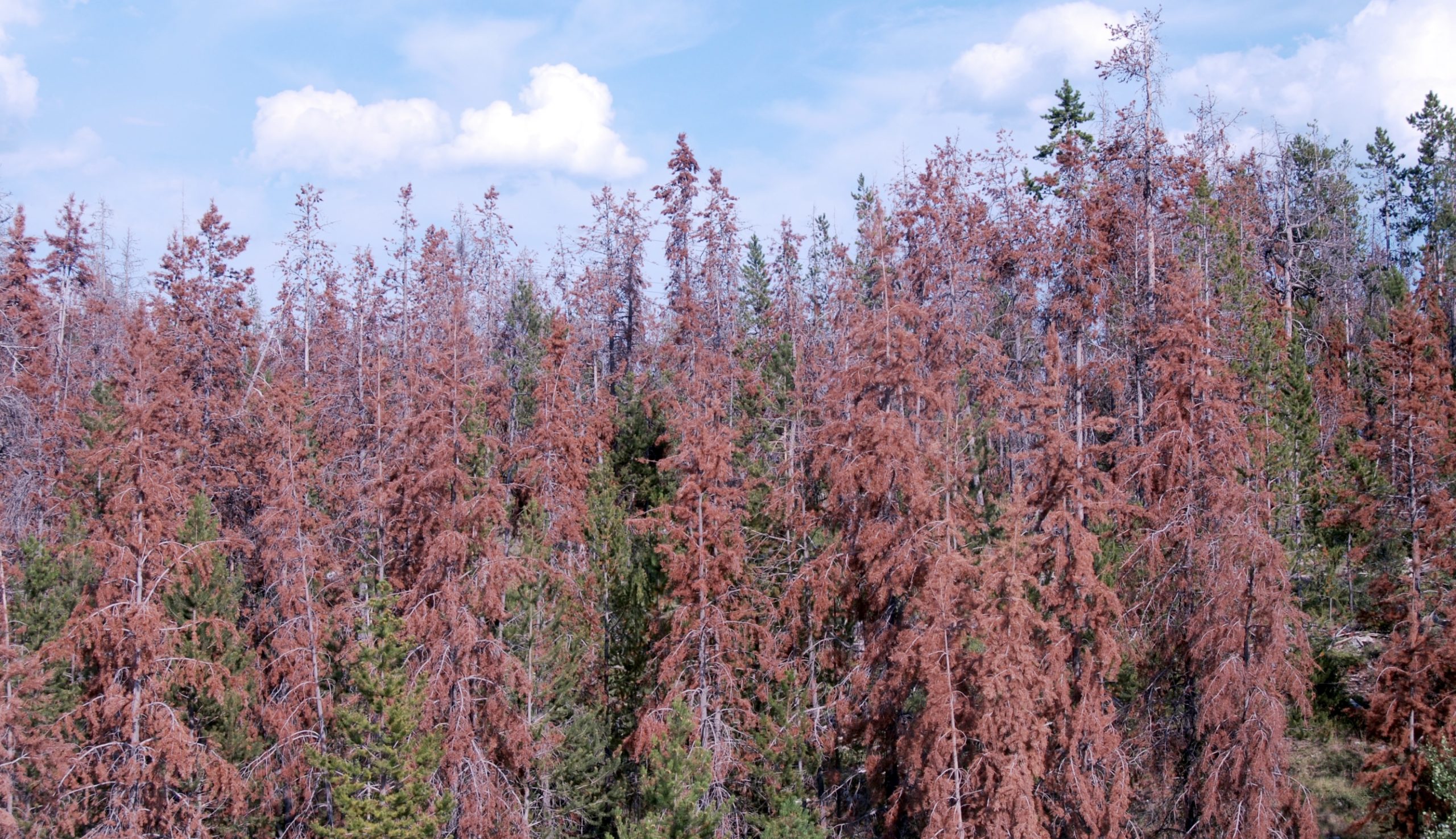
 Satellite measurements detected declining photosynthetic activity in Western U.S. forests two years before bark-beetle mortality appeared in aerial detection surveys, according to new University of Utah-led research. The first-of-its-kind study suggests that satellite-observed chlorophyll fluorescence (SIF), a measure of plant photosynthesis, could provide an early warning of forest stress. As drought, wildfire and insect outbreaks occur with increasing frequency across the American West, the technology could also help scientists understand how these disturbances affect forests’ ability to absorb and store carbon from the atmosphere. …“The ultimate goal is to identify areas of concern early enough for land managers to investigate, mobilize crews, allocate funding or otherwise prepare before mortality becomes widespread,” said lead author Lewis Kunik. …In forests that would later experience bark-beetle mortality, the researchers detected a significant SIF decline roughly two years before mortality was seen in aerial surveys conducted by the USDA Forest Service.