Click to Enlarge
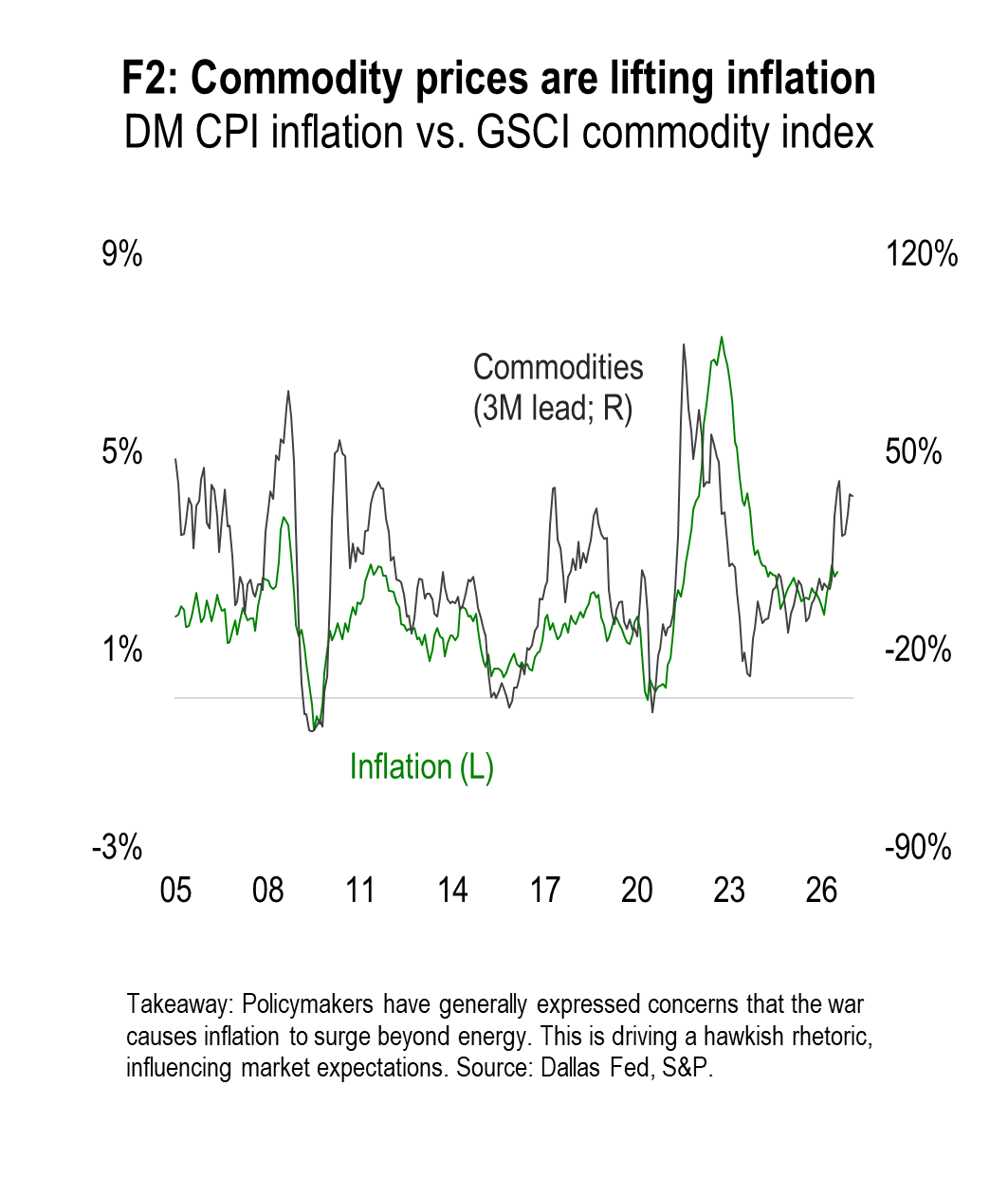
Higher oil prices have pushed up inflation in developed markets (DMs) this year, as the energy shock feeds through to consumer prices. Today’s chart illustrates how commodity prices have historically been a strong predictor of inflation, highlighting why policymakers fear that persistent energy pressures could eventually spread to other goods and services. So far, however, evidence of broader spillovers remains limited. The persistence of the energy shock has led us to raise our inflation forecasts for most major developed economies. We now expect Eurozone inflation to average 3.1% in 2026, up from 2.9% last month, and have raised our US and UK forecasts to 3.4% and 3.1%, respectively. Our aggregate DM forecast now stands at 2.9% for both 2026 and 2027, suggesting a slower return to central banks’ inflation targets. Why this matters: The inflation resurgence has caused major central banks, including the ECB and Fed, to pivot back to rate hikes. We expect further tightening, particularly from the ECB, where our models assign a 59% probability of additional hikes over the next 12 months. For businesses, this means continued pressure on financing costs alongside elevated energy bills. Yet limited evidence of broader inflation spillovers still argues against a prolonged hiking cycle.