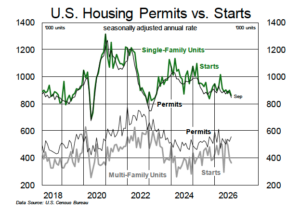
 U.S. housing starts slumped to just 1.22MM seasonally-adjusted units in September as single-family building activity declined to 859,000 (the lowest monthly total in 12 months). Multifamily starts didn’t fare much better, coming in at just 362,000, the second-lowest monthly reading for the year. On an actual basis, September starts of just under 104,000 marked the lowest unadjusted total since February. …Through the first nine months of the year, adjusted U.S. housing starts are averaging 1.35MM, down from a FY2025 average of 1.36MM. However, over the past three months of data, starts have averaged just 1.29MM. With sky-high mortgage rates and broad-based macroeconomic malaise (record-high diesel prices, inflationary pressures, rock-bottom consumer confidence, etc.) we expect that homebuilding activity will remain sluggish through year end, most likely resulting in a fifth consecutive y/y decline for U.S. housing starts for FY2026.
 We tend to focus heavily on conditions in the U.S. housing market given that it is by far the biggest driver of North American wood products demand. However, when we look at the current state of housing in Canada and some key Asian markets (both of which also consume meaningful volumes of North American wood products), it is clear that the U.S. housing market isn’t alone in its struggles year-to-date. In Canada, total starts are off by ~4% ytd through September. In China, residential floor space started continues to decline—it’s off by a further 25% ytd, following y/y annual declines ranging from ~11% to ~40% in the five years between 2021 and 2025. …The Japanese housing market is holding up a little better, with total housing starts increasing by 2.2% ytd. Still, Japanese starts have been trending steadily lower for over a decade now.
Key takeaways include:
- Solid Wood: Lumber markets are generally lower, but looking at just 2×4 prices misses a lot of what is happening in the broader market (e.g., wider grades are often moving quite differently). Softwood lumber duties are lower for Canadians, but so too are prices. OSB prices are up given shuts, but have topped out for now. Plywood remains strong but stretched.
- Timber/Log: Log prices remain uneventful in most markets, with the oversupply of pulpwood a pressing issue in many regions.
- Pulp markets have seen mixed moves on the capacity front with the Howe Sound mill now restarted while some large European mills take downtime. Inventory is being drawn down in some markets, but supply is sufficient in most grades, which is limiting pricing upside.
- Paper prices were unchanged for most grades in October, although some (but not all) woodfree producers are working to tack on fuel surcharges with mixed success. Markets are holding, but there is some weakness forming in uncoated woodfrees based on recent reports (imports are up).
- Containerboard prices held steady this month after general success on pricing last month. Box shipments appear to have fallen in Q3 as all companies reporting to date have registered declines. Producers have managed supply well over the past years, but further shuts/downtime should be expected if demand remains weak.
- Boxboard: Oversupply has been an issue in the market, but capacity closures are chipping away at the excesses. However, a recent increase in imports is undermining those supply-management efforts. Operating rates are improving, but not enough to enable broad price hikes. Some producers are attempting hikes on SBS/FBB for November.