A lumber mill in New Ross has been destroyed by fire. Four departments battled the blaze Thursday at L.E. Elliott Lumber on New Russell Road. …Peter Elliott, the owner of mill, says the business has been in his family for three generations. The original mill was built in 1933. …While the sawmill was a total loss, fire crews managed to save a planer mill, which was only about 25 metres away, Elliott said. “The planer mill was kind of in the line of the sparks and all the smoke and stuff. …” Elliott said he doesn’t know for sure how the fire started, but he guesses it might have been electrical. Elliott, who is 65, said it’s too early to decide what will come next for him or the business. He estimates it would cost about $1 million to rebuild the mill, and he did not have insurance, as the cost would have been prohibitive.






 A final tally of which Ontario municipalities hit their housing targets and how many fell short last year has been finished since mid-February, according to government documents obtained, despite the province refusing to release the data for months. For the past two years, the Ford government has set targets for new homes in towns and cities, promising them extra cash if they meet those goals. The numbers Ontario uses to assess whether or not cities have hit their goals are made up of new homes, long-term care beds and additional units like basements or garden suites. The government set up a website to show which cities had hit their goals. Around October 2024, however, with housing starts across the province stuttering, the government stopped updating the tracker. …While the tracker has appeared abandoned for close to half a year, the government has had “finalized” data for months.
 TORONTO — A mass timber showcase on Toronto’s George Brown campus is also a study in collaboration and innovation. George Brown College’s Nerys Rau, Moriyama Teshima Architects partner Philip Silverstein and PCL’s Mike Love all explained the process behind building Limberlost Place at a session titled Exploring Limberlost Place: at the Canada Green Building Council’s Building Lasting Change conference held recently in downtown Vancouver. Limberlost Place is a 10-storey mass-timber net-zero building that achieved occupancy in January. …Silverstein said the building is rated at Tier 4 of the Toronto Green Standard, adding no other building in the city has reached that metric. “It’s like LEED Platinum on steroids,” Silverstein said. Love said the number one question was “what if the wood gets wet?” “It’s OK for wood to get wet. Just remove any ponding water and let it dry. It wants to breathe,” he said.
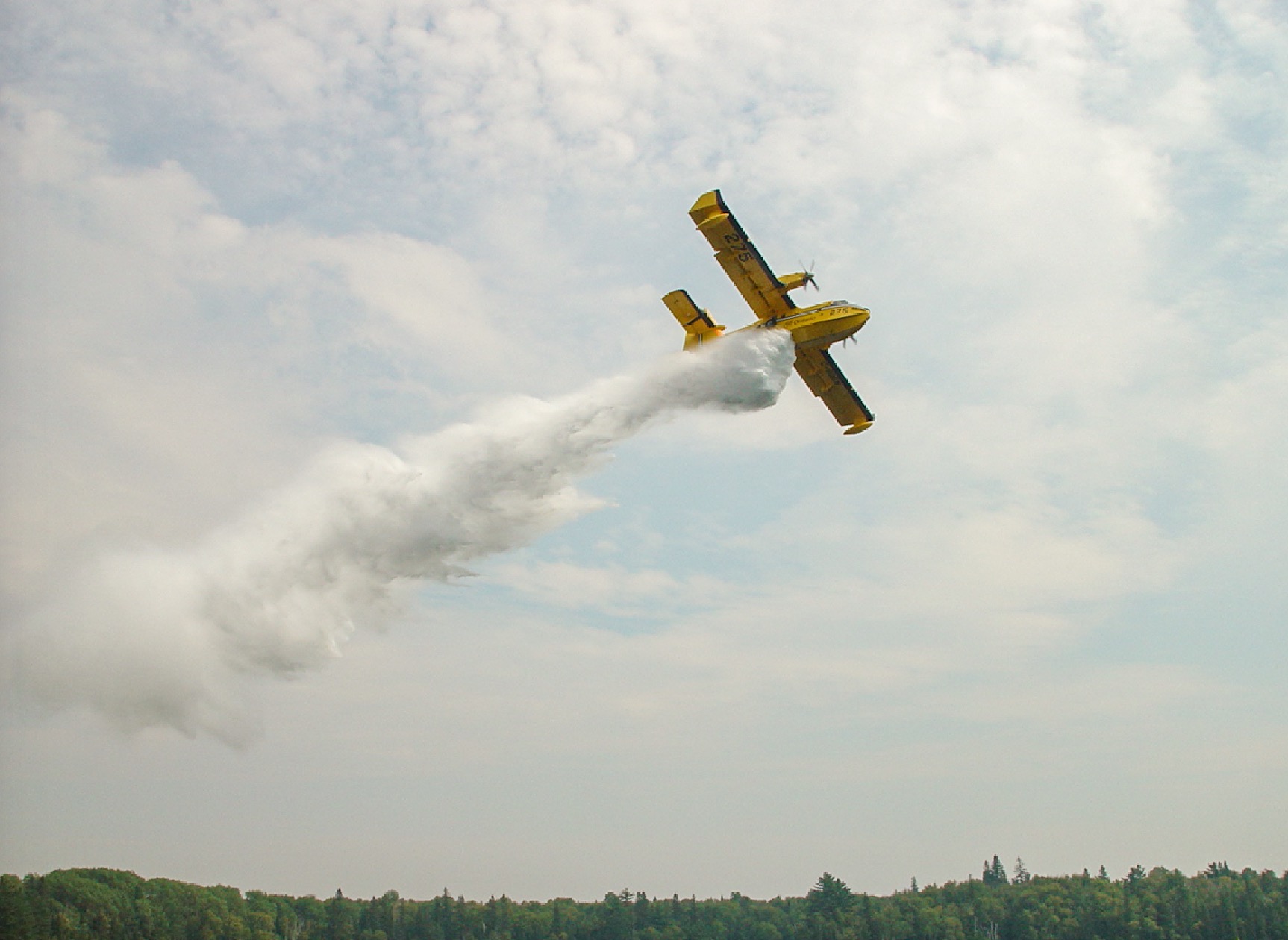 The union representing Ontario’s wildland firefighters says they’re working long hours that are contributing to “fatigue,” and is calling for a funding increase to address a lack of resources. “Historically Ontario’s had about 180 four-person fire crews,” said Noah Freedman, a wildfire crew leader in northwestern Ontario and vice-president of Local 703 of the Ontario Public Service Employees Union (OPSEU). …”While we should be looking to staff more firefighters, and have more water bombers and pilots and all of our incredible support staff that we need more of, we’re just going the other direction at the moment.” Freedman said the union has been unable to confirm the exact number of crews currently operating; last year, there were 143. …The province is also short water bomber pilots.
 The other day, in the midst of a heat wave that suffocated central Canada, this newspaper brought us the story of a five-year-old at a public school in Ottawa, sent to hospital for heat exhaustion. The accompanying photo shows the child and his mother seated on a picnic table in the schoolyard, surrounded by grass and pavement – and one tree. As a forester, I volunteer with a program of Forests Canada called Forestry in the Classroom, whose goal is to connect ”the next generation of forest stewards with forestry and environmental professionals.” This spring I visited a school in north Toronto to take a class of Grade 5 students to a nearby forested ravine, to help them identify trees and to evaluate tree health. On my arrival at the school, I was shocked to find the playground a barren wasteland.
 For years, forest firefighters in Ontario have been calling on the provincial government to reclassify their jobs to recognize them as an emergency service in a bid to stem recruitment and retention issues. It’s a change the Ford government promised it would take on after sustained pressure from front-line staff and union officials. The province now says work to reclassify forest firefighters — officially called resource technicians — has been “completed,” and is blaming the Ontario Public Service Employees Union for a delay in announcing the move. Whether the terms the government has put forward address the substantive changes called for by forest firefighters is contested. Draft information seen by Global News shows the reclassification involves renaming positions within the existing union structure — and moving people one category further up the grid, for a raise of roughly $3 per hour.
 A new study suggests small, consistent amounts of exposure to the herbicide glyphosate can lead to higher incidents of cancer – a finding that has Green party Leader David Coon calling on the province to take the issue seriously. The study, by the Italian-based non-profit Ramazzini Institute, involved exposing rats to small levels of the herbicide and two other products for 2+ years. It found that “statistically significant dose-related (amounts of glyphosate) increased incidences of benign and malignant tumors.”…Bayer, which uses glyphosate in its Roundup herbicide, denounced the study. “It is clear this study has serious methodological flaws, which is consistent with the Ramazzini Institute’s long history of making misleading claims about the safety of various products,” the company said. …A government spokesperson initially told Brunswick News that the study’s findings weren’t applicable in New Brunswick because two products studied aren’t used in Canada.
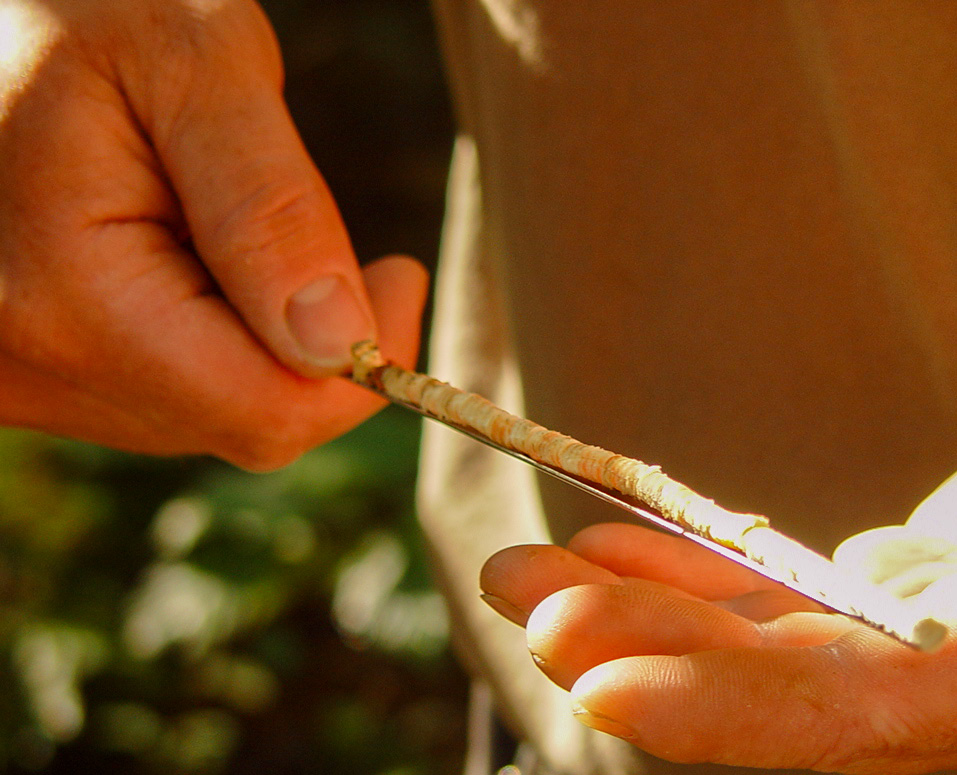 Chris Watson of Lorneville, a rural community in southwest Saint John, recently saw what he believed to be a centuries-old red spruce near Spruce Lake. He drilled a small hole into the trunk by hand and took a pencil-sized sample to have it tested. Ben Phillips, environmental lecturer at Mount Allison University, began a process known as dendochronology on the sample — a study that measures the age of trees by counting small lines otherwise known as tree rings. “This tree, I can confidently say, is over 400 years old,” Phillips, who runs the Acadian Forest Dendochronology Lab on campus, said about the sample he got from Watson. “It is probably in the top 10 oldest trees in the province that I know of.” …Both Phillips and Ilana Urquhart, Nature Trust of New Brunswick conservation co-ordinator, want to see legislation put in place in New Brunswick that would protect areas with old growth, specifically.

 They slither in silence, drape trees in silk and chew through lively leaves. This year, the forests of Ontario are full of a very distinctive, creepy crawler – the tent caterpillar. Eastern tent caterpillars are appearing in large numbers across the province marking what experts describe as an ‘outbreak year’ for the species. While noticeable, the current outbreak is not as severe as previous ones, according to Dan Rowlinson, forest health field coordinator with Ontario’s Ministry of Natural Resources. According to the Government of Ontario, periodic outbreaks occur roughly every 10 to 12 years and typically last three to six years in a particular areas. The tent caterpillar, often mistaken for their close relatives; the spongy moth, is known for having a similar looking larvae.
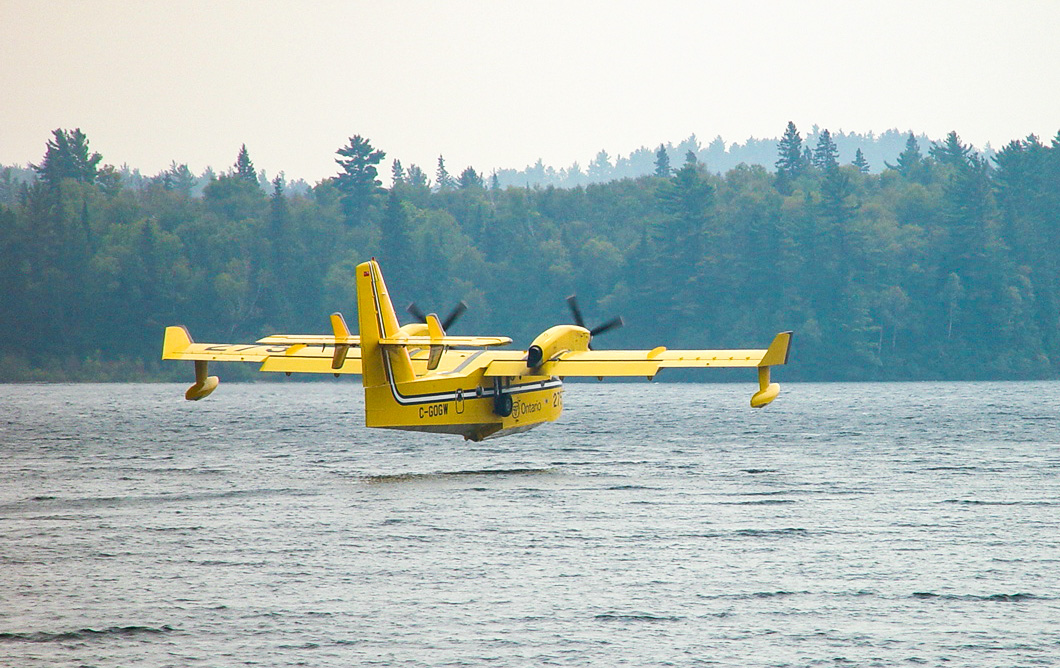
 The Ontario Public Service Employees Union (OPSEU) is calling on the province to increase wages for water bomber pilots, as a shortage of pilots has led to the grounding of some aircraft. OPSEU said in a news release that pilots it represents have “resoundingly rejected an offer that would have made Ontario second to last in terms of wages for these dangerous and critical jobs.” OPSEU president JP Hornick told CBC that Ontario water bomber pilots are leaving for other provinces because they can earn better wages. “We have a government that is touting the fact that they’re purchasing six new water bomber planes, but they can’t even actually address the staffing needs that they have on the existing planes,” Hornick said. “This isn’t somebody taking off of a regular tarmac, right? They’re flying planes into the worst possible conditions, active wildfires, dipping down into lakes, filling it with water.”


 EGANVILLE, Ontario — The Government of Ontario is protecting workers and jobs in the forest sector by investing over $9.1 million in five research, innovation and modernization projects in Eastern Ontario. The investments from the Forest Biomass Program will help boost Ontario’s forest sector’s competitive advantage by creating new jobs, increasing productivity and opening up opportunities for revenue streams in new markets. …The government’s investment is supporting projects related to underused wood and mill by-products, known as forest biomass. …These projects will help create good-paying local jobs while supporting the delivery of high-quality, made-in-Ontario products to market at a lower cost. In addition, they will strengthen Eastern Ontario’s economy by creating added demand for the harvesting, hauling and trucking industries, and develop new opportunities for Indigenous communities to participate in the growing forestry industry.

 Halifax spent more than $160,000 on the wrong type of wildfire protective gear, and the union for municipal firefighters says the mix-up is just one example that the department is not properly preparing for wildfires. In the aftermath of the
  Ontario Forest Fires says there are now six forest fires in the northeast region after four new ones were discovered Monday. One of the fires is under control while the other five are being held, the group said in its daily update on the area’s forest fire situation. “The fire hazard is low across the central and southern section of the region and moderate to high with a few pockets of extreme values across the northern section of the northeast region,” the update said. Wildland fires can affect communities when they occur in or near neighbourhoods near forested areas. The FireSmart program offers tangible tips on how to mitigate the risk of wildland fires spreading to your home, cottage, or community. “Aviation, Forest Fire and Emergency Services would like to remind the public to use caution when performing any outdoor burning,” the update said.
 The province’s biggest-ever forest fire is now considered unlikely to spread beyond its existing boundaries. The 196,000-hectare Red Lake 12 was declared “being held” by the Ministry of Natural Resources on Sunday. The MNR described it as “a significant milestone” for the fire that prompted the evacuation of both Deer Lake and Sandy Lake First Nations. Eighteen firefighting crews supported by seven helicopters are still assigned the task of bringing the fire under complete control, but some other equipment has now been demobilized. Logistic support staff will be shipping firefighting apparatus out of Deer Lake and Sandy Lake over the next few days.
  Recent rainfall has reduced the wildfire hazard across northwestern Ontario, though the region’s largest wildfire is now more than 194,000 hectares large. Red Lake 12 — the fire that has forced community evacuations in Deer Lake First Nation and Sandy Lake First Nation — remains not under control. However, precipitation and cooler temperatures have given FireRangers more breathing room over the past few days and have also reduced smoke levels. However, thunderstorms this past weekend have created the potential for holdover fires caused by lightning, which crews will be monitoring over the next week. Red Lake 12 has 23 firefighting crews assigned to three divisions on the fire’s south and eastern perimeters, supported by 18 helicopters, including four heavy helicopters with increased bucketing capacity, Ontario Forest Fires said in its latest update.