 It just might be Toronto’s most unlikely tourist attraction. It is pipsqueak-ish in size, not much taller than a single storey of a house. Its branches are scrawny and, at this time of year, empty of leaves, buds or nesting birds. It even has steep competition from its own neighbours just south of Trinity Bellwoods, such as the towering maple across the road and the elegant evergreen up the street. But this young Eastern Redbud is the little tree that could. The tree — its name is Rodney, the owners will tell you — has become an oddball local celebrity. Since being planted less than five years ago, Rodney has already gotten its own Google Maps pin, visits from tourists around the world and a handful of viral social media posts in recent days that have sent this unsuspecting tree’s celebrity into the arboreal stratosphere.

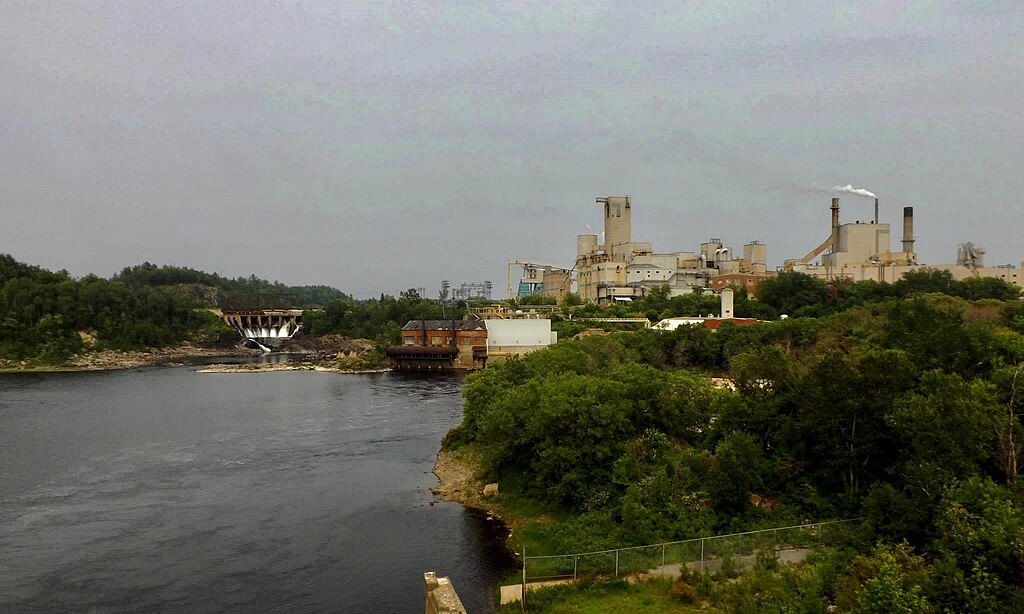

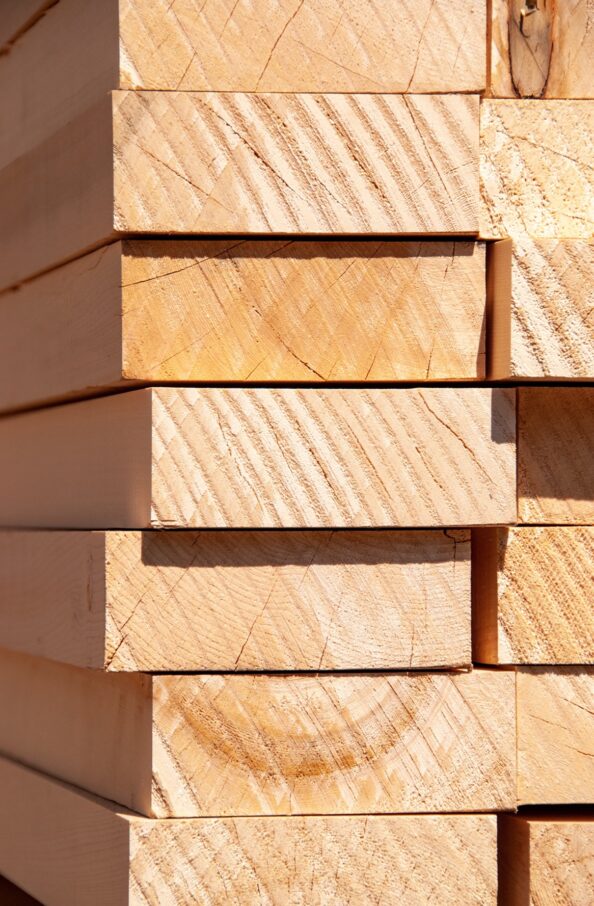 SAGUENAY, QUE. — Wood, as well as aluminum, are economic drivers in Quebec’s Saguenay-Lac-St-Jean region north of Quebec City. The … looming 25 per cent tariffs are leaving businesses in Saguenay-Lac-St-Jean bracing for impact. Inotech, a company that specializes in manufacturing equipment for the wood industry, said the economic disruption started in early February, when Trump had initially promised to impose tariffs, before delaying them. “In Quebec, the entire wood market was paralyzed,” said Michel Marceau, the company’s CEO. “People are waiting to see what will happen and during this time, no one is investing,” added Michael Dufour, Inotech’s sales director. A recent study from the Canadian Chamber of Commerce identified Saguenay and Drummondville — a city northeast of Montreal — among the Canadian cities most vulnerable to U.S. tariffs.

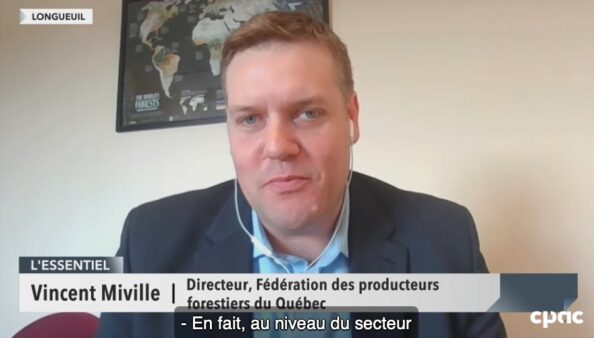




 MONTREAL — Stella-Jones announced financial results for its fourth quarter and year ended December 31, 2024. Sales for the fourth quarter of 2024 amounted to $730 million, up 6% from sales of $688 million for the same period in 2023. …Net income for the period amounted to $52 million compared with $56 million in the corresponding period of 2023. …Sales for the year ended December 31, 2024 reached $3,469 million, up 5%, versus sales of $3,319 million in 2023. Net income in 2024 was $319 million, compared to net income of $326 million in 2023. Despite the lower net income, earnings per share in 2024 was higher at $5.66 versus $5.62 in 2023 due to the continued repurchase of shares. …Eric Vachon, CEO of Stella-Jones, “We achieved solid results in our infrastructure product categories, even in the face of softer market demand. We acquired new customers, maintained our expanded EBITDA margin of over 18%, and delivered strong operating cashflows.”

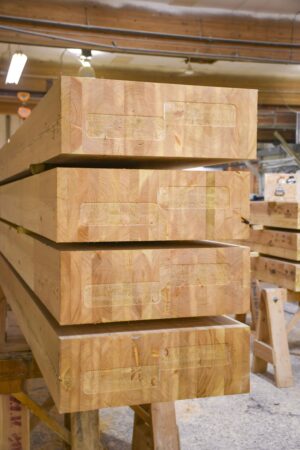 EAST HANTS, Nova Scotia — The Honourable Kody Blois, Minister of Agriculture and Agri-Food, announced federal funding for MTC Mass Timber Company (MTC) to support its move to technology-driven manufacturing that will create high-value mass timber products in Nova Scotia. Through an investment of $500,000, MTC will advance the detailed design of Canada’s first large-scale, clear-span mass timber manufacturing structure that would house a new industrial plant. Once constructed, MTC will be Canada’s first vertically integrated mass timber manufacturer in Atlantic Canada, allowing further growth of the region’s offsite building construction sector and improving access to housing for Nova Scotians. MTC was also conditionally approved for $10 million in federal support, subject to the required due diligence measures, and the negotiation of a final agreement.




 Gatineau, Quebec — Natural Resources Canada announced more than $16 million in funding for four tree-planting projects that will bring environmental, health and social benefits to both urban and rural communities across the province of Quebec. The City of Gatineau and the City of Saint-Jean-sur-Richelieu are receiving funding for urban tree-planting projects that will plant new trees on public lands, helping to capture carbon, increase biodiversity and cool areas vulnerable to extreme heat. …These projects are being supported in part by Canada’s 2 Billion Trees (2BT) program. This program is dedicated to working with governments and organizations across the country to support the expansion of Canada’s forests while creating sustainable jobs in communities.
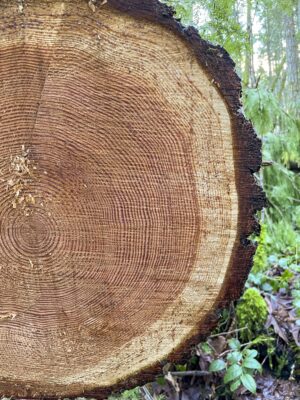 Simcoe County forests are growing — and not just up. Councillors got a brief update Tuesday on the county’s forest management activities last year, as well as finding out what the future holds as the county moves into its 103rd year operating the local forest system… The fact the county has been managing these forests for more than a century is “quite exceptional,” Graeme Davis, who works as a forester for the county, said during Tuesday’s committee of the whole meeting… Of particular note is that the county forests are very active and working forests, Davis added. While harvesting does play an important role, Davis said it’s also important to note that they are about much more than forest harvesting — they also provide “incredible” recreational uses.
 …When the Terrace Bay pulp mill opened, an effluent canal was built to connect with Blackbird Creek — a convenient way to send its liquid waste into Lake Superior. It wasn’t until the Great Lakes Water Quality Agreement was signed in 1972 that researchers started to focus on the impact industry was having on the Great Lakes. Following that agreement, in 1987 Jackfish Bay and 42 other sites across the Great Lakes in Canada and the U.S. were officially listed as areas of concern. New guidelines were created for discharging effluent into the Great Lakes and their tributaries, and remedial action plans were proposed. But the use of Blackbird Creek as an effluent canal was grandfathered into the Terrace Bay mill’s operations. When it first opened, the mill owner was entitled to choose where to monitor the receiving environment for its effluent. They chose Moberly Bay, the smaller bay at the mouth of Blackbird Creek, on Jackfish Bay.
 .JPG;w=960)
 QUÉBEC – The Ministry of Environment and Climate Change announced the signing of a Canada-Quebec agreement to advance the protection and conservation of nature throughout Quebec. The Government of Canada will invest up to $100 million between now and 2027 to support the objectives of Quebec’s 2030 Nature Plan and Canada’s 2030 Nature Strategy. This nature agreement reflects both governments’ commitment to implementing the Kunming-Montréal Global Biodiversity Framework and establishes a series of objectives to achieve this: Create and expand protected and conserved areas, and accelerate the conservation of natural environments on private land in southern Quebec, including through the implementation of urban park projects; Take action to address threats to biodiversity, better protect threatened or vulnerable species, and foster the recovery of at-risk species; Control invasive alien species; and Support Indigenous leadership in biodiversity conservation.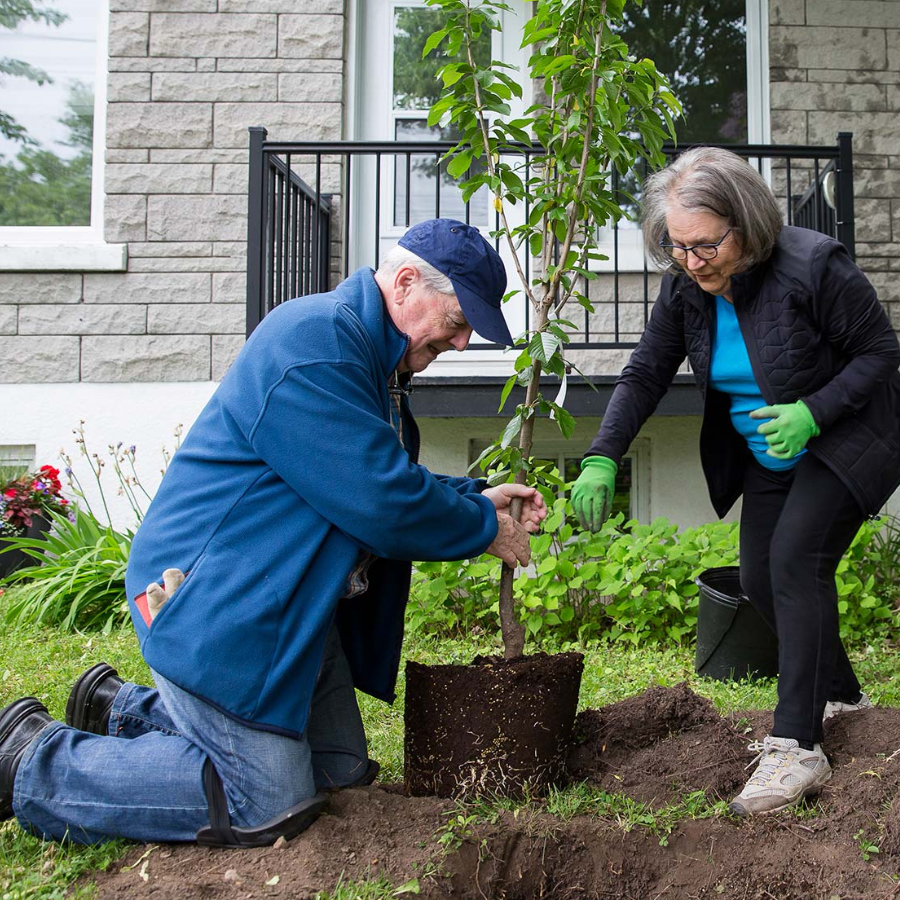



 MONCTON, New Brunswick –
 Dear Premier Houston, On January 21st, you sent a letter to your caucus addressing potential actions your government could take in response to US President Trump’s threat of tariffs, later made available in the Chronicle Herald. We are extremely concerned with some of the content of your letter …as well as the disrespectful way you have described the interests of Nova Scotians and the environmental groups that represent them, referring to opposition voices to unsustainable resource extraction activities as “special interest” groups. …we are left wondering if your term “special interest” group refers only to organizations based in Halifax, or urban areas in general, or perhaps only to organizations led by scientists and other experts in environmental fields. In this case, where does Nature Nova Scotia fall? Our staff and board are rural Nova Scotians, some of us woodlot owners, and foresters, but we are also scientists, and we are certainly environmentalists.

 …”We’re focused on … looking at clean fuel for the power plant, and attracting industries that use clean fuel to produce a value-added product,” said Denis Caron, the president and CEO of the Port of Belledune in New Brunswick. …The Conservation Council of New Brunswick is “first and foremost … happy” the port wants to transition away from fossil fuels to more renewable technologies, said Moe Qureshi, director of climate research and policy. But it’s “not very happy” about the biomass plan for N.B. Power’s Belledune generating station. Burning wood isn’t an efficient way to generate electricity, Qureshi said, and it would be difficult to regrow trees at the rate they are burnt up as wood pellets. …N.B. Power is looking at using black wood pellets at Belledune, Caron said. These are more energy dense and similar to coal, and may not require any refitting or capital spending at the power plant.