 A leading clean-technology company looks to be the first tenant of a proposed bio-hub complex at the former Espanola pulp and paper mill. CHAR Technologies is focusing on setting up shop at the idled Espanola site to produce renewable natural gas and a bio-coal product from residual wood waste. The innovative Toronto company has teamed up with the BMI Group, the property’s pending new owners, to be co-developers in creating a renewable energy production facility at the mill site, now being dubbed Bioveld North. BMI is in the process of buying the property from Domtar, which closed the mill in 2023. The deal is expected to close this month. Last week, the two companies inked a “strategic partnership” agreement that involves BMI making a $2-million investment in CHAR to become a major shareholder and help fast-track CHAR’s flagship Thorold facility into commercial production later this year.
Related coverage: New products, new name, new life for the Domtar Mill in Espanola
 The Ford government is planning to impose new rules on how local governments greenlight development projects, pushing the changes on municipalities as the province struggles to meet its self-imposed goal of building 1.5 million homes by 2031. The government is relying on a series of changes to Ontario’s planning rules, like reducing studies developers have to undertake and standardizing development charges, in a bid to speed up homebuilding. Minister of Municipal Affairs and Housing Rob Flack is set to table the legislation next week, with changes including reducing requirements for builders to conduct some municipally-focused studies, allowing builders to bypass some city committees and a raft of changes to the fees developers pay to local governments. …The legislation would give the Ford government the ability to pare down the list of requirements for a development application, establish which studies would be required and force municipalities to accept certified studies presented by the developer.
 As the next step in its plan to protect Ontario workers in the face of tariffs and economic uncertainty, the provincial government is expanding its Skills Development Fund (SDF) by nearly $1 billion over the next three years, for a total of $2.5 billion. This funding will help train and reskill Ontario workers, including those directly impacted by layoffs resulting from tariffs and ensure they have the necessary support to find good-paying jobs and help strengthen Ontario’s economy. “We’re already seeing the impact of President Trump’s tariffs and the economic uncertainty he has created on Ontario workers,” said Premier Doug Ford. “Today’s announcement of a further $1 billion in SDF funding is just the latest step in our plan to protect Ontario by investing in workers and making sure they have the support they need to succeed, no matter what comes our way.”




 MONTREAL — Stella-Jones announced financial results for its first quarter ended March 31, 2025. Highlights include: Sales of $773 million, relatively unchanged from Q1 2024; Operating income of $143 million, including insurance settlement of $38 million; EBITDA of $179 million, or 23.2% margin; Acquisition post-quarter of a steel transmission structure manufacturer, aligned with strategy to support North American infrastructure. …Eric Vachon, President and Chief Executive Officer of Stella-Jones said “Though macroeconomic headwinds continue to impact volume growth, at this stage we remain confident in our ability to achieve our financial objectives. …“The Company entered into a definitive agreement to acquire Locwel., a leading manufacturer of lattice towers and steel poles for electrical transmission. This transaction marks a step forward in Stella-Jones’ long-term vision, allowing us to enhance our infrastructure offering and establish a presence in the growing steel transmission structure industry.”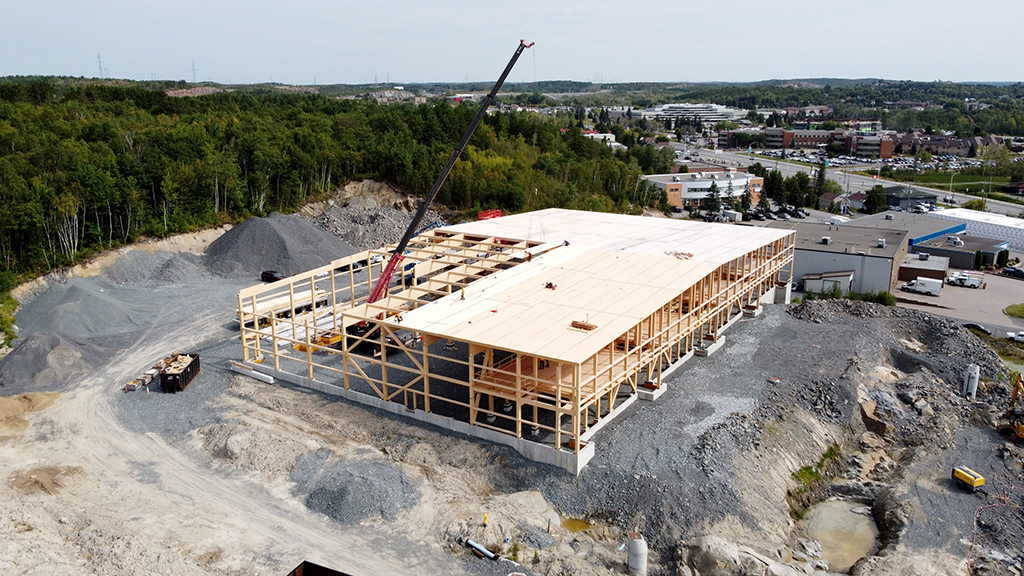



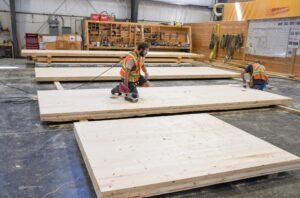 To reach Ontario’s bold goal of 1.5 million homes by 2031… we have a proven solution — and much of what we need, from innovative building techniques to mass timber and Canadian steel, is right here in Ontario’s backyard. …The Ontario Real Estate Association (OREA) released a new policy report, titled Building More, Building Faster, outlining the importance of embracing factory-built homes as a key part of the solution to address Ontario’s ongoing housing supply and affordability crisis. …Factory-built, or prefabricated housing, is a fast-growing area of homebuilding where homes are constructed in a factory — often using prefabricated 3D components — and assembled at their final address. …OREA’s new report highlights five policy recommendations that would cut red tape and create favourable conditions for investment to significantly boost factory-built housing construction with “Made-in-Ontario” solutions that can eventually scale nationally.
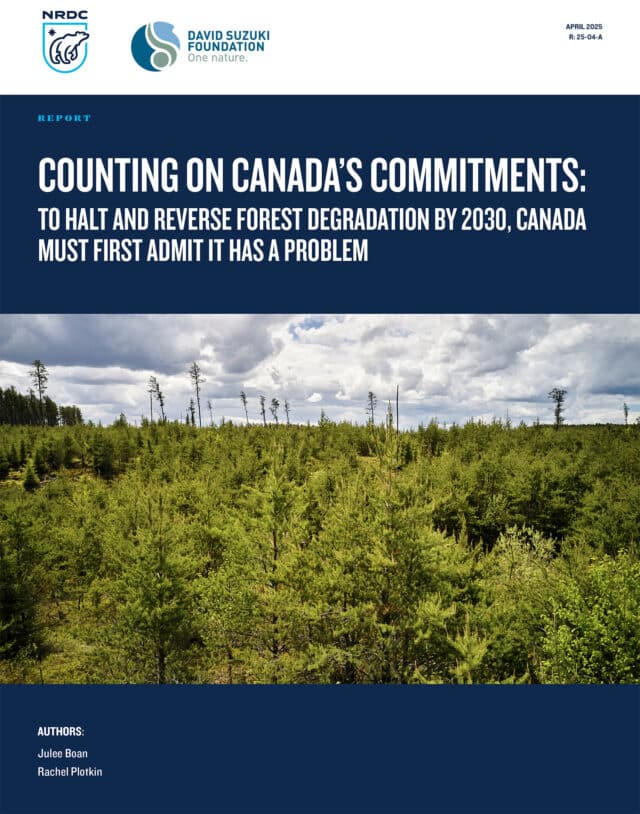 THUNDER BAY — The health of Canada’s forests is an issue if the county is to meet its climate targets, according to a recent study. Co-authored by Julee Boan, partnership director for the Global Nature International Program at the Natural Resources Defense Council, with Rachel Plotkin, the boreal project manager at the David Suzuki Foundation,



 Favourable winds and provincial firefighting efforts have led to the cancellation of a stage one evacuation for Wabaseemoong Independent Nations as a large forest fire burns nearby. The fire, known as Kenora 14, was discovered on Thursday 12 kilometres from Wabaseemoong. It has since grown to more than 1,000 hectares in size, and is not under control. “We had another update meeting (Sunday) morning, and it looked promising that we won’t have to do any evacuation,” said Waylon Scott, chief of Wabaseemoong. “We were at the midst of doing a stage one evacuation, which is basically the vulnerable population.” Scott said the evacuation has now been put on hold. Chris Marchand, fire information officer with Ontario’s Aviation, Forest Fire and Emergency Services (AFFES), said southerly winds have kept the fire from advancing any closer to Wabaseemoong, and helped keep smoke out of the community.
 KENORA — The largest wildfire of the season in Northwestern Ontario has consumed 1,300 hectares of forest, but Ministry of Natural Resources crews have been aided by more favourable weather conditions. Heading into the weekend, there were concerns about the fire’s proximity to Wabaseemoong Independent Nations, as it was only 12 kilometres to the south and the fire was exhibiting some extreme behaviour. However, there was minimal growth on the fire’s perimeter on Saturday, and the wind changed direction, blowing from the south to direct fire activity and smoke away from the community. The MNR expects southerly winds will persist for a few days.
 ATIKOKAN — A forest fire forced the closure of a section of Highway 11 in Northwestern Ontario. Ontario 511 reported the closure of both lanes of the highway at 5:27 pm EDT Monday. The road was blocked between Highway 623 at Sapawe and Highway 633 near Kawene. According to witnesses at the scene, Ministry of Natural Resources waterbombers were working steadily on the fire. The MNR estimated the fire had burned 180 hectares by 8:30 pm, and listed the outbreak as “not under control.”
 Quebec’s forest fire prevention agency says it is sending reinforcements to Ontario and Saskatchewan to help teams fight several forest and brush fires. Two CL-415 firefighting aircraft and their crews will head to Dryden, Ont., while two other of the same aircraft will head to Meadow Lake, Sask. Quebec’s forest fire prevention agency, known as SOPFEU, says the teams departed Sunday from Quebec City. The agency says the current situation in Quebec allows for resources to head to other provinces. In Ontario, there were six active fires burning across the province shortly before noon Sunday, including one in Haliburton, located about 170 km north of Oshawa, according to the Ministry of Natural Resources’ interactive map. The Saskatchewan Ministry of Public Safety map showed there were 18 active wildfires burning Sunday, for a total of 142 fires since the season began on April 1. There were 19 active fires burning in Saskatchewan on Saturday.