NEWFOUNDLAND — A pulp and paper mill on Newfoundland’s west coast is temporarily suspending operations due to limited fibre availability. The pause comes after forest operations stopped on Aug. 9 due to extreme fire risk. The province is fighting multiple wildfires, including five that are burning out of control. Corner Brook Pulp and Paper — owned by Kruger — said all forest operations stopped on Saturday, and operations at the mill will be put on hold starting Friday. “This decision aligns with emergency measures introduced by provincial authorities to help safeguard communities and natural resources in areas facing very high and extreme fire risk,” the company said. As of Wednesday afternoon, there were nine wildfires burning in Newfoundland and Labrador. The company said the estimated downtime will be about three weeks, and customer needs are being managed on a case-by-case basis. …The mill currently employs about 400 people.




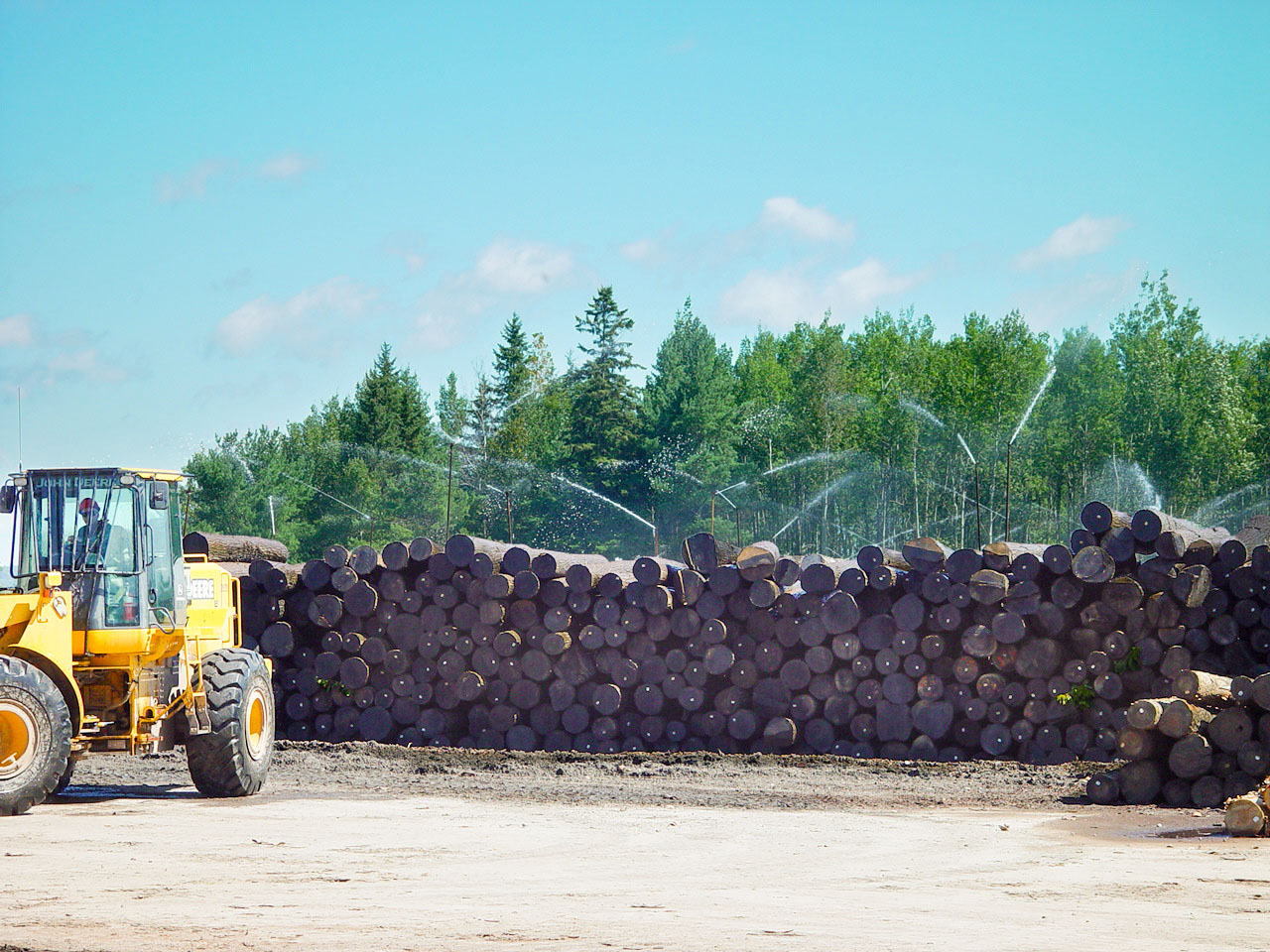 Mushkegowuk-James Bay MPP Guy Bourgouin is calling on the province to take immediate action to protect Ontario’s forestry sector in the wake of new U.S. tariffs on Canadian lumber. Bourgouin said the impact of the tariffs imposed by U.S. president Donald Trump could be devastating for northern communities that depend on the industry. “The anti-dumping tariffs imposed by Trump will devastate our lumber industry. Condemning Trump’s actions isn’t enough. We saw it with the auto sector, with steel, and now with lumber — the Premier’s ‘wait and see’ approach is leaving thousands of workers vulnerable to layoffs.” Bourgouin criticized the Ford government for failing to present a concrete strategy, calling their approach “an afterthought” for northern Ontario’s economy. …Ontario NDP party argues that using Ontario-produced wood could tackle multiple challenges at once, safeguarding forestry jobs, boosting local economies, and addressing the province’s housing shortage with “made-in-Ontario” solutions.
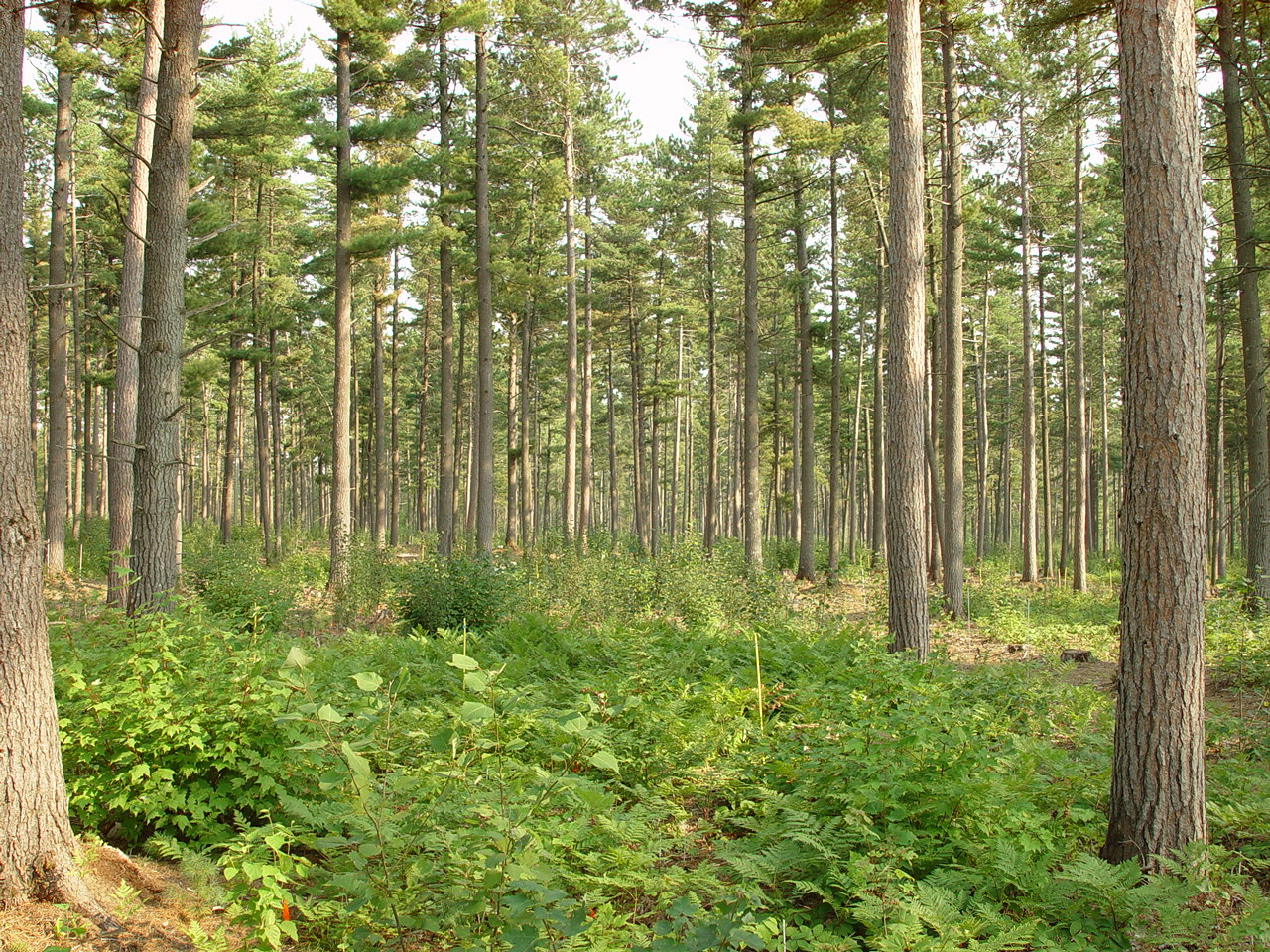 Members of the forest industry and the provincial government weighed in Monday on the Trump administration’s decision to raise tariffs on Canadian softwood lumber. Last week, the U.S. Commerce Department decided to raise anti-dumping duties on Canadian softwood to 20.56 per cent. A news release stated the province’s forest industry is “deeply troubled” by the decision to increase the duties by over 14 per cent. “Increasing anti-dumping duties to 20.56 per cent from the current average rate of 7.66 per cent is unjustified,” read the statement. “New Brunswick’s softwood lumber producers already face punitive and unfair anti-dumping and countervailing duties.” According to the statement, when combined with an anticipated rise in countervailing duties, the new increase to anti-dumping duties will mean an expected new total of 34 per cent by the middle of August.
 A cornerstone industry of northwestern Ontario is at risk, says a regional municipal group, with the decision by the U.S. Department of Commerce to raise anti-dumping duties on Canadian softwood lumber to 20.56 per cent. “Forestry is the economic lifeblood of communities across northwestern Ontario,” said Rick Dumas, president of the Northwestern Ontario Municipal Association (NOMA), in a July 28 statement. “This unjustified and protectionist action will have a direct and harmful impact on workers, families, Indigenous communities, and local economies throughout our region.” The provincial government called the U.S. commerce department’s decision to increase duties on Canadian softwood lumber exports an “unjust burden” on American consumers that will raise construction costs in the U.S., make homes less affordable, and negatively impact economic growth on both sides of the border. “We remain firm in our position that these duties should be lifted entirely, for the benefit of workers and families on both sides of the border.”
 OTTAWA — Canada’s housing crisis may get worse before it starts to show much relief, as new projections say that the number of housing starts will actually decrease this year and next. These new estimates, from both public and private sector housing forecasts, contradict political promises from all levels of government to boost supply of homes across the country. The Canada Mortgage and Housing Corporation (CMHC) forecasts that the total number of housing starts in Canada this year will be about 237,800, down from 245,367 in 2024. CMHC, a Crown corporation that acts as Canada’s national housing agency, also forecasts a drop to no more than 227,734 next year and 220,016 in 2027. Those forecasts are all below the 267,000 annual output for housing starts from 2021-22 and less than half the 480,000 that the CMHC says Canada needs to add each year over the next decade.
 EDMUNDSTON, New Brunswick – Acadian Timber reported financial and operating results for the three months ended June 28, 2025. “During the second quarter, Acadian delivered mixed results,” said Adam Sheparski, CEO. …Acadian generated sales of $17.1 million, compared to $41.2 million in the prior year period. The second quarter of 2024 included $19.7 million in carbon credit sales, while no carbon credit sales occurred in the second quarter of 2025. Acadian generated $0.8 million of Free Cash Flow during the second quarter and declared dividends of $5.2 million or $0.29 per share to our shareholders. …While the second quarter of the year is traditionally our weakest due to seasonal operating conditions, operating activity in Maine was impacted by prolonged wet conditions which significantly delayed the commencement of deliveries in the spring.
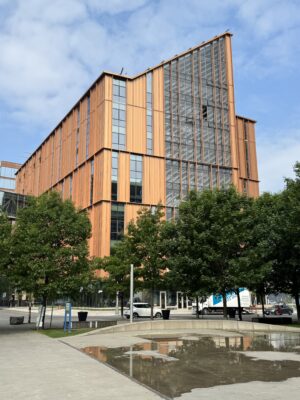 TORONTO — George Brown College’s (GBC) Limberlost Place has helped trigger major changes to Ontario’s building codes and is playing a key role in the province’s strategy to grow its mass timber construction sector, college officials say. The 10-storey academic building—Canada’s first institutional structure made from mass timber and designed to achieve net-zero carbon emissions—has served as a catalyst for the Ontario government’s Advanced Wood Construction Action Plan, unveiled on June 26. The action plan outlines four goals: Promote awareness and use of advanced wood construction; Remove regulatory barriers in codes and standards; Stimulate innovation and investment in advanced manufacturing; and Showcase successful projects to build industry confidence. Limberlost Place embodies all four goals. …By demonstrating the viability and benefits of mass timber at scale, George Brown College has positioned itself—and Ontario—as a leader in sustainable construction and advanced wood manufacturing.
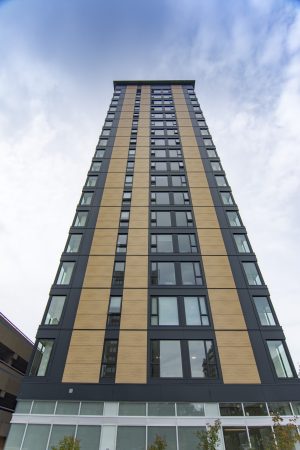 There may have been dissension surrounding the Morris Street bikeway, but the Halifax mayor and regional council found common ground with mass timber. Mayor Andy Fillmore tabled a motion at Tuesday’s council meeting to direct the chief administrative officer to prepare a staff report that, with changes to land-use bylaws and amendments to a municipal planning strategy, would knock down barriers to mass timber construction to help expedite housing builds. That would include the potential to increase the height of built-form requirements from 10 to 12 storeys for mass timber construction. The motion passed unanimously. “The principal reason (for supporting the mayor’s motion) is that this unlocks some newfound potential in local supply,” Coun. Jean St-Amand (Bedford-Wentworth) said. “I think that’s something that can have a very positive impact to the acceleration of our ability and our capacity to build.



 Worsening dry conditions across New Brunswick — which sparked a provincewide burn ban and led this week to an uncontrolled wildfire near Miramichi — have prompted the provincial government to impose restrictions on some industrial activities in forested areas. The Department of Natural Resources said in a news release Friday that some forestry operations would be banned for the next several days given the high risk of another wildfire. …From midnight on Aug. 8 to midnight on Aug. 12, harvesting, forwarding, skidding, scarification, chipping and all pre-commercial thinning and cleaning are all banned. That restriction applies to all forestry on both Crown and private lands. Trucking, road construction and maintenance, vegetation management and tree planting are allowed to continue. …Except for the possibility of a shower Saturday afternoon in northern New Brunswick, the province could see at least six more days of dry, hot weather, according to Environment Canada forecasts.

 MIRAMICHI, New Brunswick — In response to the increased wildfire risk, some forestry operations in New Brunswick will be restricted over the next couple of days. A release from the province’s Department of Natural Resources says the move is to protect both the forests and people living in the province. On Friday, the natural resources minister said in the release the restrictions will be on both Crown and private lands. “These measures will help protect our forests, animals, natural habitats and our communities, as well as our wildland fire crews,” John Herron said. As of midnight Friday, harvesting, forwarding, skidding, scarification, chipping and all pre-commercial thinning and cleaning are restricted until Tuesday. However, trucking, road construction and maintenance, vegetation management and tree planting are still getting the green light. These restrictions apply to all forested lands in the province, both private and Crown.
 Fostering inclusive economic development and ensuring that local communities, including Indigenous partners, benefit from these opportunities are key priorities for the Government of Canada. Today, Claude Guay, Parliamentary Secretary to the Minister of Energy and Natural Resources, concluded a two-day tour of Northern Quebec, where he highlighted the importance of Quebec’s mining and forest sectors in building Canada’s supply chains and export opportunities, creating good jobs, and strengthening reconciliation… Parliamentary Secretary Guay concluded the trip with a visit to Les Chantiers Chibougamau’s Kraft Pulp Mill in Lebel-sur-Quevillon and their head manufacturing plant in Chibougamau. These sites are key examples of Quebec’s forest sector excellence and innovation in modernizing the industry, accelerating affordable housing and promoting green construction using value-added Canadian wood-based products.
 Vic Fedeli, MPP for Nipissing, announced the Ontario government is investing $2,874,898 through the Skills Development Fund Training Stream to The Canadian Institute of Forestry to support 75 workers across Northern Ontario get the skills they need to land good-paying, in-demand jobs in forestry, logging, and agriculture-related services. …“As we navigate a shifting economic landscape, disrupted by U.S. tariffs, we remain laser-focused on protecting Ontario workers and job seekers,” said MPP Fedeli. “That’s why we’re investing over $2.8 million to support a project by the Canadian Institute of Forestry, in partnership with College Boréal, to train workers for in-demand roles in the forestry and resource sector, helping grow Northern Ontario’s economy.” …”These programs are equipping the next generation of forest professionals and ensuring the continued vitality of our forestry communities,” said Ken Farr, Interim Executive Director, Canadian Institute of Forestry.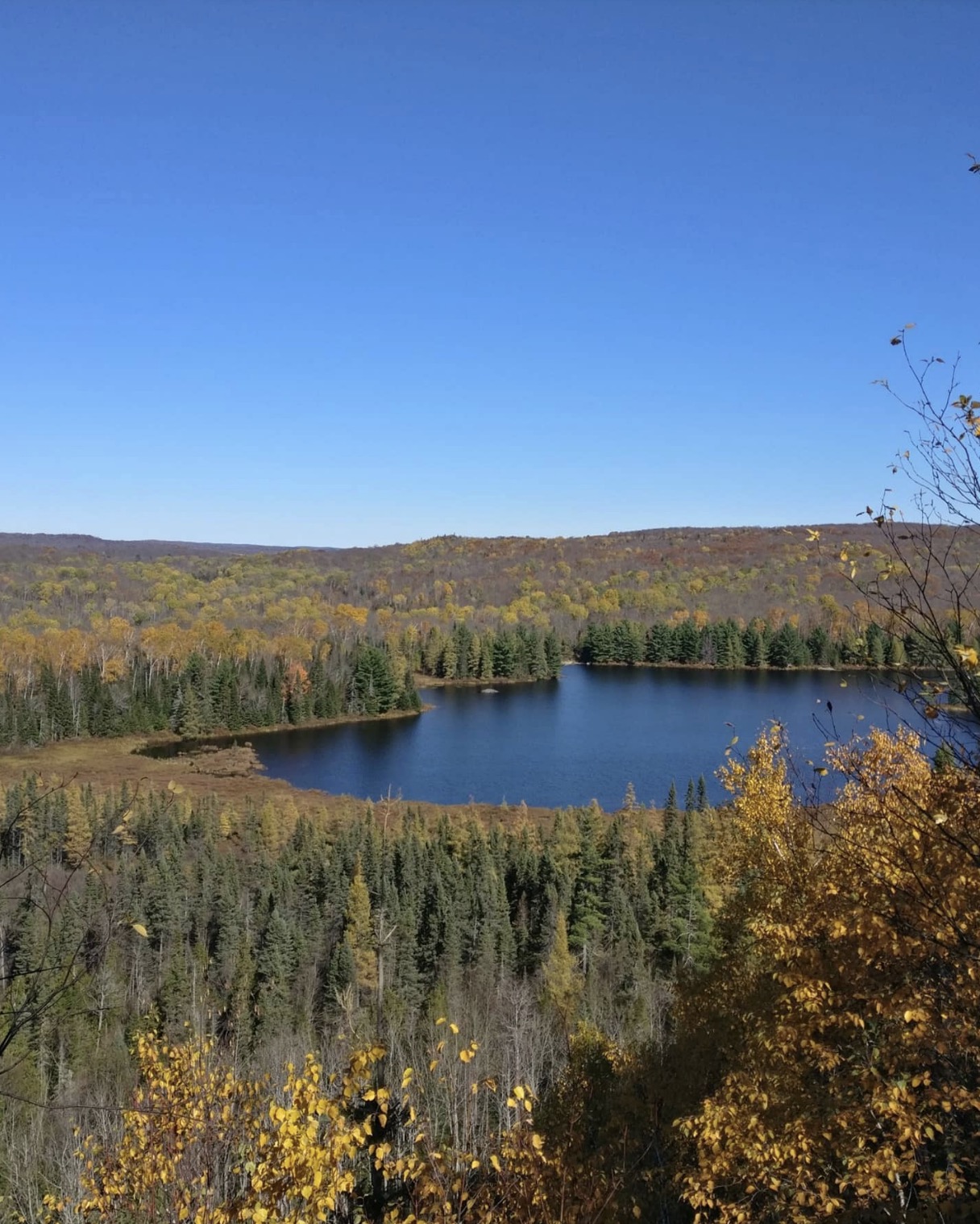
 Toronto is among the most polluted cities in the world on Monday morning as the city remains under a special air quality statement for its third consecutive day. Environment Canada said smoke from forest fires is expected to continue to impact much of southern Ontario Monday and may persist into Tuesday before finally easing. “Air quality and visibility due to wildfire smoke can fluctuate over short distances and can vary considerably from hour to hour,” said Environment Canada in a special air quality statement issued Monday morning. …Toronto ranked third in a
 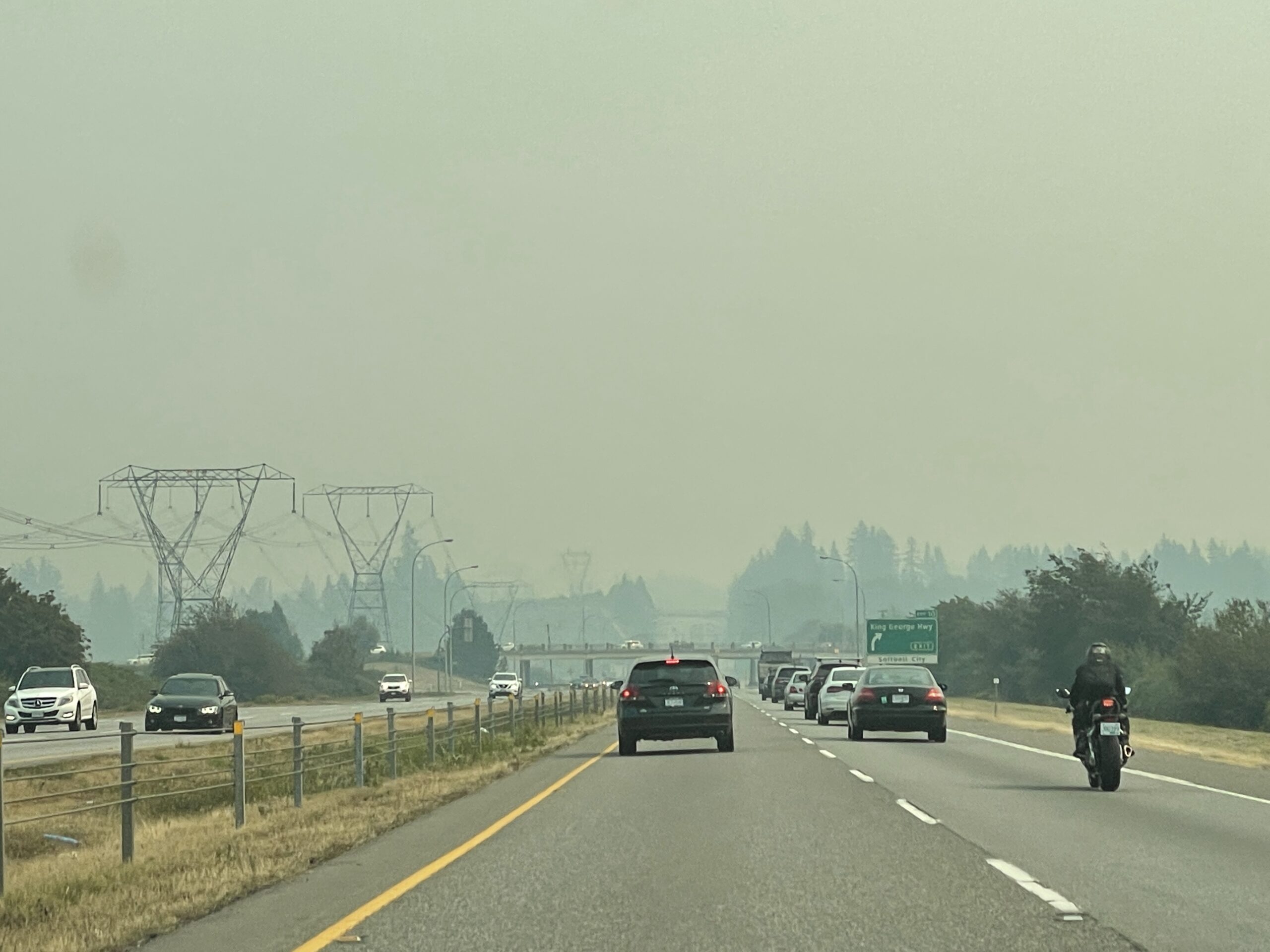 KENORA — Across Northwestern Ontario, the public is being urged to limit time outdoors due to “extremely high levels of air pollution.” The poor air quality is being caused by smoke from forest fires in the Prairies, according to an air quality warning issued by Environment Canada and the Province of Ontario Tuesday morning. The warning extends from east of Marathon — including Biigtigong Nishnaabeg — west to the Manitoba border and extends as far north as to include communities like Wunnumin Lake, Muskrat Dam and Deer Lake. Poor air quality is expected to persist through Thursday for most areas, according to the updated warning, extending the expected duration.
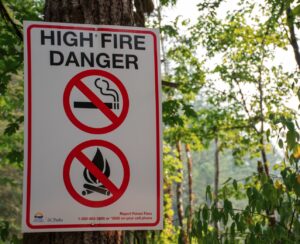 NOVA SCOTIA –More than one hundred homes have been evacuated as an out of control wildfire near West Dalhousie in Annapolis County continues to burn Friday morning. The fire broke out Wednesday on the north side of Long Lake, about 20 kilometres east of Annapolis Royal, Nova Scotia. The provincial Department of Natural Resources has said a lightning strike caused the fire. …The national weather forecaster has issued an air quality statement for Annapolis County and parts of Halifax County, saying smoke from the wildfires is reducing air quality in the area, and that people who are more likely to be impacted by smoke — including pregnant people, infants and young children, people with chronic health conditions and people who work outdoors — should avoid strenuous outdoor activities.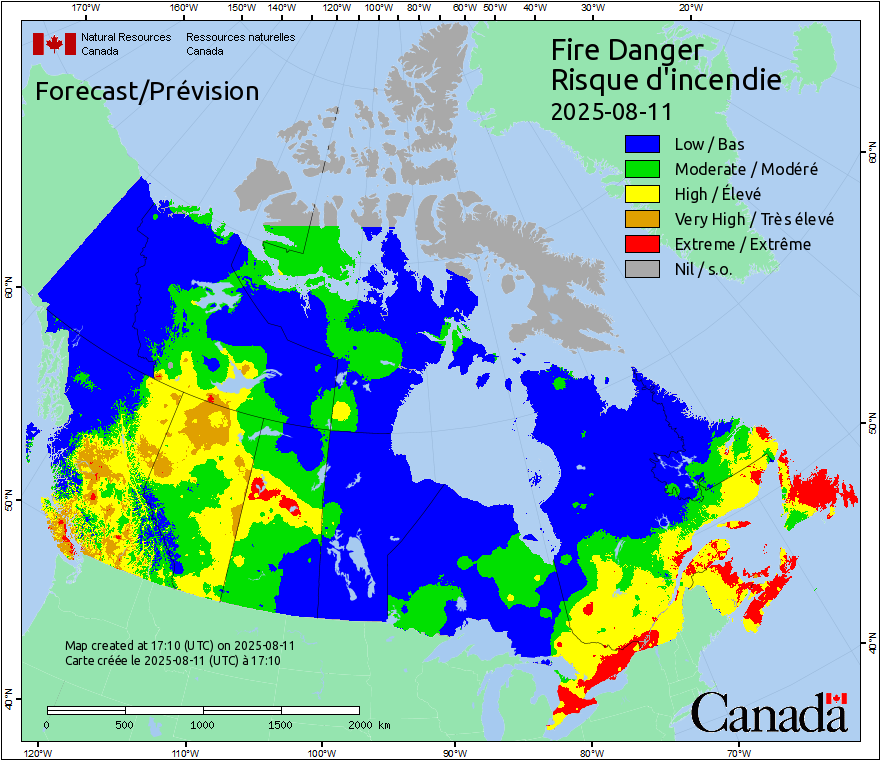
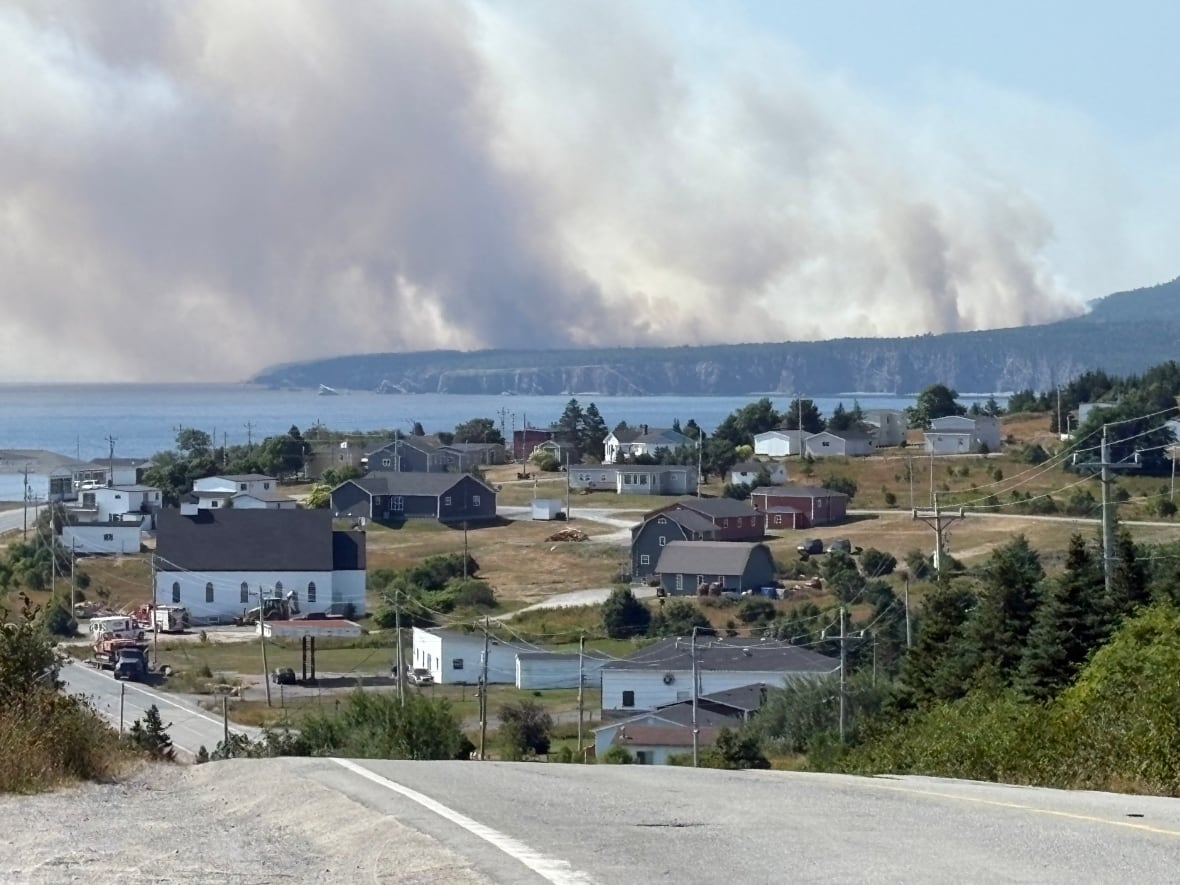
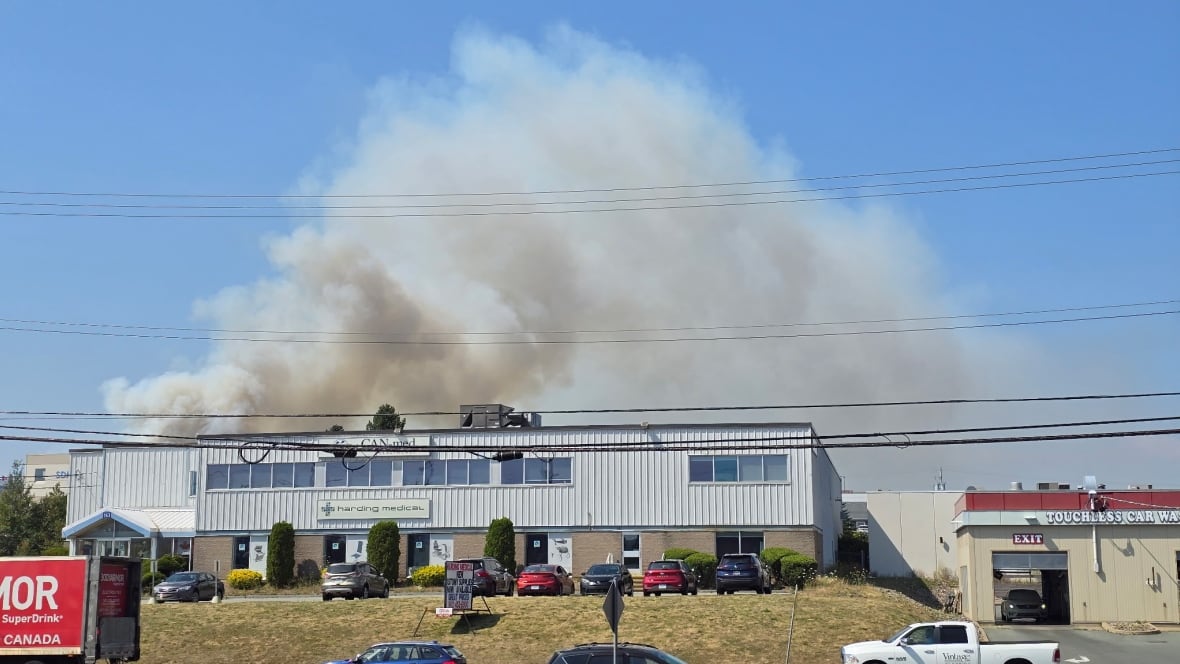


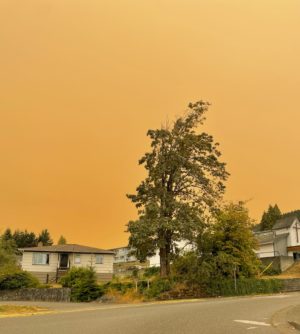 The air quality has finally improved after several days of wildfire smoke hanging over much of southern Quebec. Montreal, along with several other cities in the province, were dealt an air quality advisory starting Saturday and clearing up Monday evening. But this year, the smoke causing the poor air quality isn’t coming from within the province but rather from the fires raging in the Prairies. While Quebec is seeing a rather tame wildfire season, this year is still gearing up to be another intense season for other parts of Canada. So far, 2025 has seen wildfires consume 6.5 million hectares. Last year the number totalled 5.3 million, and in 2023 — Canada’s worst wildfire season on record — a little over 16 million hectares burned. “The thing that is quite exceptional right now is that we had three years in a row with very, very high fire activity in Canada,” said Boulanger. The three most active fire seasons since 1995 have been recorded between 2023 and 2025, he said.