
Don Pigott
Don Pigott is a forest seed and silviculture specialist whose career spans more than five decades in BC and internationally. He spent 13 years with MacMillan Bloedel’s Forest Research Division working in silviculture, tree improvement, and seed orchard management before founding Yellow Point Propagation in 1982. Through Yellow Point, Don has worked extensively in seed collection, processing and storage, tree improvement, gene conservation, ecological restoration, and international cooperative research projects. This story looks back to where that career began.
In the spring of 1968, I was between my first and second year of forestry… jobs were hard to get, but I had the good fortune to land a job with a Forest Service marking crew in Quesnel. …What followed was a summer spent moving north, living out of a rusty 1956 Dodge station wagon, and working out of tiny ranger offices nestled between lakes and mosquito swamps. …You had to be quick… as hordes of mosquitos would follow in behind you. The work was varied and often enjoyable—checking bush mills, issuing burning permits, mapping scarified cutblocks, and learning firsthand why regeneration was such a challenge in the Interior at the time. …We could often establish hundreds of plots without finding any regeneration.
Then came the cone crop. …One of the best spruce cone crops in many years, and suddenly the focus shifted to seed. Armed with a .22 rifle that proved nearly useless, an axe, and later a rotating cast of fallers and helpers, we set up camp at Mossvale Lake. …It wasn’t pretty, efficient, or cheap. …Crews came and went, equipment failed, tempers flared, whiskey appeared, and responsibility arrived faster than experience. In the end, the quota was met—and the bill was memorable. …One of the most expensive collections in the history of the Forest Service. Looking back, that first cone collection was rough, chaotic, and deeply formative… a beginning that shaped everything that followed.
 On the eve of the 81st Annual Truck Loggers Association Convention, ForestNet brings us an exclusive interview with the new TLA executive director, Peter Lister. This episode explains the practical drivers behind BC’s current forestry downturn — rising permit costs, trade duties, changing land‑use governance, and the operational impacts those forces are having on mills, contractors and communities. Peter Lister, MASc, PEng, ICD.D — Executive Director of the Truck Loggers Association with more than 35 years in the sector — outlines the immediate causes and possible responses. He details specific examples (Altmill, Crofton, 100 Mile House), quantifies key impacts (BC harvest ≈ 30 million m³; planning costs rising from $4/m³ to $14/m³ = roughly $300M additional industry cost), and explains how U.S. duties near 45% and higher operating costs make BC uncompetitive for investment.


 BLUE RIDGE, Alberta — A fire at Blue Ridge Lumber in Woodlands County started on Saturday, Jan. 10 and was contained in the evening on that day, West Fraser confirmed with the Whitecourt Star. Woodlands County posted a message on social media on Monday, Jan. 12 that there were no injuries “Emergency response procedures were immediately activated, and all employees were safely evacuated,” the statement reads. Firefighters from Blue Ridge, Goose Lake, Anselmo and Whitecourt responded. The social media post states that West Fraser is investigating the cause of the fire, as well as how much damage was done and when mill operations can re-start. …The Blue Ridge Lumber mill falls under West Fraser and has a forest management agreement with the Alberta government. The mill is located north of the Hamlet of Blue Ridge.
 Nathanson, Schachter & Thompson LLP is again ranked as a Tier 1 firm in Dispute Resolution in British Columbia by The Legal 500. We are included as one of four firms in British Columbia ranked as Tier 1. We are also the only firm in Tier 1 that received a Client Satisfaction accolade. Partners Irwin Nathanson, K.C. and Stephen Schachter, K.C. are included in the Hall of Fame category once again. They are the only two partners from the same firm included in this category. Partner Karen Carteri continues to be recognized as a Leading Partner, particularly for her work in complex shareholder and partnership disputes. Clients describe NST as a firm that “whole-heartedly embraces and delivers a hands-on and effective approach” while offering particular praise for partners Karen Carteri, Emily Hansen, Julia Lockhart and Kayla Strong.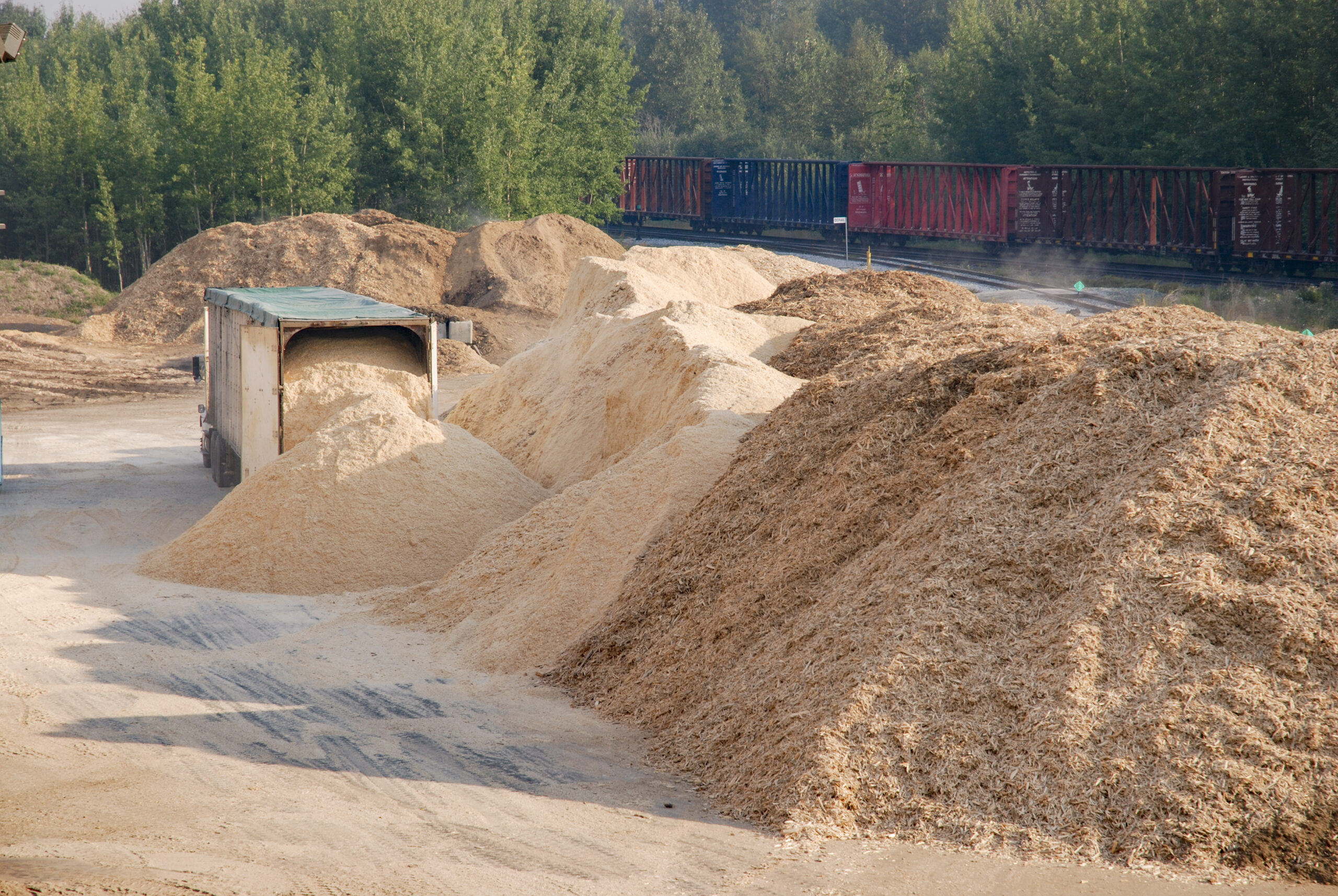


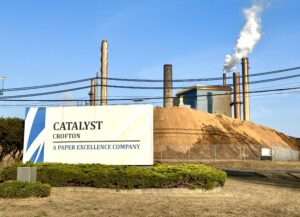 The union representing 350 Crofton mill workers facing layoffs next month wants federal money earmarked for softwood lumber workers to pay for early retirement for some of its members. Geoff Dawe, president of the Public and Private Workers of Canada, said he’s not sure why it’s taken so long for the provincial government to negotiate its share of a $50-million federal fund aimed at supporting softwood lumber workers. The fund is for income support and costs of re-training an estimated 6,000 forestry workers across the country. …Dawe wants some of that $50 million to go toward an early-retirement fund for members who will be out of work when forestry company Domtar starts laying off its Crofton workers on Feb. 3. …Dawe said the provincial and federal governments should bring back a lump-sum payment program for older mill workers that will “leave them some dignity.”

 Premier David Eby will lead a trade mission to India promoting British Columbia’s businesses, critical minerals and sustainable wood products, supporting work to build a more independent economy and creating more good jobs for people in British Columbia. … “India is a key market for B.C. with enormous opportunities for trade. This trade mission is about deepening our relationships, supporting good jobs in B.C. and strengthening our position as the economic engine of the new Canadian economy,” Premier Eby said. As India moves toward becoming the world’s third-largest economy, the Premier will highlight opportunities for sustainable forestry, clean energy and responsible mining through new partnerships that are available only in B.C. …During the mission, from Jan. 12-17, 2026, Premier Eby, along with Ravi Kahlon, Minister of Jobs and Economic Growth, will meet with government and business leaders in major centres of commerce and technology, such as New Delhi, Mumbai, Chandigarh and Bangalore.
 Since 2018, notes forestry watcher David Elstone, the British Columbia government has introduced more than 43 measures, policies, plans, systems, laws, reviews and reports about and affecting the BC forest sector. Meanwhile, there have been a series of closures and curtailments (permanent, temporary or indefinite) of sawmills and pulp mills, and thus workforce reductions. “And the fibre-supply crisis has continued to worsen, and . . . the industry is in far worse condition than ever before.” Elstone’s basic message: “Government has been busy designing change rather than figuring out solutions and moving forward. …Kim Haakstad, CEO of the BC Council of Forest Industries (COFI) echoes the analysis “There’s been a significant amount of change that hasn’t settled itself into the system, and there’s been no look at what regulatory efficiency can be achieved to make processes clearer, more transparent, and more accountable.”
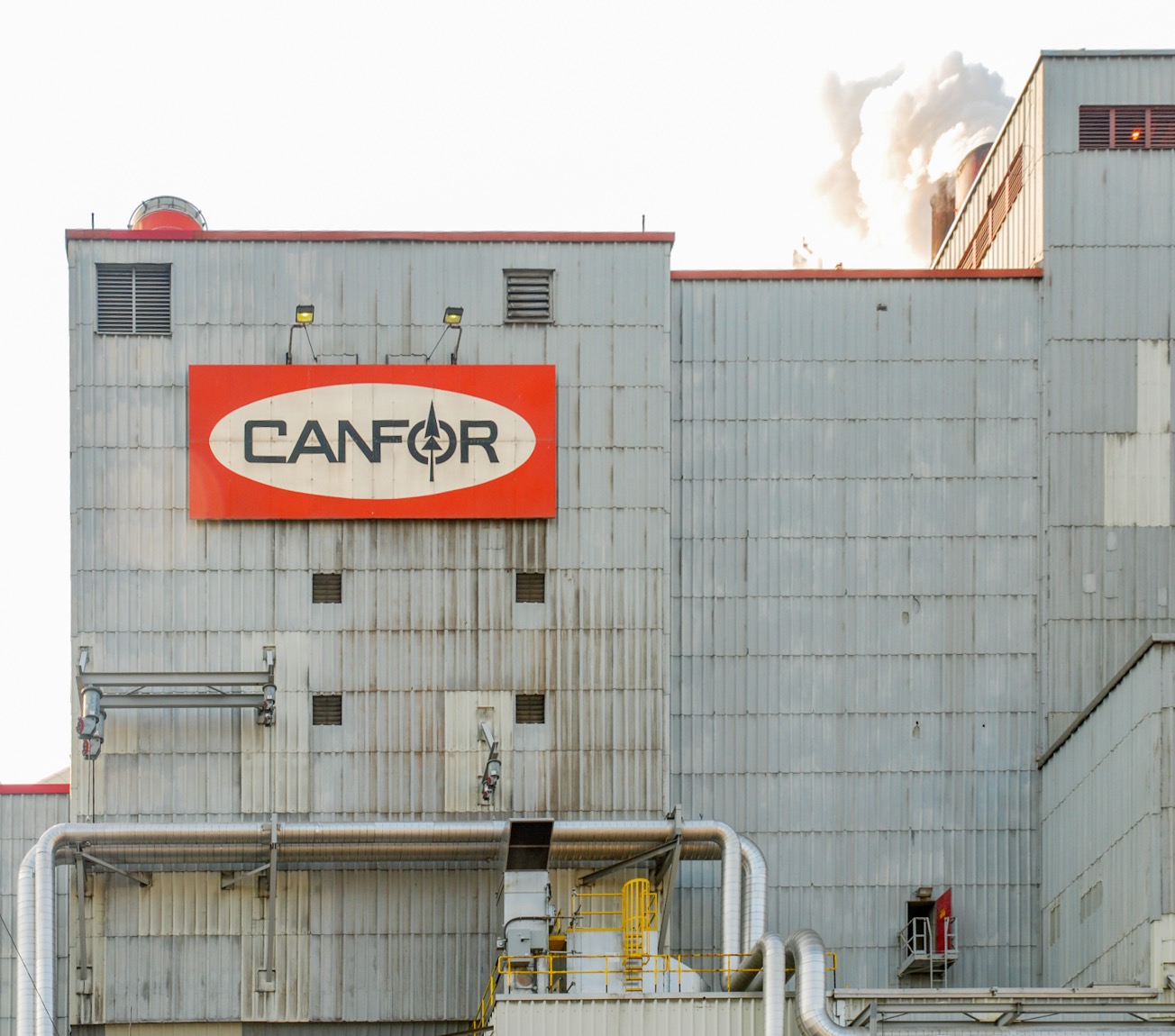 The District of Vanderhoof, says it is now feeling the full financial impacts of Canfor’s 2024 Plateau sawmill closure and is facing a substantial loss of tax revenue for 2026. Canfor closed its sawmills in both Vanderhoof and Fort St. John, B.C., in December of 2024 citing “increasing regulatory complexity, high operating costs and the inability to reliably access economically viable timber.” Kevin Moutray is the mayor of The District of Vanderhoof, says the closure will create a loss of $580,000 in tax revenue equivalent to 11 per cent of its tax base. …Recent closures include the West Fraser’s sawmill in 100 Mile House and Domtar’s permanent closing of its plump mill in Crofton on Vancouver Island. “It’s difficult and sometimes action only happens in a crisis even though you sort of, can see some of it coming,” said Kurt Niquidet, B.C. Lumber Trade Council president and B.C. Council of Forest Industries chief economist.
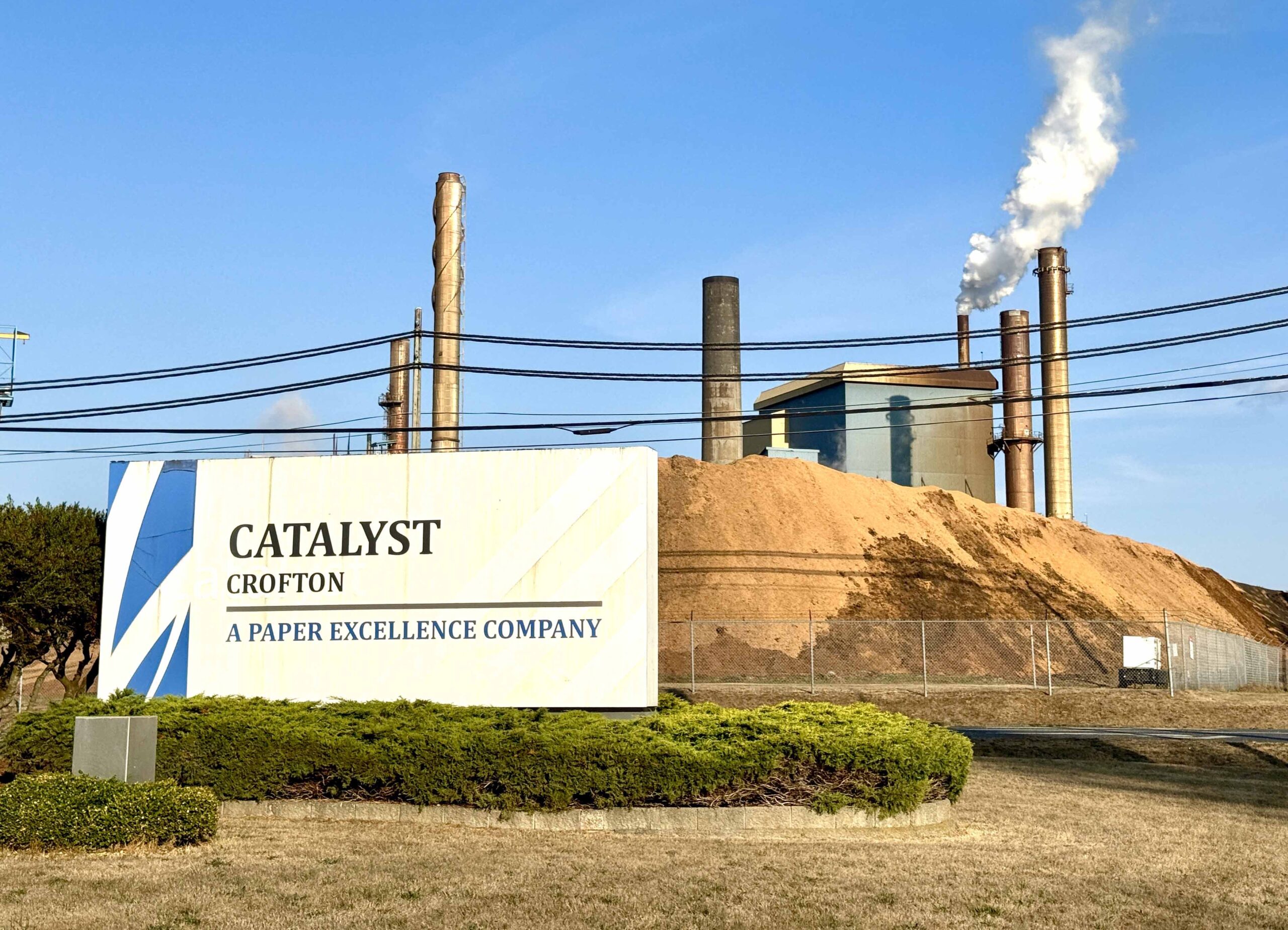 The Municipality of North Cowichan said it is hoping to reopen the Bridging to Retirement Program and lower the eligible age to increase support for workers affected by the Crofton mill closure. Mayor Rob Douglas said he has asked the premier and the minister of forests to work with the federal government to reinstate the program, which was launched in 2021. He said the program is aimed at workers over 55 who do not “relish the idea” of retraining for new careers. “We recognize workers who are in their 50s and 60s are in a tough spot and are able to access pensions,” Douglas said. “For obvious reasons some aren’t too excited about going back and getting retrained to work in a whole different field.” …Douglas said the decision rests with the province and there is no definitive timeline for when workers or the municipality could see results.
 WASHINGTON — A mandatory review of the Canada-U.S.-Mexico-Agreement on trade kicks into high gear this year as US President Trump continues his campaign to realign global trade and poach key industries from America’s closest neighbours. …Since the president’s return to the White House, however, confidence in CUSMA’s future has waned. Trade with Canada may not be front of mind for Trump, said Fen Osler Hampson, a professor of international affairs at Carleton University in Ottawa and co-chair of the Expert Group on Canada-U.S. Relations. It’s more like the “proverbial iceberg,” he said. “It’s what you don’t see that matters. And that’s the kind of hidden economic wiring of a very deep and highly interdependent relationship.” …Trump has complained repeatedly about long-standing irritants in the United States’ trade relationship with Canada — the supply management system for dairy products, the alleged subsidization of the softwood lumber sector, other non-tariff barriers.
 MACKENZIE COUNTY, Alberta — An agreement with Calgary-based PowerWood Canada Corp. will bring two new wood pellet manufacturing facilities to the Mackenzie County region in Northern Alberta, Canada. Josh Knelsen, Mackenzie County Reeve, announced Dec. 23 the agreement. “This is a leading-edge, first-of-its-kind project in Canada that turns wildfire-damaged wood into clean energy and helps reduce reliance on coal,” said Knelsen. The two facilities represent the potential for up to 300 direct jobs,” with many more across forestry, construction, transportation, and local businesses. …Construction on two sites is expected to begin by mid-2026. …The facilities will also see the introduction of Canada’s first steam explosion pellet production process – developed by leading industrial systems engineers Valmet and capable of producing black wood biofuel pellets with 94% less carbon release than coal. …PowerWood Canada plans to open a second Alberta plant and has developed expansion plans for further plants in New Brunswick and Nova Scotia.
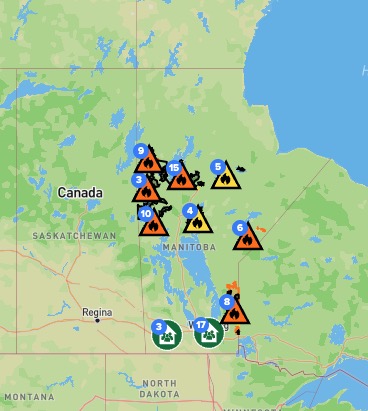 Manitobans should expect higher cabin and home insurance premiums in 2026, one expert says, after a 2025 fire season that destroyed at least 130 properties in the province and forced more than 32,000 people to leave their communities. Owners may also encounter new caps on payouts or exclusions in their policies that won’t cover certain hazards or parts of a property, or may find insurers will not provide coverage at all, said Jason Thistlethwaite, an assistant professor at the University of Waterloo’s school of environment, enterprise and development. “Insurance is a business, and they’re going to be looking to recoup those losses,” said Thistlethwaite, who studies the economic impacts of climate risk and natural disasters.

 Nine more forestry companies are being supported to modernize, innovate and diversify their product lines and fibre sources to make more high-value, made-in-BC products, and help protect and create jobs. “It’s no secret our forestry sector is facing many challenges, making these investments timely,” said Minister of Forests, Ravi Parmar. …Through the BC Manufacturing Jobs Fund, the Province is contributing $2.5 million to plan or complete capital projects. For example, Canadian Bavarian Millwork and Lumber in Chemainus will receive as much as $1.4 million to help build its new facility. …Additional investments include:

 B.C.’s GDP is forecast to increase by 1.6% this year,


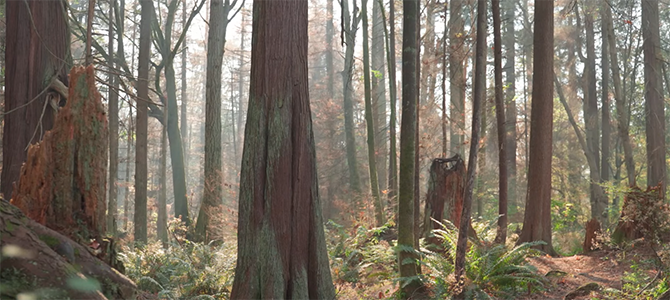

 Nearly 1,060 hectares is being added to West Twin Protected Area to increase protection of important wildlife habitat across the Robson Valley. …West Twin Protected Area was established in 2001, and together with adjacent West Twin Park, covers more than 30,000 hectares to form the only protected wildlife corridor across the Robson Valley. The area spans from the Cariboo Mountains in the south, through the main Robson Valley trench and up to the front ranges of the Rocky Mountains. The additional land improves habitat connection for caribou, moose, elk, deer, grizzly bears and many other species. The Crown land was originally identified for protection through the Robson Valley Land and Resource Management Plan, but the land had two historical mineral claims that have now been forfeited. The land also contains old-growth priority deferral areas and an existing old-growth management area.
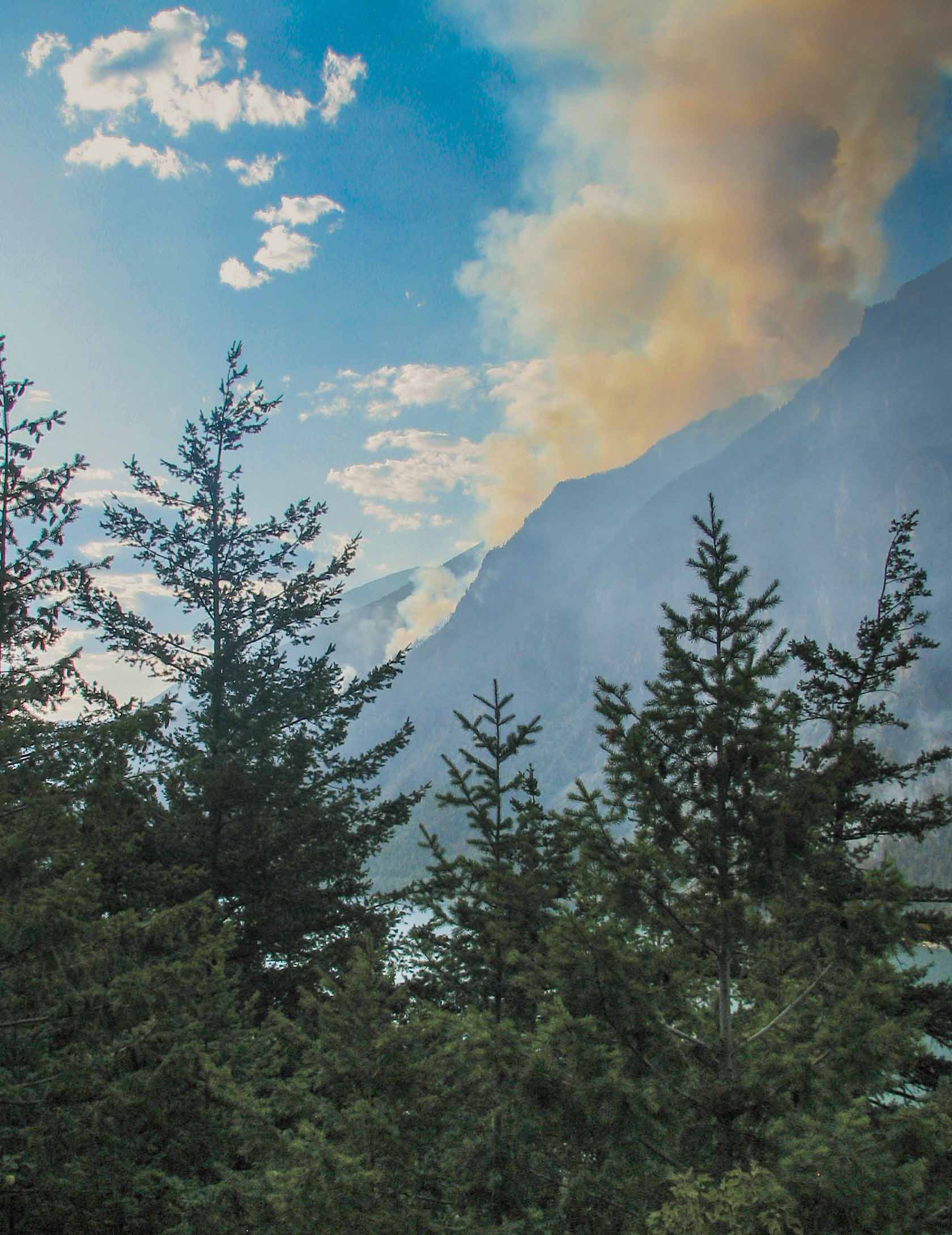 FORT ST. JOHN, B.C.— In the 2025 wildfire season, 199 wildfires were fought in Fort St. John, Fort Nelson and Dawson Creek areas in the “second-worst wildfire season in Canadian history.” The Ministry of Forests said in a news release on December 29th, 2025, the province has experienced over 1,350 wildfires burning an estimated 886,360 hectares of land since April 1st that year. In the news release, Ravi Parmar, minister of forests, said: “We’re coming off our second-worst wildfire season in Canadian history.” The Prince George Fire Centre specifically – the branch of the BC Wildfire Service (BCWS) covering northeast B.C. – recorded 354 fires in the 2025 wildfire season. …For the 2026 wildfire season, the province says it will continue to look at new technology and opportunities for better prevention and response.


 A BC judge has quashed a decision from the province to transfer a major forestry licence to an Indigenous-owned forestry company, after the government was found to have failed to uphold the “honour of the Crown” with a neighbouring nation. The Jan. 8 ruling centred on the BC Ministry of Forest’s decision to approve the transfer of a forest licence to the Kitsumkalum First Nation. The transfer, which occurred after the previous holder Skeena Sawmills entered into bankruptcy proceedings in 2023, was opposed by eight Gitanyow hereditary chiefs. … In his decision, the judge found the government oversimplified the impacts of the transfer, and relied on “hope and optimism” that the two First Nations could reach an agreement. …The Gitanyow had called on the court to quash the transfer of the forestry licence. Instead, the judge forced the province to reconsider the licence transfer while properly consulting with the Gitanyow.
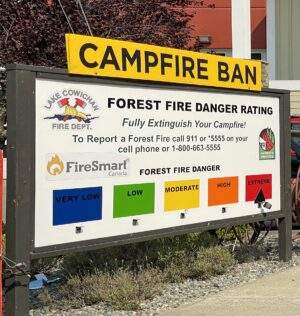
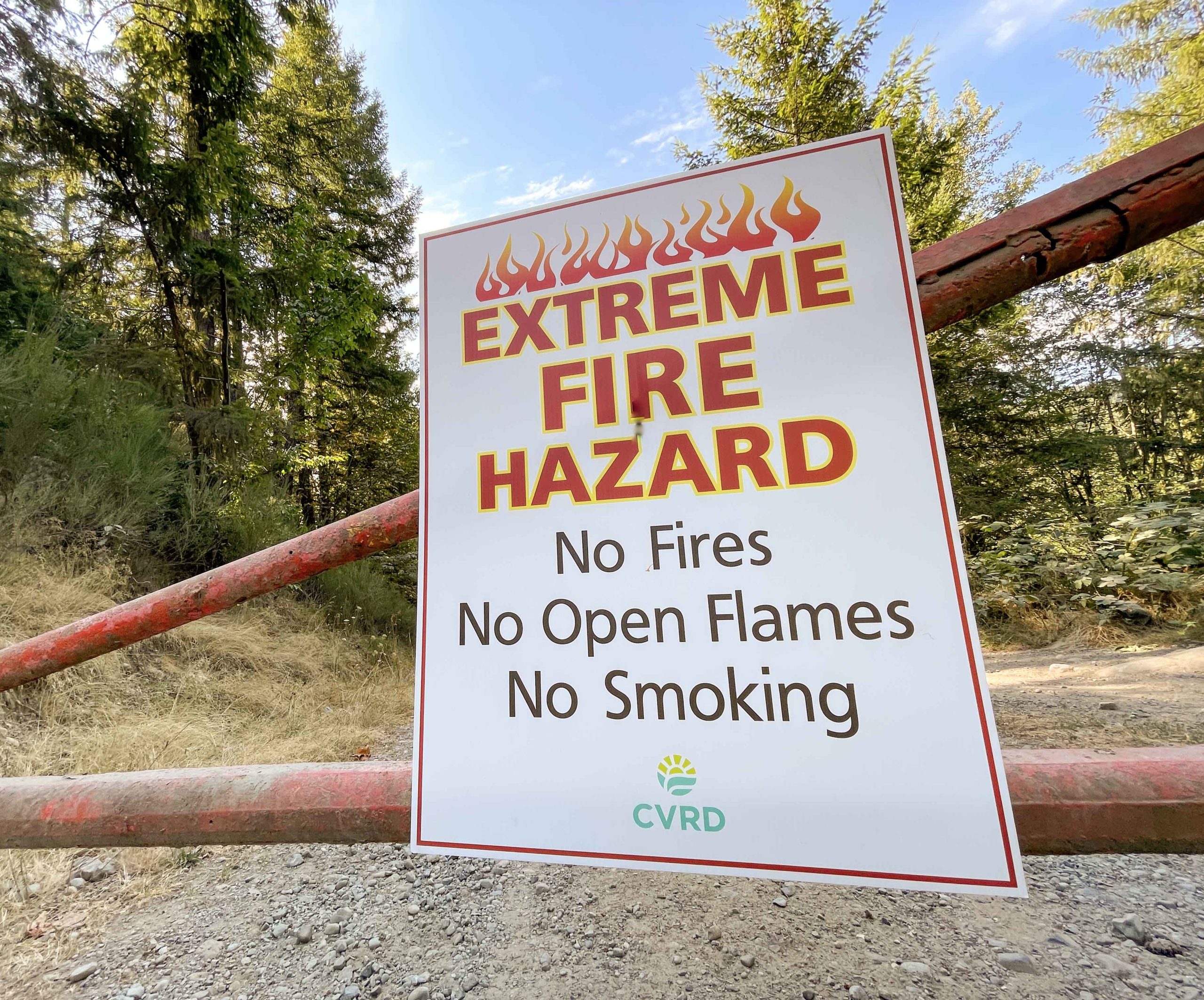 North Cowichan will hire a wildfire specialist to support wildfire-protection planning in the municipality. At its meeting on Dec. 3, council voted to allocate $95,000 in North Cowichan’s budget for 2026 for the position from the Climate Action and Energy Plan’s reserve funds, and funding for the wildfire specialist will come from general taxation in following years. As well, council decided to allocate $115,000 in the 2026 budget for the creation of a Strategic North Cowichan Wildfire Plan, with the funding also coming from CAEP reserve funds. Council adopted a resolution establishing wildfire preparedness as a strategic priority in September, and the key actions identified and recommended by staff since then include strengthening the fire department’s wildfire-response capabilities, vegetation management, FireSmart education, evacuation planning, infrastructure standards, and community volunteer initiatives.
 Three pieces of logging equipment owned by Fraser Valley Timber were torched overnight Jan. 1 into the morning of Jan. 2, putting multiple employees immediately out of work and potentially costing the company hundreds of thousands of dollars in replacement costs. …While a company spokesperson suggested to television media that the fire may be linked to nearby anti-logging protests, members of the Ada’itsx/Fairy Creek blockade denied any involvement. RCMP said investigators have not made any connection between the fire and the protest. Blockade members posted on Facebook that to assign blame to them before the facts are known “serves to vilify old-growth forest protectors without grounds.” …the Office of the Fire Commissioner brought an accelerant detection dog to the scene as part of the investigation. “…the Office of the Fire Commissioner is assisting in determining the circumstances, origin, and cause of the fires,” according to the Ministry of Public Safety and Solicitor General.
 A group protesting old-growth logging on Vancouver Island is hitting out at an “insinuation” they were involved in the suspected arson of logging equipment last week. Sgt. Kevin Mack with Lake Cowichan RCMP says officers responded to the scene of the suspected arson at a site operated by Fraser Valley Timber on Jan. 2, and they are keeping an “open eye to all possibilities.” Two grapple yarders and a log loader reportedly sustained more than $530,000 in damage in the fires… The company did not immediately respond to a request for comment, but media reports quoted a spokesman suggesting that the proximity of the protest camp wasn’t a coincidence. But the Walbran Valley Blockade protest camp says its code “explicitly prohibits violence and the damage or destruction of property.” It says it supports a full and transparent investigation and that “assigning blame before the facts are known serves to vilify forest protectors.”
 …council was about to vote to log our protected community forest. At the last moment, a chief saved the day. But we are now forewarned — our forest isn’t protected. …a new council could throw down the gauntlet. So, once again we’re asking ourselves, as a community how do we protect the Six Mountains? Now that we know our North Cowichan council can ignore our public consultation, and our vote for conservation, what can we legally do? In the next election, vote in a pro-conservation council? This is our intention, but there are no guarantees. …an extraordinary solution [exists to] protect ecosystems from human destruction. It’s called the Rights of Nature movement (RoN). …founded on indigenous ancestral reverence for nature, as sacred and sacrosanct, beyond human control and ownership… it’s the perfect solution for our Valley where we, N. Cowichan and Quw’utsun, “own” the legal right to protect the ecosystem surrounding our home.
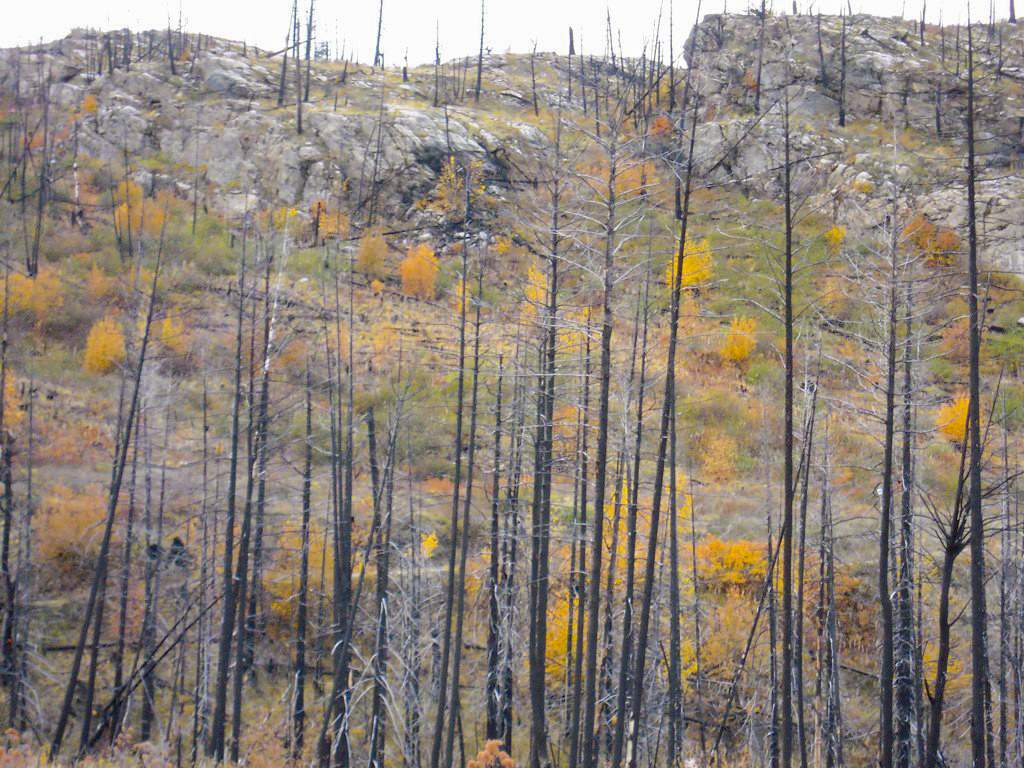 The in-creek infrastructure for the Peachland water treatment plant is at risk of a landslide in the aftermath of the summer’s Munro Lake wildfire. The
 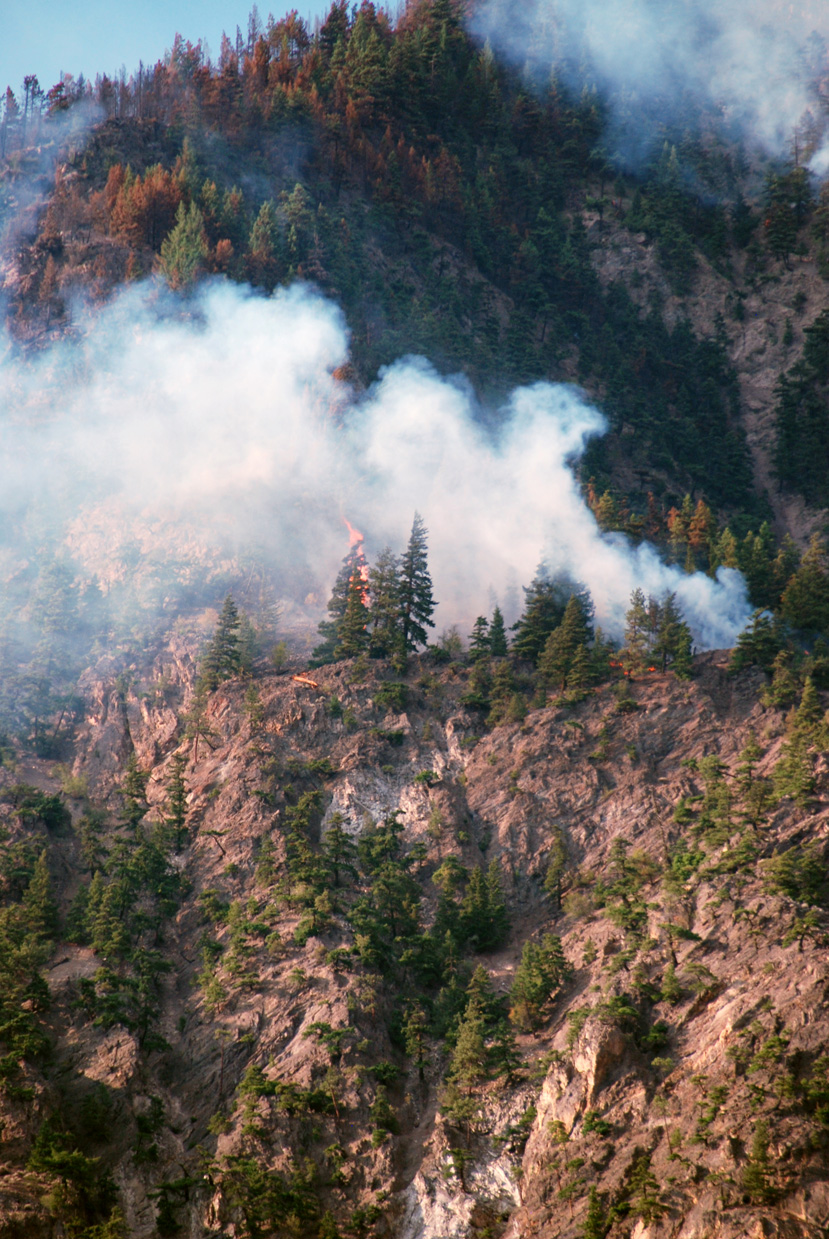 The intense 2025 wildfire season in B.C. means firefighters will face challenges in 2026 because of overwintering wildfires, also called holdover or zombie fires, that smoulder deep underground through the colder season. As they spread below the forest floor in the dried-out peat, the fires can ignite in spring, sparking new life into last season’s devastating blazes. Canada’s 2025 wildfire season was the second-worst on record after 2023, with more than 6,000 fires burning more than 83,000 square kilometres across Canada, according to the Canadian Interagency Forest Fire Centre. In B.C., the season started early because of several zombie fires in the northeast region of the province, where fire officials say overwintering fires and underlying drought combined to create challenging conditions in April and May. …Scientists say climate change is making B.C.’s wildfire season longer and more intense as drought dries out the forest floor and heat waves become stronger.
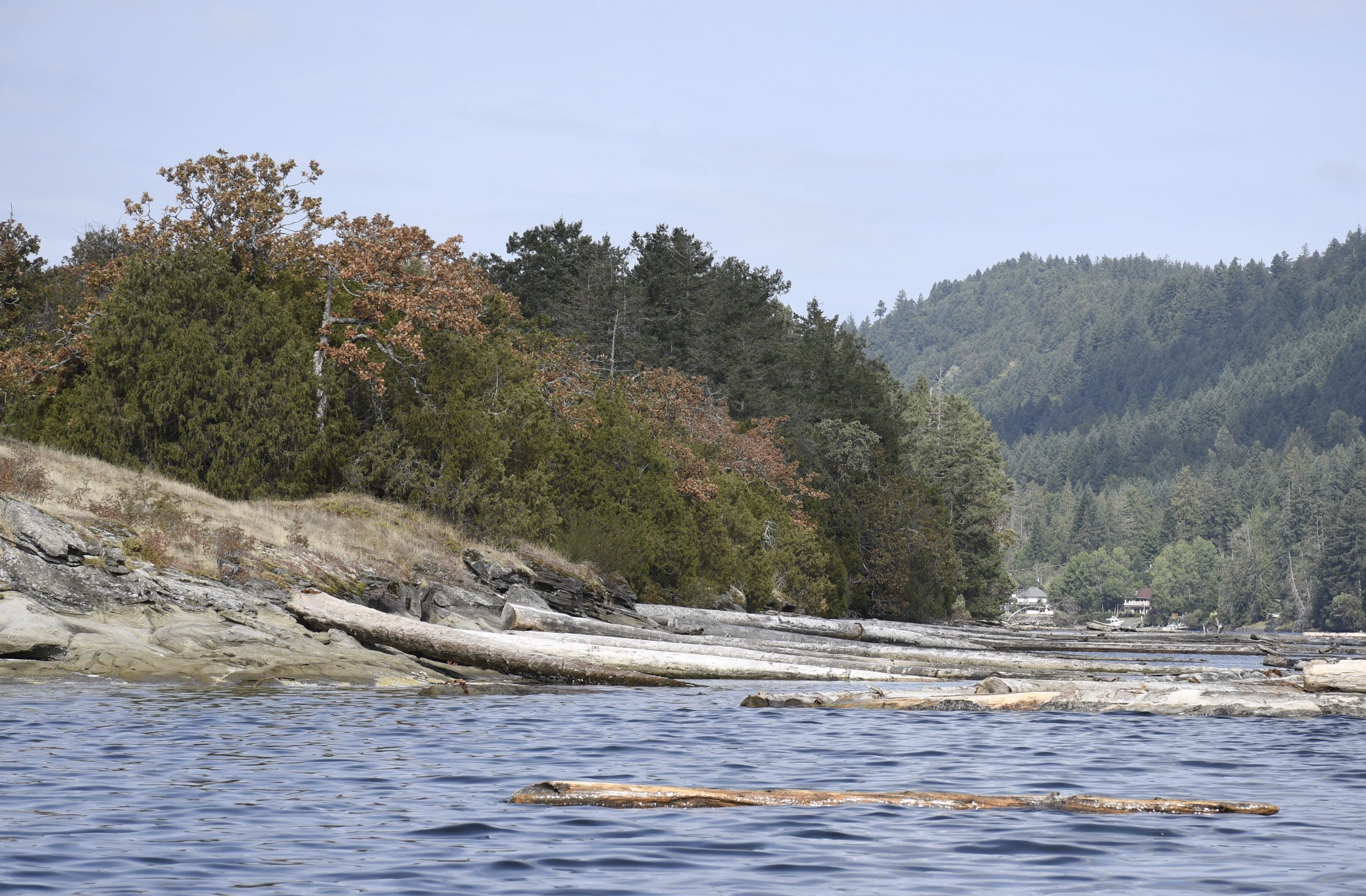 If we’ve reached the point where we’re fretting over barnacles being knocked off by drift logs, perhaps we’ve run out of real crises. A recent University of Victoria study warns that wandering logs — nature’s most passive travellers — are scraping B.C.’s intertidal ecosystems into oblivion. …I mean no disrespect to my academic descendants at UVic — my alma mater — but I can’t help recalling a time when a scientist would distinguish between data and drama. Anyone raised on this coast knows those “thundering” drift logs are as much a fixture of our marine landscape as kelp, rockweed, and yes, barnacles themselves. …Here lies the problem with this kind of “drive-by ecology.” A barnacle count taken on a single day, at a single beach, photographed from orbit, becomes a sweeping “coast-wide phenomenon.” Probability alone tells us that the fraction of shoreline simultaneously blanketed and agitated by free logs — especially those resting on sand — is marginal.
 In 2025, the BC Wildfire Service (BCWS) worked tirelessly with people and communities to fight wildfires and build community resilience throughout the province. “We’re coming off our second-worst wildfire season in Canadian history,” said Ravi Parmar, Minister of Forests. “From technology to equipment and training, all to protect people and communities, the BC Wildfire Service has shown us that they are a global leader in wildfire work. Thanks to the dedicated members working tirelessly to fight the threat of wildfire. In 2026, we will raise the bar even higher. …Since April 1, 2025, more than 1,350 wildfires burned an estimated 886,360 hectares of land in B.C. The 2025 season compared to the past five years:
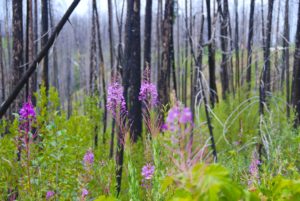 VICTORIA — The BC government says cutting red tape has allowed provincial pulp mills to more than double their use of timber salvaged from forest fires. The Ministry of Forests says in a statement that mills processed more than one million cubic metres of wildfire chips in 2024-25, up from 500,000 cubic metres in 2023, and representing about seven per cent of all processed wood. Forests Minister Ravi Parmar says that BC can’t let anything go to waste, including logs that have been burned in wildfires.” The statement says pulp mills rarely accepted burned timber before 2022, but both government and industry recognized the opportunity of turning wildfire-affected fibre into wood chips. It says that faster permitting and stronger partnerships between government and industry made it even easier to use that type of timber and the work will continue in 2026.

 The BC Conservative leader fostered fear and falsehoods in his
 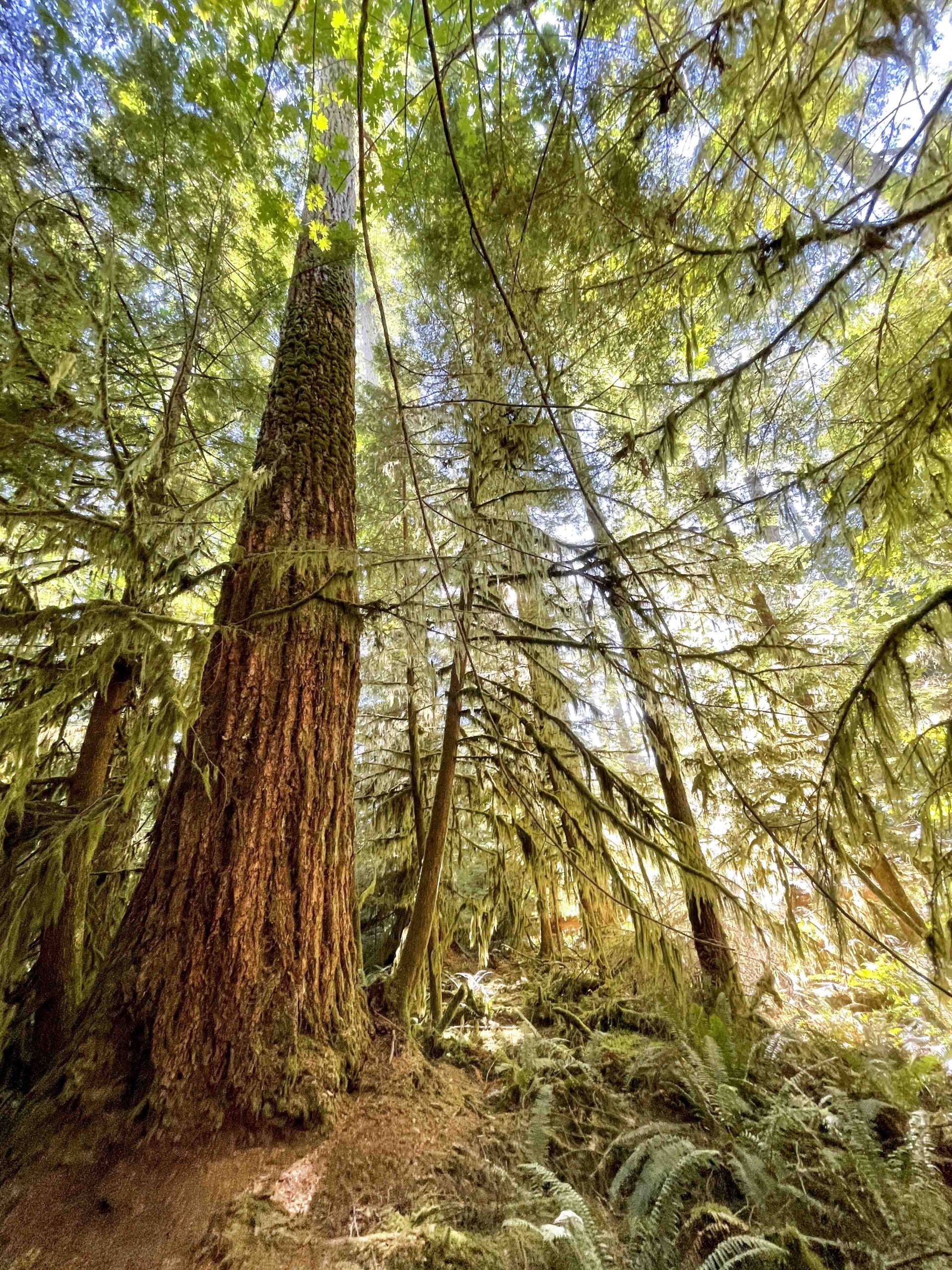 My grandfather, Gordon Gibson Jr., taught me to speak up when I see injustice in the world, and I am seeing it now. I am absolutely furious regarding Premier Eby’s plans to destroy old-growth and primary forests. They are the lungs of our atmosphere, and cutting them down is not only an attack on our future, it’s anti-Canadian. The only possible benefit to the logging would be to make a few people richer, most of whom are not Canadian, and those people do not care about the longevity of our species. We are facing a major extinction event, at the end of which the planet will not be able to support human life. I ask the province to listen to the science, and to care about the people who you are tasked with caring for. Care about our futures, and our dreams. …Stop the deforestation of old growth, and save the lungs of our planet.
 Over an hour of discussion followed BC Timber Sales’ (BCTS) presentation at the Sunshine Coast Regional District’s (SCRD) Dec. 11 committee of the whole meeting. …BCTS representatives, a delegation at the committee meeting, faced a direct ask from Gibsons area alternate director Annemarie De Andrade to pause harvesting activities on TA0519, in the Gibsons aquifer recharge area pending further study of the impacts of such logging. “We can continue to listen and continue with a light footprint, but we cannot pause,” was the response from BCTS’s Chinook Business Area timber sales manager Stacey Gould. She explained BCTS has a role as a revenue generator for the province. …That “lighter” BCTS footprint… is havesting about half of the volume it is permitted to on the lower Sunshine Coast. To make up for that, higher levels of harvesting need to be undertaking in other locations.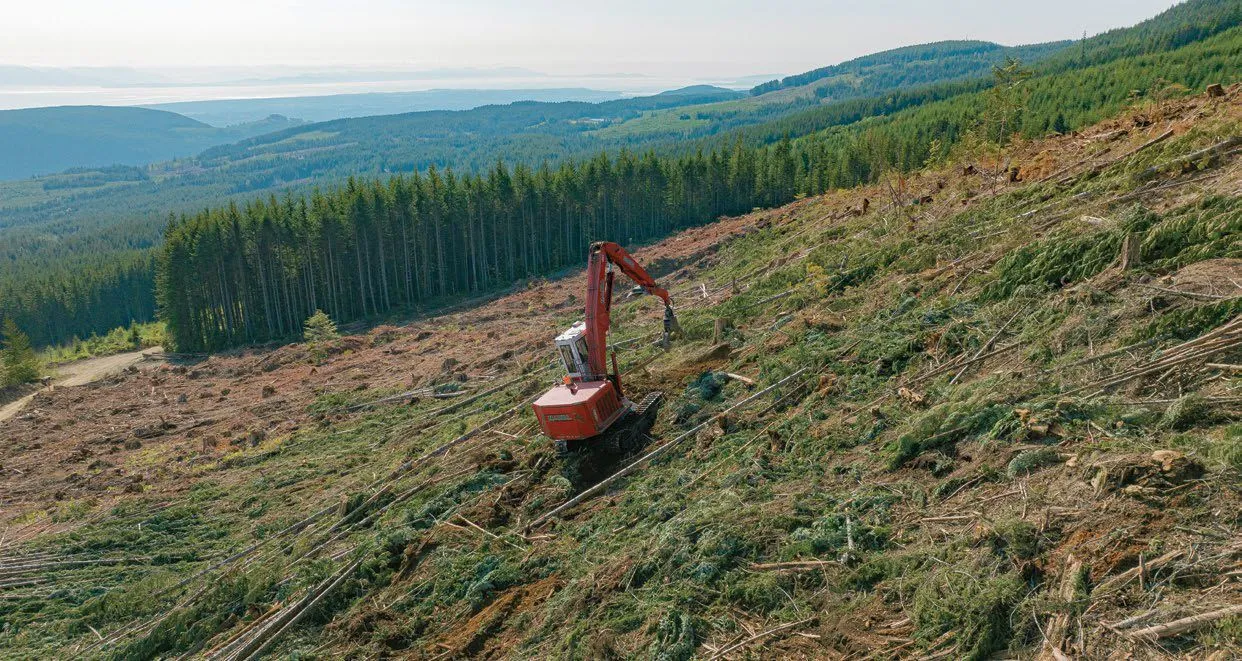

 The Cache