 A two-year investigation by the Forest Practices Board has found outdated rules and unclear responsibilities are preventing forestry from becoming a powerful wildfire-defence tool. The board examined forestry operations from 2019 until 2022 in the wildland-urban interface — areas where communities and forests meet. …It begins with fire hazard assessments, a cornerstone of wildfire risk reduction. The investigation found that 70% of assessments met content requirements. However, fewer than one in four were completed on time. …Municipalities, the most populated areas of the province, are excluded from the legal interface. …Despite the challenges, the board observed strong examples of wildfire-conscious forestry. …The board is recommending five actions to the Province. … If adopted, these changes would help turn everyday forestry into a proactive wildfire prevention tool, supporting faster fuel cleanup, better co-ordination and more consistent protection for people and communities throughout B.C. “This is an opportunity to improve our policies and processes toward proactive, risk-reducing forestry,” Keith Atkinson said.
Related coverage in:
 With roughly 2,000 wildfires in B.C. each year, forestry workers are often operating in or near fire-affected areas. It’s up to employers to ensure their crews are properly trained and prepared to recognize the risks and respond safely. …Employers are responsible for identifying hazards, assessing risks, and ensuring effective controls are in place — along with providing training, supervision, and fit-for-use equipment.
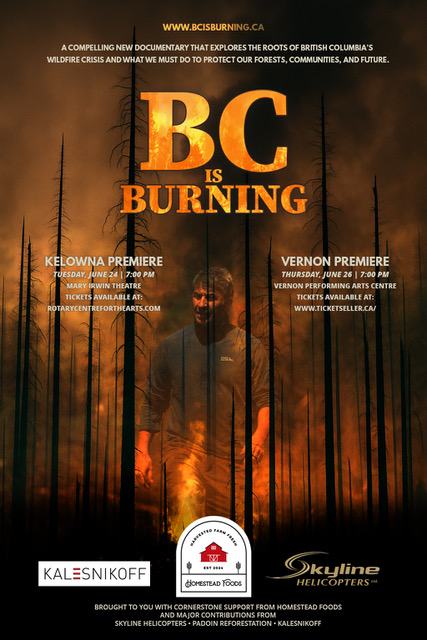 New film reveals the roots of B.C.’s wildfire crisis—and what we must do to stop it. A powerful new documentary exploring the causes and consequences of British Columbia’s escalating wildfire crisis will premiere to the public at the Mary Irwin Theatre in Kelowna on Tuesday, June 24 at 7:00 pm and at the Vernon Performing Arts Centre Thursday June 26 at 7:00 pm. Titled B.C. is Burning, the 45-minute film delivers a sobering but hopeful look at what’s fueling today’s megafires—and the science-based solutions that could protect our forests, our communities, and our future. B.C. is Burning was independently produced and funded through community support, with Homestead Foods generously contributing half of the total budget. We also gratefully acknowledge major support from Skyline Helicopters, Padoin Reforestation, and Kalesnikoff.
 A contractor hired to oversee logging on a Sechelt property and that site’s numbered company owner were sentenced for violations of the Heritage Conservation Act June 16, in the first ever B.C. Provincial Court sitting held at the shíshálh Nation longhouse. Grant Starrs, 55, of Sechelt and 0990199 B.C. Ltd. both pleaded guilty to the 2020 disruption of an identified heritage site. That area was occupied by the graves of 49 shíshálh people, according to federal Crown counsel Molly Greene. Provincial Court Judge Robert Hamilton accepted the joint submission of the Crown and defence attorneys, and fined the company $200,000, payable within five business days. Starrs was fined $30,000 and given 90 days to pay. Each is also to pay a victim surcharge of 15 per cent of their fine amounts. …In issuing his decision, Hamilton stated the fine to the company was four times higher than previous ones issued for such violations of the Heritage Conservation Act.
 Cranbrook, BC – United Steelworkers (USW) Local 1-405 members at Galloway Sawmill have had enough and are going public with their frustration with Peak Renewables and Galloway Sawmill owner Brian Fehr and the violation of their collective agreement rights and severance owed to the 20 workers of the Galloway Sawmill. “Workers left at the Galloway Sawmill are entitled and deserve their severance from Peak Renewables and owner Brian Fehr at Galloway Sawmill. The company is reneging on a negotiated closure agreement and the workers are the only ones that get hurt,” said USW Local 1-405 President Grant Farquhar. “That site was closed officially by the employer in December of 2024. Five months later and two months after the commitment was made by the employer to pay the severance was made, the members still haven’t received it.” Brian Fehr, owner of Peak Renewables, bought the Galloway Sawmill from Bud Nelson in 2017. The mill hadn’t run since December of 2022.
  SURREY, BC — Mackenzie Sawmill is back in the courts, a little more than a decade after the sum of three fires ruined a large mill built in 1938. The first of three fires was on Nov. 12, 2010, followed by a second on Jan. 25, 2011 and the third on Oct. 31, 2014 essentially destroyed what was left of it. …Judge Rory Krentz, presided over a hearing in B.C. Supreme Court in Vancouver, where the defendants applied for a dismissal for want of prosecution. Mackenzie ceased operations in early 2011 after the second fire, with two groups of employees entitled to severance pay. The court heard Mackenzie told the union the company intended to build another mill on site, enabling the union employees to keep their jobs. …This was before the third fire, after which Mackenzie indicated it still planned to rebuild the mill. But the union alleges MacKenzie decided before the last fire happened that it wouldn’t rebuild.
 TORONTO – The Ontario government released
 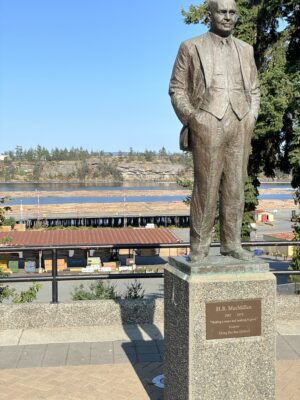 Western Forest Products says it will curtail all operations at its Chemainus sawmill next week, sidelining 150 employees for an indefinite period. The company said the curtailment, set to start June 18, is due to market challenges that include weaker lumber demand and higher US softwood lumber duties, as well as a lack of available viable log supplies. The company also blamed market conditions and a lack of log supplies for a similar shutdown in the spring of last year. Western Forest Products’ other mills at Duke Point, Ladysmith, Saltair and Cowichan Bay, and a value-added remanufacturing plant in Chemainus, will continue to operate, said Babita Khunkhun, senior director of communications for Western Forest Products. She said there is no end date for the curtailment at the Chemainus mill at this point, as the company monitors conditions. The mayor of North Cowichan said he was initially told 55 workers were facing layoffs.
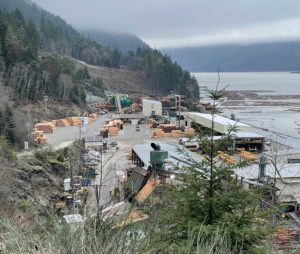 The major assets of the beleaguered San Group are under contract to be sold, awaiting only court approval. The monitor overseeing the credit-protection process has applied to the courts for approval of the sale. A court date is set for this week. …The largest creditors support the sales, despite the fact “they will suffer a significant shortfall on their debt.” The main properties in question are the Coulson manufacturing sawmills and San Group’s value-added facility in Port Alberni. There is also a mill in Langley and an adjacent agricultural parcel. The Surrey-based Fraserview Cedar has agreed to buy the Coulson facility in Port Alberni. The group has said it expects to have the mill up and running this year if the deal closes. A numbered BC company has entered into an agreement to buy the value-added facility. The buyers will lease the site to Ucluelet-based IGV Housing, which specializes in manufacturing scalable housing that combines pre-fab and on-site processes.
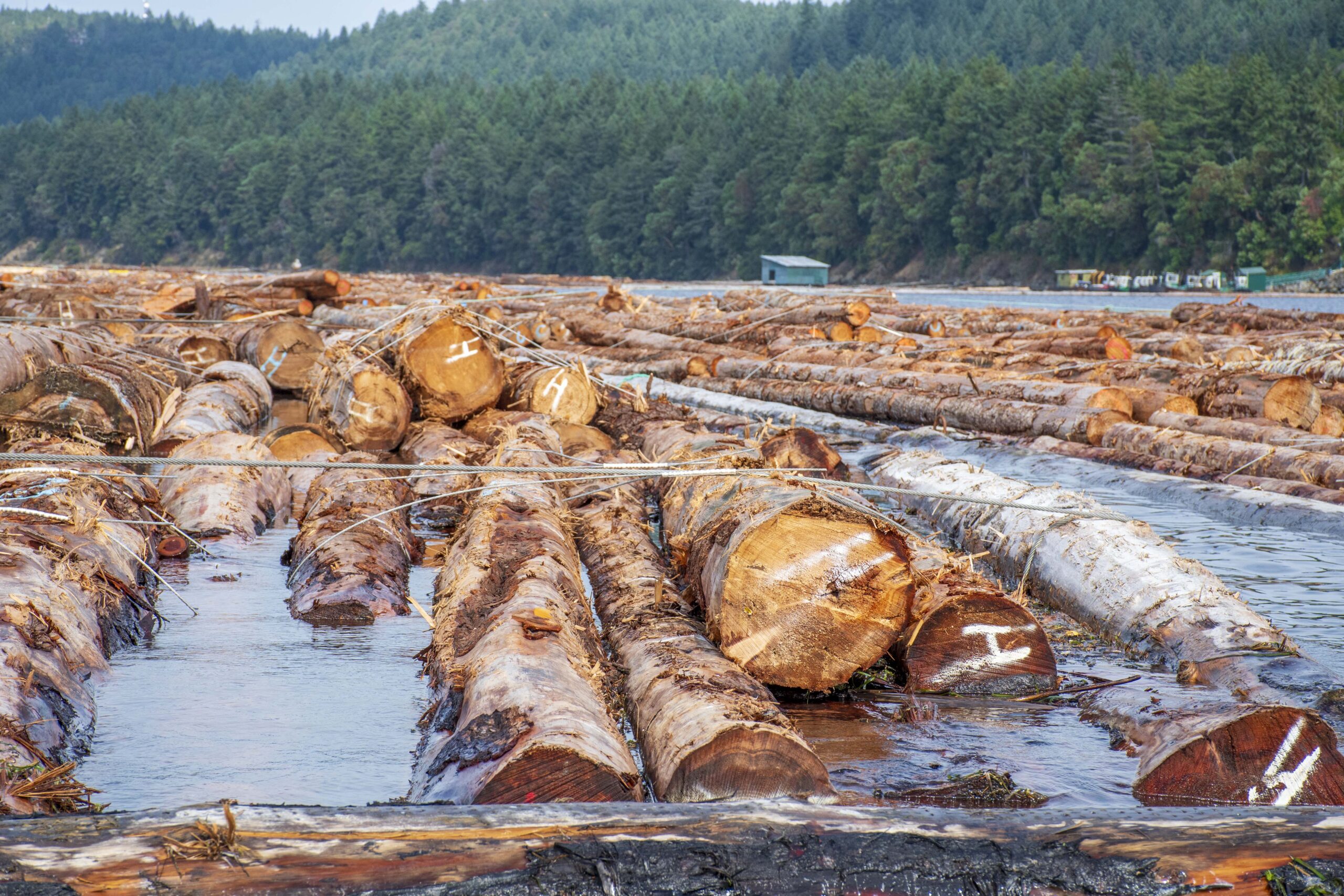 About 100 unionized forestry workers are on the picket line at operations on the mid and north Island, claiming their employer wants to contract out their work. United Steelworkers Local 1-1937 went on strike June 6, citing “significant concessions” demanded by La-kwa sa muqw Forestry Limited Partnership (LKSM Forestry). LKSM Forestry is the former Western Forest Products Mid-Island Forest operation now jointly owned by four First Nations of the Nanwakolas Council — the Tlowitsis, We Wai Kai, Wei Wai Kum and K’ómoks First Nations — as well as Western Forest Products, which still owns the majority of the company. The Steelworkers union said one of the main concessions LKSM is demanding is the use of non-union contractors to do work currently done by union members on sites. That includes jobs performed by union members working for contractors on sites. …The union said it remains open to talks with the company that focus on resolving the outstanding issues.
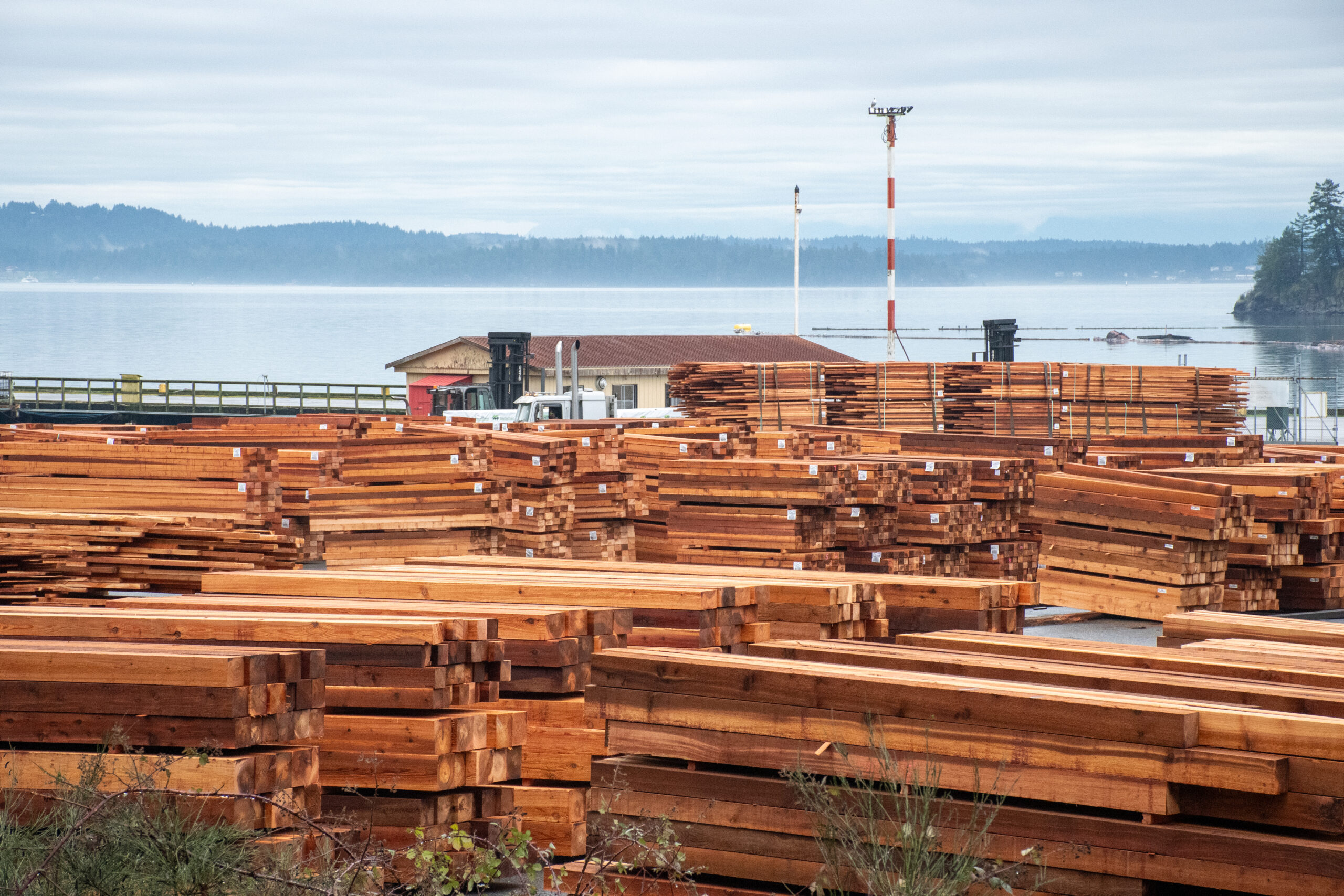 CHEMAINUS, BC — Fifty-five workers are scheduled to be laid off after a shortage of viable logs has forced production at the Chemainus Sawmill starting this month. According to North Cowichan mayor Rob Douglas, Western Forest Products has informed the municipality they intend to start curtailment of the jobs on Jun. 18. “The company has indicated the reason for the shutdown is due to their inability to find a viable supply of fiber,” Douglas says. “We don’t have a date as to when Western Forest Products is going to resume operations at the Chemainus Mill, but we hope it’s very short term.” …“I have reached out to the forest minister (Ravi Parmar),” he says. …Delays in permits and cutting fiber is a long-standing issue in BC, which has led to shutdowns and impacting production, but Douglas says he has been reassured by Parmar that the province is addressing the issue.
 SLAVE LAKE, Alberta — On Saturday, May 24, West Fraser’s Slave Lake Veneer plant celebrated its 50th anniversary with the community of Slave Lake. Several hundred community members, elected officials, Indigenous leaders, employees and retirees joined the company for a day of festivities, including lunch, bouncy castles, face painting and an opportunity to learn more about the history of Slave Lake Veneer’s operations. These directly employ 150 local residents, mostly in the mill, but also in the woodlands department, as well hundreds of more with contractors that supply the operation. …West Fraser acquired Slave Lake Veneer in 1999, as part of its acquisition of Zeidler Forest Products. At the time, the mill operated as both a veneer plant and a stud mill. In 2016, all lumber production was transferred to the newly-acquired sawmill in High Prairie. Today, veneer output is almost 13 times higher than when the plant opened in 1973.
 VANCOUVER, BC



 An insolvent BC forestry company’s attempt to sell off a forest licence to pay back creditors has triggered a dispute with several First Nations, who allege the company is attempting an “end run” around their rights. This spring, three Indigenous groups challenged the Teal-Jones Group before a BC Supreme Court judge for attempting to complete an interim transfer of forest licence A19201 to Western Canadian Timber Products (WCTP). The move came before the B.C. Minister of Forests could consult with 39 First Nations who have territory in the area. …The legal dispute hinged on whether the proposed interim agreement triggered a duty to consult with First Nations. But Fitzpatrick ruled Teal Jones’ agreement with WCTP remained “the highest and best offer presently available for consideration and approval after all that time.” The judge concluded that the sales process had been conducted in a “fair and reasonable manner”.
 Looking over the 40-acre waterfront Somass property, Port Alberni’s Chief Administrative Officer Mike Fox sees an area that is key to shaping the city’s future. “I believe this project will be one of those defining moments where people will look back years from now and comment on how the community rallied and how we enabled the development of this key waterfront area,” he says. The land that once housed Western Forest Products Somass Division was purchased from the timber giant after the mill was shuttered in 2017 and the land sat vacant for more than a decade… While there was early discussion about trying to incorporate some of the structures used in the operation of the mill, geotechnical and structural analysis work is being done to see if any meet building standards. One of the buildings included in initial discussions burned down last summer.
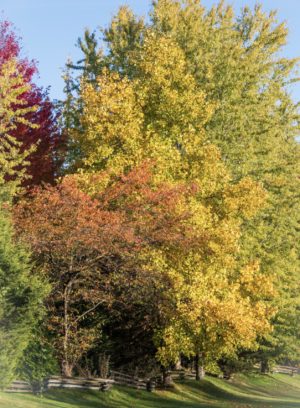 Whistler’s mayor and council advanced a pair of sweeping environmental bylaws that will introduce stricter rules for tree removal and land disturbance across the resort community. At its regular meeting, council gave first three readings to new environmental and tree protection bylaws, with 87 letters submitted in support and a wave of speakers appearing in council chambers to back the regulations. The bylaws were introduced to address long-standing gaps in how Whistler protects its natural areas, following community concern over clear-cut lots, unregulated vegetation removal and heightened wildfire risk. In addition to creating a new permit process for tree removal, the rules prohibit land clearing in sensitive areas and carry steep penalties for infractions—up to $50,000 for unauthorized tree-cutting.

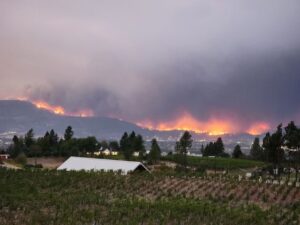 A wildfire risk reduction initiative led by the Lower Nicola Indian Band Development Corporation (LNIBDC) has significantly decreased wildfire hazards in the Steffens Estates area, just north of Merritt, while setting an example for Indigenous-led land stewardship in British Columbia. The multi-phase project, which began in 2022 and was completed in March 2024, combined strategic timber harvesting with intensive fuel mitigation efforts to create safer forest conditions near the Steffens Estates subdivision—land bordering private residences and Crown forests. With more work planned near Steffens Estates and around critical communications infrastructure on Iron Mountain, the project is part of a broader effort to proactively manage wildfire risk in British Columbia. B.C. Minister of Forests Ravi Parmar also praised the initiative: “Wildfire risk reduction is one of the most important ways we can protect people, homes, and vital infrastructure – especially as our province faces the growing impacts of climate change.”
 There’s an entire cycle of life that helps some wildlife thrive when the boreal forest burns, but experts say climate change and human activity have led to larger, more intense wildfires, exacerbating the negative effects on some species. While it’s too early to know exactly how one of the worst wildfire seasons in Saskatchewan history is affecting wildlife, research shows some species have evolved over millennia to take advantage of forest fire cycles. “It’s almost essential, particularly in the boreal forest, to have some degree of fire on the landscape, because it is important to create that sort of regenerative habitat for species that depend on it,” said Jean-Michele DeVink, an environmental consultant and adjunct professor at the University of Saskatchewan. “The challenge, is that for other species that do require more mature forest, the extent of fires that we’re seeing throughout the boreal forest is a bit of a problem.”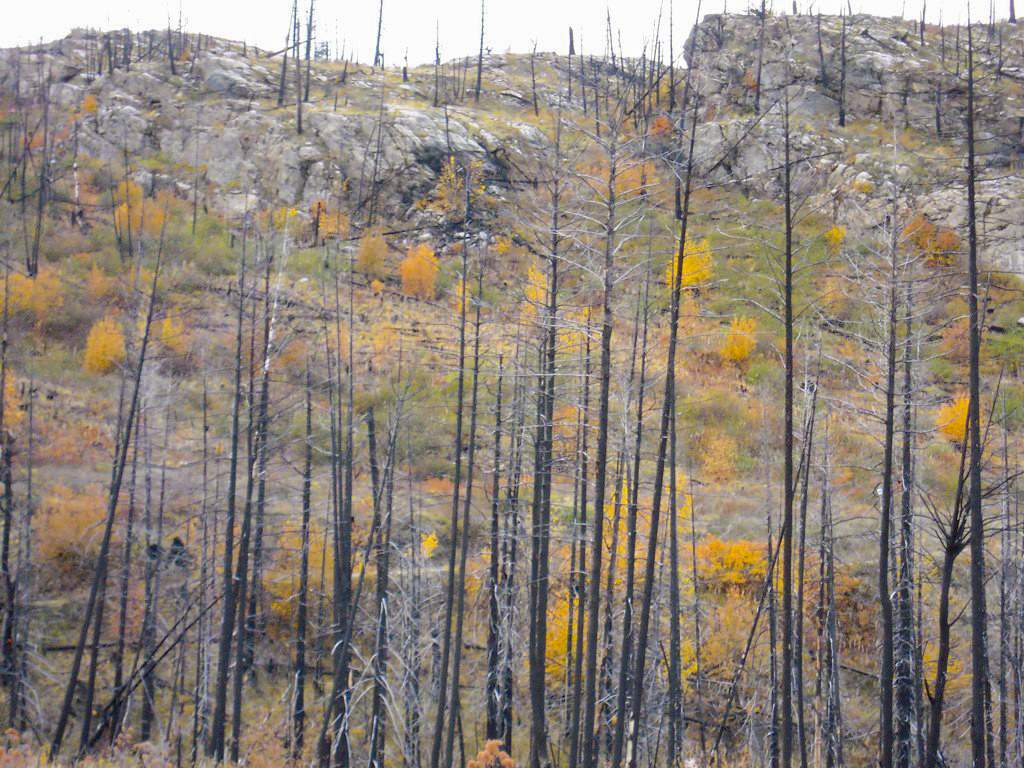
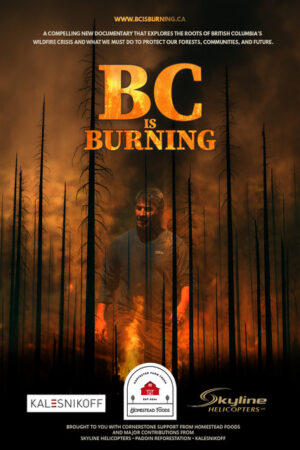 A wildfire documentary funded in part by community donations and Okanagan businesses will be screened in Kelowna and Vernon later this month. B.C. is Burning is a 45-minute film that explores the causes and consequences of the megafires that have devastated communities in the province in recent years. It also looks at science-based solutions that could protect communities, forests and B.C.’s future. The documentary was produced and written by retired forester Murray Wilson, initiated by association producer Rick Maddison and directed/edited with production support from Ryan Tebbutt of Edge Digital Media in Kelowna. It combines expert interviews, government data, and powerful footage from both British Columbia and California. …We know how to stop this,” says Wilson. “B.C. can lead — if we stop solely reacting and start managing our forests to protect lives, cut emissions, and reduce wildfire risk.”
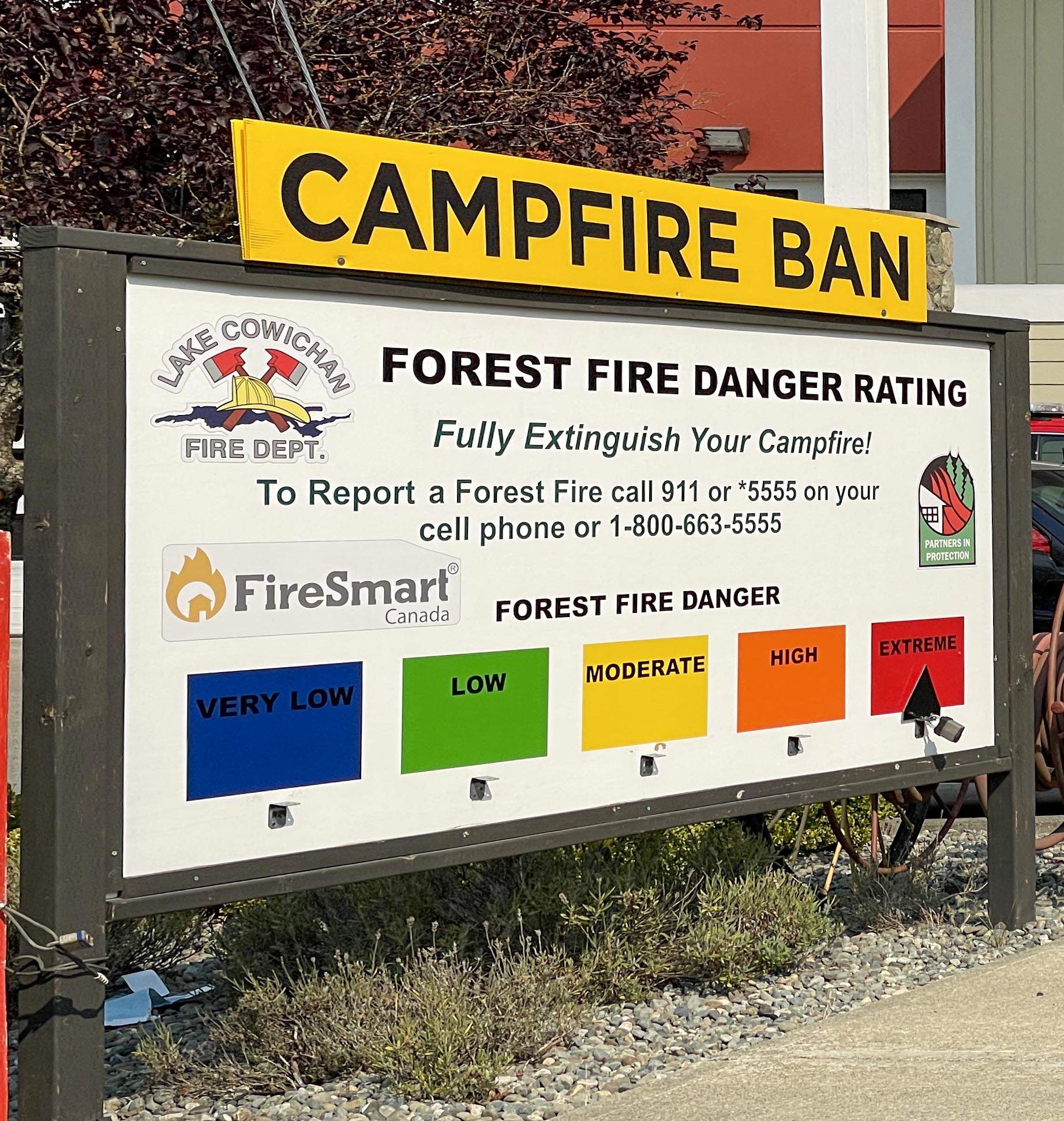 With dry conditions persisting, the Fire Danger Rating in North Saanich remains at ‘high’ since it was first raised on June 10, prompting fire and emergency services to urge residents to prioritize fire safety. “Forest fuels are extremely dry and the fire risk is serious,” the district warns. “Fires can start easily, spread quickly and be difficult to control. Use extreme caution in forested areas and during outdoor activities.” “We’re hoping the rating will encourage residents to take a proactive approach to keep their homes and properties safe in the event of a fire,” Deputy Fire Chief Aaron Kary emphasized. The fire department is offering residents valuable tools to enhance their preparedness. Wildfire automated sprinkler systems protection kits are available for purchase through the department, offering an easy-to-install solution for home protection. …While the forecast offers a glimmer of hope with potential rain … the rating will “remain high until significant precipitation occurs.”
 As wildfires continue to sweep across northern Saskatchewan, the toll is mounting. Not just in evacuations and lost homes, but long-term damage to the province’s forest industry. Carl Neggers, CEO of Forest Saskatchewan, says two of the largest fires, the Shoe Fire and the Ditch, have scorched 900,000 hectares of forest, an area roughly 40 times the size of Saskatoon. According to Neggers, “Saskatchewan’s forestry sector harvest around 23,000 hectares per year. That means this years wildfires have destroyed nearly 40 years of commercial timber.” “We support 12,000 jobs in this province through forestry” Neggers said in a June 9 interview on the Evan Bray Show. “If it impedes allocation or limits access to alternative timber zones, that puts our workforce and mills at risk.” The damage, he says, extends well beyond the logging industry. Forest in the commercial zone are also critical for recreation, traditional land use and Indigenous communities.

 At the 2025 Council of Forest Industries (COFI) Convention in Prince George, the message coming from the stage was clear and consistent: British Columbia’s forestry sector, though challenged, was on the cusp of transformation. Words like resilience, partnership, and innovation echoed across the sessions. COFI’s President and CEO, Kim Haakstad, struck a hopeful tone in her remarks: “The forest sector is facing unprecedented challenges—but with collaboration and innovation, there is a path forward.” …Seven weeks later, I attended the Canada North Resources Expo, in Prince George. The contrast couldn’t have been more striking. This show, which typically draws the biggest names in logging and roadbuilding equipment, felt subdued. Gone were the sprawling displays from Caterpillar, Komatsu, Hitachi, Volvo, John Deere, and XCMG. These are big players – their absence was impossible to miss. …At COFI, we heard big ideas. At the Resource Expo, we saw who’s showing up—and who isn’t.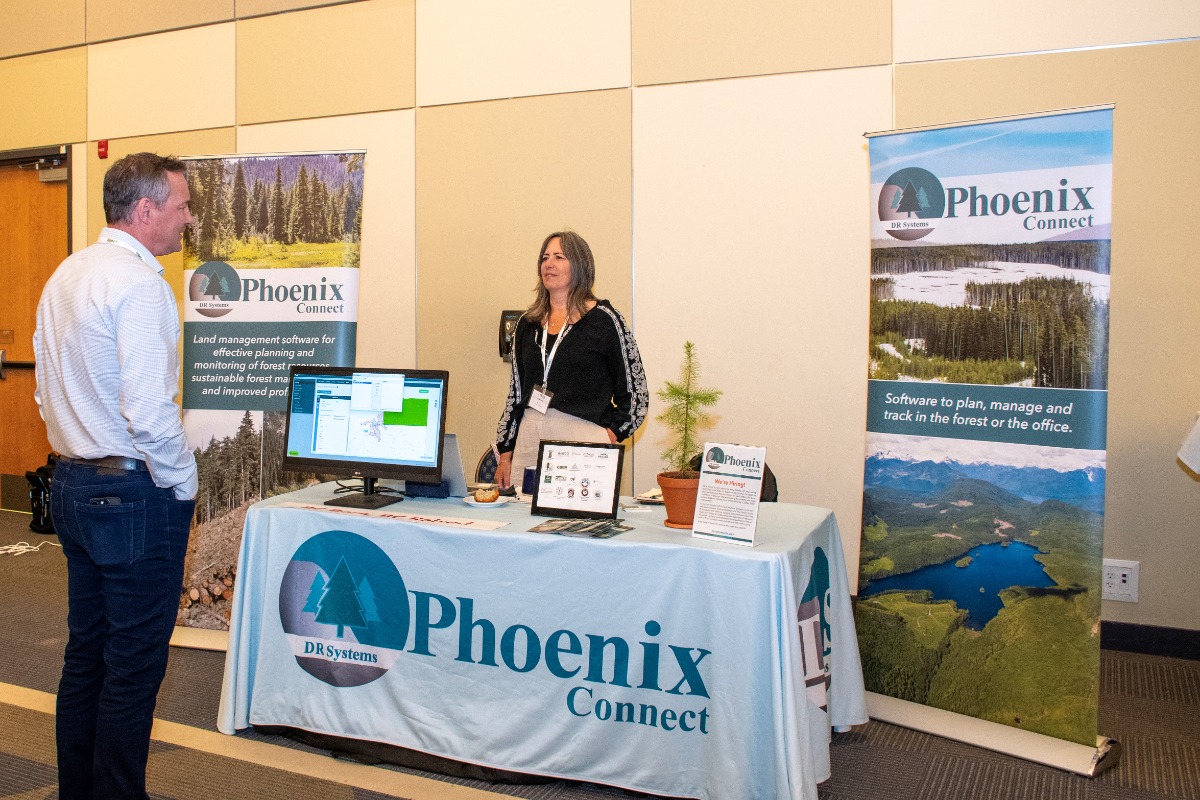

 Canada’s wildfire season has had an early and intense start, with states of emergency declared in Saskatchewan and Manitoba and forecasts warning of severe conditions across central and eastern Canada. Wildfire smoke is already crossing borders, affecting millions. In this Q&A, wildfire experts Dr. Lori Daniels and Dr. Mathieu Bourbonnais, co-directors of the
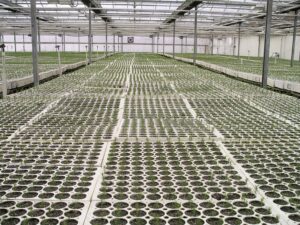 Crystal To… is part of a small crew of tree planters who are slowly filling the Whitehorse South fuel break with aspen. It’s her first time doing the job. …The goal of the fuel break is to protect the capital city from wildfires by creating a natural barrier, removing all the highly flammable conifers in an 800-hectare area and replacing them with more fire-resistant aspens. The Yukon government began work on the fuel break in 2020, near the Mary Lake subdivision. It’s one of the first such projects in Canada, and the goal is to have it finished by 2032. The aspens are being planted by the thousands every summer. This year, 232,000 seedlings will be planted.
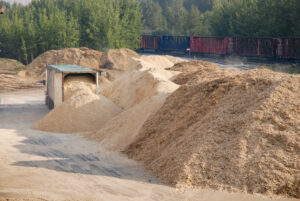 Earlier this year, Burnaby’s Svante Technologies made inroads in Alberta. The move eastward is partially powered by a newly formed partnership with Mercer International. The Canadian cleantech’s carbon capture project is targeting biogenic CO2 emissions from Mercer’s Peace River pulp mill. …One of the strategies the firm intends to adopt in Canada is carbon sequestration. Within Alberta, carbon sequestration is a sensible tactic to apply, according to Mercer International’s chief executive officer, Juan Carlos Bueno. “The reason why we’re doing it there is because the mill is located in Alberta, where you have geological formations that are suitable for sequestering CO2,” Bueno informed Andrew Snook of Pulp & Paper Canada. …Finalizing investment in the project, however, is no small consideration. There is a price tag north of $500 million and moving forward would require extensive support from both the Province of Alberta and Government of Canada.

 The 2023 McDougall Creek wildfire caused serious damage to the Rose Valley reservoir, which provides source water to more than half of West Kelowna residents through the Rose Valley Water Treatment Plant. During a presentation to city council this week, Interior Health medical health officer Dr. Fatameh Sabet said that damage makes it harder to treat water coming from the reservoir. “We know the land surrounding the Rose Valley reservoir has been contaminated because of the wildfire in 2023 and it means the contaminated source of water can be harder to treat because of the sediment, nutrients, metals and organic matter as a result of burned material,” said Dr. Sabet. “Fortunately, the Rose Valley Water Treatment Plant was not damaged from the fire and it has been very helpful to compensate for damage to the watershed.” The plant ensures water is safe by not only controlling levels of manganese and disinfection byproduct, but other perspectives as well.
 With warmer, drier conditions expected to increase across B.C., people are advised to stay prepared for climate-related emergencies. …People are encouraged to prepare grab-and-go bags, create an emergency and evacuation plan, create an Emergency Support Services profile through their B.C. Services Card app and ensure they have renter’s or homeowner’s insurance for their property. …Warm and dry conditions are expected throughout the province this month, and with that comes an elevated risk of wildfire. Northeastern B.C. is continuing to experience prolonged drought and is expected to remain at high risk for wildfire this summer. …In addition to wildfire risk, the Province is also closely monitoring key indicators of drought risk, including snowpack.
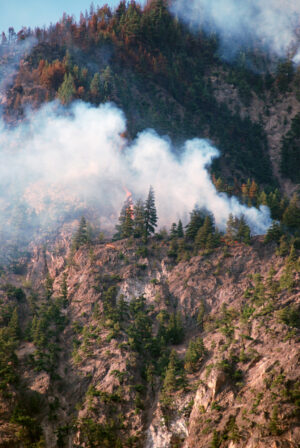 The wildfire on the northern edge of Squamish is classified as being held on Monday after a weekend of favourable weather conditions. BC Wildfire Service Fire Information Officer Sarah Budd says dozens of ground crews are working to get the Dryden Creek wildfire fully under control. “We also have three helicopters actioning this fire,” Budd told 1130 NewsRadio, adding the fire now sits at just under 60 hectares. An evacuation alert for properties near the fire, issued by the Squamish Fire Department, has been downsized. Because the Dryden Creek Fire is in difficult terrain, it could take crews another week or so to wrap things up. “This fire has been burning in sort of really difficult terrain,” explained Budd.
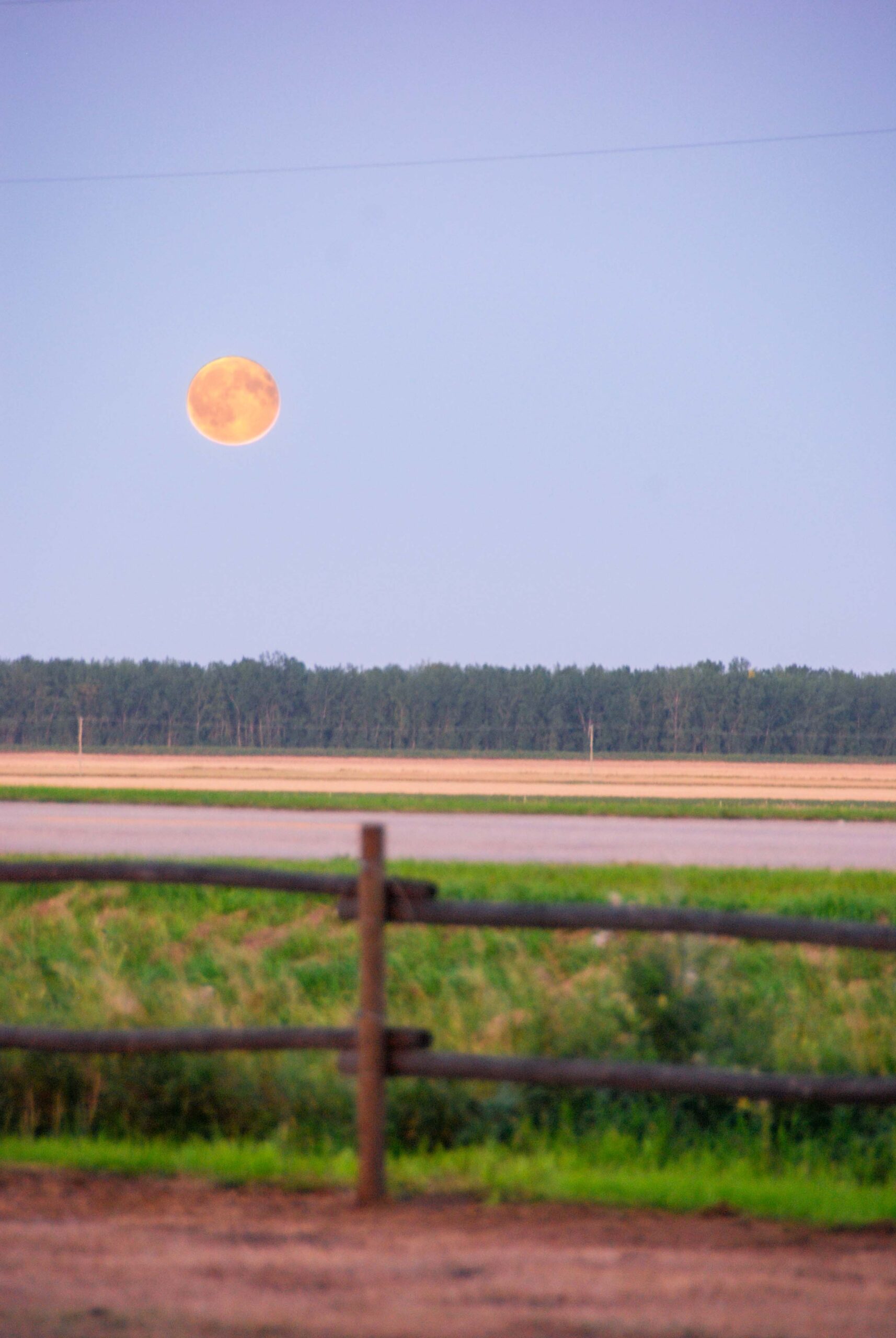 WINNIPEG — Rain and cooler temperatures brought relief to fire-ravaged Manitoba and Saskatchewan Monday, allowing fire bans to be reduced and more evacuees to go home. The weather helped fire crews get an upper hand in parts of northern Manitoba to clear the way for some of the 21,000 or more evacuees to start returning home. David Monias, chief of Pimicikamak Cree Nation, reposted video of heavy rainfall on social media along with video of small planes leaving Winnipeg with evacuees who were forced out almost three weeks earlier. “Our people are coming home,” Monias wrote on Facebook, adding the community’s infrastructure is intact and water systems have been tested by health officials. …There were 18 fires still burning across Manitoba, with seven of them listed as out of control.
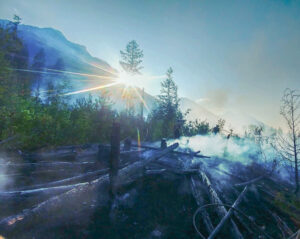 High winds fanned a wildfire threatening Squamish as some residents remained on evacuation alert and under a heavy blanket of smoke. On Wednesday evening, the B.C. Wildfire Service had mapped the Dryden Creek fire at about 54 hectares, or about a half-square kilometre, up from five hectares two days ago. The District of Squamish said daytime winds have contributed to the fire’s size, pushing it further north away from properties. “Existing containment lines on the southern flank are not currently threatened,” said the district in an update Wednesday evening. Aaron Foote, chief of Squamish Fire Rescue, said the fire is within 40 metres of some homes as debris from burning trees falls near properties, but added that the properties were not at risk. He said debris has been rolling down steep hillsides as local firefighters battle the blaze that’s looming over the community, next to the Sea to Sky Highway.

 In response to the Dryden Creek fire, as this wildfire is called, Squamish Fire Rescue said in a post late Monday night that the District’s emergency response team is working out of the Emergency Operations Centre, located at Fire Hall 1 in Valleycliffe. The out of control fire is located above the eastern end of Depot Road, in the north end of Squamish. It said the BC Wildfire Service has “actively and aggressively” attacked the wildfire thus far by air and with ground crews and would continue to late into the night, and will begin again early this morning. Aerial attack will also resume early Tuesday morning, the post said. Late last night the District of Squamish issued evacuation alerts to those living in properties at the east end of Depot Road, east of Highway 99 including the campground Mountain Fun Basecamp and at the end of Tantalus Road.
 Smoke from wildfires in northern Alberta and northeastern B.C. reached Calgary this weekend, resulting in poor air quality in the city through the weekend and into Monday morning. Fire bans remain in effect for a large part of Alberta, including in all of Rocky View County, as six of the province’s forest areas are considered to be at extreme wildfire risk. An evacuation order for parts of the County of Grande Prairie was expanded again late Saturday after the Kiskatinaw River wildfire in B.C. crossed into Alberta Friday afternoon. …As of Monday night, there were 60 fires burning in the province, with 23 of them classified as out of control. More than 615,000 hectares have burned in Alberta so far in 2025. Fire personnel and aircraft from British Columbia, Yukon, Quebec, Nova Scotia, New Brunswick, Washington State, Oregon and Idaho have arrived in Alberta to assist with battling out-of-control blazes.
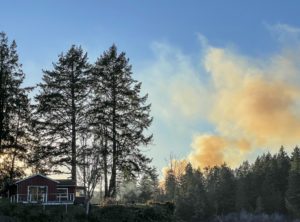 BC Wildfire Service crews are responding to an out-of-control, 10-hectare blaze south of Sproat Lake on Vancouver Island and say it’s expected to spread. Gordon Robinson, Coastal Fire Centre information officer, tells CHEK News 18 firefighters, three helicopters and a response officer are on scene in the Beverly Main area, west of Port Alberni. The fire currently measures 10 hectares, reads information online. The blaze was discovered on Sunday – and as of around 2 p.m., it’s listed as “out-of-control,” meaning it’s “anticipated to spread beyond the current perimeter or control line. Robinson says the fire is believed to be human-caused because there hasn’t been any lightning in the area. Crews are trying to determine the cause, the BC Wildfire website says, adding that such investigations “often take time and can be very complex.”


