A log of wood believed to be 50 million years old has been hauled up from below ground at Diavik diamond mine in the N.W.T. — a find that researchers say is remarkable but not uncommon… the mine described it as a 136-kilogram (300-pound) log from a redwood tree that it found 240 metres below ground. In an email, a Diavik spokesperson said it was discovered on Feb. 20 during regular mining at the A21 pit while miners were scooping kimberlite ore. The spokesperson said pieces of wood are regularly recovered from Diavik’s kimberlite pipes but this one is notable because of its size. Scientists know that 50 million years ago the region would have been a humid temperate forest ecosystem with metasequoia, hazel, chestnut and oak-like trees.”It would almost have looked like Nashville, Tennessee in a way, climate-wise.”
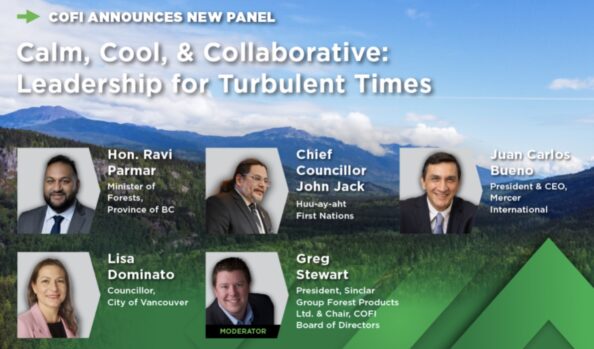 COFI 2025 – April 2-4 in Prince George, BC — As BC’s forest sector grapples with significant turbulence – including US tariffs, geopolitical uncertainty, and sector-wide challenges in BC – strong leadership and collaboration are essential to securing a sustainable and competitive future. The “Calm, Cool, & Collaborative: Leadership for Turbulent Times” panel at the 2025 COFI Convention will bring together senior decision-makers from industry, government, and First Nations. These influential voices will share their insights on navigating market uncertainty, shaping effective policies, and strengthening community resilience. Jon our panelists: Hon. Ravi Parmar, Minister of Forests, Province of BC; Chief Councillor John Jack, Huu-ay-aht First Nations; Juan Carlos Bueno, President & CEO, Mercer International; and Lisa Dominato, Councillor, City of Vancouver for a lively discussion moderated by Greg Stewart, President, Sinclar Group Forest Products Ltd. & Chair, COFI Board of Directors.
 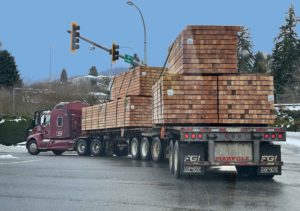 The ongoing trade spat between the U.S. and Canada is impacting BC’s construction sector in ways that could bring short-term gain and long-term pain. At first, there could be an oversupply of lumber if Canadian softwood is taken out of the U.S. equation, resulting in lower costs for B.C. builders and developers, said Padraic Kelly, Vancouver-based director with BTY Group. But costs would later rise significantly, he said. “The medium- and long-term pain would be that if the American market is choked out, mills would close, supply would be constrained and costs would ultimately go up,” Kelly said. The total levy on Canadian softwood lumber going into the U.S. could total between 45% and 55%, taking into account anti-dumping measures introduced by the Biden administration and scheduled to increase this August. Other big-ticket impacts to B.C. construction could be the mechanical and electrical divisions within construction budgets, he said.
 In this newsletter, we are pleased to share great stories of the impactful work happening in communities throughout our province. As the world continues to navigate the challenges affiliated with climate change, British Columbia’s forestry sector is playing a key role to mitigate its impacts and contribute to a more sustainable future. We take pride in investing in projects that provide enduring economic and social benefits for our local communities and are helping take action on this global issue. Last month, in collaboration with the Provincial Government, we shared more specifics about 70 recently funded projects moving forward to help local communities, community forests, First Nations, and other project partners enhance their wildfire prevention efforts and/or expand fibre-recovery initiatives. …In years past, much wood waste from harvesting operations was piled and burned in slash piles. Today, we invest in projects that recover this waste and use it to make forest products and generate green energy.
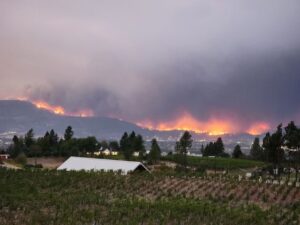 If you’ve noticed smoke on days it hasn’t been snowing or raining recently, it’s likely from a prescribed burn. Local governments across the Okanagan including the Westbank First Nation are working to finish as many of their prescribed burn operations as possible before the weather gets too hot and dry. A prescribed burn, sometimes called a controlled burn, is a planned and intentional use of fire on a specific land area to reduce wildfire risk, improve wildlife habitat, or restore ecosystems… The McDougall Creek wildfire was one of the most destructive local wildfires in recent memory, destroying 303 structures in West Kelowna, Westbank First Nation, Kelowna and the RDCO. The Insurance Bureau of Canada estimated the fire caused $480 million in insured damage.
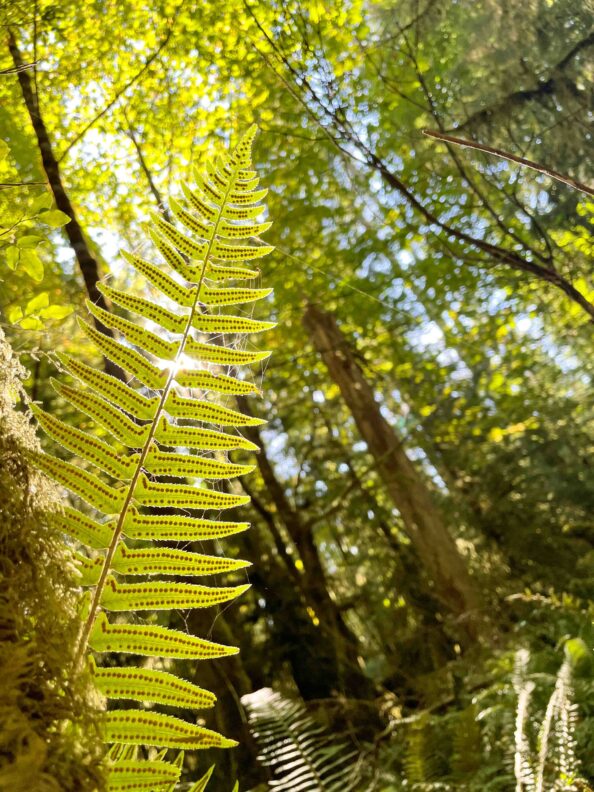 A draft co-management framework and plan to manage North Cowichan’s 5,000-hectare municipal forest reserve likely won’t be presented until sometime in 2026. The municipality and the Quw’utsun Nation (which consists of Cowichan Tribes, Halalt First Nation, Lyackson First Nation, Penelakut Tribe, and Stz’uminus First Nation) agreed in April, 2024, that they would work together to establish a co-management framework and plan for the forest reserve, and that work is still ongoing. North Cowichan’s communications director Barb Floden said the municipality and the Quw’utsun Nation issued a joint request for proposals to support the development of the co-management plan in February, which will be closing soon, and it is expected that the draft framework and plan will be ready next year. “The public will be kept informed of the process through joint statements and updates at council meetings,” Floden said.