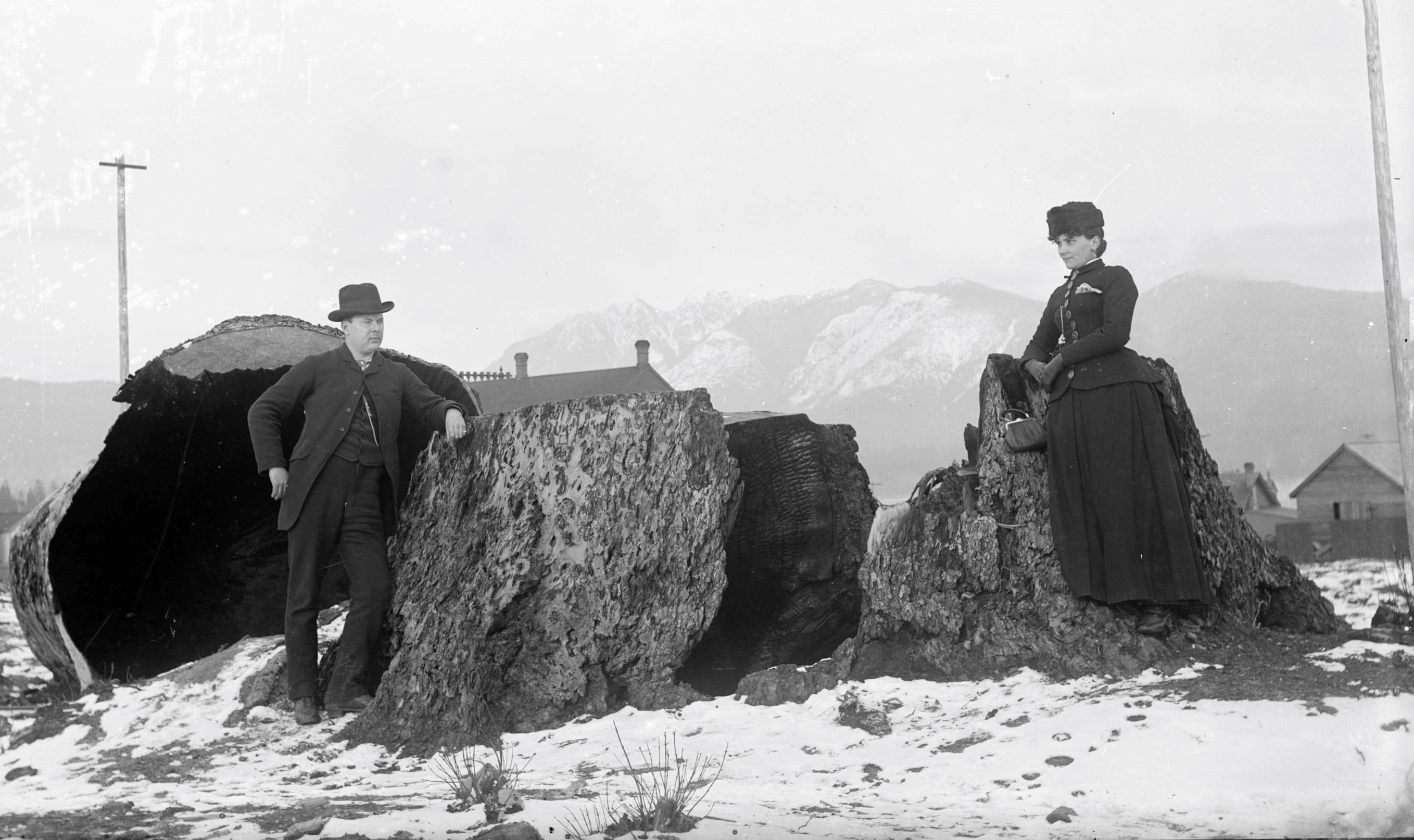
The Forest Products Association of Canada (FPAC) released a new national research report, titled Canada’s Forest Economy: An Analysis of the National Supply Chain and Community Investment Impact, which underscores the forest sector’s vital contributions to Canada’s economy, rural development, and urban sustainability. Produced with the expertise of iTOTEM Analytics and in partnership with BC Council of Forest Industries (COFI) – the report highlights how 19 leading forest products companies in Canada are sustaining a network of 30,000 vendors spanning approximately 1,595 municipalities nationwide.
Together, these partnerships generated $14.9 billion in supply chain expenditures in 2022 alone, demonstrating a compound annual growth rate of 9.5% since 2020. In alignment with the First Nations Major Projects Coalition Conference Valuing Reconciliation in Global Markets happening this week, the forestry sector is deeply invested in partnering with Indigenous communities across the country and learning more on how reconciliation strengthens both commercial success & project sustainability.
“The forest products sector touches every corner of Canada,” said FPAC President and CEO Derek Nighbor. …Beyond supply chain expenditures, the study also revealed that between 2020 and 2022, the forest sector made $39.2 million in community investments – supporting over 2,000 organizations across 380 communities with funding for health, education, public amenities, and Indigenous initiatives. “As our sector continues to evolve, this research helps shine a light on the outsized and interconnected role that Canada’s forest sector, along with our commitment to growing the economy and building strong partnerships across rural and urban communities alike, plays in Canada’s national economy,” added Nighbor.




 NEW YORK, NY — Mercer International reported first quarter 2025 Operating EBITDA of $47.1 million, a decrease from $63.6 million in the same quarter of 2024 and $99.2 million in the fourth quarter of 2024. In the first quarter of 2025, net loss was $22.3 million compared to $16.7 million in the first quarter of 2024 and net income of $16.7 million in the fourth quarter of 2024. Mr. Juan Carlos Bueno, Chief Executive Officer, stated: “There was continued strength in pulp markets and an improving lumber pricing environment in the first quarter of 2025. However, our operating results in the quarter were negatively impacted by annual planned maintenance downtime at our Celgar mill and the impact of the weaker dollar against the euro.
 This newsletter includes:



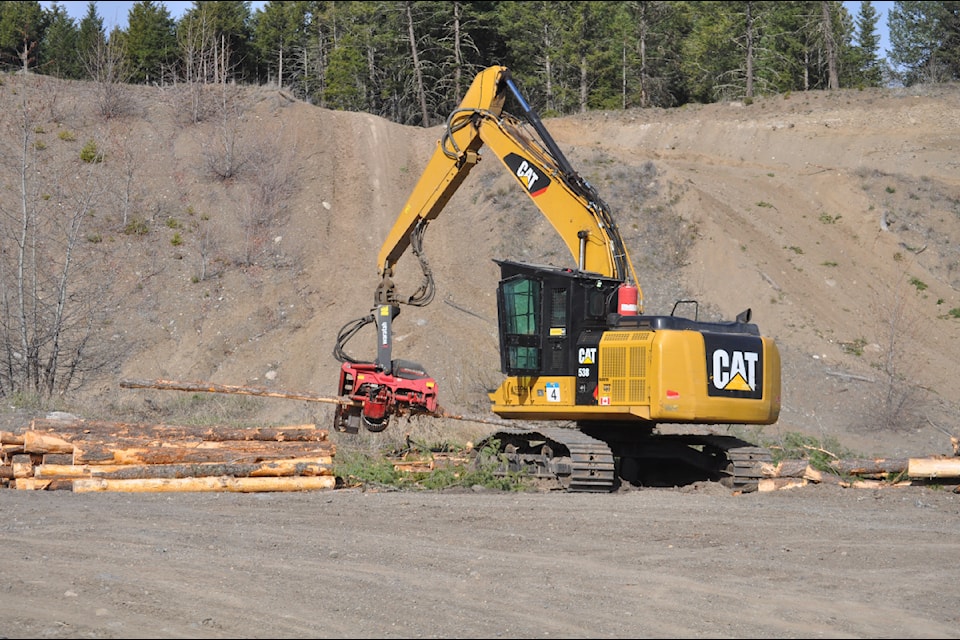

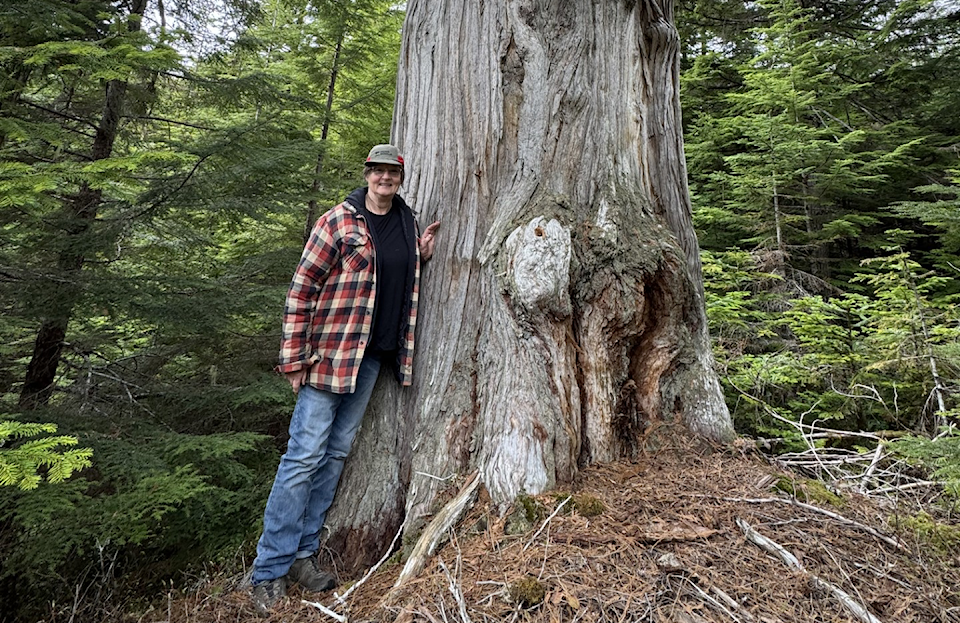
 May is Invasive Species Action Month and 33 organizations throughout BC will be able to continue their work fighting invasive plants, due in part to a funding boost. …Ravi Parmar, Minister of Forests said “No one person, group, agency or government can effectively control invasive plant species alone, and collaboration is critical to everyone’s success. The work these groups do is crucial in our fight to ensure BC’s environments remain healthy and vibrant.” …Nearly $3 million will go toward groups, such as regional invasive species committees, local governments, environmental groups, researchers and the Invasive Species Council of BC, to continue collaboration and support of invasive plant programs and management actions. …Gail Wallin, executive director, Invasive Species Council of British Columbia said, “Invasive plants are estimated to cost us over $2 billion in losses annually.”
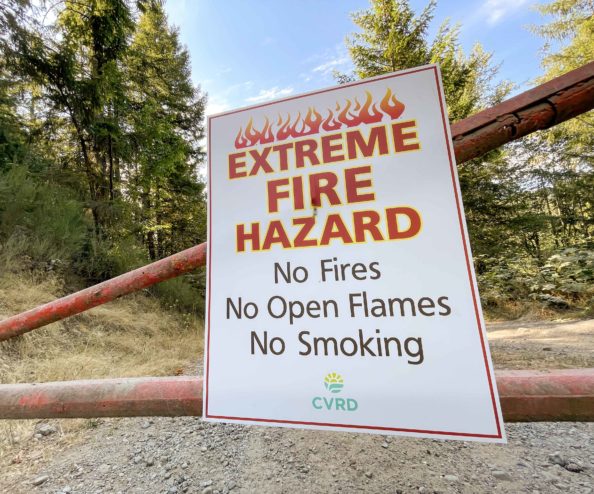 People are asked to use caution over the next several days as a combination of warm, dry conditions and strong winds in much of southern B.C. are adding to elevated wildfire danger. The BC Wildfire Service urges people to postpone any open burning until the windy conditions pass and to use extra caution when camping in the backcountry. “We are expecting active weather in the coming days that could set the stage for dangerous wildfire conditions across the province,” said Ravi Parmar, Minister of Forests. “This is the time of year when we’re at the most risk for human-caused wildfires in B.C., most of which are entirely preventable.” People planning to have campfires should do so safely, following any local prohibitions.
 With the Southern Interior’s hottest months just around the corner, FortisBC is putting important safety measures into place to help protect communities and its electricity system against wildfires, which includes adding extra precautions that could result in power outages. To further enhance its wildfire safety practices, FortisBC has introduced a Public Safety Power Shutoff (PSPS) policy, a new precautionary measure where electricity is proactively shut off in selected areas in advance of extreme weather. FortisBC is advising its customers to be prepared for these potential outages that help reduce potential ignition sources. …According to FortisBC, customers should always be prepared to be without electricity for at least 72 hours, especially during wildfire season.

 More than 80 per cent of the critical habitat for at-risk species in B.C. fails to meet federal protection standards, according to a government briefing document. The
 MONTREAL – Academics at McGill University in Montreal are providing the U.S. scientific community a platform to protect climate research under attack. Six months ago, researchers at McGill University’s Desautels Faculty of Management launched the Sustainability Academic Network — SUSANHub.com — a database that centralizes climate research and data. “We initially created this platform to connect researchers and professionals in sustainable development and climate change,” said Juan Serpa, a professor at the Desautels Faculty of Management, describing the platform as a kind of “LinkedIn” for the field. But at a time when the administration of United States President Donald Trump is firing climate researchers, banning certain words from scientific articles, cutting funding for environmental research, threatening to withdraw financial support from universities, and deleting scientific reports from government websites, the McGill platform has taken on a different significance. “The goal is to protect scientific data against threats from the U.S. government,” Serpa said.
 The
The 


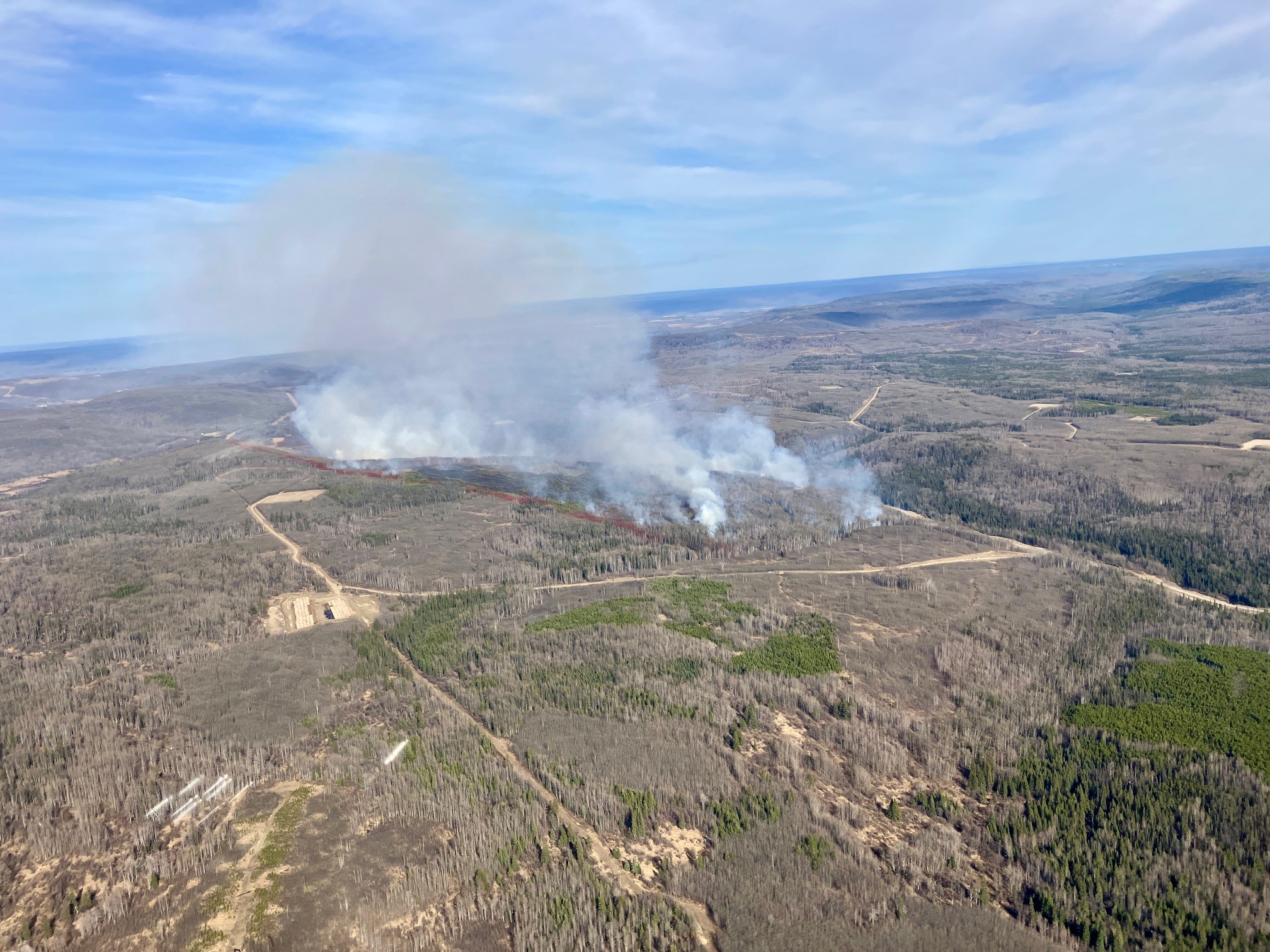
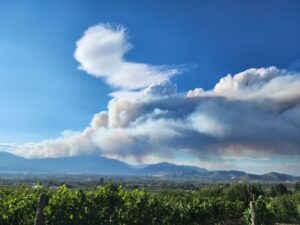 Firefighters from Fort St. John and the B.C. Wildfire Service were battling a blaze that prompted evacuations late Thursday, the city said. The fire is in the Fish Creek Community Forest on the northern outskirts of the city. …The wildfire service website indicates the out-of-control blaze was discovered Thursday and spanned an estimated 0.56 square kilometres — about four times the size of Granville Island in Vancouver — as of 7:32 p.m. The suspected cause of the fire is human activity. The fire is one of nearly two dozen active across BC on Thursday, as the provincial government warned that a combination of warm, dry conditions and strong winds would raise the fire risk in southern parts of B.C. It’s one of two blazes classified as burning out of control, the other being a 1.85-square-kilometre blaze that began as two separate fires about 30 kilometres southwest of Dawson Creek, which is south of Fort St. John.