 Vancouver — The BC Lumber Trade Council (BCLTC) strongly opposes the U.S. Department of Commerce’s preliminary decision to increase anti-dumping duties on Canadian softwood lumber to 20.07%. This unjustified move will negatively impact forestry workers and communities in British Columbia, while further burdening homebuilders, consumers, and the broader construction sector in the United States. “It is deeply disappointing that the U.S. continues to impose these protectionist trade measures” said Kurt Niquidet, President of the BC Lumber Trade Council. “The fact remains that the United States relies on Canadian softwood lumber imports and these duties will harm not only the B.C. forestry industry, but also U.S. consumers, who will bear some of the cost”. Ongoing rebuilding efforts in North Carolina and California, where affordable and reliable lumber is critical to recovery, will be more expensive as a result of this decision.
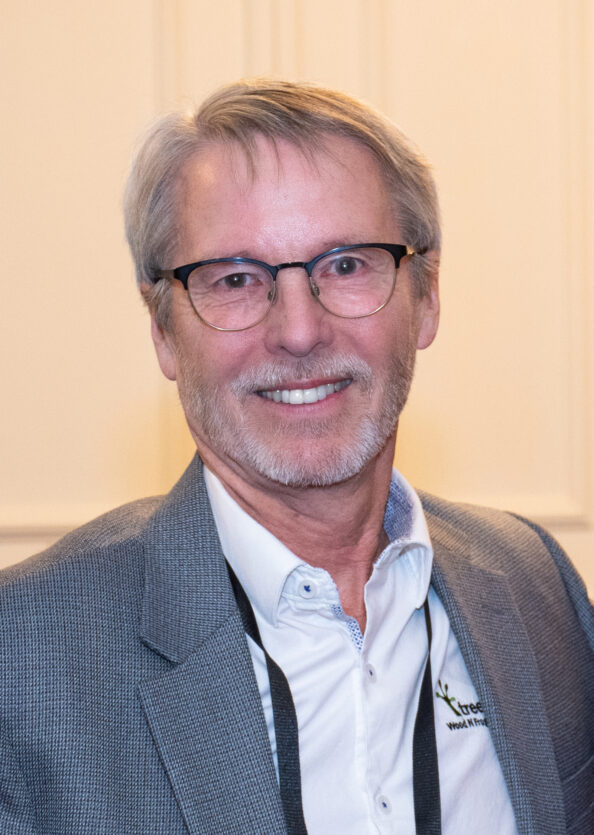
 US President Trump on Saturday
 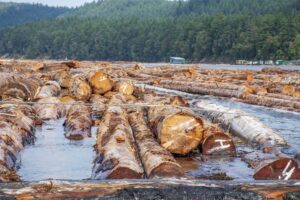 Donald Trump has ordered a probe into dumping in the US lumber market, setting the stage for the industry to join the widening basket of commodities targeted by Washington’s global trade war. The president directed the Department of Commerce to investigate whether imports of lumber and wood products were undermining domestic loggers in a way that posed a risk to US national security, days after ordering a similar review of the copper industry. …Forestry is big business for Canada. In 2022, the sector contributed C$33.4bn to real GDP, or about 1.2%. In the same year Canada’s forest product exports were valued at C$45.6bn, with the majority destined for the US. …Derek Nighbor, FPAC president, said any increase in tariffs on lumber would hurt forest sector employees on both sides of the border. …But Andrew Miller, chair of the US Lumber Coalition, said: “Canada’s unfair trade comes at the direct expense of US companies and workers.”

 WASHINGTON — U.S. President Donald Trump said again Wednesday he plans to hit Canada and Mexico with devastating duties — but a White House official confirmed on background that the tariff plans could change through negotiations. …He signed an executive order to implement “reciprocal tariffs” by raising U.S. duties to match the tax rates that other countries charge on imports starting April 2. He ordered 25% tariffs on all steel and aluminum imports into the United States on March 12. Trump also floated the idea of imposing tariffs on automobiles and forest products in April. …Trump himself seems to be having a hard time keeping track of his massive tariff agenda. …Many experts say Trump’s actions are intended to shake up Canada and Mexico ahead of a review of the continental trade pact. The Canada-U.S.-Mexico Agreement was negotiated during the first Trump administration to replace the North American Free Trade Agreement.
 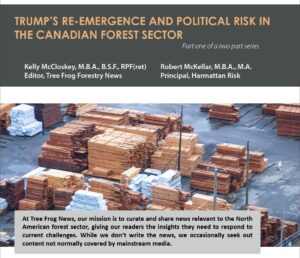 Yesterday, we featured an op-ed by political risk management expert Robert McKellar on how Donald Trump’s re-election is changing the political risk landscape for the Canadian forest sector. While U.S. trade disputes are not new, the unpredictability of Trump’s approach to trade policy creates new challenges that Canadian exporters must assess and manage. McKellar presents a structured way to evaluate these risks using the devil’s advocacy approach, a method that considers both worst- and best-case scenarios to develop a balanced assessment. Trump has proposed three different types of tariffs—bi-national, product-specific, and reciprocal—which, if applied together, could significantly impact the sector. By examining multiple possibilities, McKellar provides companies with a way to better prepare for potential disruptions rather than reacting in crisis mode. And as today’s
 Landscape to Local: Integrated solutions to wildfire, conservation, community safety and economic development: As wildfires intensify and land use policies evolve, finding solutions requires cooperation across governments, First Nations, local communities, labour and industry. The “Landscape to Local” panel will tackle critical issues, shedding light on real world strategies, innovative practices and community-driven approaches to address the dual challenges of protecting our forests while supporting local economies. Join our distinguished panel of experts: John Kitzhaber, Former Governor of Oregon; Ward Stamer, MLA for Kamloops-North Thompson and BC Conservative Critic for Forests; Klay Tindall, General Manager of Lil’Wat Forestry Ventures; James Whitehead, Engagement Analyst with the Mitigating Wildfire Initiative at SFU’s Wosk Centre for Dialogue; and Moderator Zara Rabinovitch, Vice President of Sustainability & Public Affairs at COFI.
 A key government program designed to help older forestry workers transition into retirement has officially closed after assisting more than 2,200 individuals since its inception in 2019. The Bridging to Retirement Program, launched in response to economic challenges in the forestry sector, has distributed over $92 million in funding, helping affected workers retire early while opening up job opportunities for younger employees, according to the government. The program, which began in October 2019, reached capacity and officially ceased intake on February 26, 2025. Initially funded with $40 million, the program was later expanded to $50 million and renewed in 2021 with a three-year funding commitment. Eligible workers aged 55 and older were provided with financial support of up to $75,000 each, based on their experience and employer contributions. …When first announced in 2019, the provincial government pledged $69 million in forestry support programs to mitigate job losses, strengthen community resilience, and promote economic recovery. …While the program has concluded, new concerns loom over the B.C. forestry sector.
 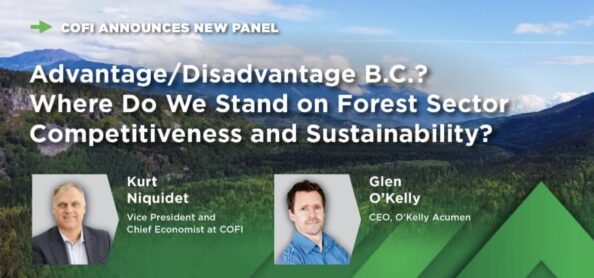 At the 2025 COFI Convention, we’re diving deep into B.C.’s forest sector competitiveness and sustainability—and how we compare to leading global regions. Join Kurt Niquidet, COFI’s VP & Chief Economist, and Glen O’Kelly, CEO of O’Kelly Acumen, as they reveal findings from a new study benchmarking B.C. against 10 international jurisdictions—including Sweden, Finland, Austria, the U.S., and Brazil. Key insights include: Strengths & Weaknesses – What industry leaders are saying about B.C.’s competitive position; Global Comparisons – How B.C. stacks up on economic and sustainability performance; and Opportunities for Growth – Strategies to strengthen B.C.’s competitive edge. This is a must-attend conversation for anyone invested in the future of B.C.’s forest industry. Don’t miss it—Register before the end of Early Bird Pricing on March 3!
 The perpetually moving target of tariffs on Canadian lumber shipments to the US frustrated traders and had broad impacts on sales in many species. Despite middling demand, the threat of tariffs combined with relatively tight supplies left many prices higher for the week. The delay in announcement of preliminary AD rates by the Commerce Department injected further uncertainty. Despite inconsistent trading throughout February, the Random Lengths Framing Lumber Composite Price recorded its fourth straight increase and hit $461. That is its highest level since July 2023. Western S-P-F sales were steady but uneventful. Canadian mills weighed their responses to potential tariffs with plans ranging from adders on quoted levels to managing production and focusing sales to non-US destinations. Lumber futures were extremely volatile, swinging aggressively to every news report. The Southern Pine market was in disarray as traders processed a constant flow of mixed signals.
 MONTREAL — Stella-Jones announced financial results for its fourth quarter and year ended December 31, 2024. Sales for the fourth quarter of 2024 amounted to $730 million, up 6% from sales of $688 million for the same period in 2023. …Net income for the period amounted to $52 million compared with $56 million in the corresponding period of 2023. …Sales for the year ended December 31, 2024 reached $3,469 million, up 5%, versus sales of $3,319 million in 2023. Net income in 2024 was $319 million, compared to net income of $326 million in 2023. Despite the lower net income, earnings per share in 2024 was higher at $5.66 versus $5.62 in 2023 due to the continued repurchase of shares. …Eric Vachon, CEO of Stella-Jones, “We achieved solid results in our infrastructure product categories, even in the face of softer market demand. We acquired new customers, maintained our expanded EBITDA margin of over 18%, and delivered strong operating cashflows.”


 VICTORIA – Workers and communities throughout B.C. are benefiting from Forest Enhancement Society of BC (FESBC) supported projects that reduce wildfire risk and increase fibre supply, keeping local mills and energy plants running in the face of U.S. tariff threats and unjustified softwood lumber duties. With $28 million from the Province, FESBC is supporting 43 new and expanded fibre-recovery projects and 31 new and expanded wildfire-mitigation projects. “In tough times, I want workers in our forest sector to know I’ve got their back,” said Ravi Parmar, Minister of Forests. “Whether it’s better utilizing existing sources of fibre or helping protect communities from wildfire, the projects are supporting workers and companies as they develop new and innovative forest practices.” Projects are taking place in all eight of the Province’s natural resource regions, helping create jobs, reducing wildfire risk and supporting B.C.’s pulp and biomass sector. They will be complete by the end of March 2025, in advance of wildfire season.
 BURNABY, BC
 The Willow Creek watershed project will restore wetlands and watercourses in the Homalco First Nation’s territory to reduce flooding and other climate disaster risks, but also boost cultural values and sustainable economic development, said Xwémalhkwu (Homalco) Chief Darren Blaney. Wetlands and riparian areas are critical because they slow and store water moving across the landscape during heavy rains to prevent floods and reduce the wildfire risk created when forests dry out. The Xwémalhkwu, whose territory is in the Campbell River area, recently secured $1.5 million in provincial funding for watershed mapping to identify flood risks and environmentally important areas, Blaney said. The project will focus on balancing the community’s climate resiliency with ecological needs. …Collaborating with partners like Strathcona Regional District will create a holistic approach to flooding that will also protect downstream neighbours, like Campbell River’s Willow Point community, David Carson, Homalco’s emergency planning and land use consultant noted.
  The province’s review of B.C. Timber Sales (BCTS) is based on a false contention the industry is running out of wood because of allowable annual cut reductions, says the Valhalla Wilderness Society (VWS). VWS said the Ministry’s review of BCTS to ensure the province’s forestry sector “is continually evolving to overcome challenges and create a guideline for a stronger, more resilient future” is barking up the wrong tree. VWS’ Anne Sherrod said the province’s intention to protect more old-growth and reform forestry in a more environmentally beneficial manner lasted only until the forest industry applied enough pressure. …Logging companies were already moving their mills and jobs out of B.C. long before U.S. President Donald Trump was elected, said Sherrod, and claims the province continues to reduce the allowable annual cut, or isn’t signing permits fast enough and environmentalists are depriving them of wood, are just excuses.
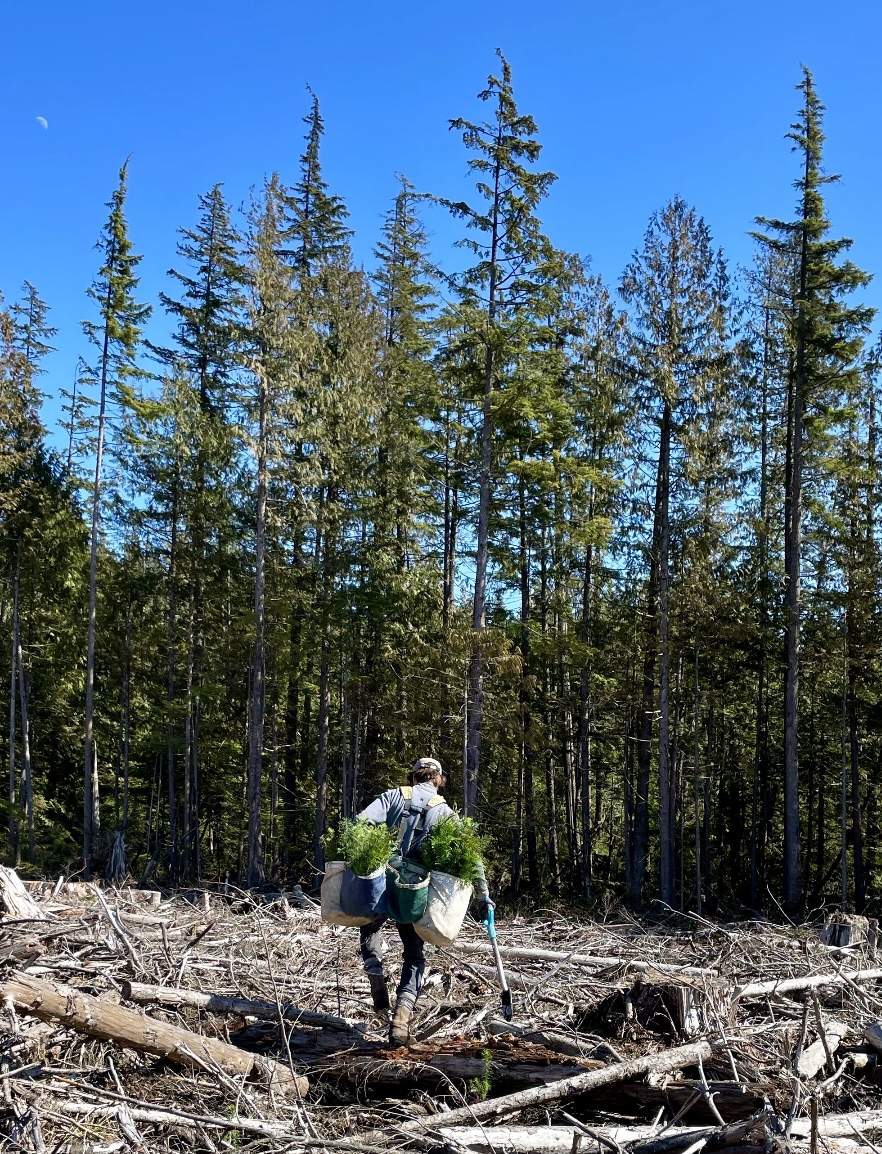 The Tłı̨chǫ Government in the Northwest Territories signed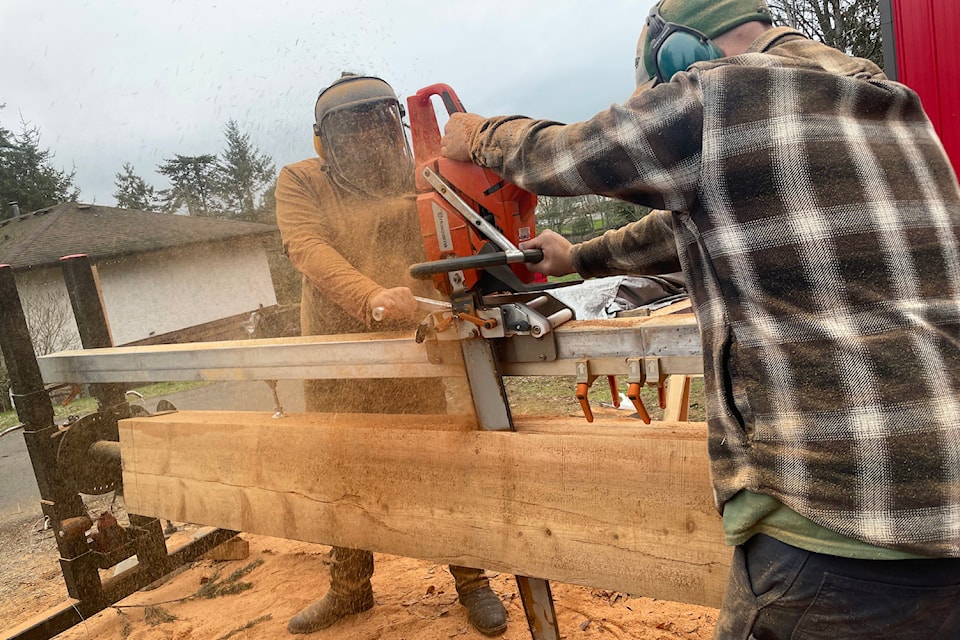

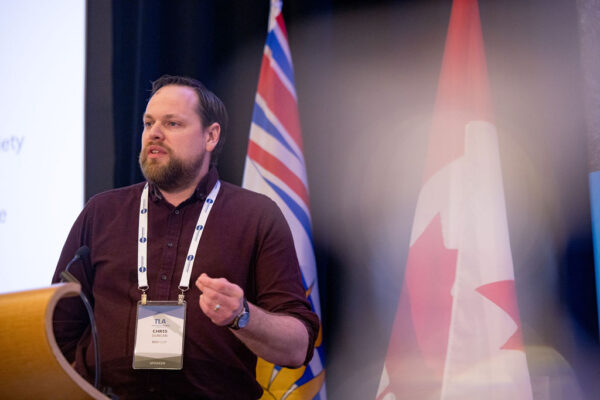
 Recently there has been discussion about upcoming forest harvesting plans on Tree Farm Licence 47 on Quadra Island. This area is within the unceded and core territory of the We Wai Kai Nation, who approves all forest management activities on the TFL. The Nation and Mosaic Forest Management have worked closely to develop a constructive relationship based on the recognition that as title holder, We Wai Kai has the right to ensure that resources on Quadra Island are being managed consistent with their conservation values and their right to benefit economically from resource extraction on their title lands. The Nation’s logging company, Way Key, is conducting all harvesting on the TFL on Quadra. Both We Wai Kai and Mosaic recognize there is interest in future harvesting activities. We also know that Islanders want a map that identifies where the old growth is (as part of a spatially explicit strategy) before harvesting occurs.
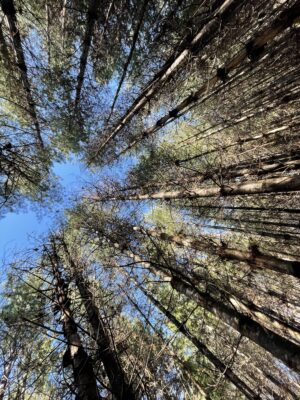 The Kaslo and District Community Forest Society (KDCFS) revisited previous board discussions about future logging plans needed to mitigate fires. During a Feb. 20 meeting, KDCFS members highlighted the demand for cedar and fir while highlighting that several blocks of hemlock trees have been damaged by past fires, rendering some unusable. The Briggs Creek fire that occurred in 2022 led to the destruction of many hemlock trees that will need to be harvested in the next two years before deteriorating. Society forester and treasurer Jeff Mattes explained that the society’s logging plans for the year 2025 will include utilizing a patch-cut system to reserve some of the trees. A patch-cut system refers to the removal of an entire stand of trees less than one hectare.
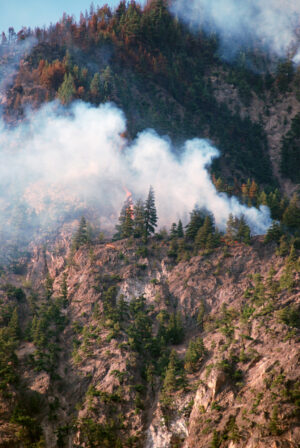 Devices used to detect and prevent wildfires in remote forests are expensive, but the one that Northeastern University student Anson He is making will be cheaper to launch on drones over dense woodlands. He is pursuing his master’s degree in computer science at Northeastern’s Vancouver campus. In January, he started a co-op at Bayes Studio — a Vancouver company that uses robotics and machine learning to make forest fire detection tools. He is helping to produce a device that uses less expensive components than others on the market. His role is core to the small company’s success: He is in charge of prototyping the hardware and coding the software for what Bayes calls its Edge device. Other team members work on integrating artificial intelligence into the device’s functionality and connecting the device to servers.
 YELLOWKNIFE, NT
 A major shift in environmental policy seems to spreading around the world. The most high-profile indicator of the shift is Germany, where Social Democratic Chancellor Olaf Scholz and his Green Party coalition partner were thrown out of office on Sunday… The only question left is how far the green wave has receded in Germany — and across Europe. The French government has been accused of watering down environmental regulations. Elsewhere in Europe, green parties have been “kicked out of government” in Austria, Belgium and Ireland. While the Canadian policy establishment resists declaring a trend, the carbon war has moved down the priority ladder, as evidenced Monday during the French-language Liberal leadership debate. A party that’s about to pick Mark Carney, the planet’s top climate-policy powerbroker, as leader, rolled through two hours of debate without coming up with anything coherent to offset its about-face removal of its own consumer carbon tax.
 Polarization is gripping the country and the centre isn’t holding, Environment and Climate Change Canada found when setting the country’s latest emissions reduction target. The department solicited feedback… to determine what Canada’s internationally binding 2035 pollution reduction obligations should be. …The results found that overcoming polarization is a major hurdle to implementing aggressive emissions reductions that climate scientists say is required to avoid catastrophic warming. About two-thirds of Canadians who participated support stronger measures to address climate change. “There was little middle ground, and very few people were satisfied with the status quo,” according to the findings. …When asked if the federal government is doing enough to fight climate change, 47% believe Canada needs to do more, compared to 36% that feel existing measures go too far. …Polarization is gripping the country and the centre isn’t holding, Environment and Climate Change Canada found when setting the country’s latest emissions reduction target.
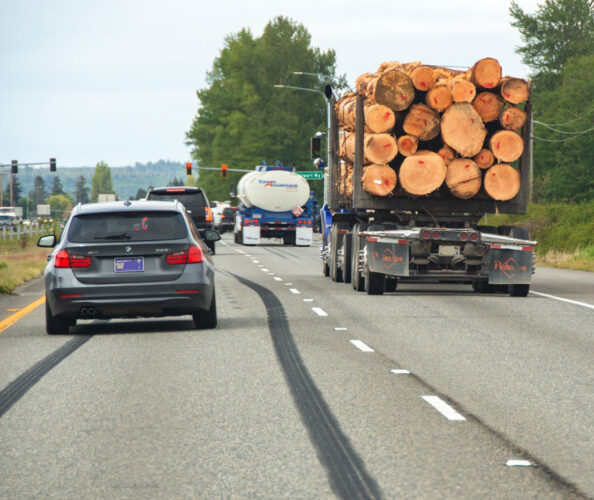 British Columbia is set to require Canadian products to fulfil renewable fuel standards for gasoline and diesel, a move Energy Minister Adrian Dix said was aimed at building a “cleaner, stronger and more self-reliant” province. Dix said B.C. is too reliant on fuels from outside Canada, making the province vulnerable to market fluctuations and other external pressures. At the same time, he said the United States provides “dramatic subsidies” for its own biofuel industry to a degree that curtails the industry in B.C. and Canada. “For too long, B.C. biofuel producers have operated in a market where their American counterparts benefited from subsidies that gave them a considerable competitive advantage,” he told the news conference announcing the changes. …Ian Quartly, chief financial officer of Tidewater Renewables, joined Dix and said the changes are a positive step toward supporting an economically viable domestic renewable fuels industry.
 Don’t miss the March edition of the BC Forest Safety Council newsletter. It’s jam-packed with information about Safety Heros like Shawn Flynn and Brian Penny. Health updates about pain management, off-road vehicles, managing the last of the snow and daylight savings! How do you stay safe when you find yourself under water? Does your team have an emergency response plan? Plus, what’s new, upcoming events, and even a cheerful rabbit for you to colour in your down moments! Check out this month’s BC Forest Safety News
 The Alberta Occupational Health and Safety Appeal Body has denied an appeal from a West Fraser Mills worker who was suspended for one day without pay and received a disciplinary letter that he claimed was retaliation for acting in compliance with workplace safety rules. The appeal panel upheld the original ruling, noting that it properly applied the standard of review in determining the employer had met its burden of proof. The case involved S.G., an employee of West Fraser Mills Ltd., operating as Ranger Board. S.G. filed a complaint under section 19 of Alberta’s Occupational Health and Safety Act (the Act), alleging the discipline was imposed in retaliation for acting in compliance with occupational health and safety requirements.
 A B.C. company has been fined just under $9,000 for the death of a worker. A WorkSafeBC penalty summary posted online says Crescent Bay Construction Ltd. was fined $8,995.26 on Jan. 23 for the incident at a worksite in Beaton, located south of Revelstoke on the shores of Upper Arrow Lake. “This firm was performing maintenance work on a bridge deck on a forest service road,” said the penalty summary. “WorkSafeBC attended the site after a worker was struck by a tree that fell from a cliff face above the work area. The worker sustained fatal injuries.” WorkSafeBC says their investigation determined “the firm did not adequately identify the hazard of dangerous trees or assess the risks they presented to workers.” The company also failed to “conduct a dangerous tree assessment by a qualified person before work began and failed to ensure the health and safety of all workers at the worksite, both high-risk violations.”
 Consultation on proposed B.C. Exposure Limits (ELs) based on the new or revised 2021, 2022, 2023, and 2024 ACGIH TLVs for selected chemical substances. The American Conference of Governmental Industrial Hygienists (ACGIH) regularly publishes a list of substances for which they have set new or revised Threshold Limit Values (TLVs). A TLV is the airborne concentration of a chemical substance where it is believed that nearly all workers may be exposed over a working lifetime and experience no adverse health effects. TLVs may be expressed as an 8-hour time-weighted average (TWA), 15-minute short-term exposure limit (STEL), or ceiling limit. Before adopting new or revised TLVs published by the ACGIH, WorkSafeBC reviews relevant data on health effects and the availability of validated sampling methods. …We are requesting stakeholder feedback on the proposed B.C. ELs for 22 substances. Feedback will be accepted until 4:30 p.m. on Friday, March 14, 2025.
