 The BC Truck Loggers Association is pleased to share and invite you to access the newly developed B.C. Timber Harvest Rate Model. The tool was built using data provided by contractors as a joint project of the TLA, ILA and NWLA. The tool calculates the hourly rates for equipment used in BC’s forest industry. It’s designed to give contractors a baseline rate for a selected piece of equipment, serving as a starting point. The rates in the model reflect the required revenues of a contractor who runs a reasonably efficient operation; however, they may vary based on specific operations. The parameters (such as labour and fuel) can be adjusted in the model to calculate rates tailored to specific needs.
Please note that this model is ever-changing and not meant to be static. Based on user feedback, it will be updated and refined over time to ensure that it meets contractors’ needs. To ensure this model works for contractors, we need their continuing input. Please share your thoughts on the model – what works, what might need some tweaks, and your overall impressions.
To access the model and create an account, go to bctimberharvest.ca.



 Canadian Forest Owners (CFO) reached out to the five federal political parties with current representation in parliament to ask how their party would support the thousands of rural communities across Canada where these forest owners live. Canadian Forest Owners represents 480,000 private forest owners from Prince Edward Island to Vancouver Island. These forest owners are largely family owned, small business, who own over a tenth of Canada’s managed forests, supporting every mill across the country, and accounting for nearly 20 percent of Canada’s total forest production. Private forest landowners provide solutions to climate change and real socio-economic development opportunities in rural communities from coast to coast. Here’s what they had to say…

 Statistics Canada says the Canadian economy shrunk in the month of February, but declines might not last long, as early signs for March point to moderate GDP growth. The agency says real gross domestic product decreased 0.2% in February. This follows previous growth in the month of January of 0.4% overall. While goods-producing industries pulled the economy up in January, Statistics Canada says it saw a decline of 0.6% overall for February. …Statistics Canada says 12 of the country’s 20 industrial sectors saw declines in February. But the manufacturing sector bucked the trend — that industry saw a 0.6% rise in February. …Advanced information from Statistics Canada indicates that real GDP increased by 0.1 per cent last month. The agency says the annualized growth rate for the first quarter of 2025 based on the March flash estimate is 1.5 per cent.
 Risks are high that the global economy will slip into recession this year, according to a majority of economists in a Reuters poll, in which scores said US President Donald Trump’s tariffs have damaged business sentiment. Just three months ago, the same group of economists covering nearly 50 economies had expected the global economy to grow at a strong, steady clip. …While Trump has suspended the heaviest tariffs imposed on almost all trading partners for a few months, a 10% blanket duty remains, as well as a 145% tariff on China, the United States’ largest trading partner. …Showing unusual unanimity… three-quarters of economists cut their 2025 global growth forecast, bringing the median to 2.7% from 3.0% in a January poll. …China and Russia were forecast to grow 4.5% and 1.7% respectively, outperforming the US. However, growth forecasts for Mexico and Canada were downgraded from January by some of the largest margins, to 0.2% and 1.2%.
 After we marked Earth Day last week, the significance of forests for conservation, community benefits and human health has never been more urgent to acknowledge. Forests play many critical roles for nature and people: they provide habitat for hundreds of species, act as water filters, reduce air pollution, and are places of community connection, recreation and refuge. However, many pressures, including severe storms and wildfires, invasive alien species and habitat loss threaten these ecosystems, the benefits they provide and the relationships they support. …The economic value of our forests is just as vital as their ecological importance. According to the Forest Products Association of Canada, more than 200,000 Canadians earn their livelihood directly from forestry, sustainable agriculture and eco-tourism, contributing an impressive $87 billion in annual revenue. …The call is clear: safeguarding Canada’s forests means safeguarding ourselves. Our natural resiliency, our economic prosperity and our health require us to do our part.
 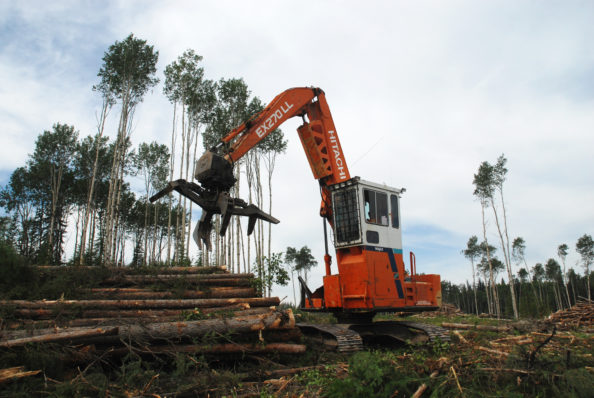 …As northern B.C. sawmills have closed over the past few years, a common refrain has been in each company press release. Punishing tariffs, high log costs, lack of access to B.C.’s plentiful timber and uncertainty in permitting processes… Is this the opening we need to dispense with the notion we need to begin turning B.C. into one big park for the world to enjoy? …Although B.C. has lost many of our lumber manufacturing facilities, our main ingredients are still here – our forests, its trees and a workforce, which when combined, provides for some of the best quality forest products in the world. Despite the economic hit our rural communities and residents have sustained with the loss of our forest industry, it is only a temporary setback, if we treat it as such, and do not let our governments succumb to the “end the forest industry” ideology that is so prevalent today.
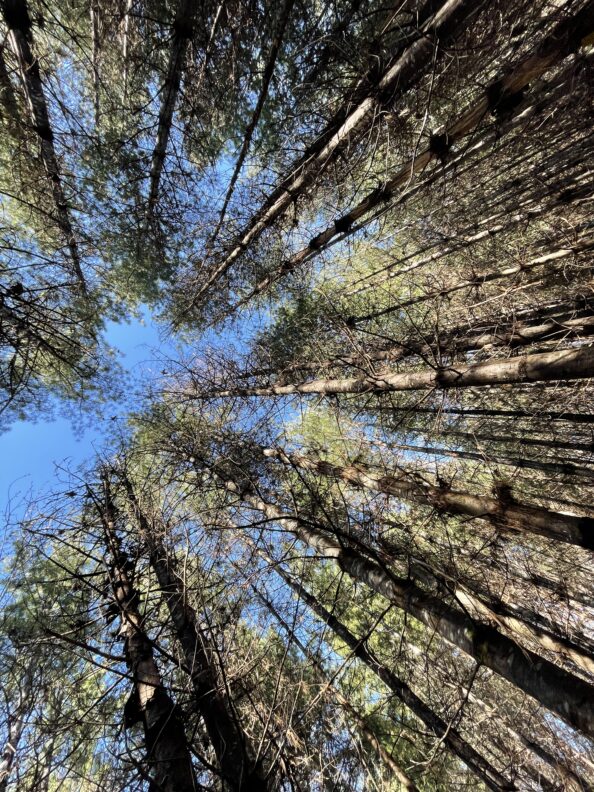 The Forest Enhancement Society of BC has given over $5 million for 18 projects in the Cariboo Region. Executive Director Jason Fisher said the Society distributes the money on behalf of the Province to invest in Forest Management activities related primarily to two major functions. “There’s the wildfire risk reduction, which involves going in and removing potentially some of the crown closure, removing some of the stems, some woody debris off the ground and making forest stands more resilient in the event of wildfire or less likely a wildfire that occurs in those stands would lead to more catastrophic wildfires.” Fisher said the other major function is wood recovery and utilization. In damaged stands, or post harvesting “we will help support applicants in going in, collecting that wood [debris] and bringing it to facilities like pulp mills or pellet plants to generate economic opportunities.”
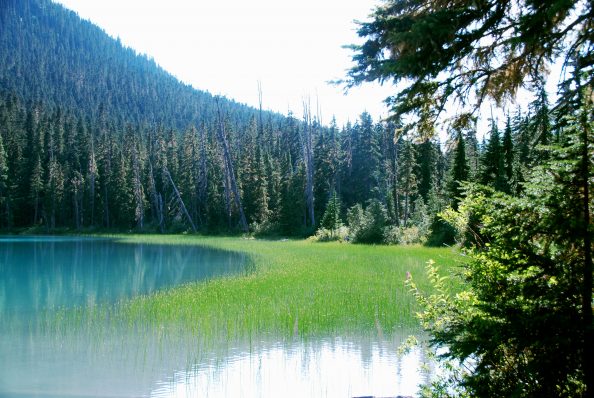 A temporary closure will take place at Pipi7íyekw/Joffre Lakes Park to provide time and space for members of the Líl̓wat Nation and N͛Quatqua to reconnect with the land and carry out cultural and spiritual practices. Pipi7íyekw/Joffre Lakes Park has become one of the busiest parks in the province. As more people go to the park, there is a need for enhanced visitor-use management, ensuring the park is not degraded by heavy use. Temporary closures to the park for recreational visitors will occur from April 25 until May 16, 2025. Beginning Saturday, May 17, adults and youth older than 12 will require a free day-use pass to visit the park. …The park is collaboratively managed with Líl̓wat Nation and N’Quatqua with the primary goal of maintaining the natural environment, and so the Nations can continue their cultural practices on their territory.
  Communities and workers throughout British Columbia are benefiting from 64 new Forest Enhancement Society of BC (FESBC) supported projects that reduce wildfire risk, enhance forest health and get more fibre into the hands of mills and energy producers. “The projects will remove almost 11,000 truckloads of flammable waste fibre from our forests,” said Ravi Parmar, Minister of Forests. “…This fibre that once would have been burned in slash piles will instead support workers and help keep communities safe.” With $19 million in provincial funding, projects will take place in all eight of the Province’s natural resource regions. This includes 31 led by First Nations and another 14 with First Nations involvement, demonstrating the critical leadership role First Nation communities are playing in restoring and protecting B.C.’s forests. This funding is part of the $90 million allocated in 2025 for wildfire-prevention initiatives through BC Wildfire Service, FireSmart initiatives and FESBC.
 The BC government says it will only meet half of its 2030 target to lower greenhouse gas emissions. In an annual
  VANCOUVER, BC — Svante Technologies, a leader in carbon capture and removal technology, announced that its joint carbon capture and storage project with Mercer International has advanced to the Front-end Engineering and Design Phase 2 (FEL-2). Also known as Pre-FEED, this phase involves engineering, cost estimation, and risk analysis to evaluate the project’s commercial viability. …The carbon capture project targets biogenic CO2 emissions from Mercer’s Peace River pulp mill, where the biomass is sourced from sustainably managed forests. Advancing to the Pre-FEED stage will support further development of the integrated design, cost estimates, and risk assessments—key steps toward a final investment decision and potential implementation. …Utilizing a Novel Carbon Capture Technology for Commercial Deployment, Svante’s second-generation capture technology maximizes low-grade waste heat from pulp mills, reducing energy consumption and increasing cost-effectiveness.