 Working in forestry can be challenging, not just physically, but psychologically as well. That’s why WorkSafeBC is advising forestry employers and workers about the importance of paying attention to psychological health and safety.
 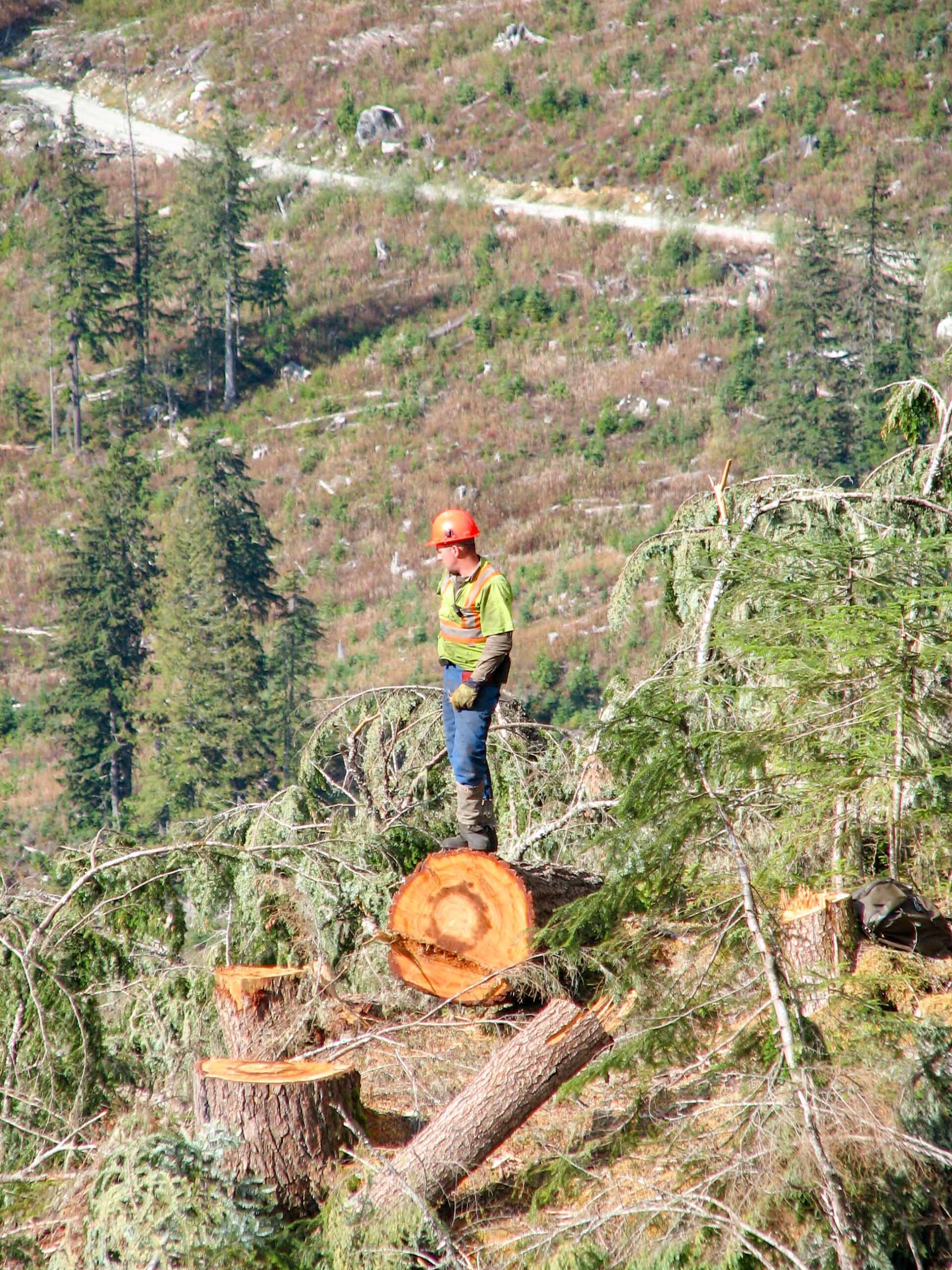 Managing psychological health and safety in the workplace is as important as managing physical health and safety. A psychologically healthy and safe workplace prevents harm to workers’ mental health and promotes mental well-being. While many factors outside the workplace can affect mental health, it is an employer’s responsibility to address the factors that are within the control, responsibility, or influence of the workplace. Psychological health and safety involves how people interact with each other daily, how working conditions and management practices are structured, and how decisions are made and communicated. In the forestry sector, workers face unique psychological challenges, including financial stress from an unstable market, job instability, social isolation, and the impact of climate change and severe weather conditions.
 They are also required to conduct regular emergency and first aid drills as part of their annual drill requirements to ensure workers understand their roles and responsibilities. As forestry operations in BC move into more remote and rugged areas, getting help to an injured worker quickly can be a serious challenge. …To help companies build stronger ERPs—especially when it comes to worker extraction—the BC Forest Safety Council and the Trucking and Harvesting Advisory Group created a video series.
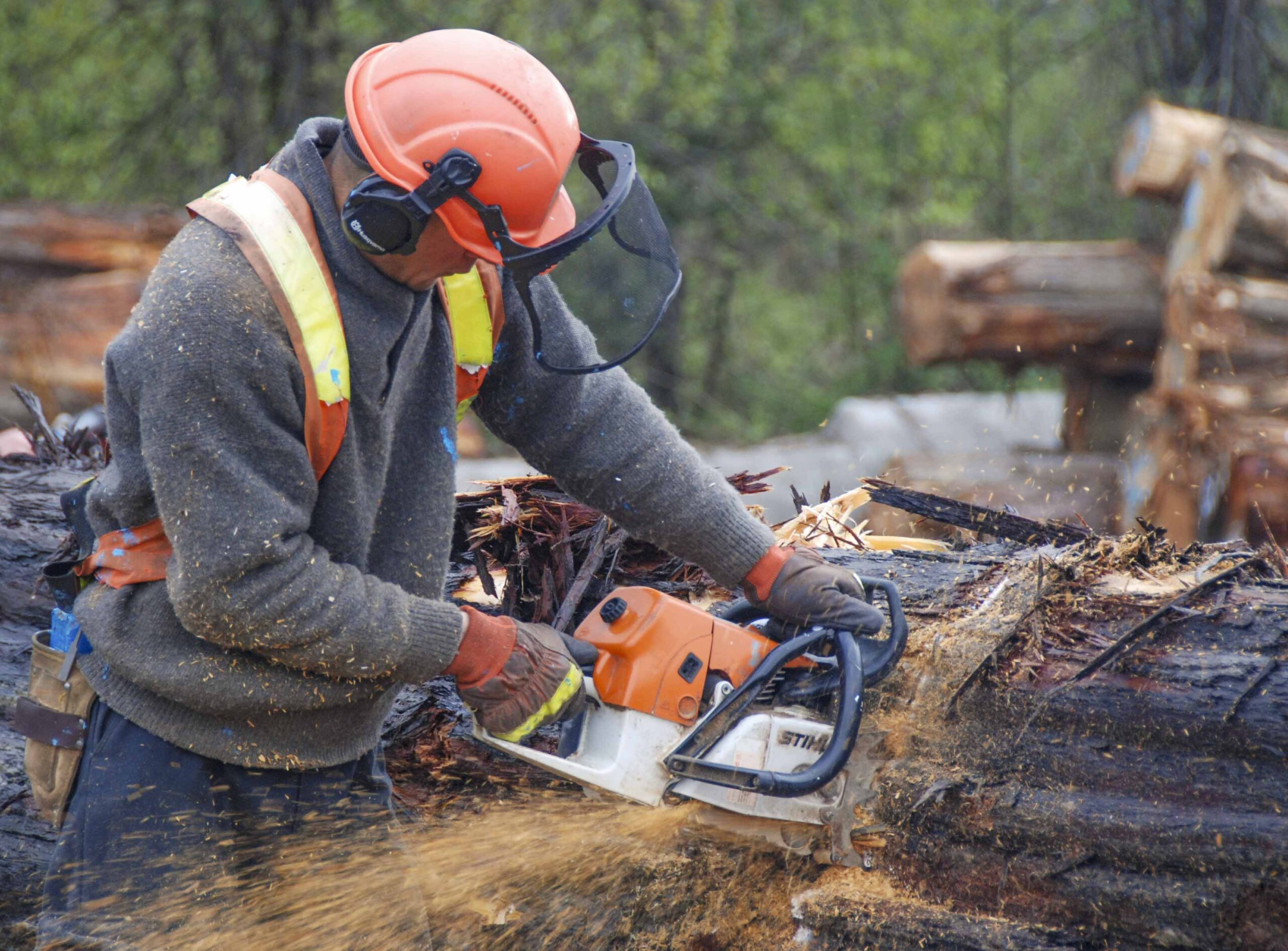 Noise-induced hearing loss (NIHL) is not just a long-term risk, it’s a fast-growing occupational disease that affects workers across the province. Over the past decade, WorkSafeBC has accepted almost 2,000 claims for hearing loss in the forestry sector. To prevent hearing loss, employers in the forestry sector must proactively recognize risks and understand the specific tasks workers will undertake, making pre-work planning a key step in injury prevention. The impact of noise on hearing “The risk of hearing loss depends on both noise level and exposure time,” says Sasha Brown, an occupational audiologist with WorkSafeBC. “For example, brief exposure to extremely loud noise or sustained exposure to moderate levels can be equally damaging to hearing.”
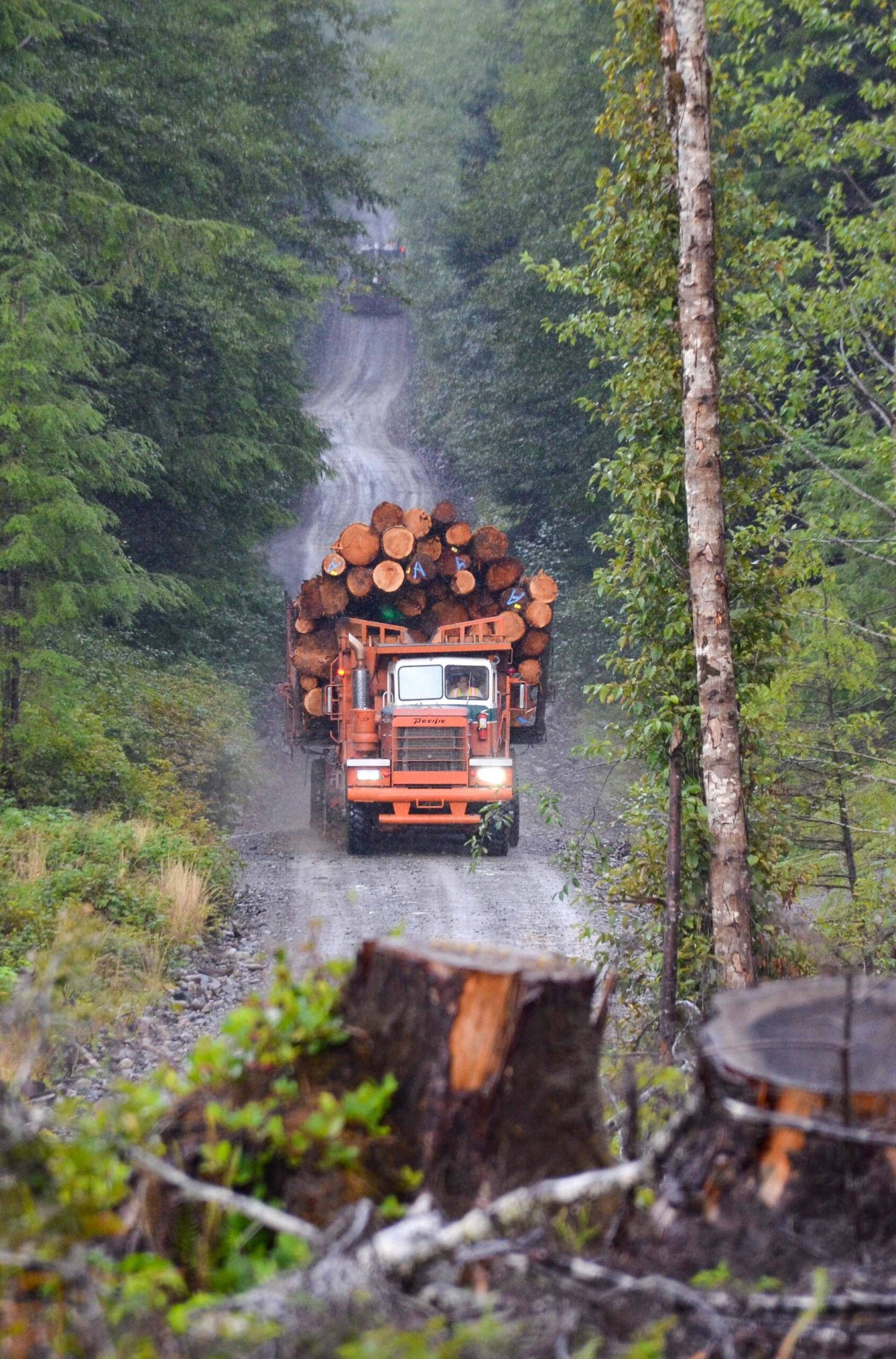 All resource road users play a key role in ensuring safe passage on these roads. Always exercise caution and have an understanding of the risks. Most resource roads have gravel surfaces and are often single lanes with limited visibility due to roadside brush and sharp, winding turns and curves. They often have soft shoulders, minimal ditches, steeper grades, changing road surfaces with loose or rough gravel and potholes. Drivers should always read and understand the signs at the start of the road and along the way as they provide important information about the road, radio channel, restrictions, expected traffic and other hazards and obstacles you may encounter while driving.
 BC Hydro data shows that severe weather events in the last 3 to 5 years have led to some of the most damaging storms in BC Hydro’s history. BC’s forest health aerial surveys show that the area of windthrown timber in 2021 (12,600+ ha) was 3 times the average over the last decade. Wind events pose significant risks to people working on and traveling to and from woodlots and community forests. This bulletin provides licensees, managers and workers with guidance and resources they can use to plan and conduct operations that minimize risk of injury to workers during those events.
 Canada continues to stare down the barrel of the American trade war. The United States-Mexico-Canada Agreement faces its first big review in 2026. This country remains in a uniquely high-stakes moment. …This will, and will always be, an uneven fight. Canada is 40 million people and only the world’s ninth largest economy. A middle power is going up against the world’s richest and most powerful country. How exactly is it even possible for Canada to win in this asymmetric trade war? Crucially, this conflict isn’t just about steel, soybeans or softwood lumber – it’s about narrative and power. …US President Trump frames trade deficits as proof that the US is “losing”:
 A U.S. court delivered a sharp rebuke of President Donald Trump’s trade policy on Wednesday, declaring he abused his authority and striking down many of his tariffs — at least for now. The upshot for trading partners, including Canada: Certain specific tariffs on steel and aluminum remain in place, but gone, for now, are sweeping levies on entire countries. The order by the Manhattan-based U.S. Court of International Trade quashes Trump’s 10 per cent across-the-board tariff on most nations and his declaration of a fentanyl emergency to impose 25 per cent tariffs on numerous Canadian and Mexican goods. The White House vowed to fight back with every available tool. This means an
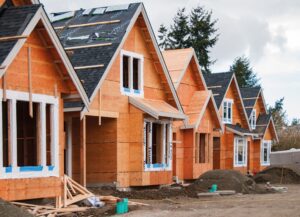 A pause on some tariffs creates a window for Canadian companies to re-examine their risk profiles and work with brokers to secure needed coverage. Both Bay Street and Wall Street are cheering the ruling from the US Court of International Trade that, at least temporarily, tamps down the 10% tariffs the White House imposed on most countries, and drug-related emergency orders setting 25% tariffs on some goods from Canada and Mexico. …Some companies may use tariff lulls to stock up on certain key materials. …Construction companies, for example, often import flooring products from the US, even though Canadian builders have good access to lumber. For them, stockpiling those materials reduces the economic impacts of both US tariffs and Canadian retaliatory tariffs. …Additional optimism arrived via King Charles III’s Speech from the Throne this week. The document opening Canada’s parliament commits to major economic initiatives, including large-scale increases in housing construction.
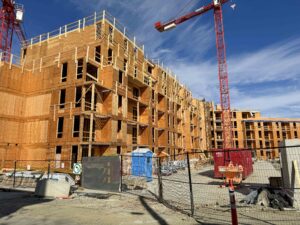 New homes development got a shot in the arm this spring with April starts rising in Canada and the United States. Recent reports from TD Economics examined new home data in both markets, finding month-over-month rises in starts for April. In Canada, starts jumped 30 per cent month over month, marking the largest rise since June 2023. Driving growth was the multi-family family segment that saw starts rise 34 per cent, whereas single-family detached home starts gained six per cent from March. …TD noted the “bounce-back” in activity was not unsurprising given levels were so low to start the year. What’s more, housing starts could “be softening,” amid higher construction costs and lower immigration, it cautioned. In the U.S., activity was less robust by percentage growth. Starts there increased less than two per cent month over month.
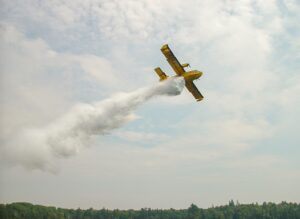 Weyerhaeuser Company and Firefighter Behavioral Health Alliance (FBHA) today announced an extension of their Fighting Fires Together campaign, a partnership that provides specialized mental health support for wildland firefighters and their families across the Pacific Northwest. Fighting Fires Together, now in its fourth year, addresses the often-overlooked mental health impacts of wildland firefighting in isolated, hazardous and highly stressful conditions. Through a free online resource hub, first responders can find specially designed content, including videos about Post Traumatic Stress Disorder, depression, anxiety and suicide prevention, along with mental health tips, educational articles and contacts for occupationally aware support groups and counselors in Oregon, Washington and British Columbia. Weyerhaeuser’s support for wildland firefighting efforts in the Pacific Northwest began in the aftermath of the Yacolt Burn in 1902, when the company began advocating for Washington’s first forest fire legislation and the funding of community fire prevention education and patrols.



 Today, the Honourable Tim Hodgson, Minister of Energy and Natural Resources, and the Honourable Patty Hajdu, Minister of Jobs and Families, announced $15 million to create 470 employment and skills training opportunities for youth across Canada in natural resources sectors including energy, forestry, mining, earth sciences and clean technology. Through the Science and Technology Internship Program (STIP) – Green Jobs, employers in natural resources sectors can apply for funding to hire, train and mentor youth aged 15 to 30 for up to 12 months. These job opportunities will ensure that Canada’s natural resources sectors remain a source of economic growth and prosperity in the future. STIP – Green Jobs is part of the Government of Canada’s
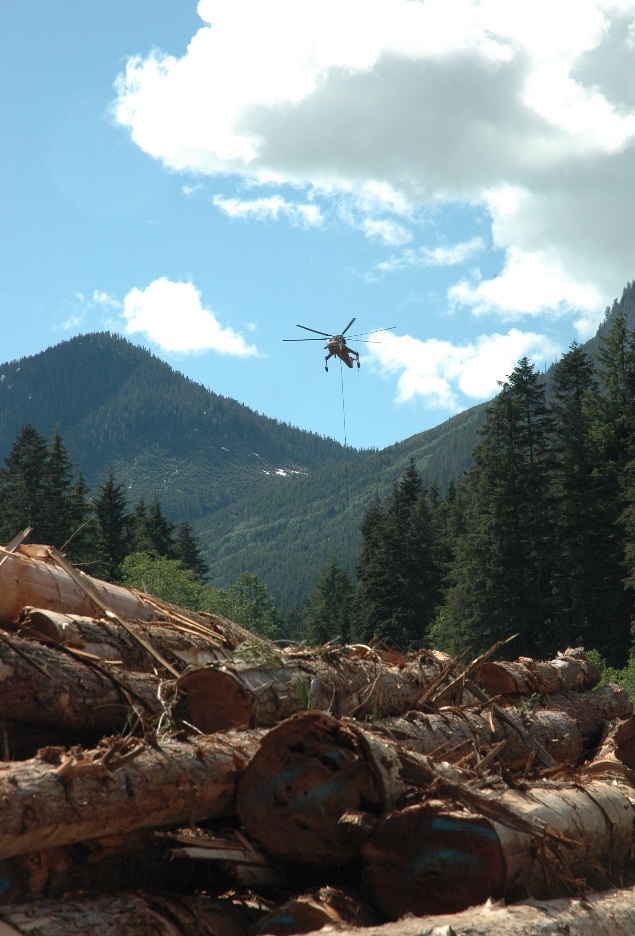 qathet Regional District’s planning committee is recommending the regional board express no objection to a Western Forest Products helicopter logging operation on Powell Lake. At the May 27 planning committee meeting, directors considered a recommendation to advise the provincial ministry of water, land and resource stewardship that the regional district has no objection to the crown land application for a licence of occupation for the purpose of industrial log handling and storage on the northern arm of the lake. Electoral Area A director and committee chair Jason Lennox said there was a detailed staff report on the application. “I’m in support of the recommendation,” said Lennox. “If you read the report, it’s a three-year activity for harvesting into the lake. You will see the different due diligence pieces in there around mitigation measures to the environment; the Powell Region Cabin Owners Association was consulted as well.
 British Columbia’s forests are home to a diverse range of wildlife species, which play a significant role in the ecology of a living forest. At the Forest Enhancement Society of BC, we recognize that responsible forest management plays a crucial role in enhancing wildlife habitat and supporting biodiversity. Because of this, one of our key purposes as an organization is to help improve wildlife habitat within B.C.’s forests. Collaborating with the Habitat Conservation Trust Foundation we have supported over 100 wildlife habitat enhancement projects restoring forest health and evaluating the habitat and wildlife response to fire… In this newsletter: Tick Safety from the BC Forest Safety Council; An interview with Thomas Sullivan, Applied Mammal Research Institute; 64 newly funded forest enhancement projects; Lower Nicola Indian Band wildfire risk reduction; and a UBC Faculty of Forestry survey explores interest in international tours.
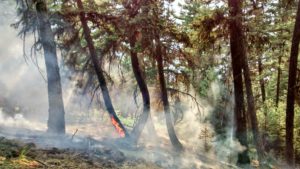 The Red Flag Warning has been sounded by Alberta Wildfire. But what does it mean? It means conditions are ripe for the ignition and fast-moving spread of wildfires. The forest-fire experts use a sliding scale, first adopted by the U.S. National Weather Service, to determine how dry the conditions are in the forest areas, and how the wind could help fan the flames if that dry tinder is ignited. Basically, a score is calculated based on wind speed, heat and the lack of humidity. A sample document provided by Alberta Wildfire shows a hypothetical watch being created when the maximum daily temperatures is expected to hit 33 Celsius, the humidity is at 25 per cent or lower, and wind speeds are 10 km/h. Basically, when it is punishingly hot and dry, it doesn’t take a lot of wind to trigger an alert. “And, just like weather alerts, “watch” is one level below “warning.”
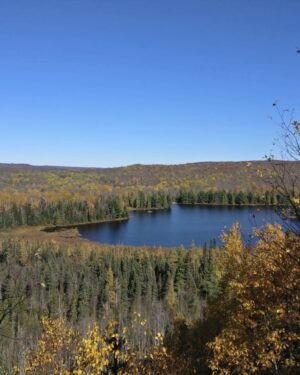 The Quw’utsun Nation and the Municipality of North Cowichan are moving forward on a co-management framework for the Municipal Forest Reserve. The initiative is being developed with the help of Your Wayfinders Management Solutions, a project management consulting firm. The goal is to create a partnership in key areas like shared decision-making, economic opportunities, Indigenous forest practices, recreation, and stewardship of culturally sensitive areas. A final draft plan is expected by early 2026. In the meantime, North Cowichan has paused new decisions on the forest reserve, but essential activities like FireSmart work and invasive species control will continue. North Cowichan had a technical review and public engagement done for the forest reserve between 2020 and 2023, and a preferred forest management scenario favouring ecological and sustainable values was presented to council.
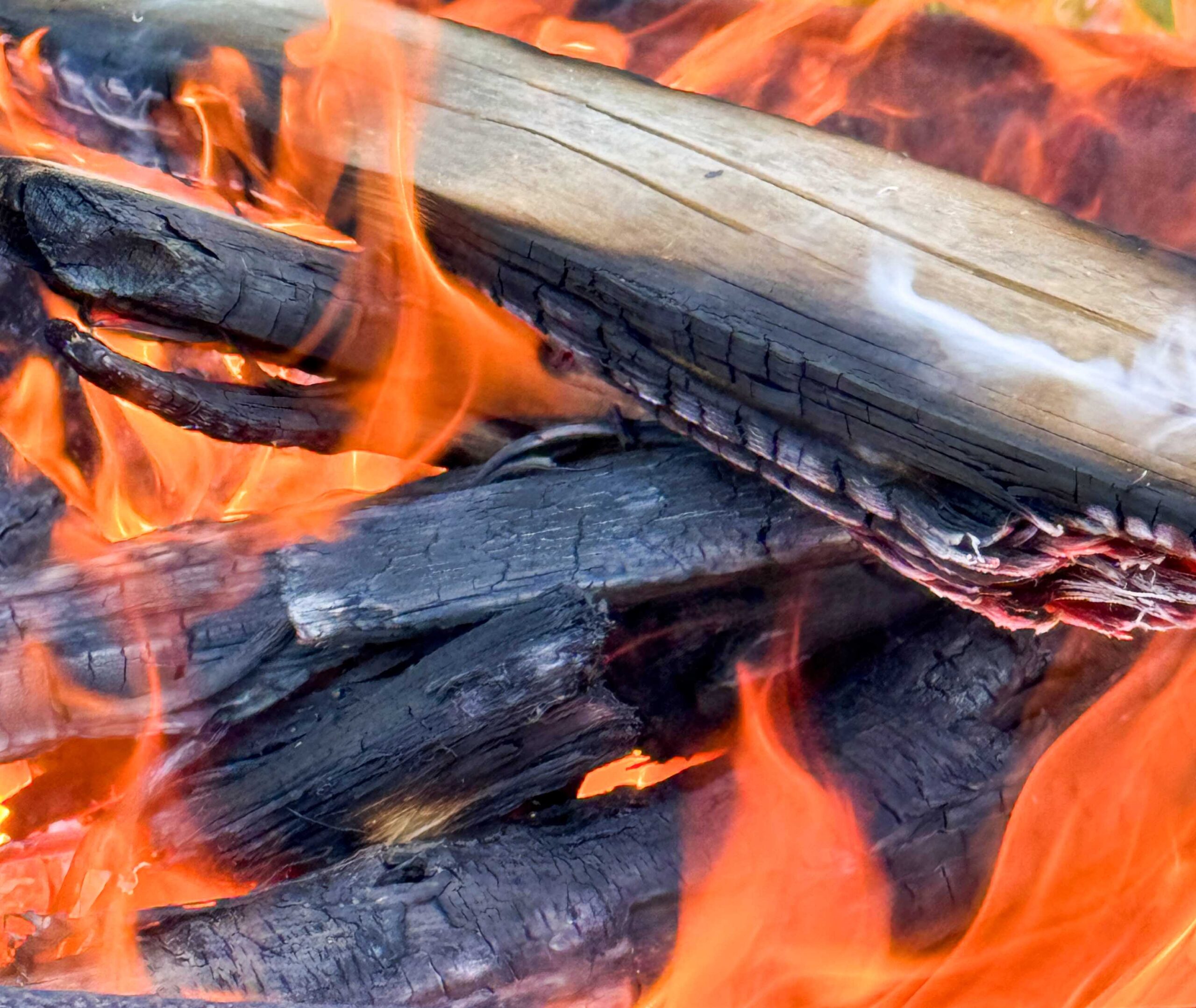 NANAIMO — Larger, open fires are set to be banned for the summer months, effective at the end of this week. The Coastal Fire Centre will enact a sweeping ban on category two and three fires beginning at noon on Friday, May 30, a typical first step in their fire prevention efforts every summer. Banned across Vancouver Island and a vast majority of coastal B.C. will be large burn piles or burns over stubble or grass to certain measurements. Also banned are fireworks, exploding targets, burn barrels and cages, air curtain burners and other, similar open flames. …“Anyone found in contravention of an open fire prohibition may be issued a violation ticket for $1,150, required to pay an administrative penalty of up to $10,000 or, if convicted in court, fined up to $100,000 and/or sentenced to one year in jail,” the BC Wildfire Services stated.


 Boeing Canada says it’s investing millions of dollars into business ventures in B.C. and Quebec with the eventual goal of producing close to 200 million litres of sustainable jet fuel every year. The announcement, made Wednesday, includes nearly $17.5 million split between two projects looking to turn wood waste and carbon captured from industrial smokestacks into sustainable aviation fuel. The fuel, known in industry as SAF, has the potential to reduce carbon emissions by up to 80 per cent over its lifecycle and “offers the fastest route to decarbonization in the aviation sector,” according to Boeing. Boeing’s latest investment will direct $10 million to Project Avance, a joint venture between Bioenergie AECN and Alder Renewables in Port Cartier, Que. The project aims to convert wood residue from sawmills into low-carbon bio-crude that can later be converted into almost 38 million litres of unblended jet fuel every year.


 Emergency crews are dealing with a fire in the woods east of Churchill Falls — an area of central Labrador currently under an extreme fire risk warning. The provincial government confirmed the fire is moving east, away from the town. It said crews and two water bombers were deployed. The Royal Newfoundland Constabulary closed part of the Trans-Labrador Highway between the company town and Happy Valley-Goose Bay, 300 kilometres east along the isolated road, for a stint Wednesday night. It has since reopened. N.L. Hydro said helicopters fought the fire from the air. The fire knocked out the power in Labrador City and Wabush for nearly three hours. N.L. Hydro restored electricity to all customers shortly after 9 p.m.
 Thunder Bay – The Northwest Fire Region continues to face escalating wildfire activity, with 12 active fires currently being managed across the region. According to Aviation, Forest Fire and Emergency Services, 4 of the fires are not under control, 3 are being held, and 5 are under control. As of Tuesday evening, five new wildland fires were confirmed: THUNDER BAY 13: Located at the south end of Dog Lake in Silver Falls Provincial Park, this 0.1-hectare fire is not under control. NIPIGON 3: Located 2 km west of Longlac, along the north end of Long Lake, this 0.1-hectare fire remains uncontrolled. RED LAKE 9: Found on the east side of Pikangikum First Nation beside Pikangikum Lake, this 0.1-hectare fire is now out. …The wildland fire hazard is high to extreme across most of the Northwest Region, driven by persistent dry conditions and strong winds.