An NDP government has had no small part in breaking B.C.’s forest industry… but can an NDP government now fix it? …Premier David Eby pledged to work towards an assured harvest of 45 million cubic metres annually, which would be an improvement of the current harvest levels, and last week, Forests Minister Ravi Parmar announced a new task force tasked with reforming BC Timber Sales, which manages 20% of the province’s AAC. …B.C.’s forest sector faces a plethora of challenges, including current softwood lumber duties, a threat of additional 25-per-cent tariffs on lumber exports and metastasizing government rules and regulations that have increasingly restricted access to timber, the supply of which had already been reduced by past pine beetle infestations and wildfires. More than a dozen sawmill and pulp mills have permanently shuttered in B.C. in the past four years. B.C. lumber producers face the prospect of softwood lumber duties doubling next year, and there’s now the added fear of 25% tariffs being imposed by the Donald Trump administration.
Domestically, the threat to B.C.’s struggling forest sector comes from federal and provincial policies that increasingly restrict access to the working forests. …Since coming to power in 2017, the BC NDP has implemented a rash of new policies and regulations crimping the timber supply, including old growth harvesting moratoria, new forest landscape plans, ecosystem-based land management, increasing parks and protected areas, shared land-use decision-making with First Nations and caribou habitat protection plans. …The shrinkage in the timber supply has not only put sawmills out of business, but has also affected secondary manufacturing, such as pulp and paper mills. …In an attempt to address some of concerns with access to fibre, Parmar last week announced a six-month review of BC Timber Sales. One of the goals of the review is to provide “predictable and reliable market access to fibre.”


 The Western Retail Lumber Association used its trade show, taking place now in Edmonton, as the platform for announcing a major rebranding initiative. After in-depth consultation with its members and board, partners, and key stakeholders, the WRLA has been renamed as Supply-Build Canada. The change is effective today. “As the association expands its advocacy efforts and external partnerships, the ‘Western Retail Lumber Association’ name became a misnomer,” says association president Liz Kovach. “The building supply industry encompasses building materials beyond lumber, and the association represents manufacturers, distributors, wholesalers, and other categories not represented by just retail.” Because many of the association’s members, especially on the supplier side, have offices and production outside of the West, the new name intends to capture that, “making a wholesale change of name both necessary and timely,” Kovach adds.
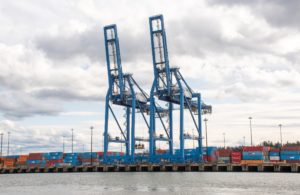 U.S. trade with Canada and Mexico is back in Trump’s crosshairs with the tariff threat. …Much of the focus has centered on autos but Canada is also the top trading partner of the U.S. for critical chemicals, an industry now bracing for the potential impact. …Mineral firms in Canada are considered domestic sources under Title III of the Defense Production Act and have received U.S. federal funding for critical minerals projects in Canada. …Canada is also the largest supplier of U.S. energy imports, including crude oil, natural gas, and electricity. …Rand Ghayad, chief economist at the Association of American Railroads, said the interconnected rail network between the U.S. and Canada is a cornerstone of North American trade, underpinning economic growth and supply chain resilience. …The inflationary effects from tariffs will take some time to materialize, as these costs will need to be passed through to end buyers.
 OTTAWA — The Consumer Price Index (CPI) rose 1.8% on a year-over-year basis in December, down from a 1.9% increase in November. …The CPI excluding food rose 2.1% in December. A temporary GST/HST break on certain goods was introduced on December 14, 2024. …The shelter component grew at a slightly slower pace in December, rising 4.5% year over year following a 4.6% increase in November. Rent prices decelerated on a year-over-year basis in December (+7.1%) compared with November (+7.7%). However since December 2021, rent prices have increased 22.1%. The mortgage interest cost index decelerated for the 16th consecutive month, reaching 11.7% year over year in December 2024, the smallest increase since October 2022 (+11.4%) as interest rates continued to rise.


 How FSC is using Google Earth Engine to monitor forest degradation and support EUDR compliance: The Forest Stewardship Council is leveraging cutting-edge technology to better monitor and protect the world’s forests.


 The B.C. government has tasked new Forest Minister Ravi Parmar with reviewing its lead timber agency, B.C. Timber Sales. The Jan. 15 news release announcing the review, and Premier David Eby’s mandate letter to Parmar, both downplay the environment in favour of the business side of forestry… There is no mention of watersheds, biodiversity, wildlife, and climate change in either the news release announcing the review or in the mandate letter, which mentions old growth once in passing. Asked why it is not mentioned in the above six reasons for the BCTS review, or in Eby’s mandate letter, Parmar said, “I’m fully committed to fulfilling my obligations on the old growth action plan. … Biodiversity, taking care of our lands, being good stewards of our land, is critical to me, and it’s going to be a huge part of this review.”
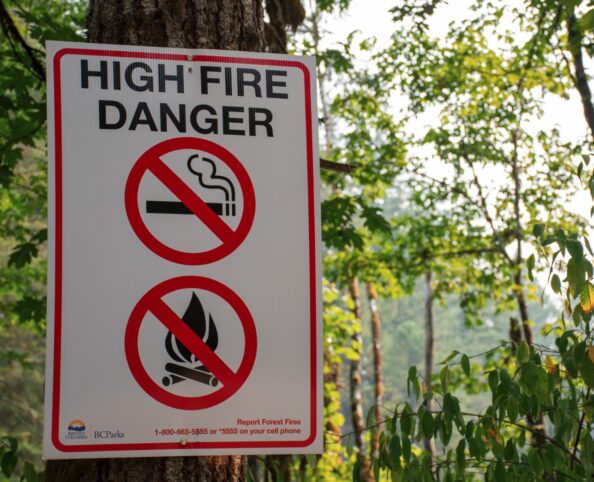 In British Columbia, wood remains the primary framing material, remarks Anthony Marks, who constructs fire resistant modular homes, but the fire resistant modular homes his company constructs are framed with steel. They also use wood sheathing coated with a fire retardant and fibrous cement board products for exterior cladding. …Anabela Bonada, manager and research associate at the University of Waterloo’s Intact Centre on Climate Adaptation says there are solutions at hand to reduce the risk of fire to homes — Canada just hasn’t demanded they be taken yet. …Canada’s National Building Code is geared toward protecting buildings and homes in cities and doesn’t refer to wildfires. …Most Canadian communities are lagging in responding to wildfire threats, Bonada said. …Referring to the National Research Council of Canada’s guide for wildland-urban interface fires, she said programs like



 Here are some highlights from this months Safety News: