The April Fool
From France to Iceland to the United States, April Fools’ Day will be celebrated on Tuesday with practical jokes and elaborate hoaxes, so make sure to triple check viral posts and don’t leave your back open to any stray sticky notes. The jokesters’ custom has been around for hundreds of years, although its exact birth is difficult to pinpoint. These days, depending on your location, it could be marked with a fish secretly pinned to someone’s back or a whoopee cushion or even news reports of flying penguins (yes, that actually happened). In the U.S., the pranks are typically followed by screams of “April Fools!” to make sure all are aware that they were the unsuspecting recipient of a practical joke. Here are some thing to know about April Fools’ Day and its history…
 Sweeping new tariffs announced by Donald Trump provoked dismay, threats of countermeasures and urgent calls for talks to find ways to rescind the stiff new import taxes imposed on goods from countries around the globe. …Trump maintains they will draw factories and jobs back to the United States. …European Commission President Ursula von der Leyen said it was a “major blow to the world economy.” …British Prime Minister Kier Starmer said he hopes to get the tariffs lifted with a trade deal. …Financial markets were jolted. …China’s Commerce Ministry said Beijing would “resolutely take countermeasures to safeguard its own rights and interests,” without saying exactly what it might do. …Mexican President Claudia Sheinbaum said she would wait to see how Trump’s announcement will affect Mexico, which like Canada was spared for goods already qualified under their free trade agreement with the United States, though previously announced 25% tariffs on auto imports took effect Thursday.
 White House aides have drafted a proposal that would levy tariffs of roughly 20% on most imports, the Washington Post reported. The report cited three people familiar with the matter. It also said White House advisers cautioned that several options are still on the table, meaning the 20% tariffs may not come to pass. Another plan being considered is the country-by-country “reciprocal” approach, according to the Washington Post. The report comes a day before April 2, when President Donald Trump is set to announce his larger plans for global trade. The date has loomed over Wall Street, where stocks have been struggling in part due to uncertainty around rapidly changing global trade policy. Unlike the tariffs already announced by the Trump administration, the new plan is expected to be more widespread and permanent as opposed to targeting specific countries or industries.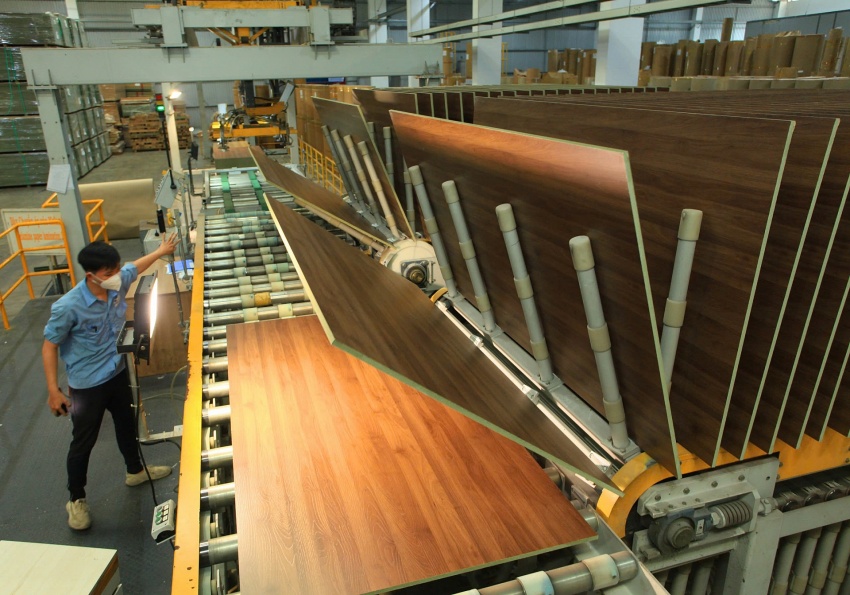


 NEW ZEALAND — The temporary exemption of tariffs on timber and lumber imported into the US provides some relief to New Zealand exporters. Though this exemption could be short lived based on the outcome of the Section 232 investigation aimed at determining the effects imports of timber, lumber and their derivative products have on the US supply chain. Exports of radiata pine products from New Zealand to the US were estimated at $358 million, making the US our third largest export market behind China and Australia. …The exemption comes about through internal US lobbying, by the likes of the American Building Materials Alliance and National Association of Home Builders. …The administration has recognised that raising costs on timber and lumber would hurt housing affordability and weaken an important supply chain. …We thank our kindred Associations in the US for making this happen. We now wait for completion of the s. 232 investigation.
 The European pulp and paper industry is struggling to assess the possible impact of tariffs. …Europe has a marginally negative trade balance with the US for pulp and paper. In 2024, it imported 2.6 million tonnes of P&P from the US. In the same year, it exported 2.3 million tonnes of P&P to the country. The largest trade deficits appear to be around pulp (-975,000 tonnes) and containerboard (-310,000 tonnes, mostly kraftliner). On the other hand, Europe has a surplus in graphic paper and cartonboard sales. …“The only certainty we have is that there will be negative consequences for businesses on both sides of the Atlantic. Trade wars are always detrimental for consumers, but we are a ‘made in Europe’ industry, with local capacities to meet the European demand,” he added. …Most market participants believe the stuttering trade war initiated by Trump will further hurt the already stagnating European economy.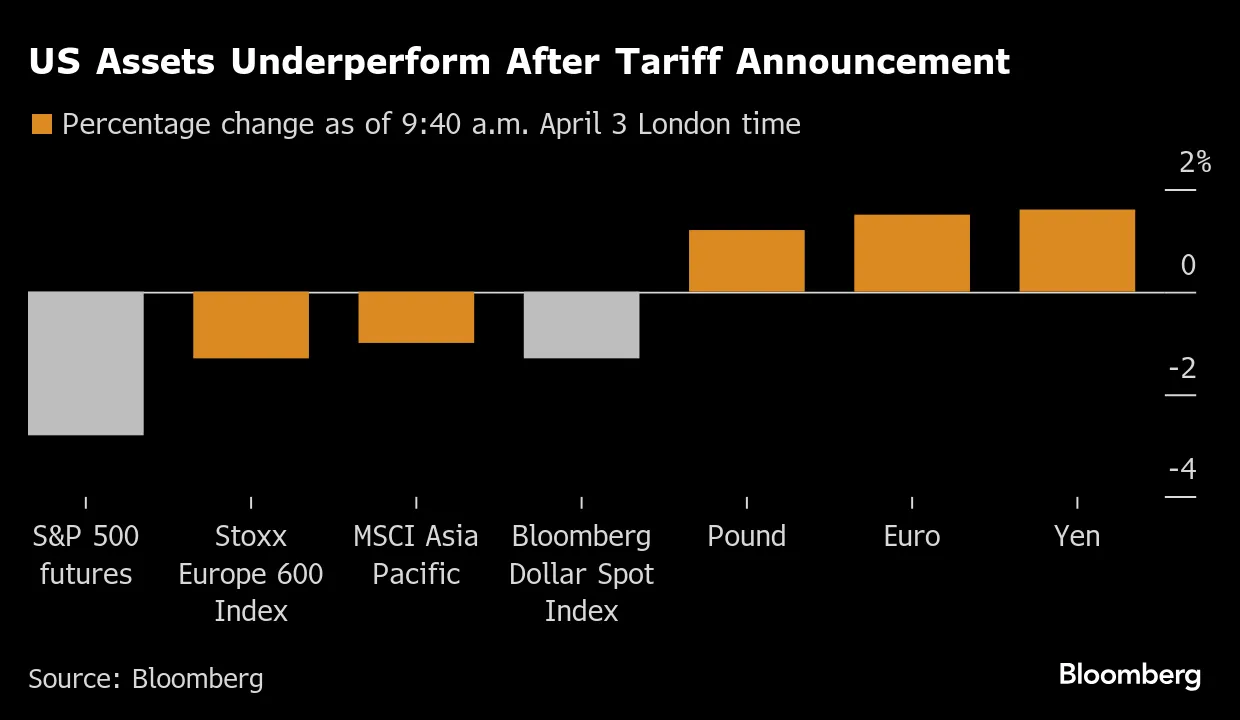
 Donald Trump’s trade war is alarming the global markets, sending shares sliding in their worst month in over two years. Stock markets across the Asia-Pacific region are in retreat this morning, as investors fear Trump will announce swingeing new tariffs on Wednesday, which has been dubbed “Liberation Day” by the US president. Japan’s Nikkei has lost 3.9%, down 1,457 points at 35,662 points today, while South Korea’s KOSPI is down 3%, Australia’s S&P/ASX 200 has fallen 1.7%. In China, which has already been hit by Trump tariffs this year. the CSI 300 is 0.9% lower. …Today’s selloff comes after Donald Trump told reporters that the reciprocal tariffs he is set to announce this week will include all nations. …On Friday, core inflation rose by more than expected, while consumer sentiment weakened to its lowest level since 2022.
 In a move that merges sustainable finance with industrial-scale environmental stewardship, Sydney-based natural capital investment manager New Forests has partnered with Japan’s Oji Holdings Corporation, one of the world’s largest pulp and paper producers, to establish the Future Forest Innovations Fund. With an initial commitment of US$300 million ( US$297 million from Oji and US$3 million from New Forests ), the fund aims to acquire and manage 70,000 hectares of plantation forests across Southeast Asia, North and Latin America, and Africa… The partnership signals an alignment between traditional manufacturing and ecological impact investing. Oji Holdings, which already manages 635,000 hectares of plantation forests worldwide, is leveraging this initiative to meet its 2030 net sequestration goal of 1.5 million tonnes of carbon dioxide equivalent per year, integrating climate action into its global forest footprint.




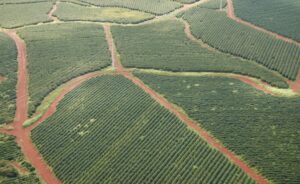
 Indonesia is one of the active exporters of logs and sawn wood, so the waste generated is very large. One of the applicable technologies developed for the utilization of wood saw waste is to process it into liquid smoke through the pyrolysis process. The application of liquid smoke to plants can affect plant’s growth and production processes due to the presence of acetic acid and methanol. The purpose of this research was to find out about the properties of Surian sawn waste liquid smoke and how it could be used as a biofertilizer an Arabica coffee seeds. …The effectiveness of liquid smoke from sawn wood waste for the increase in height, stem diameter, and the highest number of leaves of coffee seeds was obtained at a concentration of 2.5%.
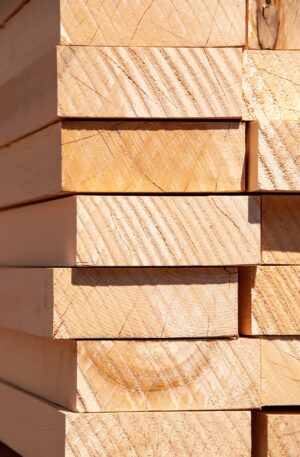 Wood, a traditional and sustainable structural material, has long been used in construction and furniture due to its availability and mechanical properties. However, natural wood’s strength is often insufficient for advanced engineering applications. Now,
  The world is running out of time to halt deforestation. Yet instead of stepping up, the US is dismantling forest protections and undermining global progress – highlighting the dangers of global forest policy that fails to hold the wealthiest, most powerful countries accountable. …But the latest actions by the US highlight just how dangerous and unbalanced this paradigm is. …Under the pretense of national security, Trump’s orders aim to gut environmental safeguards and fast-track industrial clearcutting in some of the US’s most precious and climate-critical forests. …Meanwhile, as Europe strengthens forest accountability, US state officials are pushing to exempt the country from new deforestation protections.. These officials, echoing industry talking points, are urging the EU to exclude US wood products from a law requiring due diligence to prevent imports or exports tied to deforestation or forest degradation. Their argument? That the US doesn’t need oversight.

 FSC is extending the suspension of the Asia Pulp and Paper (APP) Memorandum of Understanding on the implementation of the FSC Remedy Framework until the end of June 2025. The extension of the suspension is due to a conflict of interest identified between Domtar and the law firm FSC identified for conducting the legal review of APP and Domtar’s corporate groups. FSC is identifying a different independent, third-party law firm to conduct this legal review. In January 2025, FSC suspended APP’s remedy MoU until the end of March 2025 because of the changes APP and Domtar announced regarding the concentration of sole beneficial ownership of the two corporate groups. FSC is commissioning a legal review of the corporate groups of Domtar and APP to better understand the implications and the effect of this change, and any impacts on the scope of the APP remedy process and the MoU. FSC disassociated from APP’s entire corporate group in 2007.
 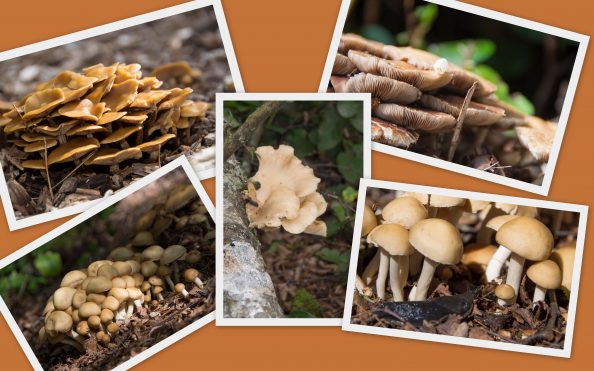 Gland, Switzerland – The number of fungi species on the IUCN Red List of Threatened Species has surpassed 1,000, confirming that deforestation, agricultural expansion and urban development are driving these species to decline worldwide. The IUCN Red List now includes 169,420 species, of which 47,187 are threatened with extinction. The addition of 482 newly assessed fungi species brings their number on the IUCN Red List to 1,300, of which at least 411 are at risk of extinction. “Fungi are the unsung heroes of life on Earth – yet they have long been overlooked. …we have taken a vital step forward: over 1,000 of the world’s 155,000 known fungal species have now been assessed for the IUCN Red List of Threatened Species, the most comprehensive source of information on extinction risk. Now, it’s time to turn this knowledge into action and safeguard the extraordinary fungal kingdom,” said Dr Grethel Aguilar, IUCN Director General.
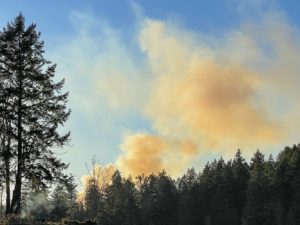 Last year was Ukraine’s worst year for wildfires in more than three decades of record-keeping, as shelling along front lines in the war with Russia triggered an unprecedented number of blazes, scientists said. Forest fires in Ukraine in 2024 burnt more than twice the area destroyed by fire in the entire 27-country European Union in 2024. Satellite data showed nearly 9,000 fires torched a total of 965,000 hectares in Ukraine in 2024. Ukraine has around 10 million hectares, or 100,000 sq km (38,610 sq miles), of forest. Around a third of the area burned last year was farmland… Maksym Matsala, a forest researcher at Sweden’s University of Agricultural Sciences, said the main cause was artillery and falling shells igniting fires. He said the jump in fires last year was partly because of a large build-up of dead and damaged trees since Russia’s invasion in 2022, which had created plentiful fuel for fires during extremely dry weather in 2024.
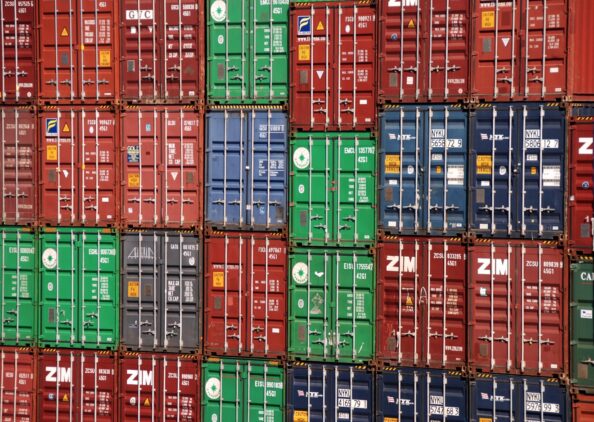 LONDON – The United States has withdrawn from talks in London looking at advancing decarbonisation in the shipping sector and Washington will consider “reciprocal measures” to offset any fees charged to U.S. ships, a diplomatic note said. Delegates are at the UN shipping agency’s headquarters this week for negotiations over decarbonisation measures, aimed at enabling the global shipping industry to reach net zero by “around 2050″. …”The U.S. rejects any and all efforts to impose economic measures against its ships based on GHG emissions or fuel choice,” according to a diplomatic demarche sent to ambassadors by the United States. …”Should such a blatantly unfair measure go forward, our government will consider reciprocal measures so as to offset any fees charged to U.S. ships and compensate the American people for any other economic harm from any adopted GHG emissions measures,” the note from Washington said.
 Last week, Pindstrup – a global supplier of growing media for the horticultural industry – opened a wood fiber plant at its factory in Kongerslev, Denmark. This €4 million investment marks a significant step in Pindstrup’s transition towards a more sustainable future. The company is actively working to reduce the CO2 footprint of its growing media by replacing peat with renewable and circular raw materials. CEO René Gjerding says, “For decades, Pindstrup has incorporated wood fiber into its growing media and has been producing it at our factories in Northern Ireland and Latvia. We are pleased to now bring wood fiber production to our factory in Denmark, using locally sourced, PEFC-certified wood chips. The plant runs on renewable energy, further reducing our CO2 footprint.”
 The island of New Guinea is cloaked in the world’s third-largest rainforest belt, helping the planet breathe by sucking in carbon dioxide gas and turning it into oxygen. Foreign companies have in recent years snapped up tracts of forest in an attempt to sell carbon credits, pledging to protect trees that would otherwise fall prey to logging or land clearing. But a string of mismanagement scandals forced Papua New Guinea to temporarily shut down this “voluntary” carbon market in March 2022. Environment Minister Simo Kilepa told AFP that, with new safeguards now in place, this three-year moratorium would “be lifted immediately”. “Papua New Guinea is uplifting the moratorium on voluntary carbon markets,” Kilepa said.
 Sometime next month, the Bolivian government and a company you probably haven’t heard of are poised to offer what could be the largest single sale of carbon credits in history. The deal will be unusual not only for its size—$1.2 billion, organizers said—but also because it will be backed by a national government and packaged under new rules developed as part of the Paris Agreement. Depending on who you ask, the sale could mark a new frontier in global climate finance, the latest offering in a long and dubious line of carbon credits or, potentially, a giant escalation in corporate greenwashing… “I don’t think a lot of people even in the climate world quite appreciate how much volume and activity may be emerging quickly from this new area,” said Danny Cullenward, an economist and lawyer focused on the scientific integrity of climate policy.
 As the EU pushes to meet its climate neutrality targets by 2050, the concept of ‘renewable carbon’ is rising fast in both policy and industry circles. Unlike fossil carbon, which is extracted from underground and released into the atmosphere during production and consumption, renewable carbon comes from above-ground sources, biomass, recycled materials, and captured CO2. In short, it’s carbon that is already part of the ongoing carbon cycle. “Renewable carbon is not just about replacing fossil-based materials: it’s about rethinking how we design, use, and reuse resources across industries,” said Michael Carus, managing director of the Germany-based Nova Institute during a recent event hosted by EURACTIV and Metsä Group. This kind of thinking is gaining traction among companies looking to green their supply chains. Wood-based products, for instance, have a unique potential to store carbon for long periods when used in construction or durable goods, making them a crucial component of a low-carbon, circular economy.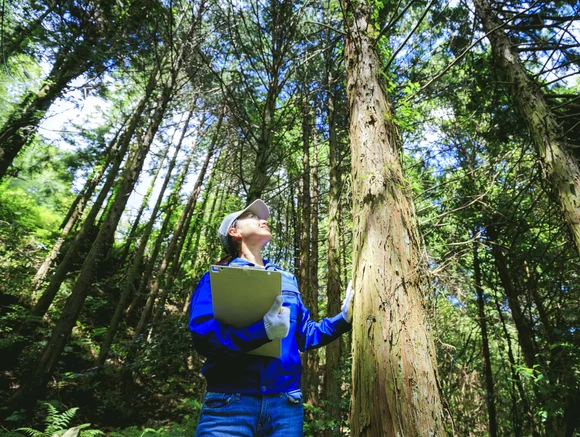
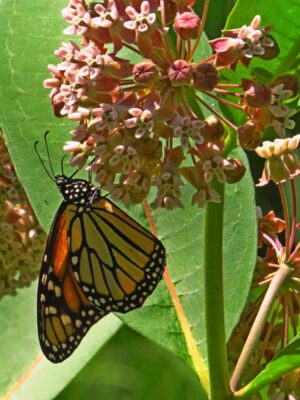 A new study is bringing hard data to understand how butterfly numbers have declined steeply in recent years, due to the combination of habitat loss, climate change, and pesticide exposure. A group of scientists is hoping to fix at least one of these problems for one species, by moving an entire forest in Mexico. The sacred fir trees, where monarch butterflies spend their winters, are struggling under climate change. Recently a team of researchers planted a thousand sacred fir trees at a new location at higher elevations to kickstart a new, future-proof forest for the butterflies to overwinter. Quirks producer Amanda Buckiewicz spoke to Cuauhtémoc Saénz Romero, a forest geneticist at the University of Michoacán in Mexico, and Greg O’Neill, a climate change adaptation scientist with the BC Provincial Government in the Ministry of Forests.
 In the past, intact forests absorbed 7.8 billion tonnes of CO₂ annually – about a fifth of all human emissions – but their carbon storage is increasingly at risk from climate change and human activities such as deforestation. A new study from the Potsdam Institute for Climate Impact Research (PIK) shows that failing to account for the potentially decreasing ability of forests to absorb CO₂ could make reaching the Paris agreement targets significantly harder, if not impossible, and much more costly. “Right now, our climate strategies bet on forests not only remaining intact, but even expanding,” explains Michael Windisch, the study’s lead author and PIK guest scientist. “However, with escalating wildfires like in California, and continued deforestation in the Amazon, that’s a gamble. Climate change itself puts forests’ immense carbon stores at risk.” … “We must act immediately to safeguard the carbon stored in forests,” Windisch emphasises.
  BENGALURU/JAKARTA