
Robert McKellar
Tree Frog:
A lot has changed in the six months since you wrote about political risk management in the Canadian forest products sector. In the media and thus the Tree Frog News, we’ve been hearing a lot about US lumber duties and tariffs and their potential impact on both sides of the border. But before we talk about that, can you comment on what’s changed from a political risk perspective?
Harmattan:
Back in August 2024, I pointed out that the sector had long enjoyed stability, largely because Canada’s primary market—the US—had been open, rational, and predictable. That sense of stability was rooted in a belief that even occasional trade disputes were manageable within a predictable framework. But as we noted then, political risk is not just about places, but also about periods, and things can change even in places we’re very used to. And yes, since that time, we’ve witnessed a dramatic evolution. …President Trump is now a critical variable in the fortunes of Canadian companies in the US, and indeed a major factor in the evolution of the international system. Getting a sense of the man and what he means is probably the most direct route to contextual insight for what follows. I’m not an expert on Trump or even US politics. But like most political risk consultants, I have been fascinated by his rise and character, and have kept an eye on the more discerning observations. What follows is a brief sketch.


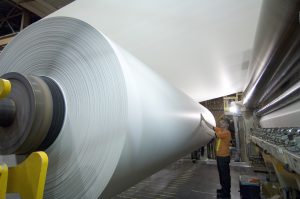 Following the US government’s imposed tariffs on steel and aluminium, Cepi has called on the European Commission to continue negotiations, citing the potential for future tariffs including pulp and paper and aiming to avoid supply chain disruptions. Cepi is currently taking part in a consultation launched by the European Commission. …The confederation asks the Commission to exclude from such EU retaliation list products that risk being in short supply in the EU. …According to Cepi, the EU imports around 900,000 tonnes of pulp per year from the US and close to 600,000 tonnes of paper and board, while the EU exports about 1600,000 tonnes of paper and board to the US and around 350,000 tonnes of pulp. It states that since a multilateral agreement of all major pulp and paper producers in January 2004, there have been no import tariffs on both sides of the Atlantic.
 WASHINGTON — A gobsmacked planet is wondering what’s next from President Donald Trump on the tariff spree he’s set in zigzag motion. In recent weeks, Trump has announced punishing tariffs against allies and adversaries alike, selectively paused and imposed them, doubled and then halved some, and warned late in the week that he’ll tax European wine and spirits a stratospheric 200% if the European Union doesn’t drop a 50% tariff on U.S. whiskey. His ultimate stated goal is clear: to revive American manufacturing and win compromises along the way. But people and nations whose fortunes rise and fall on trade are trying to divine a method to his machinations. So far, he’s spurred fears about slower growth and higher inflation that are dragging down the stock market and consumer confidence. “His tariff policy is erratic,” Robert Halver, at Germany’s Baader Bank, said. “So, there is no planning certainty at all.”
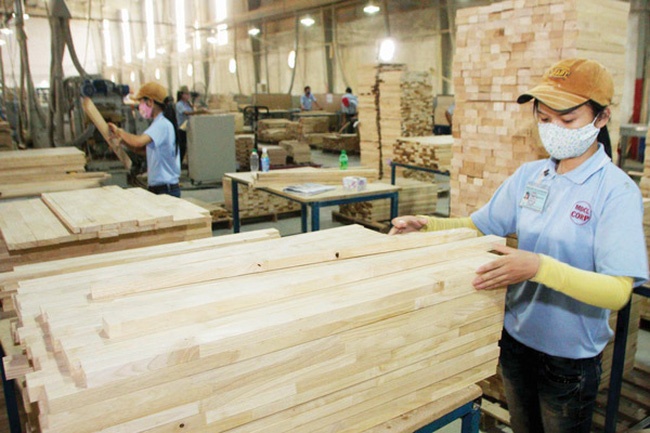
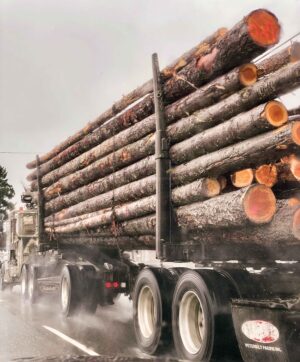 China suspended on Tuesday the soybean import licences of three U.S. firms and halted imports of U.S. logs, stepping up its retaliation for Donald Trump’s decision to impose an extra 10% duty on China. …The suspension of U.S. logs was a direct response to Trump’s move on March 1 to order a trade investigation on imported lumber. Trump had earlier told reporters that he was thinking about imposing a 25% tariff rate on lumber and forest products. “The announcement of import restrictions on U.S lumber and soybeans linked with phytosanitary issues follows a long history of similar measures by Beijing,” said Even Pay, agriculture analyst at Trivium China. …China is one of the world’s largest importers of wood products and the third-largest destination for U.S. forest products. It imported around $850 million worth of logs and other rough wood products from the U.S. in 2024, according to Chinese customs data.
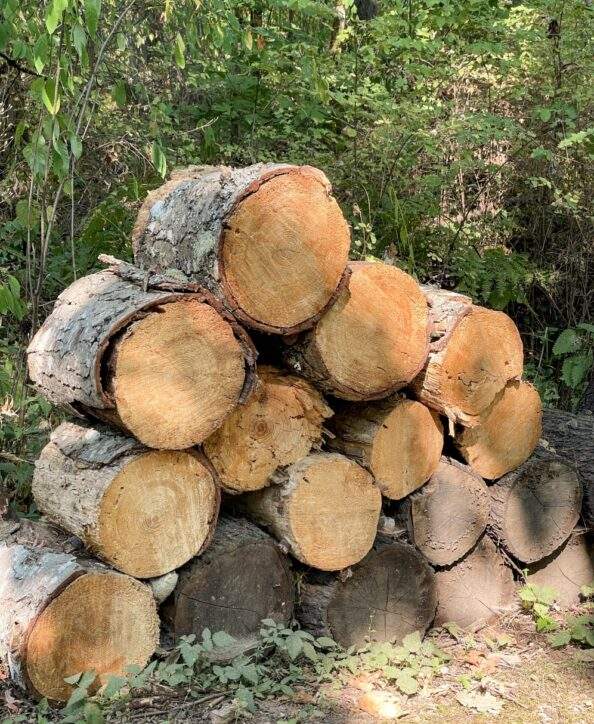 BEIJING – China suspended on Tuesday the soybean import licenses of three U.S. firms and halted imports of U.S. lumber, stepping up retaliatory action after the United States imposed additional tariffs on Chinese goods. Earlier in the day, China also imposed import levies covering $21 billion worth of U.S. agricultural and food products… Customs said it detected ergot and seed coating agent in imported U.S. soybeans while the suspension of U.S. lumber imports was due to the detection of small worms, aspergillus and other pests. …Beijing’s retaliatory measures were in response to U.S. President Donald Trump’s decision to impose an extra 10% duty on China, effective Tuesday, resulting in a cumulative 20% tariff in response to what the White House considers Chinese inaction over drug flows. …The suspension of U.S. lumber was a direct response to Trump’s move on March 1 to order a trade investigation on imported lumber.

 KUALA LUMPUR, Malaysia — The proposed classification of two timber species commonly found in Malaysia as unsustainable by the United States and the European Union (EU) under the Convention on International Trade in Endangered Species of Wild Fauna and Flora (CITES) will result in the cancellation of Malaysian timber exports to the US and the EU. The Timber Exporters’ Association of Malaysia (TEAM) treasurer Wong Kar Wai said that in addition to impending tariffs, the US and the EU are proposing to classify certain timber species common to Southeast Asia, including Malaysia – namely Shorea, locally known as Meranti, and Apitong, known as Keruing – under CITES despite being sustainably harvested and processed. “Keruing is a special type of timber primarily used for floorboards, with the US being its main market. A major buyer is the US military, which uses Keruing for the flooring of trucks and tanks due to its durability and strength.

 NEW YORK — Mercer International reported fourth quarter 2024 net income of $16.7 million compared to a net loss of $87.2 million in the fourth quarter of 2023 and a net loss of $17.6 million in the third quarter of 2024. Q4 revenues were $488 million, down from $502 million in Q3, 2024 but up from $470 million in Q4, 2023. Mr. Juan Carlos Bueno, CEO, stated: “In the fourth quarter of 2024, softwood pulp prices remained strong, decreasing slightly from recent record prices.” …Hardwood pulp prices in China and North America decreased in the fourth quarter of 2024 as the market absorbed capacity increases from earlier in the year. …Lumber sales realizations increased, driven by modestly higher prices in the U.S. market, while in Europe, prices remained stable.
  BEIJING — UBS analysts became the latest to raise expectations that China’s struggling real estate market is close to stabilizing. “After four or five years of a downward cycle, we have begun to see some relatively positive signals,” John Lam at UBS Investment Bank. …“Of course these signals aren’t nationwide, and may be local,” Lam said. One indicator is improving sales in China’s largest cities. Existing home sales in five major Chinese cities have climbed by more than 30% from a year ago on a weekly basis as of Wednesday. The category is typically called “secondary home sales” in China, in contrast to the primary market, which has typically consisted of newly built apartment homes. UBS now predicts China’s home prices can stabilize in early 2026, earlier than the mid-2026 timeframe previously forecast. They expect secondary transactions could reach half of the total by 2026.
 Japan’s timber industry is seeing notable changes, with predictions of a drop in log imports and varying trends in lumber imports. These shifts are influenced by economic factors, environmental concerns, and policy decisions affecting how Japan uses timber. The Japan Lumber Importers Association has shared its predictions for wood imports, expecting a 13% decrease in log imports for 2024. …While log imports are expected to decline, the situation with lumber imports is more complex. In 2024, lumber imports are projected to increase by 17.2%. However, in the first half of 2025, a 12.5% decrease is expected compared to the same period the previous year. Several factors influence these mixed trends… Japan’s housing starts decreased by 4.6% year-over-year in 2023, with owner-occupied housing falling by 11.4%. These changes directly impact the demand for lumber, influencing import volumes.






 FRANKFURT – Bayer has told U.S. lawmakers it could stop selling Roundup weedkiller unless they can strengthen legal protection against product liability litigation, according to a financial analyst and a person close to the matter. Bayer has paid about $10 billion to settle disputed claims that Roundup, based on the herbicide glyphosate, causes cancer. About 67,000 further cases are pending for which the group has set aside $5.9 billion in legal provisions. The German company has said plaintiffs should not be able to take Bayer to court by invoking U.S. state rules given the federal U.S. Environmental Protection Agency has repeatedly labelled the product as safe to use, as have regulators in other parts of the world. “Without regulatory clarity (Bayer) will need to exit the business. Bayer have been clear with legislators and farmer groups on this,” analysts at brokerage Jefferies said in a note on Thursday, citing guidance Bayer’s leadership provided in a meeting.

 Large, undisturbed forests are better for harboring biodiversity than fragmented landscapes, according to University of Michigan research. Ecologists agree that habitat loss and the fragmentation of forests reduces biodiversity in the remaining fragments. But ecologists don’t agree whether it’s better to focus on preserving many smaller, fragmented tracts of land or larger, continuous landscapes. The
 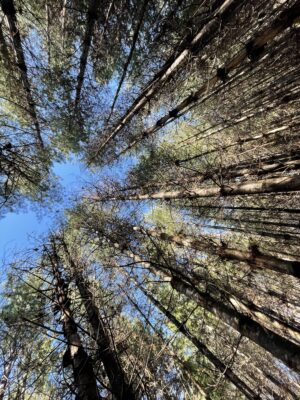 In wild Tasmania there are trees whose direct ancestors lived with dinosaurs. Many of those alive today are thousands of years old, and some have been growing for ten millennia or more. They are mostly hard to reach, hidden in forest valleys or on remote mountains, survivors of human greed and fire.
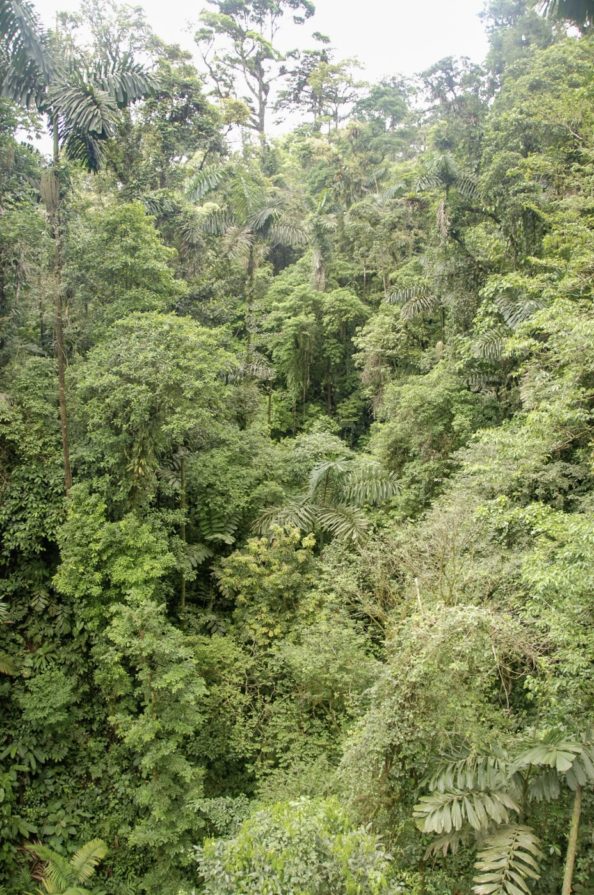 In 2006, Brazilian President Lula da Silva’s government passed the Public Forest Management Law, implementing a forest concession scheme designed to regulate and legalize logging activities in Brazil’s forest — in particular, the Amazon. Forest management consists of removing a small number of trees whose species are valued in the market. After that, the area can only be explored again in 30 to 40 years, following its regeneration cycle. Behind on its concessions targets, the current government wants to almost quadruple the current area of federal concessions by 2026. Even though it is different from deforestation, timber management has never been seen as a way to conserve the forest by traditional peoples.
 The European Union Deforestation Regulation (EUDR) aims to prevent deforestation-linked products from entering the EU market. This study assesses the potential impacts of the EUDR on global forest product markets using the FOrest Resource Outlook Model (FOROM). We simulate two scenarios: the baseline EUDR, focused on commodity-driven deforestation and urbanization, and an extended EUDR+ scenario, which includes shifting agriculture. The results indicate that high-deforestation countries, such as Brazil, Indonesia, and Malaysia, are expected to face significant reductions in roundwood production and exports, with downstream effects on sawnwood and panel prices. In contrast, low-deforestation countries like Canada and the United States may experience slight increases in production to meet EU demand, but their impact is limited by moderate deforestation rates. The study also highlights the potential for market leakage, where deforestation-linked products may shift to non-EU markets, potentially undermining global environmental goals.


 Polarization is gripping the country and the centre isn’t holding, Environment and Climate Change Canada found when setting the country’s latest emissions reduction target. The department solicited feedback… to determine what Canada’s internationally binding 2035 pollution reduction obligations should be. …The results found that overcoming polarization is a major hurdle to implementing aggressive emissions reductions that climate scientists say is required to avoid catastrophic warming. About two-thirds of Canadians who participated support stronger measures to address climate change. “There was little middle ground, and very few people were satisfied with the status quo,” according to the findings. …When asked if the federal government is doing enough to fight climate change, 47% believe Canada needs to do more, compared to 36% that feel existing measures go too far. …Polarization is gripping the country and the centre isn’t holding, Environment and Climate Change Canada found when setting the country’s latest emissions reduction target.
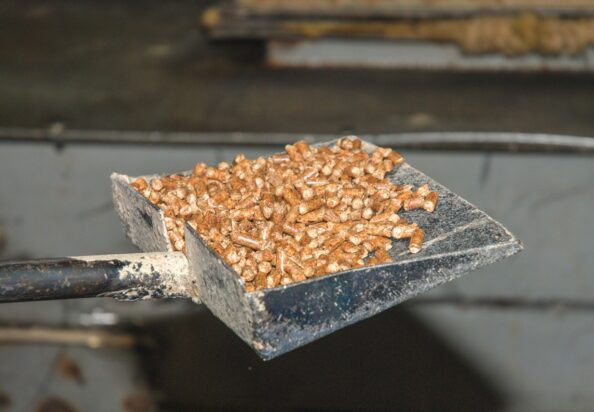 The European Union is on track to miss its 2030 carbon sequestration targets for forests. A new report says forest-based carbon removal needs clearer policies and more funding. Ongoing deforestation, land degradation, and unsustainable land-use practices highlight the need for a policy shift. Data from the latest European Environment Agency (EEA) monitoring report, details 28 key indicators assessing targets across sectors, including climate change, biodiversity, pollution reduction, and sustainable resource use. Biodiversity and ecosystem conservation goals are closely tied to forest health. The EU is not on track to meet its targets for increasing forest connectivity or reversing the decline in common bird populations, which reflects broader ecosystem degradation. Despite existing legislation, pressures from agriculture, urban expansion, and resource extraction continue to impact forest ecosystems.
 Sweden might fail to meet its and the EU’s carbon neutrality targets after recent environmental policy shifts, the Organisation for Economic Cooperation and Development (OECD) warned in a report published Wednesday. Long considered a champion in environmental protection and the fight against climate change, the Scandinavian country has set a goal of net zero emissions by 2045, five years ahead of the European Union’s target. But Sweden might not be able meet either of those goals, according to a review conducted by the OECD, a 38-member group of mostly developed nations. “Over the last decade, the country has cut its greenhouse gas emissions faster than the EU average,” the report said. “However, recent policy shifts, particularly in the transport sector, have put into question Sweden’s ability to meet EU and domestic climate targets.” …In January, the World Wildlife Fund (WWF) criticised Sweden for not adequately protecting primary and old-growth forests from logging.
 Denmark has long been praised for its transition to renewable energy, with renewable energy use rising from 6% in 1990 to 42.8% in 2022. However, behind this achievement lies an overdependence on woody biomass, which now accounts for up to 68% of its total renewable energy use. This growth has been sustained through direct and indirect subsidies, often exceeding those allocated to wind and solar energy. Denmark’s dependence on woody biomass is largely fuelled by imports from Estonia and Latvia. The country ranks among the largest, if not the largest, importer of woody biomass from the Baltic region, with 52% of its wood chips and pellets coming from these two nations. …Intensive logging is also devastating Estonian and Latvian bird populations.
  LONDON, March 12 – British energy regulator Ofgem said on Wednesday that it had not found evidence of a breach of sustainability obligations by power company Drax, in the watchdog’s review of reports prepared by auditor KPMG. Renewable power generators in Britain can receive renewable obligation (RO) certificates which can then be sold to energy suppliers who use them to sell renewable electricity products to customers. For biomass power plants to qualify for the certificates they must show at least 70% of their biomass fuel comes from sustainable sources. Green groups have long criticised the sustainability credentials of biomass power plants, which burn wood pellets to generate electricity. In 2023, regulator Ofgem opened an investigation into whether Drax was in breach of annual reporting requirements under the RO scheme. Ofgem said it reviewed over 3,000 documents and did not find evidence to support claims that sustainability obligations had been breached.
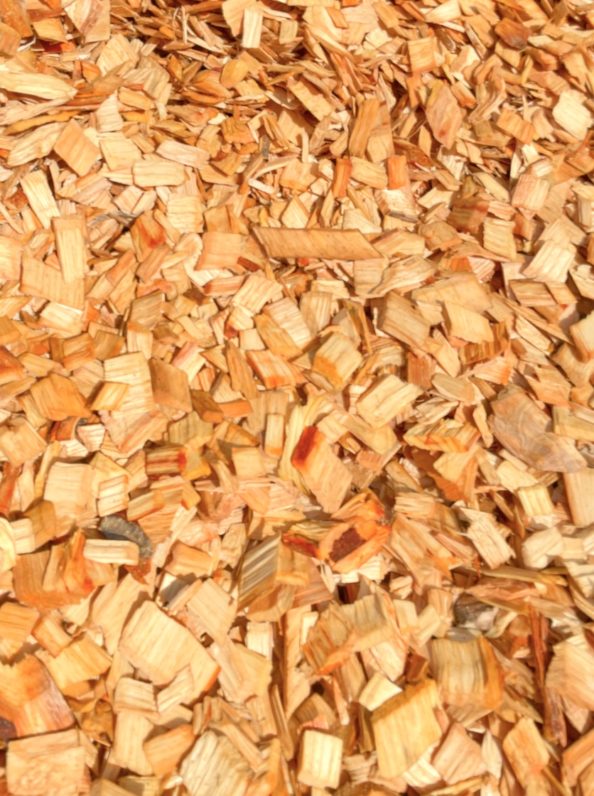 The harvesting and burning of forest biomass to produce energy continues to surge, according to a new report entitled

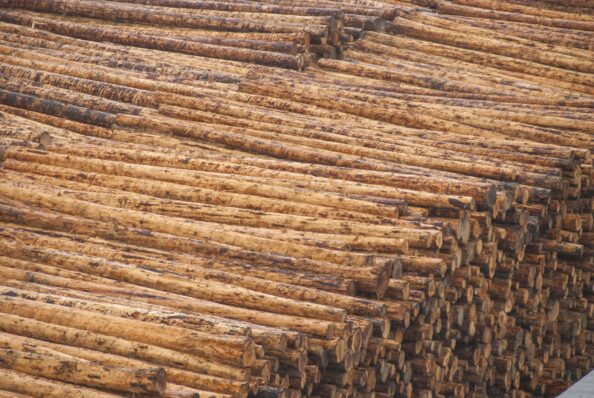 Norwegian forestry companies are making history by revolutionizing how timber is transported. Beginning in 2027, Viken AT Market and AT Skog will be the first in the forestry industry to ship timber on zero-emission vessels—a game-changing move that signals a dramatic shift toward sustainable maritime logistics. This breakthrough is made possible through a partnership with Skarv Shipping, which will provide vessels powered by ammonia and electricity, significantly reducing emissions compared to conventional diesel-powered ships. Norway’s timber industry plays a crucial role in the country’s economy, exporting approximately 1 million tons of timber annually to European markets. However, most of this transport has relied on traditional diesel-powered vessels, which contribute to greenhouse gas emissions. In an effort to push the industry forward, Viken AT Market is committing to zero-emission transport, securing a long-term shipping agreement with Skarv Shipping and Arriva Shipping.
 In December 2024, Drax and Pathway Energy announced a multiyear deal that could see Drax supplying upward of 1 million metric tons of wood pellets to Pathway’s currently proposed sustainable aviation fuel (SAF) plant on the U.S. Gulf Coast. In the months leading up to the announcement, Drax had hinted at such prospects, indicating plans to develop a pipeline of biomass sales opportunities in North America, including in the SAF market. Drax CEO Will Gardiner confirmed as much during a November quarterly earnings call. Currently, Drax has 17 operational wood pellet production plants across North America and a 450,000-metric-ton facility under construction in Longview, Washington. While Drax is well known in the industrial wood pellet industry, Pathway Energy is a new and unique market participant. Pellet Mill Magazine interviewed Pathway Energy CEO Steve Roberts to introduce the company, technology and plans.
 Turkey is poor in oil and gas while its renewable energy sector is heavily reliant on a mix of hydro, wind and solar. But another element is heating up: biofuel – fuel derived directly from biomass, such as wood or plant matter – is gaining interest domestically and creating an export market not available to other renewables. Demand for and output of biomass pellets used in stoves, furnaces and heaters as an alternative to coal or wood to cope with Turkey’s often freezing winters have increased in recent years. Produced by crushing and compressing wood waste, the pellets have a higher per-kilo energy output than gas, coal or oil, and far lower emission levels, according to promoters. Studies estimate Turkey has the raw material to produce up to 1.8 million tonnes of pellets annually, although installed processing capacity has yet to reach this level.
 Authorities in Japan have warned that the country’s biggest wildfire in decades is likely to spread, after it damaged dozens of homes and forced more than 1,000 people to flee. Fires continued to rage a week after they broke out in the city of Ofunato, on the north-east coast, with weather officials speculating that this year’s unusually dry winter and strong winds were to blame. As of Monday, the fire had spread through about 2,100 hectares of land, damaged 84 homes and forced 1,200 residents to take refuge in school gymnasiums and other shelters. A further 2,000 are staying with friends or relatives. …More than 2,000 self-defence force [SDF] troops and firefighters have struggled to control the flames as they spread through heavily forested mountainous areas bordering Ofunato, which was among communities destroyed in the March 2011 earthquake and tsunami.
 MORIOKA, JAPAN — One person has died, and more than 80 homes appear to have burned down after a wildfire broke out in a northeastern Japan city, local authorities said Thursday, as the region faced its third fire in about a week. Since Wednesday, the blaze has scorched more than 600 hectares in Ofunato, Iwate Prefecture, the municipal government said. With the fire still spreading, about 3,300 residents have been ordered to evacuate. Firefighters battled the blaze through the night, while helicopters were deployed in the morning to contain it from the air. The Fire and Disaster Management Agency requested emergency support from firefighting departments in eight nearby prefectures, and they sent about 690 personnel combined. …Efforts to contain the blaze Wednesday were carried out at ground level as the strong winds precluded waterbombing by helicopters. When the latest fire broke out, strong wind and dry air warnings were in place in the area.