 We’re proud to share that in 2024 the Tree Frog Forestry News readership surged by an impressive 44%, reaching 105,411 unique users (per Google Analytics)! This remarkable growth far outpaces our average annual increase of ~20% over the past decade. Even more, our audience is becoming increasingly continental: in 2020, 22% of our readers were US-based, but by 2024, that number climbed to 39%. Canada still leads at 51%, with the remaining 10% representing international readers from the UK, Australia, Japan, India, and beyond.
Your feedback is essential to ensuring the Tree Frog Forestry News remains your trusted source for forestry updates. Completing our quick 6-8 minute survey will help us improve and continue to offer this free, open-access resource. The survey is completely anonymous, and your responses will be kept strictly confidential. Thank you for helping us grow and better serve the forestry community!
 WASHINGTON — President Trump is taking a blowtorch to the rules that have governed world trade for decades. The
 U.S. President Donald Trump in an all-caps post on Truth Social Thursday teased a new round of sweeping reciprocal tariffs, matching the higher rates other nations charge to import American goods. …Reciprocal tariffs were one of Trump’s core campaign pledges — his method for evening the score with foreign nations that place taxes on American goods and to solve what he has said are unfair trade practices. …He is set to share more details on the tariffs ahead of his visit with Indian Prime Minister Narendra Modi, White House press secretary Karoline Leavitt told reporters on Wednesday. …The tariffs are likely to hit developing countries hardest, especially India, Brazil, Vietnam and other Southeast Asian and African countries, given that they have some of the widest differences in tariff rates charged on U.S. goods brought into their countries compared to what the U.S. charges them.
 Reciprocal tariffs are straightforward in theory: The U.S. would pose the same levies on imported goods from a given country that the other country imposes on their U.S. imports. But it gets far murkier in practice, as countries often charge different tariffs on different classes of goods. Goldman Sachs economists outlined three approaches Trump could take. “Country-level reciprocity” is the “simplest” strategy which would have the U.S. impose the same average tariffs. “Product-level reciprocity by country” would have the U.S. place marching tariffs on a good-by-good basis by trading partner.” Reciprocity including non-tariff barriers” is the “most difficult” approach as it would encompass a complicated web of inputs including inspection fees and value-added taxes. …4.8% is the U.S.’ weighted average tariff rate if Trump implemented the country-level strategy. …Goods from the 20 countries the U.S. has free trade agreements with, including Australia, Canada, Mexico and Panama, won’t be affected – though Trump has targeted several of those countries in recent weeks.
 BEIJING — China countered President Trump’s across-the-board tariffs on Chinese products with tariffs on select U.S. imports Tuesday, as well as announcing an antitrust investigation into Google. The Chinese response was “measured,” said John Gong, a professor at the University of International Business and Economics in Beijing. “I don’t think they want the trade war escalating,” he said. …This time, analysts said, China is much better prepared to counter, with the government announcing a slew of measures that cut across different sectors of the economy, from energy to individual U.S. companies. China said it would implement a 15% tariff on coal and liquefied natural gas products as well as a 10% tariff on crude oil. …China also announced export controls on several elements critical to the production of modern high-tech products. “A risk is that this is the beginning of a tit-for-tat trade war,” Stephen Dover of Franklin Templeton said.
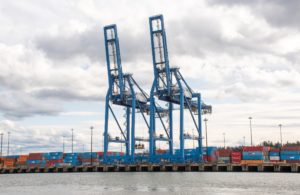 While Donald Trump has yet to act on his multiple tariff threats, it’s likely he will. So the fear lingers that the US president’s aggressive trade posture will sow global disorder, depressing growth and roiling markets, particularly if targeted nations retaliate. But retaliation is not the only or even the most likely response to Trump, no matter how broadly he finally delivers on his threats. The US has wielded tariffs as a weapon for eight years now. …Some nations retaliated; others offered concessions or challenged them before global trade arbiters. But most just quietly moved on, seeking trade with countries other than the US. Since 2017, trade has held more or less steady at just under 60% of global GDP. But there’s been a decline in the US share of trade flows offset by an increase in other regions. Trump 2.0 seems likely to bring more of the same: trade without America.

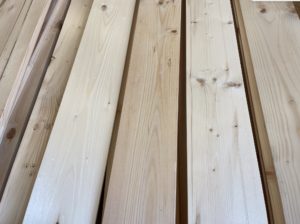 The U.S. market accounts for 5-10% of Sweden’s forest industry exports, depending on the segment, meaning the direct impact of potential new tariffs remains limited, said Christian Nielsen, market analyst for wood products at Swedish Forest Industries Federation. The U.S. relies on imports for 25% of its lumber consumption, primarily from Canada. Higher tariffs on Canadian wood could raise costs for American consumers while improving the competitive position of European suppliers. However, Nielsen noted that future tariffs directly targeting EU exports remain uncertain. In the pulp and paper sector, the U.S. could rely entirely on domestic production, reducing the need for imports. Sweden currently exports 7% of its pulp and 5% of its paper and board products to the US. In total, Sweden exports 92% of its paper and board production, and global trade flows could be affected by tariff changes. [END]
 RUSS TAYLOR GLOBAL is pleased to provide the latest quarterly report from the
 High Point, N.C. — After a successful first year, British Columbia wood expert
  Don’t miss these headlines and more in the February Market News and Insights:
 The cement industry is at a crossroads as decarbonization is expected to take its toll, resulting in a significant decline in demand, according to a paper by the World Cement Association (WCA). “The cement industry is undergoing an unprecedented transformation,” explains WCA CEO Ian Riley. “As we move towards a decarbonized future, understanding the true demand for cement is critical to ensuring that policies, technologies and investments align with reality.” The white paper examines disruptive factors such as alternative materials. …The report challenges prevailing forecasts and projects demand for cement and clinker will dip, mainly due to the rise of timber, greater use of admixtures, the move towards decarbonization of the industry as well as design practices that will reduce the concrete used. ..According to the paper, timber has replaced concrete and steel in many highrise buildings but limitations on the supply of timber are expected to curb its growth.
 A 13-storey high-rise approved for development in Sydney is slated to become the tallest commercial mass timber building in New South Wales. The building has been designed by architecture and urban design practice Tzannes for property developer NGI Investments. …The weight of the building was a significant consideration during the design process. The structure needed to be lightweight as the site is located above subterranean railway tunnels. Tzannes’s approach for addressing has involved transferring the load from the building’s western side to a central core using a hybrid concrete and steel structure. This system then supports 12 timber commercial floors, with 11 levels rising above the load transfer structure and one suspended below. According to a communique issued by Tzannes, “all timber and steel elements will be crafted for future disassembly and reuse.”


 An international survey of frogs and toads has revealed that global warming and drought are more likely to affect the animals in the Amazon and Atlantic Rainforests. The
 Nearly half of the global boreal forests — spanning Canada, Alaska and Siberia — are undergoing major transitions due to climate change, making them increasingly vulnerable to forest fires and altering their role as a key carbon sink, a new study has revealed. These forests are vast and found in the cold, northern regions. However, they are warming four times faster than the global average and are expected to shift into a new ecological regime. This transformation could impact global climate regulation by triggering biome shifts and changes in tree cover dynamics, according to the study published in the journal
 The Government has announced a new support mechanism for sustainable biomass generation post-2027. From 2027, Drax and other eligible large-scale biomass generators will be supported via a lowcarbon dispatchable CfD (Contract for Difference). If approved, the plan will keep the power station running until 2031. Under this proposed agreement, Drax Power Station can step in to increase generation when there isn’t enough electricity, helping to avoid the need to use more gas or import power from Europe. When there’s too much electricity on the UK grid, Drax can reduce generation, helping to balance the system. Importantly, the mechanism will result in a net saving for consumers. …The agreement also prioritises biomass sustainability. Drax supports these developments and will continue to engage with the UK Government on the implementation of any future reporting requirements.
 The UK government has agreed a new funding arrangement with the controversial wood-burning Drax power station that it says will cut subsidies in half. …The new agreement will run from 2027 to 2031 and will see the power station only used as a back-up to cheaper renewable sources of power. …The government says the company currently receives nearly a billion pounds a year in subsidies and and predicts that figure will more than halve to £470m under the new deal. …The new agreement also states that 100% of the wood pellets Drax burns must be “sustainably sourced” and that “material sourced from primary and old growth forests” will not be able to receive support payments. All the pellets Drax burns are imported, with most of them coming from the USA and Canada. BBC has previously reported that Drax held logging licences in British Columbia, and used wood, including whole trees, from primary forests for its pellets.
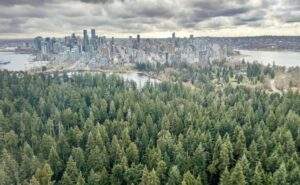 As institutional interest in real asset investing grows, forestry is gaining recognition beyond its core enthusiasts for its ability to produce income and capital growth, alongside added benefits like carbon sequestration and biodiversity protection. However, trust in sustainability-focused investments remains a challenge. In EY’s 2024 Institutional Investor Survey, 85% of respondents said misleading claims about sustainability are more of a problem today than five years ago, despite regulators’ efforts to quash exaggerated ESG statements. …A persistent narrative is that established timberlands are better, safer investments than new greenfield developments. The truth is more nuanced. Greenfield projects, which involve reforesting degraded or underused land, offer an opportunity to achieve ‘additionality’ – a crucial component of effective carbon sequestration. …For forestry investors, the upshot is clear: regulatory uncertainty is currently a barrier to restoring widespread trust in carbon markets, and resolving this will take time.
 To formally pull the United States out of the Paris Agreement, the Trump administration will need to formally submit a withdrawal letter to the United Nations, which administers the pact. The withdrawal would become official one year after the submission. The formal withdrawal of the United States and subsequent changes to agreements under the UN Framework Convention on Climate Change cannot be transmitted to the United Nations until President Trump’s nominee to be US Ambassador to the UN, Rep. Elise Stefanik (R-NY), is confirmed by the Senate. …The withdrawal raises key questions about the future of the voluntary carbon market (VCM), particularly in light of the Paris Climate Accords’ role in driving offset demand. …Without the federal endorsement of climate goals, corporate strategies might shift away from investing in carbon offsets, diminishing demand for carbon credits. Furthermore, uncertainty surrounding federal support could delay or derail the development of new VCM projects.
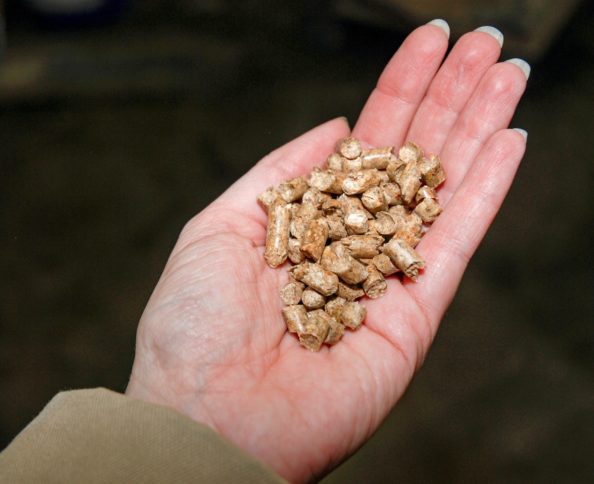 LONDON – The UK government and Drax, opens new tab have agreed a deal that will halve the energy producer’s subsidies over 2027-2031, while ensuring the group uses more sustainable sources of woody biomass, the two sides said on Monday. Drax is Britain’s largest renewable power generator. With the help of government subsidies that run until 2027, it has converted four former coal plants to use biomass to provide around 6% of the country’s electricity. Following a consultation on extending the subsidies, the government said it “cannot allow Drax to operate in the way it has done before or with the level of subsidy it received in the past”. “Biomass currently plays an important role in our energy system, but we are conscious of concerns about sustainability and the level of subsidy biomass plants have received in the past,” Energy Minister Michael Shanks said in a statement, which did not disclose the exact figures of the subsidy.
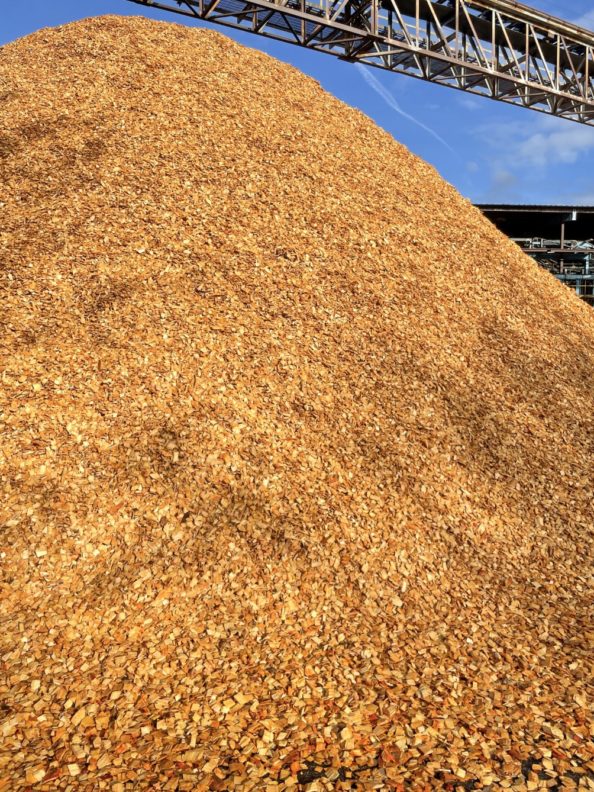 Green campaigners fear ministers are poised to award billions of pounds in fresh subsidies to Drax power station, despite strong concerns that burning trees to produce electricity is bad for the environment. Drax burns wood to generate about 8% of the UK’s “green” power, and 4% of overall electricity. This is classed as “low-carbon” because the harvested trees are replaced by others that take up carbon from the atmosphere as they grow. But many studies have shown that wood burning harms the environment, by destroying forests, and because of the decades-long time lag between the immediate release of carbon dioxide CO2 from burning and the growth to maturity of replacement trees. Drax currently receives billions of pounds in subsidies from energy bill payers, at the rate of about £2m a day according to Greenpeace, but these are scheduled to run out in 2027. A government decision to continue the support payments beyond the cut-off could come on Monday.
 Swedes and Finns have long monetized their forests. EU climate goals — seen as a threat to both family wealth and the two national economies — are fast becoming a lightning rod for anger. …In Sweden and neighboring Finland, forestry is, to all intents and purposes, a retail asset class. In Sweden, some 300,000 people own, in total, half of the country’s forests. In Finland, 60% of forests belong to 600,000 individuals. Owners like Velander have been able to work their land with relatively light regulations, generally free to harvest trees when and as they chose. The way these small forest owners traditionally manage their land is, they contend, also good for the climate. But this approach, along with their investments, is under threat from a growing number of European Union regulations aimed at protecting biodiversity and reducing the bloc’s carbon emissions. In Sweden and Finland these measures have been interpreted as a potential ban on logging. [to access the full story a Bloomberg subscription is required]
 A forest twice the size of Greater London would need to be planted in the UK to cancel out the extra emissions from the expansion of Heathrow, Gatwick and Luton airports, Carbon Brief analysis reveals. New runaways at these airports surrounding London would result in cumulative emissions of around 92m tonnes of extra carbon dioxide equivalent (CO2e) by 2050, if the number of flights increases in line with their operating company targets. For example, offsetting these emissions would require more than 300,000 hectares of trees to be planted within just a few years. This equates to all the trees planted in the UK since 2000… Reeves has stressed that “sustainable aviation fuels” (SAFs) and electric planes could help to offset these emissions. However, such technologies are still in the early stages of deployment and previous Carbon Brief analysis suggests the role of SAFs in achieving net-zero may be limited.
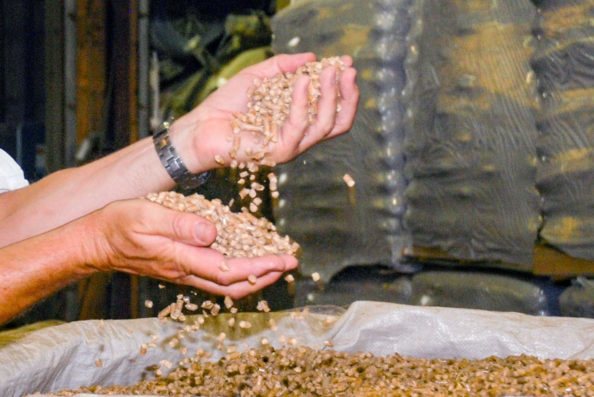 The UK should stop burning wood to generate power because it is not needed to meet the government’s target of decarbonising the electricity sector by 2030, according to analysis. Ed Miliband, the energy security and net zero secretary, is expected to make a decision soon on whether to allow billions of pounds in new public subsidies for biomass burning, despite fierce opposition from green groups. Campaigners have amassed years of evidence of how much destruction burning wood causes to forests and wildlife around the world, and argue that it is not “carbon neutral” because regrowing trees takes decades to make up for the carbon emitted when burned. But ministers were thought to be reluctant to let go of the capacity for baseload power generation that biomass represents. Biomass makes up roughly 4% of the UK’s total electricity generation, and about 8% of “green” power generation, most of it coming from Drax.
 A research team led by the University of Oxford has carried out the most comprehensive assessment to date of how logging and conversion to oil palm plantations affect tropical forest ecosystems. The results demonstrate that these have significantly different and cumulative environmental impacts – and that logged forests should not be immediately ‘written off’ for conversion to oil palm plantations. The findings have been published in
 …Endless hours in front of devices are quietly rewriting the blueprint of childhood, reshaping the way that young people think, interact, develop, and experience the world. Young people today spend between 5 and 9 hours staring at screens, but less than 10 minutes a day enjoying time playing in nature. The result? Rising rates of anxiety, body image dissatisfaction, reduced attention spans, waning creativity, and sleepless nights. Brain scans show kids glued to screens experience premature thinning in the prefrontal cortex—the brain’s control centre for impulse control, attention, emotional regulation, and decision-making. …But there is a solution… The antidote is far simpler than reducing screen time. It’s the original technology: nature. …One movement helping to lead this reconnection is the forest school. Forest schools are built on a simple but radical idea: the best classroom doesn’t have walls. Here, nature is a teacher.