 Canada says Canadian forestry investments in the US South should be viewed positively by US Section 232 investigation. In related news: US trade policies create uncertainty for Canada’s forest sector; amid uncertainty—BC invests $11M in four wood product manufacturers; and a webinar to help contractors manage tariff impacts. Meanwhile: a look inside Gorman’s West Kelowna mill; what the closure of IP’s Georgetown mill says about fluff pulp; and US roofing contractors say they are delaying projects.
In Forestry/Wildfire news: Canadian Forest Owners seek clarity from the political parties; firefighting drones could change the way BC fights wildfires; ENGO’s want BC to refocus on old-growth; Trump and California find common ground on forestry; New Jersey lifts its wildfire evacuation order; and the US Fix Our Forests Act called forest malpractice.
Finally, Wood Solutions Conference comes to Halifax, and the Softwood Lumber Board’s 2024 Annual Report.
Kelly McCloskey, Tree Frog News Editor
 The BC Lumber Trade Council is warning that threatened US tariffs stacked on top of duties against Canadian softwood could lead to soaring costs for residential construction, including in American states seeking to rebuild after natural disasters. Hurricane Helene damaged or destroyed an estimated 73,000 homes in North Carolina last fall, and wildfires burned more than 15,000 structures in California in January, the BC council said in a submission this month to the US Department of Commerce. “Significant hurricane reconstruction efforts are also underway in Florida, Georgia, South Carolina, Virginia and Tennessee,” the council’s 55-page filing says. The submission was a response to a March 1 executive order… which also threatened new lumber tariffs, cited Section 232 of the Trade Expansion Act, allowing him to connect the softwood file with national security. The probe into softwood and other wood products is scheduled to be completed by the end of this year. [to access the full story a Globe and Mail subscription is required]
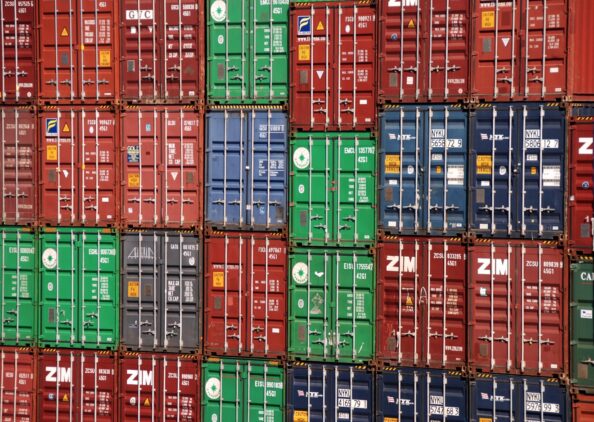 London—President Donald Trump’s unpredictable tariff policy and countermeasures by America’s trading partners will likely deal a heavy blow to economies worldwide, with US prosperity hit particularly hard, the International Monetary Fund warned Tuesday. Global economic growth will slow to 2.8% this year, from 3.3% last year and significantly below the historical average, the IMF forecast in its World Economic Outlook. The slowdown expected in the United States is even steeper, with its economy likely to grow only 1.8% in 2025, compared with a 2.8% expansion in 2024. Both predictions are more pessimistic than the fund’s January projections, which came before Trump’s flurry of tariff announcements took America’s average import tax to its highest level in a century. …North America, just like all regions, can’t expect any upside from the tariffs further down the line. “The long-term impact of the tariffs, if they are maintained, (will be) negative for all regions, just like the short-term impacts,” Gourinchas said.
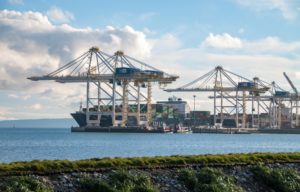 The clock is ticking on trade deals that the US will need to strike with many nations, most notably China, to avoid what Trump’s Treasury Secretary has described as an “unsustainable” tariffs war. But in the U.S. farming sector, the damage has already been done and the economic crisis already begun. US agriculture exporters say the global backlash to President Trump’s tariffs is punishing them, especially a decline in Chinese buying of US farm products, leading to cancelled export orders and layoffs. Peter Friedmann, of the Agriculture Transportation Coalition …says “massive” financial losses are already being shared by its members. …A wood pulp and paperboard exporter reported to the trade group the immediate cancellation or hold of 6,400 metric tons in a warehouse and a hold of 15 railcars sitting in what is known in the supply chain as “demurrage,” when fees are charged for delayed movement of goods.
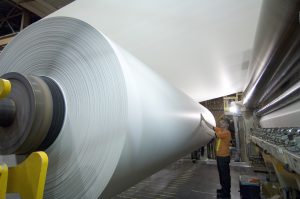 The European pulp and paper industry is struggling to assess the possible impact of tariffs. …Europe has a marginally negative trade balance with the US for pulp and paper. In 2024, it imported 2.6 million tonnes of P&P from the US. In the same year, it exported 2.3 million tonnes of P&P to the country. The largest trade deficits appear to be around pulp (-975,000 tonnes) and containerboard (-310,000 tonnes, mostly kraftliner). On the other hand, Europe has a surplus in graphic paper and cartonboard sales. …“The only certainty we have is that there will be negative consequences for businesses on both sides of the Atlantic. Trade wars are always detrimental for consumers, but we are a ‘made in Europe’ industry, with local capacities to meet the European demand,” he added. …Most market participants believe the stuttering trade war initiated by Trump will further hurt the already stagnating European economy.
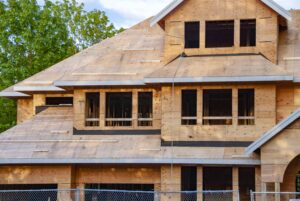 UK — Housing starts in the UK have lagged behind completions for the sixth successive quarter, including to the latest official data. Around 32,000 homes were started in the last quarter of 2024, compared to just over 49,000 completed during the same period, according to the Office for National Statistics. The number of starts is down from 37,000 in the preceding quarter and well below the average of 42,000 homes which have been started per quarter since the ONS resumed gathering the data after the pandemic in April 2022. Completions have remained more stable, rising in the last quarter of 2024 from 41,500 in the third quarter, with an average of just over 49,000 completions a year since the pandemic. Pocket Living chief executive Paul Rickard said: “By any measure these are a disappointing set of figures and continue to highlight the massive challenge the government has.”
 UK — Nearly half of birch wood certified by leading sustainability schemes is misidentified and does not come from the labelled country of origin, according to new testing. The analysis raises fears that large quantities of sanctioned wood from Russia and Belarus are still illegally entering Britain. New research by World Forest ID… scrutinised the accuracy of dozens of harvesting-origin claims on birch products, which had almost entirely been approved by FSC and PEFC sustainability schemes. The samples of birch – a popular hardwood used in furniture, kitchens panels and musical instruments – were labelled as originating in Ukraine, Poland, Estonia and Latvia. But tests using the wood’s “chemical fingerprint” showed that 46% of certified samples did not come from the origin on the label. …While the tests did not specify the country where the wood was grown, experts said Russia and Belarus were the only plausible origins.
 BRUSSELS – For fashion companies grappling with the EU’s ambitious anti-deforestation law, a recent tweak from the European Commission may appear to offer some relief. As the December deadline looms for the landmark EU Deforestation Regulation (EUDR), Brussels has eased what some companies claimed were daunting reporting requirements. Instead of the initially mandated declaration for every shipment of goods linked to forest destruction, companies now only need to submit a single annual due diligence statement. …The Commission hopes this new simplification – which also includes allowing authorised representatives to file for company groups and enabling reuse of statements for re-imported goods – will shave off a significant 30% in reporting burdens and associated costs for affected businesses. However, the EU Commission’s simplification is being met with concern by environmental campaigners. As Reuters reported, the streamlining of paperwork has sparked fears that the teeth of the EUDR might be blunted.
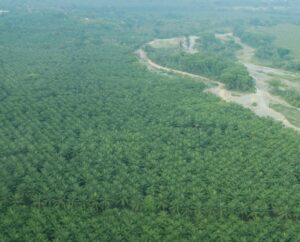 The age of forest restoration has arrived. Between 1990 and 2020, our planet lost 420 million hectares of forest cover, with grave consequences for climate, biodiversity and resource security. For years, large-scale restoration efforts were hindered by concerns around cost-effectiveness and results — but science has come a long way. Yields are higher, and the cost is lower. Advances in methods for measuring carbon storage, creating three-dimensional maps of forest, planting and surveying wildlife populations have removed technical impediments. Now, new financial models are removing the final barrier to large-scale restoration. Philanthropy alone cannot restore, rewild and conserve hundreds of millions of hectares, especially in tropical systems in the global south. …We must find ways to unlock private capital for restoration. Fortunately, commercial restoration projects are now under way across the world and forward-thinking companies are building a strong business case for investing in nature.
 On 10 April 2025, the Forest Stewardship Council (FSC) was notified of Svenska Cellulosa Aktiebolaget’s (SCA) intention to self-terminate its forest management certification in Sweden as of 1 June 2025, while keeping their forests in the Baltics certified and maintaining the Chain of Custody certification as well as membership in FSC Sweden. We regret this decision, but acknowledge SCA’s continued commitment to FSC, and its openness to finding a solution through engagement with FSC and other stakeholders. FSC, a membership-based organization, is founded on the belief that lasting solutions to complex problems require diverse voices at the table. Our unique three-chamber governance structure brings together environmental, social, and economic interests, ensuring that no single perspective dominates, and that consensus guides our decision making.
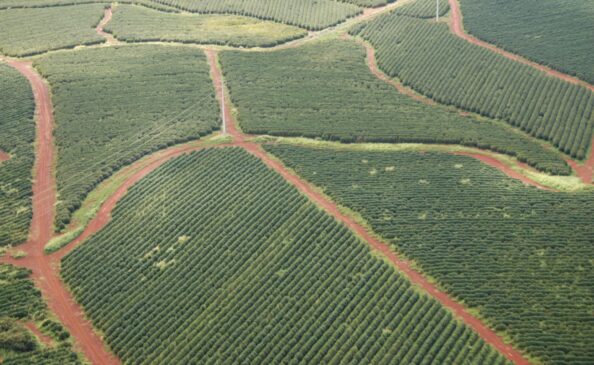 BOGOTA, Colombia — A recent amendment to Peru’s Forestry and Wildlife Law is drawing fierce backlash from environmental groups and Indigenous groups that warn it could accelerate deforestation in the Amazon rainforest under the guise of economic development. The amendment eliminates the requirement that landowners or companies get state authorization before converting forested land to other uses. Critics say the change could legitimize years of illegal deforestation. “To us, this is gravely concerning,” said Alvaro Masquez Salvador, a lawyer with the Indigenous Peoples program at Peru’s Legal Defense Institute. Masquez added that the reform sets a troubling precedent by “effectively privatizing” land that Peru’s constitution defines as national patrimony. “Forests are not private property—they belong to the nation,” he said. Supporters of the amendment, enacted in March, say it will stabilize Peru’s agricultural sector and provide farmers with greater legal certainty.
 The Sustainable Biomass Program (SPB) published its Annual Review 2024, capturing a year of growth, strategic progress, and continued delivery as the biomass certification scheme of choice. With 2024 marking the second year of its current three-year strategy, SBP has consolidated its position in a rapidly evolving sustainability landscape, while laying firm foundations for the years ahead. “2024 outcomes reflect a busy and productive year for SBP. We saw significant growth in certified biomass volumes and certificate holder numbers, but equally important we took proactive steps to define our contribution to global challenges, from carbon and climate to regulatory compliance and sustainability governance. With growth comes an increased responsibility to ensure that assurance and oversight of compliance are rigorously maintained,”stated Carsten Huljus, CEO of SBP.
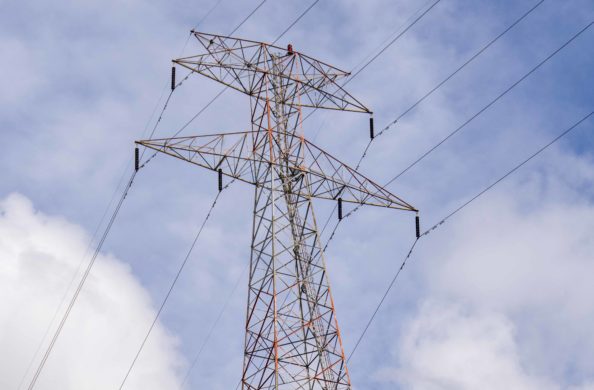 A UK government spending watchdog has questioned the value of the multibillion pound subsidies granted to the Drax power plant in North Yorkshire – and said plans to hand over billions more may not represent value for money. The government has provided about £22bn of public money to businesses and households that burn biomass pellets as fuel over the past three years, including £6.5bn for the owner of the Drax plant. The power plant, which generates about 5% of the UK’s electricity, is expected receive more than £10bn in renewable energy subsidies between 2015 and the end of 2026 – despite ongoing concerns that wood pellets are not always sustainably sourced. The Public Accounts Committee has said that biomass generators have been left to “mark their own homework” when it comes to proving that their fuel met the sustainability standards set by the subsidy scheme.
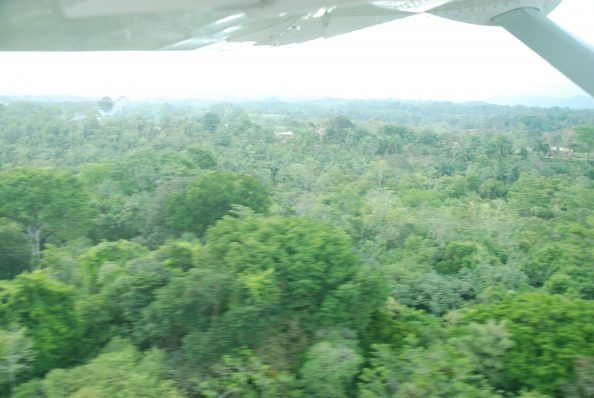 The assessment singled out Brazil and Australia, and warned a lack of rules around accounting for forests and other land-based carbon sinks meant countries could “game the system” when reporting their national greenhouse gas emissions. Scientists are still unclear about how carbon sinks might behave as the planet warms in future, and exactly how much heat-trapping carbon dioxide they might soak up from the atmosphere. But that has not stopped countries from making their own assumptions and using those numbers in their national climate plans, which are due to be finalised to 2035 before the next UN climate talks in Brazil in November. Climate Analytics, a policy institute that independently assesses these plans, said overly optimistic assumptions about how much CO2 forests might draw down was “masking the scale and pace of the fossil fuel emissions cuts needed”.
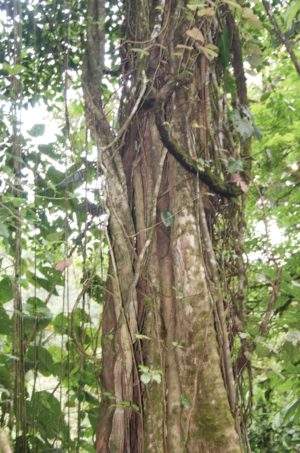 After almost a decade of negotiations, the agreements on carbon markets achieved at Cop29 have been broadly seen as a great success. As well as providing the basis for a global trading system, it may also unlock another source of green finance for global south countries. In Baku, important decisions on article 6 of the Paris Agreement were made and adopted. Countries have agreed on the ground framework to implement a global, centrally governed carbon market, widely seen as the successor to the clean development mechanism developed under the Kyoto protocol. There were also agreements on helping to refine the mechanisms allowing carbon trading between countries through voluntary cooperation… Given the uncertainty, carbon markets may provide an alternative vehicle to channel the funding necessary for climate adaptation and mitigation.
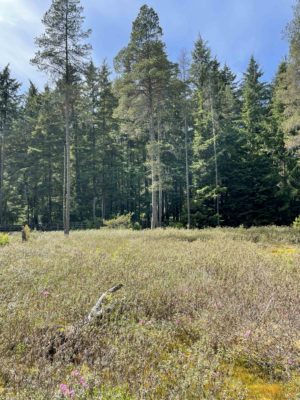 Like giant bones planted in the earth, clusters of tree trunks, stripped clean of bark, are appearing along the Chesapeake Bay on the United States’ mid-Atlantic coast. They are ghost forests: the haunting remains of what were once stands of cedar and pine. Since the late 19th century, an ever-widening swath of these trees have died along the shore. And they won’t be growing back. These arboreal graveyards are showing up in places where the land slopes gently into the ocean and where salty water increasingly encroaches. Along the United States’ east coast, in pockets of the west coast and elsewhere, saltier soils have killed hundreds of thousands of acres of trees, leaving behind woody skeletons typically surrounded by marsh.
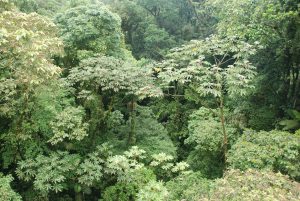 A new study led by researchers at Washington University in St. Louis and the Missouri Botanical Garden has uncovered a surprising layer of diversity in tropical forests. Not only are the forests populated by a dizzying number of tree species, but each of those species takes a different approach to chemistry, increasing the array of natural compounds that provide important functions for the plants — and potentially for humans. The research helped clarify the ecological and evolutionary forces that make tropical forests such hotbeds of biodiversity. While the team wasn’t specifically looking for compounds that could be useful for humans, their findings underscore the value of tropical forests as natural factories of plant chemicals that could have important uses in medicine and other fields, said Jonathan Myers, a professor of biology in Arts & Sciences at WashU. “Tropical plants produce a huge diversity of chemicals that have practical implications for human health.”
 Israel asked Greece, Bulgaria, Cyprus, Italy and Croatia to help extinguish major wildfires that broke out Wednesday morning in several locations near Jerusalem and along Highway 1 leading to the city as communities along the road were instructed to evacuate. At least one man suspected of involvement in igniting the fires was arrested, according to Israeli broadcaster Kan, which reported that the suspect is now detained at the Oz police station in east Jerusalem. Israel police did not confirm or give any details on what started the fires. …Foreign Minister Gideon Saar asked his counterparts in the four countries to send firefighting airplanes and helicopters to Israel, including supertankers. Ynet reported that Greece and Italy are sending supertankers and that the Palestinian Authority offered to send firefighters, though Israel has not yet responded to the offer. International aid is expected to arrive Thursday morning.
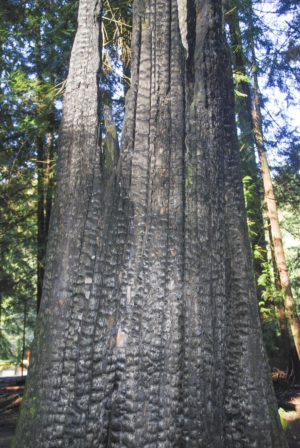 The scale of forest damage caused by recent wildfires in North Gyeongsang is nearly double the amount initially estimated by the Korea Forest Service, according to multiple local governments and authorities on Thursday. A joint investigation conducted by government agencies, including the Korea Forest Service, found that the wildfires that swept across five cities and counties in North Gyeongsang burned close to 90,000 hectares (222,395 acres) of forest. This is a significant increase from the 45,157 hectares that the Korea Forest Service previously announced as the affected area after fire suppression efforts concluded. The actual damage is twice the originally reported figure and nearly four times greater than the forest damage caused by the East Coast wildfires in 2000, which had been considered the worst in the country’s history until the recent disaster.