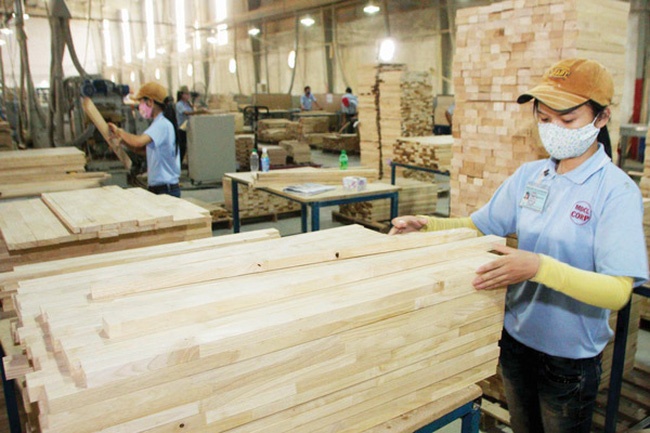
Trade is top of mind for everyone right now, and market diversification is a key part of those conversations. In this episode of Forestry Talks, host Aspen Dudzic is joined by Bruce St. John, President of Canada Wood, to dive into the decades-long efforts to diversify Canada’s forest product exports. Bruce shares fascinating insights into how countries like Japan, China, and Vietnam are integrating Canadian wood into their industries—not just for construction, but for everything from seismic-resistant buildings to high-end furniture. We also explore how Alberta plays a crucial role in securing international demand and why emerging markets are looking to Canadian forest products as part of their sustainability solutions. Join us for an in-depth discussion about why international market diversification is more important than ever, the impact of evolving trade policies, and the exciting innovations shaping the future of Canada’s forestry exports.


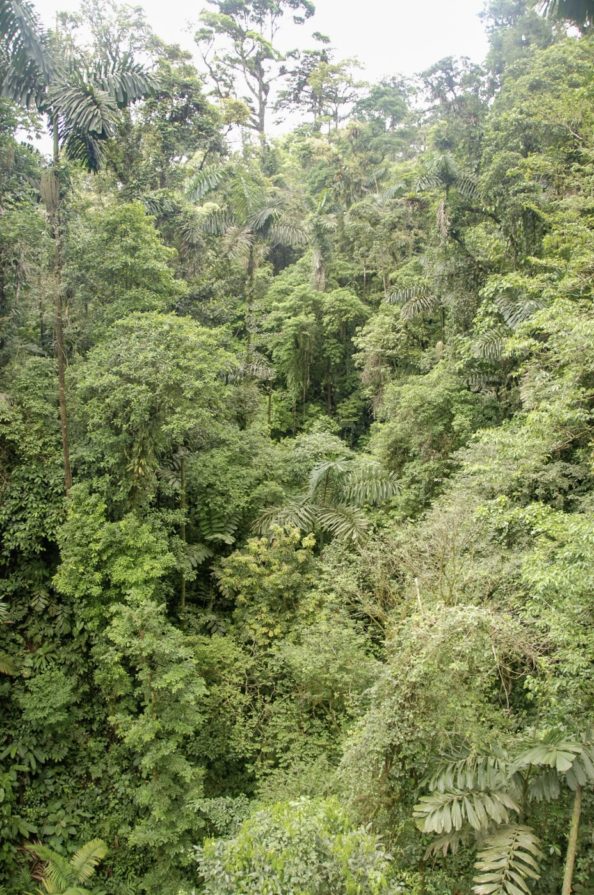 In 2006, Brazilian President Lula da Silva’s government passed the Public Forest Management Law, implementing a forest concession scheme designed to regulate and legalize logging activities in Brazil’s forest — in particular, the Amazon. Forest management consists of removing a small number of trees whose species are valued in the market. After that, the area can only be explored again in 30 to 40 years, following its regeneration cycle. Behind on its concessions targets, the current government wants to almost quadruple the current area of federal concessions by 2026. Even though it is different from deforestation, timber management has never been seen as a way to conserve the forest by traditional peoples.
 The European Union Deforestation Regulation (EUDR) aims to prevent deforestation-linked products from entering the EU market. This study assesses the potential impacts of the EUDR on global forest product markets using the FOrest Resource Outlook Model (FOROM). We simulate two scenarios: the baseline EUDR, focused on commodity-driven deforestation and urbanization, and an extended EUDR+ scenario, which includes shifting agriculture. The results indicate that high-deforestation countries, such as Brazil, Indonesia, and Malaysia, are expected to face significant reductions in roundwood production and exports, with downstream effects on sawnwood and panel prices. In contrast, low-deforestation countries like Canada and the United States may experience slight increases in production to meet EU demand, but their impact is limited by moderate deforestation rates. The study also highlights the potential for market leakage, where deforestation-linked products may shift to non-EU markets, potentially undermining global environmental goals.
  Sweden might fail to meet its and the EU’s carbon neutrality targets after recent environmental policy shifts, the Organisation for Economic Cooperation and Development (OECD) warned in a report published Wednesday. Long considered a champion in environmental protection and the fight against climate change, the Scandinavian country has set a goal of net zero emissions by 2045, five years ahead of the European Union’s target. But Sweden might not be able meet either of those goals, according to a review conducted by the OECD, a 38-member group of mostly developed nations. “Over the last decade, the country has cut its greenhouse gas emissions faster than the EU average,” the report said. “However, recent policy shifts, particularly in the transport sector, have put into question Sweden’s ability to meet EU and domestic climate targets.” …In January, the World Wildlife Fund (WWF) criticised Sweden for not adequately protecting primary and old-growth forests from logging.
 Denmark has long been praised for its transition to renewable energy, with renewable energy use rising from 6% in 1990 to 42.8% in 2022. However, behind this achievement lies an overdependence on woody biomass, which now accounts for up to 68% of its total renewable energy use. This growth has been sustained through direct and indirect subsidies, often exceeding those allocated to wind and solar energy. Denmark’s dependence on woody biomass is largely fuelled by imports from Estonia and Latvia. The country ranks among the largest, if not the largest, importer of woody biomass from the Baltic region, with 52% of its wood chips and pellets coming from these two nations. …Intensive logging is also devastating Estonian and Latvian bird populations.
  LONDON, March 12 – British energy regulator Ofgem said on Wednesday that it had not found evidence of a breach of sustainability obligations by power company Drax, in the watchdog’s review of reports prepared by auditor KPMG. Renewable power generators in Britain can receive renewable obligation (RO) certificates which can then be sold to energy suppliers who use them to sell renewable electricity products to customers. For biomass power plants to qualify for the certificates they must show at least 70% of their biomass fuel comes from sustainable sources. Green groups have long criticised the sustainability credentials of biomass power plants, which burn wood pellets to generate electricity. In 2023, regulator Ofgem opened an investigation into whether Drax was in breach of annual reporting requirements under the RO scheme. Ofgem said it reviewed over 3,000 documents and did not find evidence to support claims that sustainability obligations had been breached.