Breaking News: The US Department of Commerce today announced the final anti-dumping duty rate of 20.56% in the sixth annual antidumping review of unfairly traded Canadian softwood lumber imports into the United States.
 The Forest Stewardship Council lifted its suspension of Asia Pulp & Paper in the interest of speedy redress—to Greenpeace’s dismay. In other Business news: Kruger plans a $700M modernization of its Corner Brook mill; Northern Pulp’s cleanup plan is still pending; Port Angeles demands a full cleanup of Rayonier mill site; UPM to curtail paper production due to overcapacity; Weyerhaeuser posts lower Q2, 2025 earnings; the US plans to continue investigating hardwood plywood imports; and the USDA draws criticism for relocating DC staff. Meanwhile: Ontario invests in forest biomass; and the Wood Flooring Association has a new CEO.
In Forestry/Wildfire news: BC’s Forest Practices Board released its annual report; West Fraser and Lake Babine Nation celebrate a new tenure; Ben Parfitt on the fibre challenge faced by BC’s value-added mills; a blockade highlights Quebec’s Indigenous consultation gap; Thompson River University joins National wildfire resilience network; Washington state secures long-delayed wildfire funds; a study say US forest diversity continues to decline, the Fix Our Forests Act draws fire; and Congress moves to stop killing of barred owls.
Finally, West Fraser was justified in safety violation firing, and WorkSafeBC’s proposed regulatory amendments.
 As trade talks intensify between the US and Canada, those in the forest industry await what will happen with that long-term irritant of a trade file – softwood lumber. The US Lumber Coalition’s (USLC) July 2, 2025 press release, “
 BURNABY, BC – The United Steelworkers union (USW) District 3 and the USW Wood Council are calling on the federal government to take urgent action in response to the latest escalation in the softwood lumber trade dispute. …“This latest increase, along with other threatened tariffs, is yet another blow to workers, communities and the long-term sustainability of our industry,” said Scott Lunny, USW Western Canada Director. “We represent thousands of loggers and mill workers… and their families, are at risk – governments need to act now.” …“It’s a constant attack on our industry and our workforce from the US administration. ….In addition to calling for a deal on softwood lumber to be a priority for Canada in trade talks with the US. …“These duties are unfair and will only drive up housing costs for U.S. consumers, while putting thousands of Canadian jobs at risk,” said Jeff Bromley, USW Wood Council Chair.
 BC’s independent wood product makers say hundreds of small- and medium-sized manufacturers may be forced to shut down in light of the latest decision from the US to raise anti-dumping duties on Canadian softwood… [which] includes a requirement for Canadian companies to retroactively remit duties for products shipped to the US since Jan.1, 2023. Association chair Andy Rielly says that requirement could not only force small BC producers to shut down, but may also threaten operators’ personal assets as they may have to risk using their homes as collateral to secure bonds to pay. …Association executive director Brian Menzies describes independent wood product producers as “collateral damage” in the trade war.” …“We acquire logs and lumber at ‘arm’s length’ from various suppliers on the open market, just like claims made by members of the US Lumber Coalition, and yet our Canadian companies along with U.S. consumers must pay these unfair and costly duties.”
 BC’s forestry sector would have been brought to its knees Friday by new American duties on Canadian softwood lumber, if it wasn’t already flat on its back from being hammered by years of provincial government policies. …But even before the new duties, B.C.’s forestry sector was in a crisis. Annual harvest volumes are down by tens of millions of cubic metres, lumber production and exports have shrunk dramatically, export revenues have fallen, thousands of jobs have been lost, and dozens of mills have been curtailed or shuttered. The industry has blamed various BC NDP policies, including new old-growth logging deferrals… and extraordinarily long permitting delays. …If New Democrats are serious about saving the industry from ruin, now would seem to be the time to shelve the never-ending reviews and actually do something. The government could spin a pivot to pro-forestry policies not as a retreat, but as a made-in-BC response to American trade aggression.

 SPRINGFIELD, Illinois — The US Department of Agriculture will move thousands of employees out of the nation’s capital in a reorganization the agency says will put them closer to customers while saving money, Agriculture Secretary Brooke Rollins said Thursday. Around 2,600 workers — more than half the Washington, D.C. workforce — will be moved to five hubs stretching from North Carolina to Utah, Rollins said. The union representing federal workers immediately criticized the plan as a ploy to cut federal jobs, pointing out that some 95% of the department’s employees already work outside Washington. The move is part of President Donald Trump’s effort to make the federal government slimmer and more efficient, which received a Supreme Court boost this month. Sen. Amy Klobuchar demanded that department officials appear before the Senate to explain their thinking.” …In the Washington region, the department will vacate three buildings and examine the best use of three others.
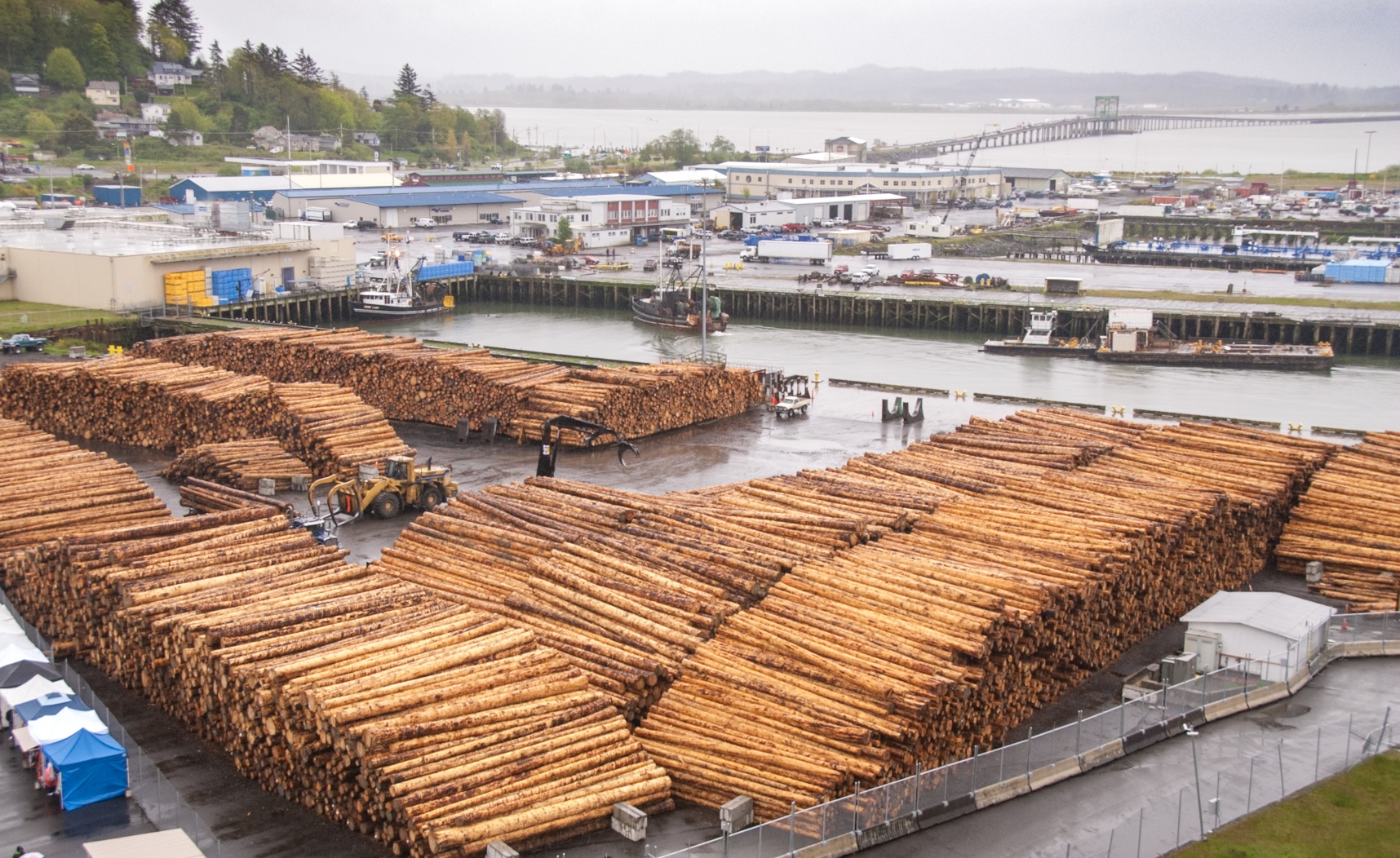 SKAMANIA COUNTY, Washington — Sawmills have been closing across the Pacific Northwest over the past 30 years. There is just one left in Skamania County, down from six during its logging heyday. Limited log supply from the region’s national forests has cut off their raw material, while cheap lumber from Canada has taken market share for their finished product. Owners of the remaining mills have high hopes that President Trump will deliver relief by increasing logging in national forests and raising trade protections against Canadian exports. Although the latter can be achieved with a stroke of the president’s pen, meaningfully boosting the federal timber harvest could take years and be impeded by litigation and red tape. …US sawyers have argued successfully in trade cases that their Canadian competitors are supplied with subsidized government logs, and that they offer two-by-fours over the border for less than they sell them at home. [to access the full story a WSJ subscription is required]
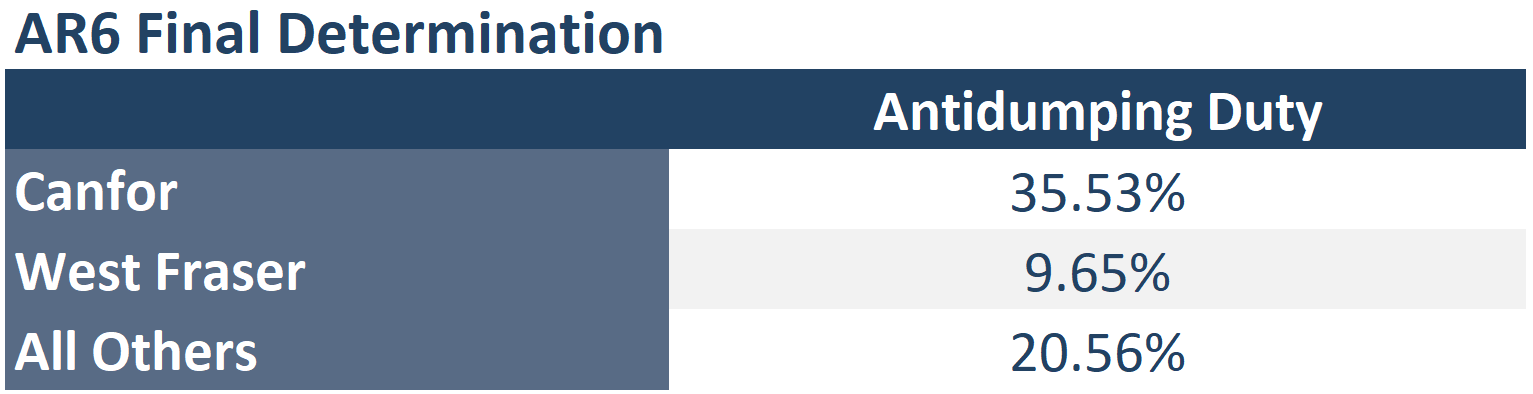
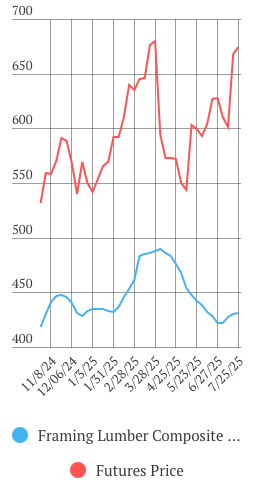 The U.S. Commerce Department has announced it is nearly tripling its anti-dumping duties on Canadian lumber imports from 7.66% to 20.56% following its annual review of existing tariffs. The anti-dumping duties are in addition to current countervailing duties set at 6.74%, which would bring the total lumber duties above 27%. However, the countervailing duty rate is expected to move higher on Aug. 8. Commerce issued a preliminary determination on countervailing duties earlier this year that would raise the countervailing duty rate to 14.38%. Moreover, President Trump’s Section 232 [investigation] could result in higher lumber tariffs. …For years, NAHB has been leading the fight against lumber tariffs because of their detrimental effect on housing affordability. In effect, the lumber tariffs act as a tax on American builders, home buyers and consumers. …We are also urging the administration to move immediately to enter into negotiations with Canada on a new softwood lumber agreement that will… eliminate tariffs altogether.
 The US Lumber Coalition (USLC) has aggressively promoted strong enforcement of US trade laws and railed against “unfair Canadian trade practices.” …The USLC’s arguments have been challenged by a pair of Canadian independent consultants — Russ Taylor Global and Spar Tree Group:
 US and Chinese negotiators have agreed in principle to push back the deadline for escalating tariffs, although America’s representatives said any extension would need Donald Trump’s approval. Officials from both sides said after two days of talks in Stockholm that while had failed to find a resolution across the many areas of dispute they had agreed to extend a pause due to run out on 12 August. Beijing’s top trade negotiator, Li Chenggang, said the extension of a truce struck in mid-May would allow for further talks, without specifying when and for how long the latest pause would run. However, the US trade representative Jamieson Greer stressed that President Trump would have the “final call” on any extension. …Trump is on course to impose extra tariffs on Mexico and Canada from Friday, barring last-minute deals.


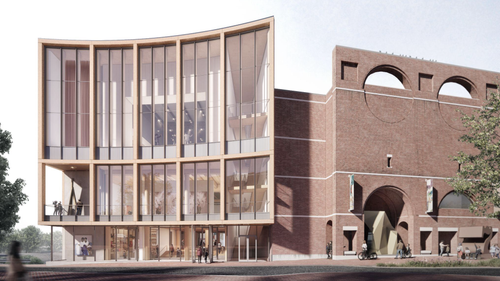
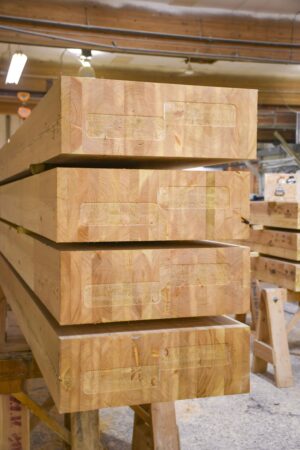 CHICAGO — …Milwaukee, our neighbor to the north has become a hotbed for the development of timber towers — tall buildings that use relatively new mass timber technologies that can replace the steel and concrete traditionally used to support such structures. Since 2022, Milwaukee has been home to the tallest timber tower in the world — the 25-story Ascent MKE at 284 feet in height. That’s no Sears Tower, but when you consider that most wood-framed buildings are one to four stories tall, it’s quite an achievement. …For all the stunning achievements that Chicago architects and engineers have accomplished over the last century and a half, there’s still a deeply conservative streak that runs through the city’s building culture. Fire, through several key historical events, is at fault. …So, perhaps it’s not surprising that we now lag many places in the development of new construction with mass timber.
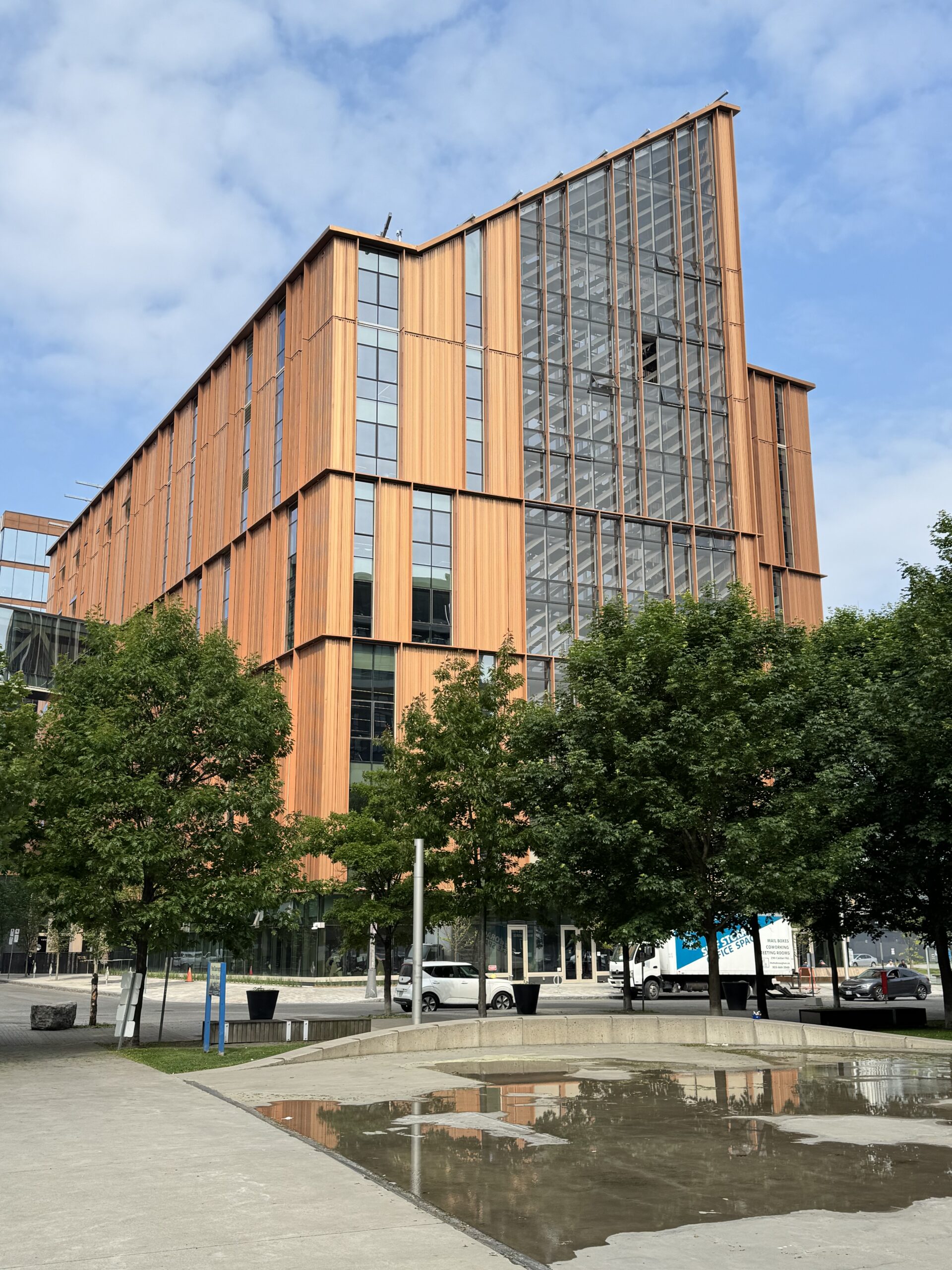 Mass timber is an emerging construction technology growing in popularity in the United States. One obstacle to the gradual adoption of mass timber construction is the limited availability of qualified engineers and designers. Although successful efforts have been made to address research topics related to mass timber design and … adoption as a construction material, little research has been conducted to identify desired student outcomes for undergraduate civil or structural engineering students working with mass timber after graduation. This paper describes the development of an industry-guided educational resource for curriculum development to improve the alignment between undergraduate student outcomes and employer requirements related to mass timber design. …The findings reflect a prioritization of competencies related to the design of mass timber elements and structures, an understanding of material characteristics, the navigation of available design resources, contributions to project deliverables, and the support of sustainability goals.
  Forming an unusual alliance, environmental and animal welfare groups have pulled together a bipartisan effort in Congress, united by universal disdain for a Biden-era plan to massacre nearly 500,000 barred owls. Killing off barred owls in an effort to save endangered spotted owls is “wasteful, inhumane and unworkable,” Wayne Pacelle, president of Animal Wellness Action and the Center for a Humane Economy said. Those groups hailed the introduction Wednesday of the Congressional Review Act (CRA) to nullify the Biden-era barred owl management strategy. …In September 2024, the Biden administration approved a $1.3 billion plan for U.S. Fish and Wildlife Service (FWS) agents to shoot about 470,000 barred owls over the next 30 years in Washington, Oregon and California. The justification was to give spotted owls a better chance of recovery under the assumption that barred owls bully their smaller cousins out of vital, old-growth forest habitat. …Federal wildlife agents have killed roughly 4,500 barred owls since 2009.
  The U.S. Forest Service will abandon its nine regional offices as its parent Department of Agriculture consolidates out of Washington, D.C., according to a memo released on Thursday by Agriculture Secretary Brooke Rollins. “President Trump was elected to make real change in Washington, and we are doing just that by moving our key services outside the beltway and into great American cities across the country,” Rollins said in a statement announcing the reorganization. “We will do so through a transparent and common-sense process that preserves USDA’s critical health and public safety services the American public relies on. We will do right by the great American people who we serve and with respect to the thousands of hardworking USDA employees who so nobly serve their country.” The reorganization plan left many Forest Service experts wondering what the benefit would be, including former Forest Service Chief Dale Bosworth, who served during the George W. Bush administration.
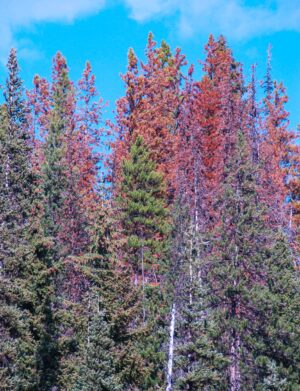 Since the mid-1990s, so-called blooms of bark beetles have affected nearly 80% of Colorado’s 4.2 million acres of pine forest, reducing decades-old trees into firewood. In the process, they’ve literally laid the groundwork for some of the state’s most devastating forest fires, from the 2016 Beaver Creek Fire in Walden to the 2020 East Troublesome Fire in Grand County. Despite rendering postcard views into wildfire fodder, West does not call these beetles a pest. Like fire, they’re just a part of nature here, filling a vital biological niche in their native habitat. In the long term, experts say they even make forests healthier. “Bark beetles serve as the ecological sanitizers of the forest,” said West, who helps manage Colorado’s 24 million acres of state forestland. One paper,
 If state funding for forest health and wildfire prevention isn’t ramped back up in the next legislative session, it could hinder efforts to prevent severe fires in the coming years, Washington’s top public lands official and others warned this week. The state Legislature approved House Bill 1168 in 2021, which committed $500 million over eight years to the state Department of Natural Resources for wildfire preparedness and response. State spending had largely kept up with that target until this year, with the department receiving $115 million in the last two-year budget and $130 million in the one before that. Then this year, as lawmakers confronted a budget shortfall, they slashed the wildfire preparedness funding to just $60 million for the next two years. The Department of Natural Resources says it’s prepared for this fire season and has money left over from past years. But the funding rollback has sparked concerns.
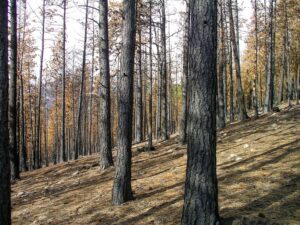 The state’s top public lands official is urging lawmakers to restore the spending to previous levels after they cut it by about half this year. If state funding for forest health and wildfire prevention isn’t ramped back up in the next legislative session, it could hinder efforts to prevent severe fires in the coming years, Washington’s top public lands official and others warned this week. The state Legislature approved House Bill 1168 in 2021, which committed $500 million over eight years to the state Department of Natural Resources for wildfire preparedness and response. State spending had largely kept up with that target until this year, with the department receiving $115 million in the last two-year budget and $130 million in the one before that. Then this year, as lawmakers confronted a budget shortfall, they slashed the wildfire preparedness funding to just $60 million for the next two years.
 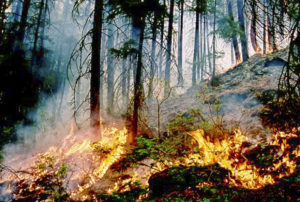 REDDING, California — In firefighting, drones get used to see hot spots in the dark, map the size of fires and look for damage. But the recent Green Fire also proves the flying robots also are effective in starting backfires on terrain firefighters cannot safely get to in the Shasta-Trinity National Forest. “If the mission is dull, dumb or dangerous, send the drone,” said John Schuler, a firefighter and US Forest Service spokesperson on the Green Fire. Drones can go where no firefighter can: Into remote areas that are difficult to impossible for crews to reach, and where manned aircraft have trouble flying due to smoke or other safety concerns. Firefighters like those on the Green Fire in the Shasta-Trinity National Forest are using drones to check fire size and directions wildfires are moving. They do the latter by dropping ping pong balls full of chemicals, said Schuler.
 The restoration of gray wolves in Yellowstone National Park has helped revive an aspen tree population unique to the region, a new study has found. Quaking aspen, one of the few deciduous tree species in the northern Rocky Mountain ecosystem, is once again thriving, after suffering severe decline during the 20th century, according to a new study. “This is a remarkable case of ecological restoration,” lead author, Luke Painter, at Oregon State University’s College of Agricultural Sciences, said. The decline in aspen growth occurred in tandem with a surge in Rocky Mountain elk, which had lost a key predator following the elimination of wolves from the region by 1930. …At the same time… aspen recovery hasn’t been uniform across northern Yellowstone — and the growth is subject to numerous potential threats including climate change and encroachment of coniferous trees, are possible such factors. And other herbivores have increased in the region.
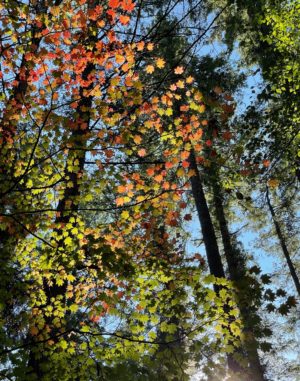 For 11 straight years, the National Arbor Day Foundation has recognized UAB as a Tree Campus USA. The recognition is for UAB’s work to plant and care for the more than 4,400 healthy trees on campus, while engaging students and employees in learning about and preserving them. UAB has been honored for the past six years with the National Arbor Day Foundation’s Tree Campus Healthcare designation. The national recognition program celebrates health institutions that make a mission-aligned impact on community wellness through tree education, investment and community engagement. The university’s urban forest is managed by the UAB Facilities Division, which maintains data on its trees: An ongoing project includes collecting details on the more than 17 genus and 24 tree species currently across campus. Students played an important part in helping identify and maintain data on the trees.
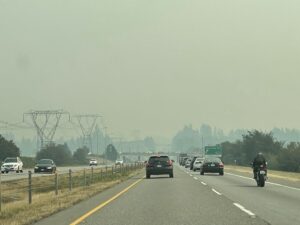 As wildfire smoke continues to drift into Michigan from Canada, experts say the increasing frequency and intensity of wildfires across North America are tied to a combination of climate change and decades of forest management practices. “Fires are a natural part of many forest ecosystems,” said Chad Papa, the Director of the Forest Carbon and Climate Program Department of Forestry at Michigan State University. “But what we’re seeing now is a major departure from historic fire regimes, with hotter, more catastrophic fires and slower forest recovery.” In the western U.S., a history of fire suppression and reduced timber harvesting has led to denser forests that are more prone to combustion. Laws enacted in the 20th century often restricted controlled burns, which experts said have contributed to overgrown conditions that increase wildfire risk.
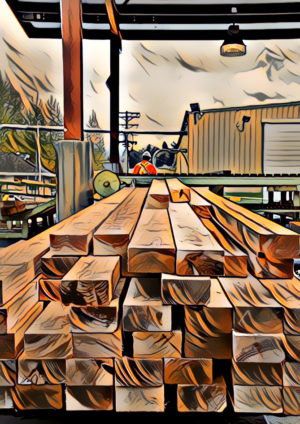 100 MILE HOUSE, BC — West Fraser Mills (WFM) had just cause to fire a worker who violated a safety policy on May 13, 2024, and tried to minimize the risk involved,