
Kelly McCloskey

Robert McKellar
When we first reached out to political risk expert Robert McKellar in mid-2024, our goal was to spark a conversation the forest sector wasn’t yet having—about political risk and its growing influence on everything from trade policy to investment decisions. Robert’s op-ed in August, 2024 made the case that political risk is not just something that happens in volatile regions—it is the exposure of businesses to political forces, whether through government policies, trade dynamics, or geopolitical shifts. He identified major political forces impacting the Canadian forest sector—including the growing China-West rivalry and Canada-US trade friction—to help companies assess the relevance of political risk for themselves. In hindsight, his foresights were well placed.
After the election of President Trump and given how quickly the trade situation evolved, we reached out to Robert a few weeks ago to re-examine these dynamics. And given the complexities, we decided on a two-part approach. In Part I, in February 2025, Robert set the stage by looking at Trump’s leadership style and his approach to business, he outlined how forest product companies can assess and manage political risk, and then he focused on the most pressing risk to the sector—tariffs. The other risks—lumber duties, interference in Canadian-owned US-based industries, and the impact of US-China trade tensions on lumber sales—were left for Part II. In that this is a long read, in the “READ MORE document” are the following hyperlinked-titles—should you wish to proceed directly to a given section:
- Recap of Part I
- Is Trump toying with Canada or is there a plan?
- The latest on duties and tariffs
- Are Canadian US-subsidiaries at risk?
- US-China friction and lumber sales
- How to plan and manage for political risk
This isn’t a typical industry commentary. It’s not about what government should do, or where markets might go next. It’s about what companies can do now to better anticipate, adapt to, and, at times, even leverage political disruption. [full disclosure, Robert McKellar is Tree Frog co-editor Sandy McKellar’s brother]
 President Trump’s promised tariffs on softwood lumber risk disrupting the supply chain for something nobody wants to be caught without: toilet paper….While Trump advocates for new tariffs partly to bolster US manufacturing, they may also hit the availability of northern bleached softwood kraft pulp, or NBSK, a key component in making toilet paper and paper towels. NBSK constitutes about 30% of standard U.S. bathroom tissue and half of a typical paper towel, and is currently sourced primarily from Canada, said Brian McClay, chairman of TTOBMA. He added that the U.S. imported about 2 million tons of Canadian NBSK last year, highlighting the longstanding reliance of American paper-goods producers on pulp from their northern neighbour. …“If Canadian pulp mills close because they don’t have the fibre supply, I can’t think of any other option for them — they just can’t switch the recipe around,” he said. The scenario risks reviving painful memories of pandemic-era toilet paper shortages.
 Yesterday, we featured Part II of our in-depth Q&A with political risk expert Robert McKellar, a follow-up to an August
 As a federal election kicks off, the trade war with the US is casting a long shadow over voters’ choices, and whoever forms the next government will have the tall order of trying to draw this conflict to a close. …International trade experts say that will be much easier said than done. The two economies are more integrated than ever before, and President Donald Trump’s chaotic governing style makes it extremely difficult to know how to even begin to unravel this dispute. …Carney met with the country’s premiers and leaders from long-time allies in other countries to chart a short- and long-term response to the tariffs. He has conceded there’s a limit to how much Canada can do to respond. …Russell Williams at Memorial University said because Trump keeps threatening Canada’s existence, a political, rhetorical de-escalation is essential before any compromise on trade can be reached.
 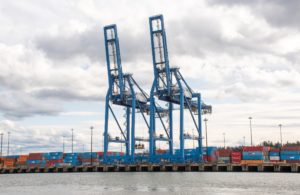 US President Donald Trump’s coming wave of tariffs is poised to be more targeted than the barrage he has threatened, aides and allies said. …The White House is narrowing its approach to take effect on April 2, likely omitting a set of industry-specific tariffs while applying reciprocal levies on a targeted set of nations that account for the bulk of foreign trade with the US. …The White House is still planning to unveil the reciprocal -tariff action on that day, though. …The fate of the sectoral tariffs, as well as tariffs on Canada and Mexico that Trump said were justified by fentanyl, remains uncertain. …The administration is now focusing on applying tariffs to about 15% of nations with persistent trade imbalances with the US… such as Australia, Brazil, Canada, China, the European Union, India, Japan, South Korea, Mexico, Russia, and Vietnam.
 Canada could be on the lower end of Trump’s threatened global tariffs next week, the Star has learned. Nothing, however, is guaranteed until Trump decides ahead of his April 2 deadline and no government officials are taking any assurances for granted, sources said. …Canadian sources with knowledge of discussions between the two countries say White House officials have suggested Trump may impose three escalating levels of tariffs on America’s trading partners, with Canada getting hit on the lower end of the scale. …Despite a recent news report the tiered-approach is not on the table, the sources said it aligns with the government’s understanding of what’s about to hit next week. Flavio Volpe, head of the Canadian Auto Parts Manufacturers Association, said, “I wouldn’t take any comfort from that… it may just be that some other countries have been levied a higher universal tariff”.
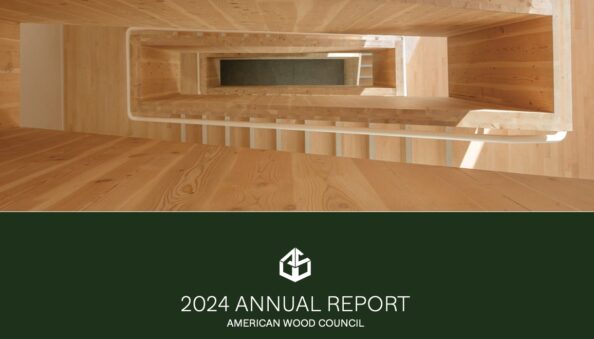 The American Wood Council (AWC) continues to do critical work on behalf of its members, and it is our pleasure to share notable examples from this past year… AWC continued to position U.S. wood products as a sustainable solution to address the environmental impact of the built environment. …Our codes and standards teams worked together to secure some important wins in the initial Group A ICC code cycle, including references to the ANSI Fire Design Specification. …As we look to this year, the new Administration means many changes in policy and regulations. We at AWC are prepared to continue to work hard to advance public policies that support market growth and protect the industry from adverse federal legislation and regulation. Our sector tells a truly bipartisan story, and we look forward to a fresh start with new opportunities to promote our industry and all of the good it does for the country.
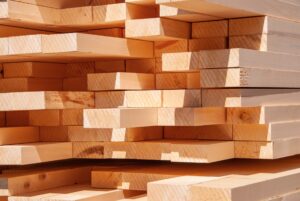 In seeking to justify his imbecilic trade war against Canada, Donald Trump
  CALIFORNIA — The US Department of Justice (DOJ) announced that it had reached an $8.1 million settlement in a civil False Claims Act case based on alleged customs violations by defendants Evolutions Flooring, a San Francisco-based importer of wood flooring, and its owners Mengya Lin and Jin Qian. …The complaint shows how DOJ and relators may formulate such cases. Evolutions and its owners were accused of knowingly evading customs duties, including antidumping duties, countervailing duties, and section 301 tariffs, on wood flooring manufactured in the People’s Republic of China. Acting at the direction of its owners, Evolutions allegedly mispresented the country of origin of certain flooring imports – declaring them as Malaysia-origin – to avoid the high duties applicable to China-origin products. Evolutions also allegedly falsely declared the true manufacturer of the imported merchandise.
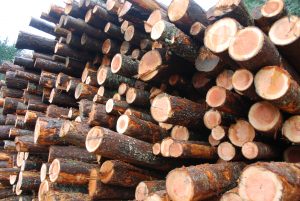 VERMONT — Oliver Pierson, Vermont state’s director of forestry, and Katharine Servidio, mapped out the [tarrif] tangle for the House Committee on Agriculture, Food Resiliency, and Forestry. As sawmill capacity in the U.S. has retracted, New England’s loggers have looked to Canada to process timber felled on this side of the border. …Vermont imported $52 million in sawmill and wood products from Canada in 2024, according to Pierson. …There is a case for bringing more milling back to America, Pierson said, but “it wouldn’t be for a year or two from now when we’d be able to stand up additional processing capacity.” In the short term, Servidio and Pierson said that they expect that U.S. tariffs on lumber imported from Canada and retaliatory Canadian tariffs on Vermont timber will be debilitating for the logging industry in the state.
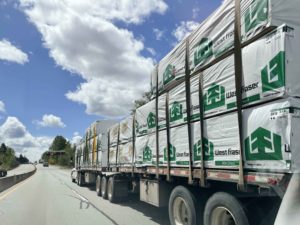 Flatbed trucking rates have surged over the past month as steel and lumber shippers hurry to stockpile inventory amid tariff whiplash threatening to roil their supply chains, experts say. A six-week increase in rates has led to the highest flatbed pricing to start a year since 2017, according to DAT, as freight repositioning combines with a typical seasonal pickup in construction and other industries. “Demand usually picks up in March and April as planti ng, building, construction, machinery imports, and nursery seasons gear up,” said DAT Principal Analyst Dean Croke. “…Last week, the average flatbed spot rate went up 4 cents to $2.13 per mile compared to the previous week. Meanwhile, the load-to-truck ratio for flatbed went up to 46.92 from 41.12 loads per truck.Shippers have pulled forward cargo imports such as machinery, lumber, metals and oversized flatbed freight to mitigate tariff uncertainty.
  Donald Trump’s trade war is alarming the global markets, sending shares sliding in their worst month in over two years. Stock markets across the Asia-Pacific region are in retreat this morning, as investors fear Trump will announce swingeing new tariffs on Wednesday, which has been dubbed “Liberation Day” by the US president. Japan’s Nikkei has lost 3.9%, down 1,457 points at 35,662 points today, while South Korea’s KOSPI is down 3%, Australia’s S&P/ASX 200 has fallen 1.7%. In China, which has already been hit by Trump tariffs this year. the CSI 300 is 0.9% lower. …Today’s selloff comes after Donald Trump told reporters that the reciprocal tariffs he is set to announce this week will include all nations. …On Friday, core inflation rose by more than expected, while consumer sentiment weakened to its lowest level since 2022.
 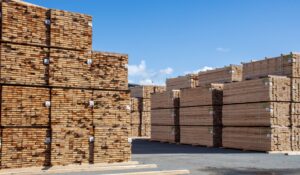 Contractors are bracing for a new wave of tariffs set to take effect April 2, this time on certain material imported from Canada and Mexico — such as steel, aluminum and lumber. Though reports indicate the Trump administration could roll back the ultimate scope of this action, contractors say just the threat of tariffs can have an immediate impact on material costs. That’s why that looming deadline on Canadian and Mexican imports has already sparked concern across the construction industry, particularly around reinforcing and structural steel, curtainwall systems and Canadian lumber, said Steve Stouthamer, executive VP Skanska USA Building. Stouthamer talks about the materials most at risk, tariffs’ impact on budgets and negotiations and steps contractors can take to minimize financial exposure. …The Trump administration has indicated Canadian lumber will be included in the reciprocal tariffs. Lumber has already seen a significant increase, 10% to 15% in cost, in anticipation of this tariff.

 From laundry detergent to dishwasher tablets, cleaning products are an indispensable part of life. Yet the chemicals that make these products so effective can be difficult to break down or could even trigger ecosystem-altering algal blooms. Now, researchers reporting in ACS’ Langmuir have addressed those challenges with an environmentally compatible detergent made of tiny wood fibers and corn protein that removes stains on clothes and dishes just as well as commercial products. …The researchers combined cellulose nanofibers from wood with zein protein from corn to create an emulsion. Cellulose can attract and repel water, so it is effective at forming such emulsions and attracting different types of stains. The zein protein, on the other hand, helps stabilize the emulsion and trap oils.
 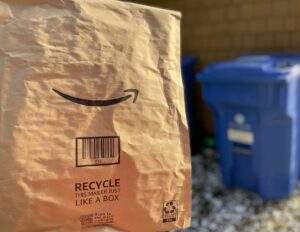 Last week, consumers in four states filed a proposed class action against Amazon, accusing the company of greenwashing by misleading consumers about the sustainability of the company’s Amazon Basics line of paper products. Here are some of the key allegations: Amazon uses a Sustainability Leaf and a Climate Pledge Friendly logo to suggest that Amazon’s supply chain for Amazon Basics paper products uses sustainable forestry practices. …However, because Amazon sources its Amazon Basics paper products from suppliers who clearcut and burn centuries-old forests, Amazon is exaggerating any environmental benefits. …The Forest Stewardship Council (or “FSC”) requires companies to use different FSC logos to depict different levels of commitment to responsible forest management. Despite this, Amazon uses an unqualified Forest Stewardship Council logo. …This Complaint challenges an arguably very sustainably-minded company. We learned this week that Amazon announced the launch of a new carbon credit investment service.


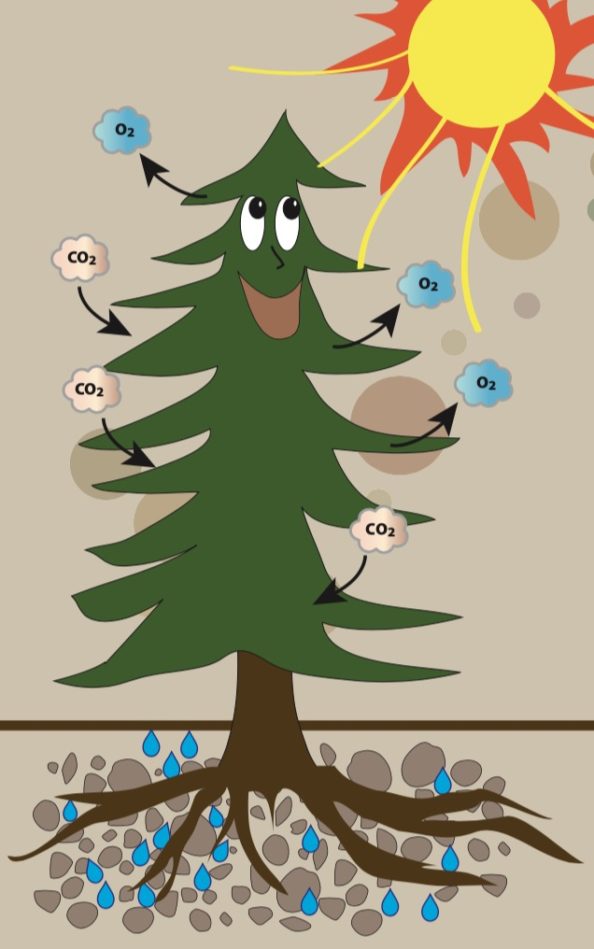 A recent study published by the Colorado State Forest Service took a deeper look into the impact of Colorado’s trees and how they store carbon. The findings reported that some of Colorado’s forests release more carbon than they draw due to dying trees that are actively decomposing. …it should be kept in mind that this data applies to recent years, and results fluctuate and can be nuanced. “(The) bigger picture of this report found that Colorado’s forests hold a lot of carbon, and that continues to this day, and it’s just in recent years that it’s releasing slightly more carbon than it adds,” Vorster said. “But when you just put it in perspective, if you were to compare the amount of carbon that it holds compared to what it releases, it’s like 0.06%, so a very tiny fraction of it at least every year. … It’s pretty close to a balance.”
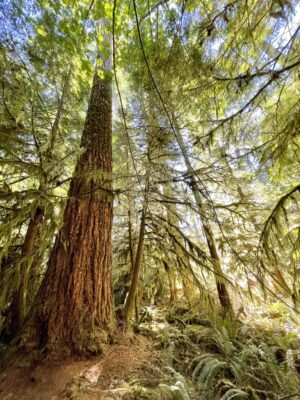 The Pacific Northwest is fortunate to have vast forests and ideal conditions for growing trees quickly. These forests have long been a cornerstone of our rural economies while also protecting streams, sequestering carbon and supporting wildlife. However, we face a troubling trend: a decline in local timber production and a growing reliance on imported lumber. We use science for active forest management with the toughest regulations in the world, we do forestry the best here. It’s time to prioritize local timber and rebuild a robust, sustainable industry right here in Washington… Prioritizing local wood production is a win-win for the Pacific Northwest. Wood is good, but local wood is best if we want to restore a vital, create economic stability and protect our environment.
 It’s a cold day at Sun Mountain Lumber in Deer Lodge, Montana. Outreach Forester Sean Steinebach walks toward the mill’s massive kiln where freshly cut two-by-fours are dried. You can feel the heat radiating off the fresh boards. He stops and inhales. “It smells fresh and it smells bright and it smells wild,” he says. The mill’s lumber yard is filled with stacks of Douglas fir and lodgepole pine logs that will soon become lumber. Having a steady and reliable supply of logs is crucial to keeping the mill in business, says Steinebach. “We drive the economics of Powell County for sure, Anaconda, Deer Lodge County. We’ve got a lot of employees that live there. Granite County, we’ve got employees there. We’re a big impact in the whole state, I think. Forest products in general is a huge impact in the state of Montana.”
 Earlier this month, President Donald Trump signed
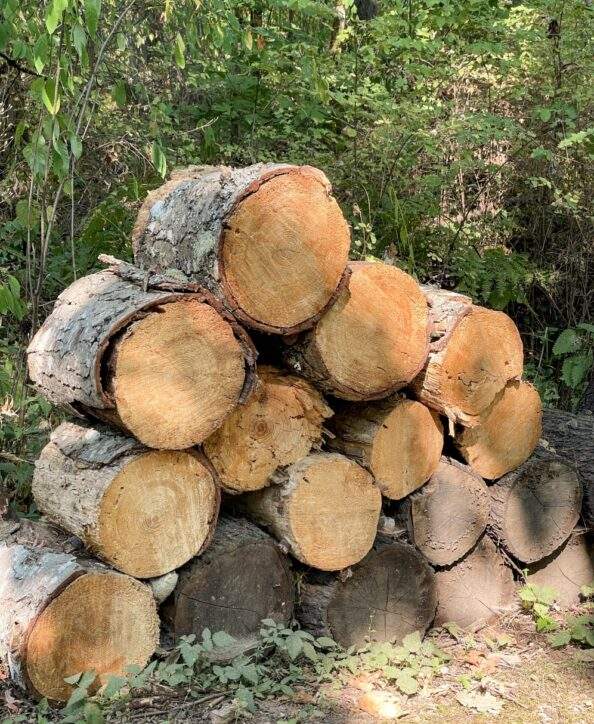 Millions of federal dollars promised to Maine woodland to improve harvest practices has been stalled for months without explanation. Landowners and logging companies are increasingly anxious about the funding blockade, and will have to make tough decisions if the money doesn’t come through. Baskahegan Co. Vice President Kyle Burdick said it was banking on federal reimbursements to sustain logging operations on its Down East timberland this year. But if the money doesn’t come through, it will have to potentially lay off logging contractors. Baskahegan was one of six Maine landowners that last year agreed to try out forestry practices that thin out woodlands to encourage bigger tree growth. The pilot project, funded through a $32 million climate smart commodities grant from the U.S. Department of Agriculture, was intended to store more carbon and generate valuable wood products in the future. The funding has been blocked since President Donald Trump put money …under review.
 A quiet collapse is sweeping through America’s hardwood log export industry, completely devastating working families in rural communities who’ve been left behind as trade battles play out far above their heads. On March 4, China abruptly banned imports of U.S. hardwood logs, citing pest concerns — though industry insiders believe it was thinly veiled economic retaliation to the Trump administration’s recent tariffs. The impact was immediate and massive: China is the dominant buyer of U.S. logs, importing the vast majority of what America exports. Without that market, the entire industry lost its economic lifeline, according to Seth Riggio, a 35-year-old log broker based in Greenville, South Carolina. The move set off a chain reaction that has pushed loggers, exporters, truckers, and rural communities across the country into financial ruin. …These aren’t corporations with reserves. Most loggers don’t have savings accounts or college degrees. What they have are contracts, equipment, and a forest to work.
 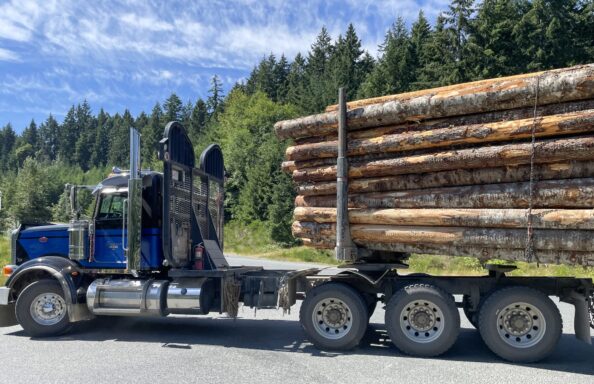 As a log truck driver, I want to share my perspective on the proposed increase in truck weight limits in Alabama. This issue is critical to the livelihoods of many hardworking people and to the… state’s forestry sector. The challenges of operating a log truck have grown significantly in recent years. Insurance premiums keep rising, fuel prices fluctuate unpredictably, and truck maintenance costs have soared due to the increasing price of parts and repairs. Despite these mounting expenses, the rates paid to haul raw wood remain relatively stagnant because of supply and demand constraints. Timber is so plentiful that mills often hit capacity before the end of the workweek, forcing them to impose quotas and stop purchases early. These restrictions directly impact our ability to make a living and keep our businesses afloat. …If weight limits are not raised, the future of Alabama’s log trucking industry — and by extension, the forestry sector — remains uncertain.
 NEW YORK — A jury in Georgia has ordered Monsanto parent Bayer to pay nearly $2.1 billion in damages to a man who says the company’s Roundup weed killer caused his cancer. The verdict marks the latest in a long-running series of court battles Monsanto has faced over its Roundup herbicide. The agrochemical giant says it will appeal the verdict. The penalties awarded include $65 million in compensatory damages and $2 billion in punitive damages. That marks one of the largest legal settlements reached in a Roundup-related case to date. …Germany-based Bayer, which acquired Monsanto in 2018, has continued to dispute claims that Roundup causes cancer. But the company has been hit with more than 177,000 lawsuits involving the weedkiller and set aside $16 billion to settle cases. Monsanto said Friday’s verdict “conflicts with the overwhelming weight of scientific evidence and the consensus of regulatory bodies and their scientific assessments worldwide.”
 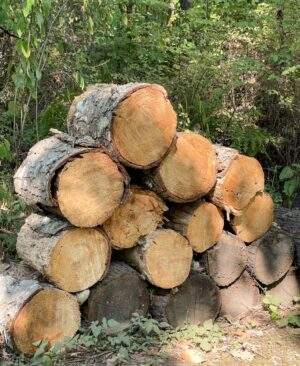 Virginia loggers hope steps taken by President Donald Trump will breathe new life into parts of the Commonwealth they feel have long been abandoned. …Canada is the largest exporter of lumber into the US. The lumber industry in the United State has a long history and has been financially rocky in recent decades. Unregulated cutting up to the 1980s damaged land and water systems. Regulations followed. Then international trade agreements saw production shipped overseas, further denting an industry that literally built America. But loggers in Virginia have stuck with it. Among them is Vance Wright. …Trump’s shortest-term impact on logging may be with tariffs. But logging and timber have long been subject to different international trade deals. And while those international markets arguably killed Virginia’s manufacturing, think Martinsville’s now-shuttered furniture factories, it also opened doors to new opportunities.
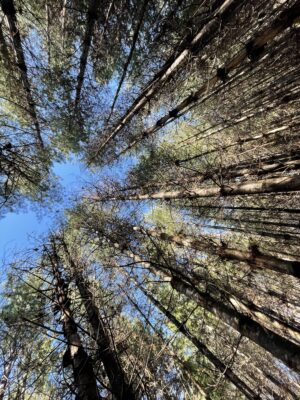 Prolonged droughts, wildfires and water shortages. Torrential downpours that overwhelm dams and cause catastrophic flooding. Around the globe, rising temperatures stoked by climate change are increasing the odds of both severe drought and heavier precipitation that wreak havoc on people and the environment. Rainfall can disappear for years only to return with a vengeance, as it did in California in 2023, with record-setting rain and snowfall. That led to heavy vegetation growth that provided fuel for the devastating January wildfires in Los Angeles after drought returned. But how can global warming cause both drier and wetter extremes? Here’s what experts say. It’s all about the water cycle. Water constantly moves between the Earth and its atmosphere. But that system — called the hydrological cycle — is speeding up as global temperatures get hotter, primarily due to the burning of fossil fuels like coal and gas.
 Living trees absorb carbon, aiding climate change mitigation. But what role do dead trees play in carbon storage? UVM researchers found that large, downed trees in streams tie up tremendous stores of carbon—and this pool of carbon storage is growing over time. Moreover, large trees in streamside forests proved important for recruiting carbon into streams over time—reflecting the environmental value of big, old trees. “We know that about 20% of global annual greenhouse gas emissions come from land use and deforestation,” University of Vermont professor and study author Dr. William Keeton said, “but we can also use forests and other land cover as what we call a natural climate solution—finding ways to sequester and store more carbon in vegetation.” Keeton had long suspected that water-bound wood in old-growth forests was surely storing carbon—but how much? Turns out, quite a lot.
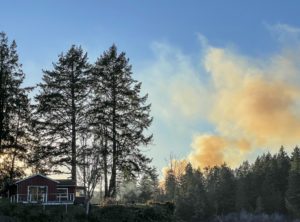 Oregon firefighters arrived Sunday in North Carolina to assist in fighting wildfires that have burned thousands of acres in the western part of the state. The Oregon Department of Forestry sent 26 firefighters and two agency representatives for a two-week rotation in North Carolina. Many of the Oregon firefighters were assigned to the Black Cove Fire. The fire was first reported March 19. The Black Cove Fire in North Carolina’s Polk County has forced evacuations and is one of the largest in the western part of the state. Along with the Deep Woods Fire, burning in the Green River Gorge, a combined 4,621 acres were burning with 0% containment as of Sunday evening, according to the North Carolina Forest Service. …The firefighters were sent under a mutual assistance agreement between Oregon and North Carolina.
 At least a half-dozen large wildfires continued to burn in the Blue Ridge Mountains of South Carolina and North Carolina on Thursday, leading to states of emergency and evacuations as firefighters deployed from other parts of the US to help bring the blazes under control. In North Carolina, progress was being made in containing two of the largest wildfires burning in the mountains, but officials warned that fire danger remained from dry and windy conditions. The news was worse in South Carolina, where two fires nearly doubled in size on Wednesday. Hundreds of people have been asked to leave their homes in the two states. Wednesday’s dry weather led to several new fires in western North Carolina and prompted the state’s governor, Josh Stein, to declare a state of emergency in 34 western counties. At least nine fires were active in that part of the state, officials said.
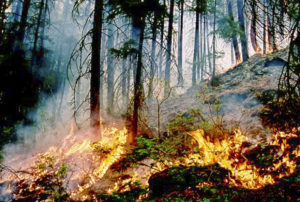 Wildfires forced a mandatory evacuation Sunday in a North Carolina county still recovering from Hurricane Helene, and South Carolina’s governor declared an emergency in response to a growing wildfire in that state. Hundreds of miles north, the New Jersey Forest Fire Service was battling a blaze in the Wharton State Forest. The North Carolina Department of Public Safety announced a mandatory evacuation starting at 8:20 p.m. Saturday for parts of Polk County in western North Carolina about 80 miles west of Charlotte. A shelter had been established in Columbus, North Carolina. …Also this weekend, the New Jersey Forest Fire Service has been battling a wildfire that broke out in the Wharton State Forest on Saturday. The fire had consumed about 2.7 square miles as of early Sunday morning and was about 50% contained, according to an 8 a.m. update.