 The COFI Day 1 luncheon panel on Canada–US relations and forest products trade brought together political veterans and policy thinkers to unpack the next four years of cross-border dynamics and what they mean for British Columbia’s forest sector. Moderated by Corinne Stavness, Vice President of Corporate Affairs at Western Forest Products, the discussion featured Glen Clark, Chair of BC Hydro and former Premier of BC; James Moore, Senior Advisor with Edelman and former federal Industry Minister; and Mark Cameron, Fellow at the Public Policy Forum and leader of its Canada–US Relations Strategy. Clark opened with a clear warning about the US election. “We are entering a period of maximum unpredictability.” …James Moore stressed that Canada must shift from reacting to shaping outcomes. …Mark Cameron provided a broader policy context, noting the bipartisan consensus around economic nationalism is unlikely to shift.
 An invasive tree species that is illegal to plant in Ohio has begun to bloom, and will soon fill the air with a distinctive odor that many liken to rotting fish. Callery pear trees – which come in multiple varieties including “Bradford” pear, “Autumn Blaze” and “Cleveland Select” – typically begin to bloom in the state in late March to early April, according the Ohio Department of Natural Resources. The species was brought to North America from Asia in the 1900s with the goal of combatting fire blight, a bacterial disease among common pear trees. The tree quickly become popular in landscaping due to its adaptability, white flowers and shape. It has also since become well-known for another one of its qualities – its odor. The tree’s blooms typically have a strong aroma, which has been likened to a variety of unpleasant scents, including rotting fish, puke and animal waste.
 The US is set to more than double the duty it charges on softwood lumber imports from Canada, with the planned new rate set at 34.45%, up from the previous 14.54%. …New softwood lumber duties were long-feared amid the growing trade war between Canada and the US, and would be the latest blow to BC’s beleaguered forestry industry, which has seen thousands of workers laid off over the last few years. BC Premier David Eby condemned the planned duty hike as an “attack on forest workers and British Columbians” in a statement on Saturday. While Canada may have been spared additional tariffs from the US on Wednesday, anxiety around levies on BC’s softwood lumber industry remains high. …Under the U.S. Tariff Act, the Department of Commerce determines whether goods are being sold at less than fair value or if they’re benefiting from subsidies provided by foreign governments.
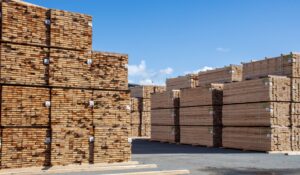 Canadian lumber has been left out of Trump’s tariff blitz, despite the president’s repeated threats to add to import taxes to a big chunk of US wood supply. Prices for two-by-fours are tumbling. Lumber futures contracts shed 8.7% to end at $606 per thousand board feet, the lowest price since mid February. They are on track for their worst day since the pandemic-era lumber bubble burst three years ago. Prices had risen this year in anticipation of another layer of import taxes. …That climb is unwinding. But the decline can also be chalked up to expectations that tariffs will push up residential construction prices and strain affordability. The tariffs Trump announced Wednesday will add about $6,400 to the cost of building an average house, UBS analyst John Lovallo estimates. That assumes that about 7% of the materials are imported and subject to an average tariff of 22%. [to access the full story a WSJ subscription is required]

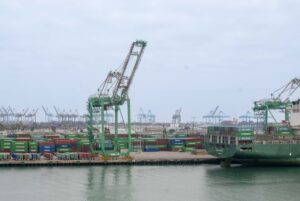 MONTREAL — The notion that Canadian companies can simply switch supply chains in response to American tariffs is a fantasy, experts say. Businesses north of the border are looking elsewhere to source their material and sell their products. But companies caught up in tightly braided supply channels after decades of trade pacts and sector specialization may quickly bump into barriers around everything from transport and labour costs to resource availability, manufacturing capacity and market saturation. …Cancelling contracts with Canadian suppliers would trigger breakage fees of up to $500 million per U.S. factory, the group said. Many parts cross the border multiple times before final assembly. …Auto, lumber and steel producers would face some of the toughest challenges in the hunt for new markets, Paschen said. …Forestry players face an entirely different dilemma. Lumber exports, while ample, have a low value per volume compared to some other commodities.
 Sweeping new tariffs announced by Donald Trump provoked dismay, threats of countermeasures and urgent calls for talks to find ways to rescind the stiff new import taxes imposed on goods from countries around the globe. …Trump maintains they will draw factories and jobs back to the United States. …European Commission President Ursula von der Leyen said it was a “major blow to the world economy.” …British Prime Minister Kier Starmer said he hopes to get the tariffs lifted with a trade deal. …Financial markets were jolted. …China’s Commerce Ministry said Beijing would “resolutely take countermeasures to safeguard its own rights and interests,” without saying exactly what it might do. …Mexican President Claudia Sheinbaum said she would wait to see how Trump’s announcement will affect Mexico, which like Canada was spared for goods already qualified under their free trade agreement with the United States, though previously announced 25% tariffs on auto imports took effect Thursday.
 OTTAWA — Canada’s exemption from Donald Trump’s global tariffs was “like dodging a bullet into the path of a tank”, say business leaders as other levies are poised to hit key industries that drive the country’s economy. …Canada was noticeably absent, alongside trade ally Mexico. Prime minister Mark Carney said 25% tariffs on Canadian steel and aluminum, as well as on automobiles, will come into effect within hours. Canada would “fight these measures with countermeasures” he said. Already, Canada had put a 25% tax on C$30bn worth of US goods in response to Trump’s tariffs. …Carney warned that while Trump had preserved key elements of the bilateral relationship, the global tariffs “fundamentally change the international trading system”. …On Wednesday, a bipartisan group of senators passed a resolution to end the national fentanyl emergency the president invoked to justify the 25% tax on Canadian imports. …House speaker Mike Johnson is unlikely to bring the measure to a vote.
 Democrats in the U.S. Senate are moving forward on a resolution to block sweeping tariffs targeting Canada as President Donald Trump presses Republican lawmakers to continue backing his trade agenda. Sen. Tim Kaine plans to force a vote on Trump’s use of the International Economic Emergency Powers Act, also called IEEPA, to declare an emergency over fentanyl trafficking to hit Canada with devastating duties. “The president has justified the imposition of these tariffs on, in my view, a made-up emergency,” Kaine said Tuesday. U.S. government data shows the volume of fentanyl seized at the northern border is tiny. The Annual Threat Assessment report, released last week, does not mention Canada in its section on illicit drugs and fentanyl. The vote will test whether Republican senators continue to back Trump’s tariffs on Canada — tariffs that, according to polling, are not supported by most Americans.
 The United States is scheduled to unveil reciprocal tariffs on a wide array of trading partners, including Canada. Dubbed “Liberation Day” by Donald Trump, the measures are meant to even things out with those who, in Trump’s eyes, have unfairly taken advantage of the US with tariffs and other non-tariff barriers. …Aside from steel, aluminum and autos, which are already facing separate tariffs, here are the issues the U.S. has singled out as problematic in their trade with Canada that could factor in to the Liberation Day announcement, and what economists and trade officials have to say about them. What Trump says: He has lumped his anger about dairy and lumber tariffs together, threatening to act immediately on unfair treatment by Canada. He also said the U.S. does not need any Canadian lumber. Reality Check: There is far from enough lumber produced in the U.S. to meet building demand.
 White House aides have drafted a proposal that would levy tariffs of roughly 20% on most imports, the Washington Post reported. The report cited three people familiar with the matter. It also said White House advisers cautioned that several options are still on the table, meaning the 20% tariffs may not come to pass. Another plan being considered is the country-by-country “reciprocal” approach, according to the Washington Post. The report comes a day before April 2, when President Donald Trump is set to announce his larger plans for global trade. The date has loomed over Wall Street, where stocks have been struggling in part due to uncertainty around rapidly changing global trade policy. Unlike the tariffs already announced by the Trump administration, the new plan is expected to be more widespread and permanent as opposed to targeting specific countries or industries.





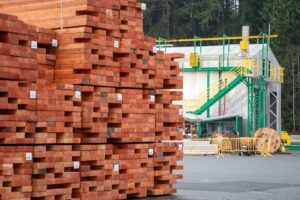 President Donald Trump is prepared to impose tariffs on many Canadian products that are shipped to the United States. Included on the list of tariffs are the wood products industry, which is facing a 25 percent tariff on products shipped south of the border. In response to the President’s actions, the Vermont House Committee on Agriculture and Forestry took testimony from two employees at the Agency of Natural Resources last week… In the past two years Vermont has lost two sawmills, becoming more reliant on Canada. Vermont imported $52 million in sawmill and wood products from Canada in 2024. Pierson said some of the wood was shipped from Vermont to Canada where it was processed and shipped south.
 Willis, a business of WTW, and The Nature Conservancy (TNC) have launched a new $2.5 million wildfire resilience insurance for the Tahoe Donner Association in Truckee, California. Described as “first-of-its-kind,” this policy directly links insurance costs to proactive wildfire risk mitigation efforts. Developed in partnership with UC Berkeley’s Center for Law, Energy and the Environment, the policy aims to demonstrate how ecological forest management practices can lead to reduced premiums and increased insurance availability. Such techniques include tree thinning to improve the health and growth of the remaining trees and planned fires to clear out flammable vegetation, both proven to reduce wildfire risk and make forests healthier. Tahoe Donner has completed forest management projects over 1,520 acres since 2015. …This new policy, covering 1,345 acres of Tahoe Donner’s land, secures a 39% lower premium and an 89% lower deductible than would have been possible without the nature-based forest management.




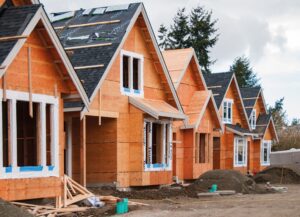 US trade wars could have major implications for an already tenuous housing market….A price hike on building materials will likely make building affordable housing feasible, an approach that many real estate experts believe is crucial to resolving the housing market gridlock. The housing sector comprises over 15% of the US GDP and will be heavily impacted by tariffs on building materials such as lumber and steel. And 70% of imported lumber comes from Canada. The NAHB noted that the tariffs are “not only expected to raise the cost of building materials, which are up 34% since December 2020, far higher than the rate of inflation, but also wreak havoc on the building material supply chain. In turn, this will put even more upward price pressure on building materials.” …Uncertainty stemming from the newly unveiled tariffs has eroded consumer and investor confidence, which has, in turn, diminished homebuyer optimism.
 US stocks opened lower Monday as markets around the world tumbled over concerns about how President Trump’s sweeping tariffs might upend the global economy and stymie US economic growth. Markets opened in bear market territory – a decline of 20% from a recent peak – after a historic rout in Asia and massive losses in Europe. The Dow fell 1,200 points, or 3.2%. The broader S&P 500 was 3.4% lower and opened in bear territory. The Nasdaq Composite slid 3.96%. The S&P 500 hit a record high less than seven weeks ago, on February 19. If the index closes in bear market territory, that would be the second-fastest peak-to-bear market shift in history. Wall Street’s fear gauge has surged to levels not seen since the Covid-19 pandemic as investors fret over the market’s next move. CNN’s Fear and Greed Index has slumped to its lowest levels this year.
 The stock market took another pounding Friday after China retaliated with new tariffs on U.S. goods, raising fears a trade war will tip the globe into a recession. The Dow Jones Industrial Average traded 1,130 points, or 2.8%. This follows a 1,679.39 point decline on Thursday. The S&P 500 slid 3.2% after the benchmark shed 4.84% on Thursday. The Nasdaq Composite shed 3.5% as many tech companies have exposure to China. …“The Trump administration may be playing a game of chicken with trading partners, but market participants aren’t willing to wait around for the results,” said Michael Arone, at State Street Global Advisors. “Investors are selling first and asking questions later.” Bank stocks tumbled in the premarket as worries of a U.S. economic slowdown grew. …The 10-year Treasury yield fell back below 4% Friday as investors flooded into bonds for safety. JPMorgan late Thursday raised the odds of a recession this year to 60% from 40%.
 Manufactured homes play a measurable role in the U.S. housing market by providing an affordable supply option for millions of households. According to the American Housing Survey, there are 7.2 million occupied manufactured homes in the U.S., representing 5.4% of total occupied housing and a source of affordable housing, in particular, for rural and lower income households. Often thought of as synonymous to “mobile homes” or “trailers”, manufactured homes are a specific type of factory-built housing that adheres to the U.S. Department of Housing and Urban Development’s Manufactured Home Construction and Safety Standards code. …The East South Central division (Alabama, Kentucky, Mississippi and Tennessee) have the highest concentration of manufactured homes, representing 9.3% of total occupied housing. The Mountain region follows with 8.5%, while the South Atlantic region holds 7.7%.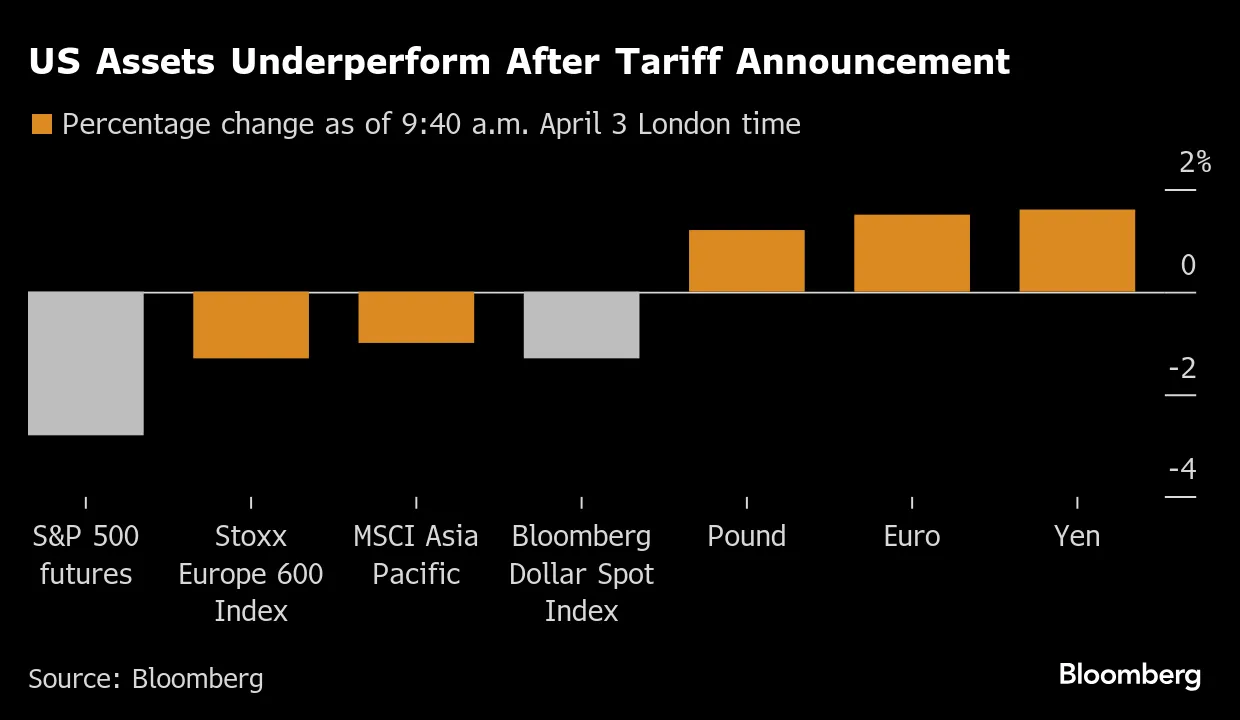


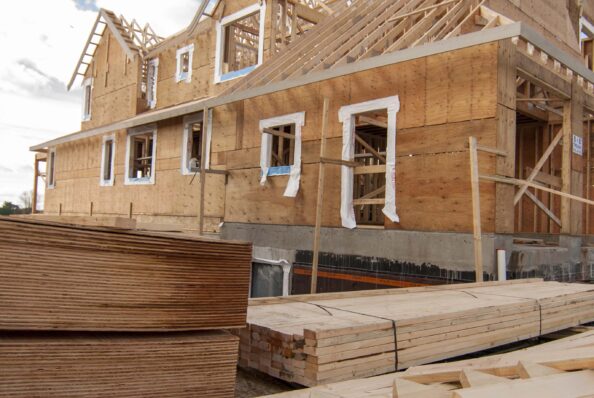 In the course of their business, home builders and remodelers buy many different products— ranging from lumber and other wood products to electrical and plumbing fixtures, a variety of materials used to finish various areas of the house, appliances, and even tools. The National Association of Home Builders (NAHB) recently surveyed both its single-family builders and its remodelers, asking them who’s most often responsible for choosing these products. In a separate question, NAHB also asked where these products are purchased irrespective of who chooses them because even when they’re not the ones driving the product choice, builders and remodelers often know where the product is being purchased. …The survey results show that, irrespective of who actually makes the purchase, it is the builders and remodelers themselves who most often influence product selection and therefore should most often be the prime targets for manufacturers looking to effectively market building products.
 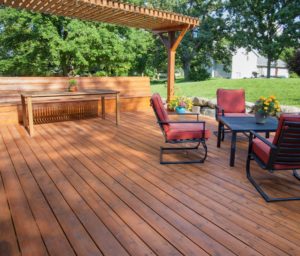 The Oregon Building Codes Division (BCD) has published its first permit-ready plan under the state’s updated Permit-Ready Plans Program. The building plans, available free to the public, are for a code-compliant residential deck. The Permit-Ready Plans Program creates an efficient pathway for the state to develop and make publicly accessible building plans that meet the requirements of the state building code. Plans are published to the BCD website. …The first plan published is a single-level, wood-framed, exterior deck attached to a building regulated by the Oregon Residential Specialty Code. BCD anticipates publishing more permit-ready plans for other residential accessory structures such as pole buildings, detached garages, patio covers, and carports later this year. The division will start developing plans for smaller detached dwelling units by the end of 2025.
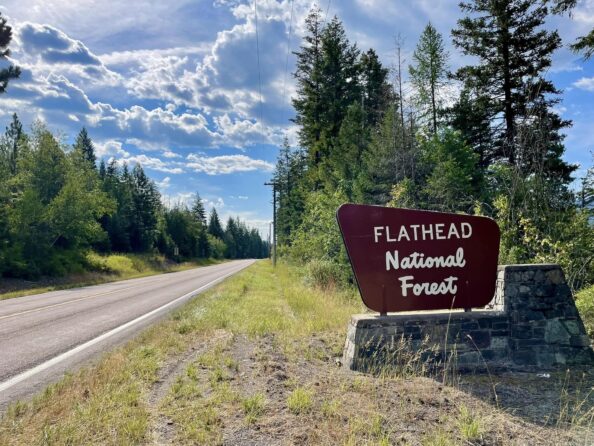 The U.S. Department of Agriculture on Friday announced will allow logging in national forests, which will help spur timber production amid reciprocal tariffs on other nations. A memo by USDA Secretary Brooke Rollins follows an executive order by President Donald Trump last month to expand timber production. There are 154 national forests covering approximately 188.3 million acres. … “Healthy forests require work, and right now, we’re facing a national forest emergency,” Rollins said in a statement. “We have an abundance of timber at high risk of wildfires in our National Forest. “I am proud to follow the bold leadership of President Trump by empowering forest managers to reduce constraints and minimize the risks of fire, insects, and disease so that we can strengthen American timber industry and further enrich our forests with the resources they need to thrive.” …The Sierra Club said the order was a giveaway to the logging industry.
 The world is running out of time to halt deforestation. Yet instead of stepping up, the US is dismantling forest protections and undermining global progress – highlighting the dangers of global forest policy that fails to hold the wealthiest, most powerful countries accountable. …But the latest actions by the US highlight just how dangerous and unbalanced this paradigm is. …Under the pretense of national security, Trump’s orders aim to gut environmental safeguards and fast-track industrial clearcutting in some of the US’s most precious and climate-critical forests. …Meanwhile, as Europe strengthens forest accountability, US state officials are pushing to exempt the country from new deforestation protections.. These officials, echoing industry talking points, are urging the EU to exclude US wood products from a law requiring due diligence to prevent imports or exports tied to deforestation or forest degradation. Their argument? That the US doesn’t need oversight.

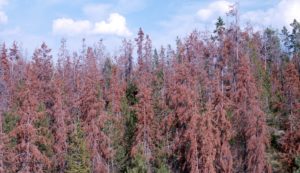 An insect known for turning entire mountainsides the color of rust could be making a resurgence in Colorado. The pest is none other than the mountain pine beetle. After a roughly decade-long period of relatively lower populations, the bugs are rebuilding their numbers along the Front Range and in southwest Colorado, according to an annual forest health report published by the Colorado State Forest Service in late March. “I’m a little concerned moving in this summer because we really haven’t had any precipitation,” said Dan West, the forest entomologist for the Colorado State Forest Service. “I’m worried bark beetles are going to increase their populations in these drought-stricken trees.” Few bugs have had a more visible impact on forests across the western U.S.


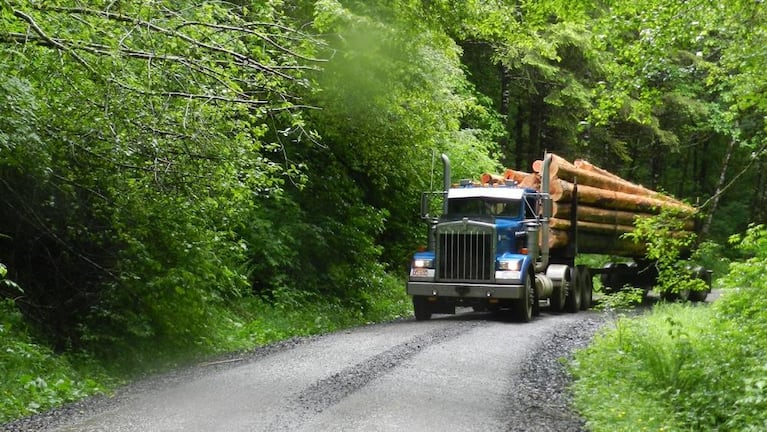


 Last week, Gov. Kevin Stitt criticized the Oklahoma State Forester’s response to the fires that blazed across Oklahoma in March. This week, the governor is floating the concept of axing the entire Forestry Services division. Stitt has said he believes the Oklahoma Forestry Service held back resources during the fires. When asked to specify which resources during a press conference, Stitt said he didn’t know. “The fact that we can’t get answers about where their assets were around the state is further proof that this is a deep-seated bureaucracy that are trying to protect their actions,” Stitt said. “We still haven’t been able to figure out where they were during that thing.” Just weeks after the fires, the state’s Chief Forester Mark Goeller resigned following criticism from the governor.




 Nearly 18,000 acres in the lower Blackfoot River watershed prized for its habitat and wood products could become publicly owned if the Bureau of Land Management (BLM) follows through with its planned acquisition. Missoula County last week signed a letter of support backing the BLM’s proposed acquisition of the former private industrial timberland in the Gold and Twin Creek drainages northeast of Missoula. Chet Crowser, chief lands and communities officer with the county, said that acquiring the parcels would permanently protect public ownership and provide benefits for decades to come… More than 60% of Missoula County is covered with public lands – lands the county claims sustain local economies through restoration and active management.

 International Paper, the global leader in sustainable packaging solutions, today announced it exceeded its sustainability goal of conserving and restoring 1 million acres of ecologically significant forestland. This milestone achievement enhances biodiversity protection, strengthens carbon sequestration, and supports sustainable land management, reinforcing the company’s commitment to environmental stewardship and climate resilience. “We are thrilled to have surpassed one of our Healthy and Abundant Forest targets to conserve 1 million acres of ecologically significant forestland by restoring nearly 1,158,00 total acres, and we did so six years ahead of schedule,” said Sophie Beckham, Chief Sustainability Oficer, International Paper. “Reaching this milestone is a testament to the company’s ongoing commitment to nature conservation and to the great work of our conservation partners.” IP released its 2024
  Over the last five years the forest carbon market in North America has experienced a period of rapid expansion, with a surge in dealmaking and heightened interest from institutional investors. In recent months, major corporations have signed high-profile offtake agreements for forest carbon credits, with the latest focus being on high quality-sequestration projects. At the same time, the uptake of Improved Forest Management (IFM) projects has grown, with over 1 million acres of IFM projects added in 2023 and 2024, reflecting the growing recognition of sustainable forestry as a viable tool for emissions removal and reduction. The rise in corporate demand for nature-based solutions, coupled with compliance frameworks including California’s cap-and-trade and emerging cap-and-invest systems, are reshaping the market landscape. Investors, timberland managers, and carbon project developers are competing in an increasingly competitive and innovative space.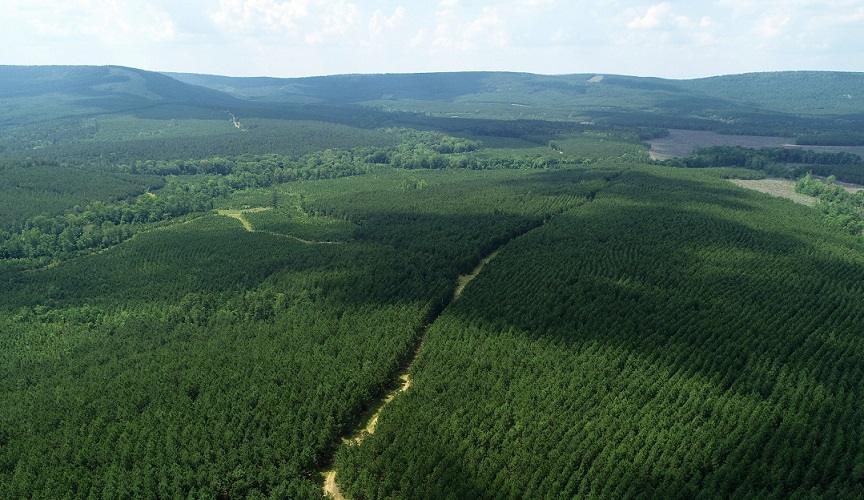

 KINGSPORT, Tennessee – The Domtar Packaging Mill in Kingsport has operated for decades, and residents have noticed one significant aspect of the mill that some believe has caused community strife: the smell. The Tennessee Department of Environment and Conservation (TDEC) is currently investigating three complaints about the odor from Domtar between March 31 and April 1. The TDEC said: “Although TDEC does not regulate odors, we do want to ensure that the facility is complying with its permit conditions.” …At the last Kingsport Economic Development Board meeting on April 1, Domtar updated the board on the wastewater treatment system plan. …The short-term plan involves reducing mill material losses and flow and optimizing the current wastewater treatment system. Domtar says this will last around a year. The long-term plan involves building a new anaerobic digester system. Domtar estimates that this project could take up to 18 months.
