MINNEAPOLIS — A Nashville-based provider of wood building products is proposing a $157 million manufacturing plant in North Branch, a project that could advance with help from the state’s Minnesota Forward Fund program. Louisiana-Pacific Corp. wants to build the 250,000- to 350,000-square-foot facility on a five-parcel, 120-acre site in the northeast portion of North Branch’s Interstate Business Park. The project is a candidate for up to $10 million in funding from the Minnesota Forward Fund.” …The funding “may be forgiven if certain project goals are met. …At the new facility, Louisiana-Pacific would manufacture pre-finished siding products, including the company’s “Smartside” and “ExpertFinish” siding, Sondrol said at the North Branch EDA meeting in December.





 ALEXANDRIA, Va.



 ATLANTA — A proposed amendment to the Georgia Constitution would end sales taxes on timber, a major industry battered by mill closings and storms. House Majority Leader Chuck Efstration said a bipartisan group of legislators want to help protect “a cornerstone of the state’s rural economy.” “The timber tax cut is necessary because Georgia timber farmers are facing severe economic hardship following the closure of multiple sawmills in Georgia and significant losses in the aftermath of Hurricane Helene,” said Efstration, R-Mulberry, the sponsor of House Resolution 1000. “Georgia is a national leader in forestry, and I want to help this state’s rural economy and the livelihood of many Georgians.” Georgia’s forestry industry was the largest in the nation in 2021 based on harvest volume and product export values of nearly $4 billion, according to a report by the Georgia Forestry Association. But timber producers have suffered in recent years.
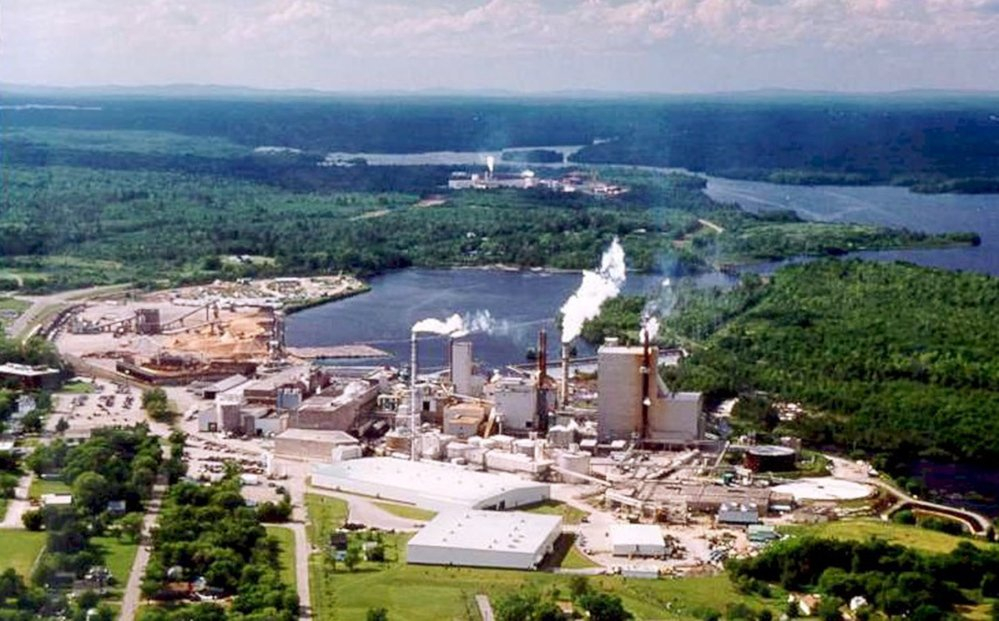 One of Maine’s largest mills is again accepting Canadian wood from New Brunswick, after briefly halting shipments citing the cost of American tariffs. Woodland Pulp in Baileyville, Maine – situated on the banks of the St. Croix River a short drive across the border from St. Stephen – stopped purchases of New Brunswick timber in mid-October in the aftermath of higher US tariffs. Shortly after, it shut down completely for 26 days, citing a challenging global pulp market. That led to the temporary lay off of 144 employees. But now back in operation, Woodland Pulp says its full complement of staff is returning and that the decision was made to restart accepting Canadian fibre, including wood chips. …Spokesperson Scott Beal said it remains unclear how much the mill will purchase from New Brunswick sources going forward.. …Tariffs are paid by the importer. [to access the full story a Telegraph-Journal subscription is required]


 Maine timber companies are in line to receive substantial incentives to manage forests and grow healthier, more valuable trees. A $32 million award to the New England Forestry Foundation was recently finalized by the US Department of Agriculture. The funding package, through the Advancing Markets for Producers initiative, replaces similar funding provided under the “climate smart commodities” program. While there are some adjustments to the program, it achieves the same purpose, according to the foundation Deputy Director Andi Colnes. The grant will largely subsidize commercial and pre-commercial thinning, Colnes said. It will also provide funding to expand market opportunities, particularly for mass timber construction, she added. …According to Colnes, the program is able to cover about 50,000 acres of New England forests, mostly commercial timberland in Maine. The foundation said 23 commercial, conservation and public forest owners are already enrolled in the project.
 NORTH CAROLINA — After reviewing public comments, the



 The effect of 10% tariffs on Canadian wood imports was the subject of a public hearing before the state’s Maine-Canadian Legislative Advisory Commission Wednesday. Dana Doran is executive director of the Professional Logging Contractors of the Northeast who says his members are struggling to stay afloat. “If they buy wood from Canada it’s hit by a 10% tariff on those raw logs. If they export any of their finished product they’re subject to any of the export tariffs,” Doran said. “So we’ve seen a chaotic situation that has occurred over the past 8 weeks because of the situation with tariffs.” Doran says if the U.S. had more domestic manufacturing of building and construction products it would have a bigger share of the marketplace, which could blunt tariffs. But Canada, he says, has 60% of that market.
 MANCHESTER, Tennessee – Several US sawmills are struggling to stay open after industry leaders said years of trade uncertainty have drained export markets and tightened margins. The Hardwood Federation estimates at least one sawmill is going out of business every week. Additionally, the National Hardwood Lumber Association (NHLA) reported that more than 4% of U.S. sawmills have been lost due to closures and consolidations. The equipment from those sawmills ends up in a growing pile of auction fliers on Johnny Evans’ desk at the Evans Lumber in Manchester, Tennessee. However, Evans is desperate to save his sawmill from being auctioned off due to ongoing trade talks. …Evans said a lot of this goes back to trade tensions that began in 2018, during the first Trump administration. That’s when some countries, like China, stopped buying American hardwood in retaliation to President Donald Trump’s tariff policies.



 Southern Pine lumber exports (treated and untreated) are almost equal to 2024 year to date through October 2025 at 488 MMBF, according to October 2025 data from the USDA’s Foreign Agriculture Services’ Global Agricultural Trade System. October 2025’s 60 MMBF of exports were up 47% over October 2024 and up 33% compared to September 2025. When looking at the report by dollar value, Southern Pine exports are up 4% YTD ($190 million) compared to 2024. Meanwhile, the October value of $25 million is the highest mark since June 2022, when the value hit $29 million. Mexico leads the way YTD 2025 at $56 million, followed by the Dominican Republic at $39 million, and India at $18 million. Treated lumber exports, meanwhile, are down 4% through the first 10 months of the year compared to 2024. The Leeward-Windward Islands market leads the way through October at $18 million, followed by Jamaica at $16 million, and Belize at $10 million. Softwood lumber imports are running 8% behind 2024 levels.
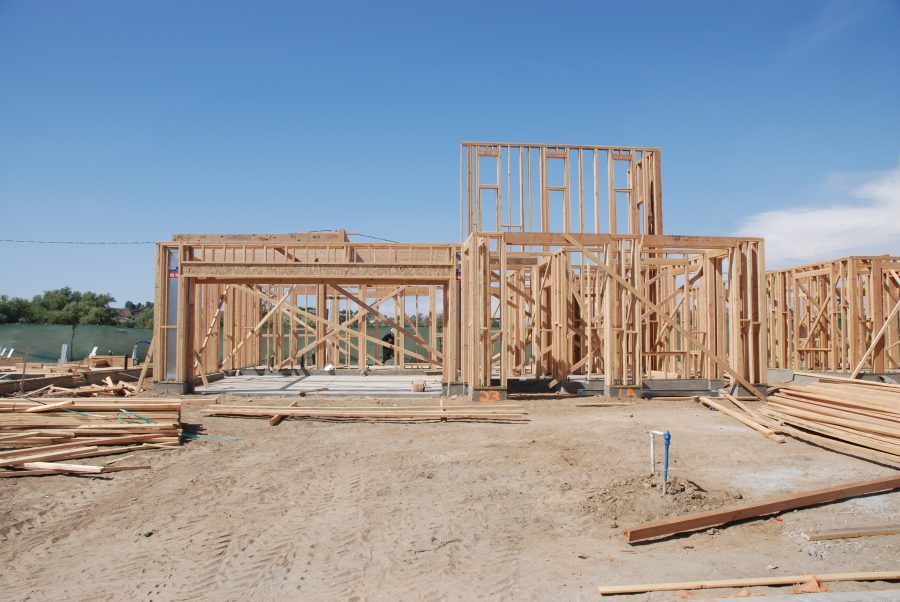 “President Donald Trump’s tariffs could increase builder costs anywhere from $7,500 to $10,000 per home,” said Rob Dietz, chief economist at the National Association of Home Builders… Last year, the NAHB estimated that every $1,000 increase in the median price of a new home prices out roughly 106,000 potential buyers. The biggest impact has been felt in lumber prices, which are expected to total about $4,900 per home on average. …about a third of the wood purchased for homebuilding comes from Canada. Domestic lumber producers generally raise their prices to match import prices. …major players like Home Depot are better able to mitigate and predict rising and volatile prices than smaller retailers. North American Builder’s Supply, based in Illinois, has filed for Chapter 11 bankruptcy protection. …“Over 50% of our inventory is not part of tariffs and is obviously sourced domestically,” Home Depot Executive Vice President William Bastek shared.
 CLEVELAND, Ohio — A state panel this week extended its offer to help finance construction of a new 129-room boutique hotel in Cleveland’s Ohio City neighborhood. While that doesn’t guarantee the hotel will move forward, the developer leading the project said construction can’t start without the state’s financing. The board… offered until Jan. 31, 2027 are $35 million worth of state bonds for the roughly $55 million project that would build a Marriott Tribute Portfolio boutique hotel. …The air quality facilities noted in the resolution include the seven-story building’s proposed use of mass-timber in its construction. …The presence of wood-timber construction above a first-floor reinforced concrete deck is noted in this axonometric view of the proposed Ohio City Hotel (DLR). The use of mass timber instead of reinforced concrete can save up to 40% in ongoing heating and cooling emissions for a building’s user as well as reduced emissions, according to Dan Whalen, at Places Development.
 ST. LOUIS — What is the life cycle of a building? Each year, in the United States, new home construction accounts for 50 million tons of carbon emissions. The majority stem from harvesting, manufacturing and transporting building materials — from lumber and masonry to glass and tile to roofing and mechanical systems. But what happens at the end of the cycle? When a building is no longer inhabitable or needed, what happens to all the energy invested in those materials? “It’s demolished,” Hongxi Yin said. “It goes to the landfill.” Yin, an expert on sustainable construction, is the InCEES professor in advanced building systems and architectural design in the Sam Fox School of Design & Visual Arts at Washington University in St. Louis. Over the last decade, he has led a series of research studios exploring ways to improve building efficiency, supply chains and construction processes.


 Bamboo tissue’s green image fades once you factor in coal-powered manufacturing. Bamboo tissue paper produced in China has become a popular option for shoppers looking to reduce their environmental impact. Despite its green reputation, new research suggests these products may not deliver the climate advantages many consumers expect. In some cases, bamboo tissue may even have a greater environmental footprint than tissue made in the United States. A recent




 STARKVILLE, Miss. — Carbon dioxide is the most commonly produced greenhouse gas, the substances that trap heat in the atmosphere keeping the planet warm enough for life. Carbon is stored in high amounts in timber, of which Mississippi has an abundance. The state ranks in the top 10 nationally in timber production, with close to 20 million acres of timberland. The U.S. Geological Survey says that carbon sequestration is the process of capturing and storing atmospheric carbon dioxide. Removing carbon dioxide from the atmosphere reduces the potential for global climate change. Since timber stores carbon efficiently, a tremendous amount of the greenhouse gas carbon dioxide is stored in Mississippi’s forests. This makes timber a valuable resource in efforts to limit the amount of carbon available as a greenhouse gas. Carbon credits and the carbon offset market have made an impact on Mississippi’s economy to a degree for about 20 years.
 PITTSBURG, New Hampshire — The state has reached a deal on the management of the Connecticut Lakes Headwaters Working Forest, a 146,000 acre property constituting 3% of New Hampshire’s forests, according to Gov. Kelly Ayotte. The forest is privately owned but is under a conservation easement, which means the state has oversight regarding how the land is managed and can ensure it remains a working timberland. Since the land was purchased in 2022 by an out-of-state carbon offset company, Aurora Sustainable Lands, local loggers have raised concerns about reduced timber harvesting on the property. As a carbon-offset company, Aurora curbed logging in order to sell the carbon they stored. …In the plan agreed upon last month, Aurora will increase the average annual timber harvest. …“The Connecticut Lakes Headwaters Working Forest is critical to recreation, tourism and the timber industry in our North Country,” Ayotte said.
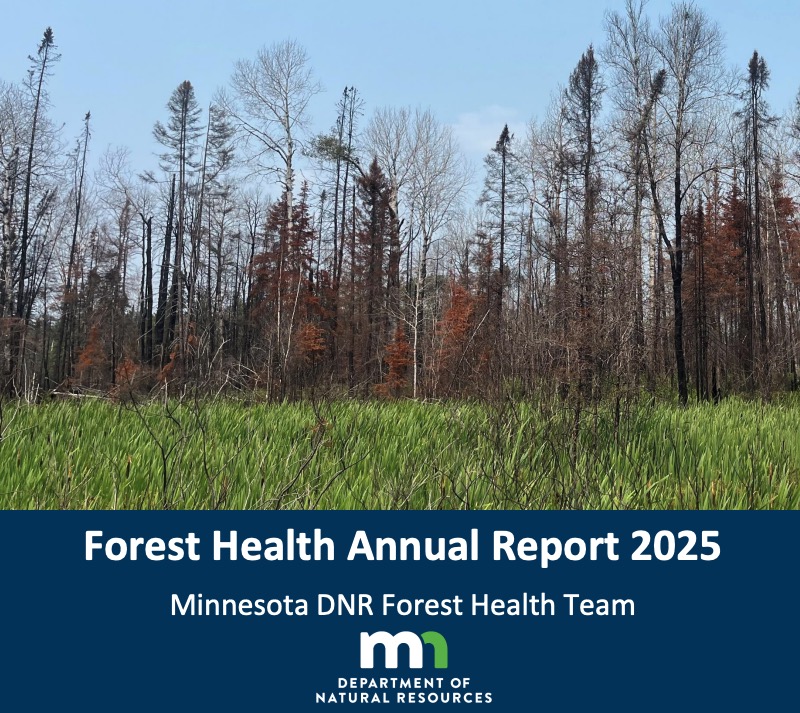 The Minnesota Department of Natural Resources aerially surveyed more than 13.5 million acres last year, checking for forest damage across the state’s forestland. Its findings are included in the recently released 2025 Forest Health Annual Report. Brian Schwingle, forest health program coordinator, said the annual survey and report is important because it tracks trends and reveals what is impacting trees, allowing the managers to make decisions for healthier, more resilient forests. “The two biggest tree health stories in 2025 in Minnesota were the derecho, the big blowdown in Bemidji, and the three big wildfires in northeast Minnesota in May,” he said, noting prior spruce budworm damage helped fuel the fires. In July, a derecho damaged 11,600 acres in and around Bemidji. Derecho, a Spanish word for straight, is a widespread, straight-line windstorm associated with a band of fast-moving thunderstorms. They can leave serious damage in their wake.
 Tribes in Wisconsin and beyond are opposing the Trump administration’s proposal to end protections for millions of acres of roadless areas on national forest land. …But Wisconsin Ojibwe tribes said the move was conducted without consultation and threatens natural resources they rely on, said Conrad St. John, chairman of the St. Croix Chippewa Indians of Wisconsin. “They want to log it for the mature timber… which is revenue-based to create money for big corporations,” St. John said. …In Wisconsin, roadless areas account for less than 5 percent of the national forest’s 1.5 million acres. But Dylan Bizhikiins Jennings said they make up a vital portion of the region’s national forests, saying the administration’s actions show disregard for tribal sovereignty and treaty rights. He’s director of public information for the Great Lakes Indian Fish and Wildlife Commission, which represents 11 tribes in Wisconsin, Michigan and Minnesota.
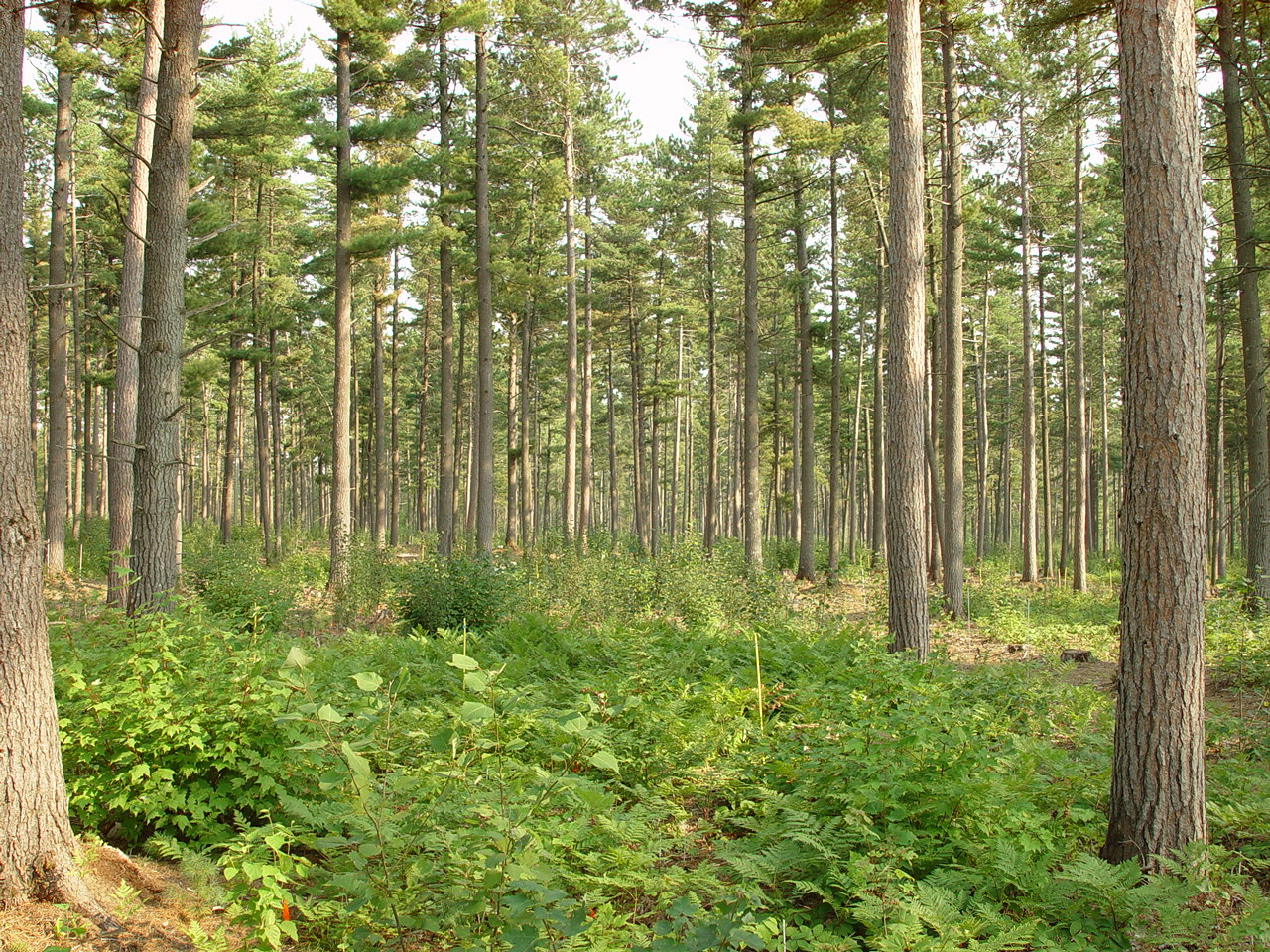 President Donald Trump’s administration has set in motion efforts to repeal the Roadless Rule, a 2001 administrative mandate that put 45 million acres of the least developed forest land under protection from logging and construction of roads. As the nation observes the rule’s 25th anniversary, Virginia’s federal lawmakers and advocates are calling for its preservation and say hundreds of thousands of acres of forests could be at stake if it is axed. The federal government has framed the proposed repeal as necessary for forest management against wildfires. …Environmental advocates have said since last summer that repealing the rule will lead to land degradation, sediment pollution, and create risks to clean water sources. It would also open up large swaths of the 400,000 acres of the protected forestland in Virginia to logging and potential new roads.


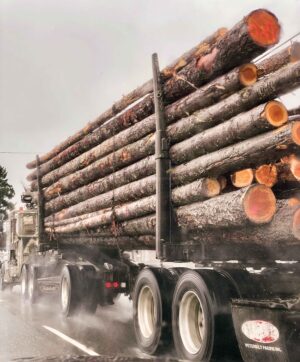 STARKVILLE, Mississippi — For all the major investments and structural changes in 2025, marked by significant sawmill expansions, shifting market dynamics and continued pressure in the pulp and paper sector, Mississippi’s timber industry observed limited monetary change. The state’s total timber value for 2025 is estimated to be $1.47 billion, which is down 1% from last year. This year’s harvest amounted to 36.4 million tons of timber products, which is down slightly from last year based on timber severance tax receipts. The value of standing timber paid to landowners as stumpage was $660 million, a 9% decline from 2024. The harvest and trucking industries, however, added $807 million to timber’s value in 2025, which was 7% more than last year. Eric McConnell, associate professor of forest business, said the industry experienced a sizable increase in the small pine sawtimber. …The forestry industry also faced pulp and paper headwinds.
  FLORIDA – Florida state officials warned of heightened wildfire risks across the state as dry conditions were expected to continue into 2026. “I’ve been with the agency a long time, and this is the driest winter that I can remember in quite a while,” Florida Forest Service Director Rick Dolan said during a Friday press conference. The number of wildfires had increased significantly, with more than 3,000 reported in 2025 compared to approximately 2,000 in 2024. This surge came months before Florida’s typical peak wildfire season, which usually occurs between April and June. Florida Commissioner of Agriculture Wilton Simpson emphasized that human activity was a major concern. “The majority of those fires are started by backyard fires, arson, things of that nature,” Simpson said. “We need everyone to be diligent as we come into the new year with the drier conditions.”
 WARREN COUNTY, Pittsburgh — Local leaders and timber industry professionals are hoping for an economic boost as logging increases in the Allegheny National Forest. The timber industry has strong roots in the four counties that contain the Allegheny National Forest: Elk, Forest, McKean, and Warren. With fewer than 150,000 residents, it’s a small enough region where almost everyone knows everyone else in the business. …“If you’re somebody who lives here, almost everybody is touched in some way by the timber industry,” said Julia McCray, at the Allegheny Forest Alliance, a coalition dedicated to the national forest’s health that includes local officials and people from the timber industry. As logging expands on federal lands amid a Trump administration push for more timber, the effects could be felt for years to come — in the forest and beyond. A single logging operation relies on a multi-step chain of work that employs many.


 As the American West warms due to climate change, wildfires are increasingly burning in higher-elevation mountains, charring the watersheds where the region’s vital snowpack accumulates. A new study has found that in the immediate aftermath of fires across the region, the snowpack disappears earlier in burned areas. This change can threaten forest health and affect the downstream farms, cities and species that rely on the snowpack for their water, according to other research. Scientists who study the effects of wildfires on the snowpack and streamflows are finding that the story is complex and nuanced. The impacts can vary greatly across the West’s diverse ecosystems and topography. Plus, each wildfire burns differently, so the severity of the blaze is another critical factor. …Published in the Sept. 17 issue of
  …Timber prices have been low for a long time; they never really recovered from the 2008 housing crash. Nearly a dozen paper mills closed across the South in recent years, and Hurricane Helene tore down trees in much of Georgia and the Carolinas. It’s left many in Georgia, one of the leading states for forestry, with a dilemma: what do you do when your income relies on a forest but nobody wants to buy your trees? A group of researchers and industry leaders thinks paying landowners for carbon storage could help. “We may see a decline in the number of acres that are kept in forests and the quality of the land that is forested,” said David Eady with Georgia Tech’s business school. Losing those trees would shrink the industry and be devastating for the environment. …So Eady and others asked: why not use that carbon storage to keep foresters in business?
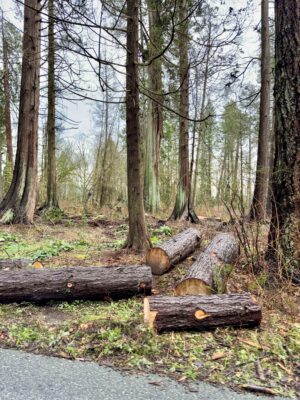 New Hampshire and its counties may soon be barred from enrolling publicly owned lands in carbon sequestration programs. “We don’t see sequestration as a traditional use,” said Rep. Mike Ouellet, a Colebrook Republican, at a hearing before the House Committee on Municipal and County Government on Tuesday. The committee later voted, 13-1, to recommend passage of House Bill 1205, which would prohibit “carbon sequestration projects” on state- and county-owned lands. …No county- or state-owned land is currently listed on the registry of New Hampshire carbon sequestration projects. But the long duration of forest carbon contracts and the possibility they would impose restrictions on land use were two reasons bill proponents cited for preventing them on public lands in the future. …Others said timber harvest could be an important source of revenue for counties and the state, and worried the contracts would have a negative impact on the timber industry.
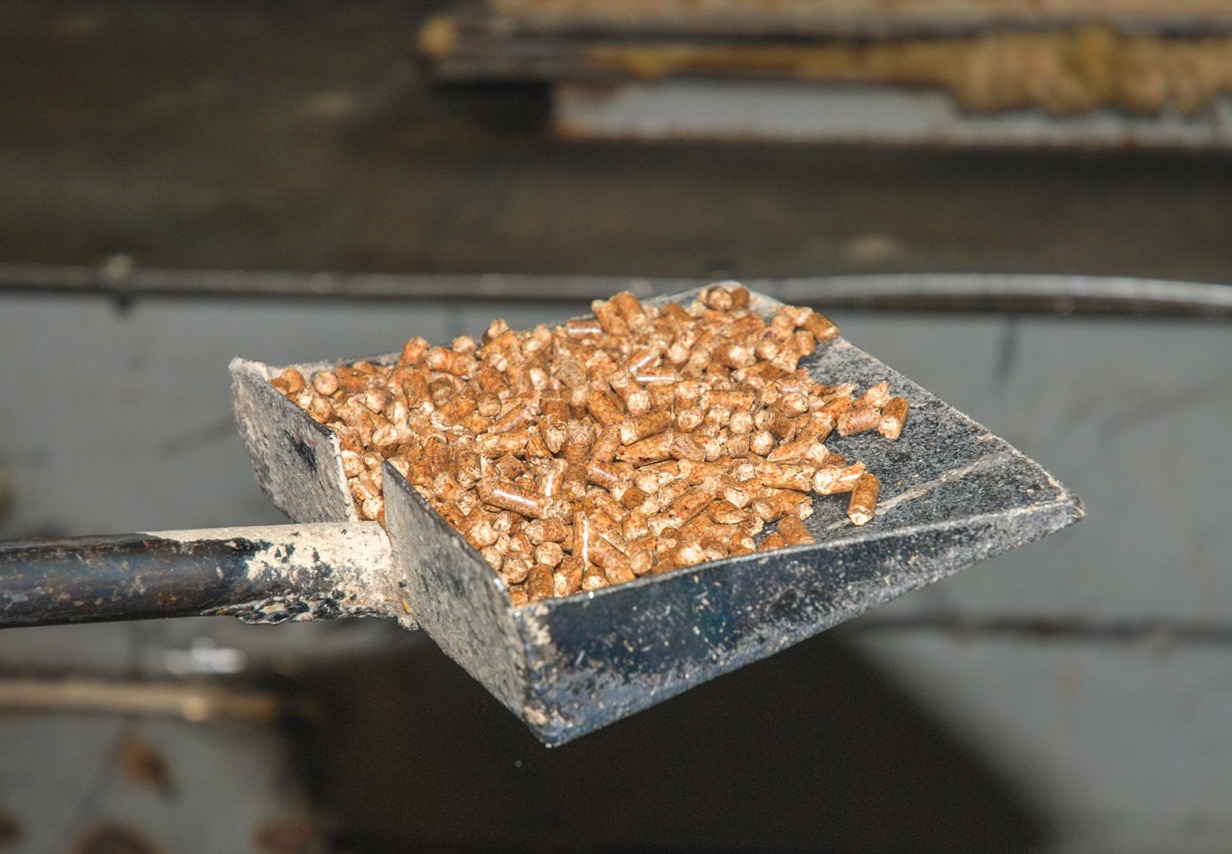 A community-led survey coordinated by the Southern Environmental Law Center across parts of the southern United States has documented concerns about pollution linked to wood pellet manufacturing facilities. The survey focused on areas where residents live near large biomass plants, including a facility in Northampton County, North Carolina. Wood pellet plants process pellets that are exported overseas…where they are burned to generate electricity. While often described as a renewable energy source, the manufacturing process produces dust and emissions that residents say affect air quality and daily life. …[Survey] participants visited households near pellet plants to gather information about health concerns, environmental conditions and quality-of-life impacts associated with nearby industrial activity. According to the survey findings, residents reported respiratory problems, persistent dust, noise and increased industrial traffic. These concerns were most frequently recorded in rural communities and in areas with lower-than-average household incomes.
 The U.S. Endowment for Forestry and Communities (the Endowment) has announced a new collaboration with the Georgia Institute of Technology. This partnership aims to address the far-reaching social, economic and environmental impacts of pulp and paper mill closures across the United States, particularly in the rural South, where these mills have long served as economic anchors. The Endowment and Georgia Tech’s Aerospace Systems Design Laboratory (ASDL) are developing an integrated decision-making dashboard to help policymakers, community leaders and industry stakeholders quantify the effects of mill closures and identify data-driven pathways to offset them through the sustainable use of forestry residues to produce bioenergy, renewable diesel, and sustainable aviation fuel (SAF). Over the past decade, nearly 50 paper mills have shut down nationwide, including major facilities in Georgia, South Carolina, Louisiana, Texas and Ohio.
 WISCONSIN — Hayward is the “first choice” for a German company considering building a $1.5 billion plant to convert wood and wood waste into sustainable aviation fuel, but the company also is talking to Minnesota, Michigan and other states, said Matthias Mueller, CEO of Synthec Fuels. …Hayward has good access to energy and to rail and highway transportation, it is not far from the Minneapolis and Chicago airports, and it is home to Synthec’s partner Johnson Timber, Mueller said. European investors have committed to providing $1.5 billion to build that plant, but Wisconsin lawmakers are working to make the state more attractive with the Forestry Revitalization Act that would provide $210 million in tax credits and loans. …The proposed plant annually would use 890,000 tons of woody biomass to produce 48 million gallons of sustainable aviation fuel.