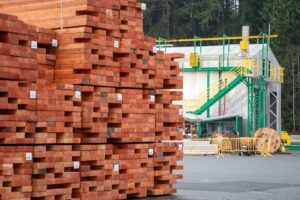
 President Donald Trump is prepared to impose tariffs on many Canadian products that are shipped to the United States. Included on the list of tariffs are the wood products industry, which is facing a 25 percent tariff on products shipped south of the border. In response to the President’s actions, the Vermont House Committee on Agriculture and Forestry took testimony from two employees at the Agency of Natural Resources last week… In the past two years Vermont has lost two sawmills, becoming more reliant on Canada. Vermont imported $52 million in sawmill and wood products from Canada in 2024. Pierson said some of the wood was shipped from Vermont to Canada where it was processed and shipped south.
 Willis, a business of WTW, and The Nature Conservancy (TNC) have launched a new $2.5 million wildfire resilience insurance for the Tahoe Donner Association in Truckee, California. Described as “first-of-its-kind,” this policy directly links insurance costs to proactive wildfire risk mitigation efforts. Developed in partnership with UC Berkeley’s Center for Law, Energy and the Environment, the policy aims to demonstrate how ecological forest management practices can lead to reduced premiums and increased insurance availability. Such techniques include tree thinning to improve the health and growth of the remaining trees and planned fires to clear out flammable vegetation, both proven to reduce wildfire risk and make forests healthier. Tahoe Donner has completed forest management projects over 1,520 acres since 2015. …This new policy, covering 1,345 acres of Tahoe Donner’s land, secures a 39% lower premium and an 89% lower deductible than would have been possible without the nature-based forest management.
 CALIFORNIA — The US Department of Justice (DOJ) announced that it had reached an $8.1 million settlement in a civil False Claims Act case based on alleged customs violations by defendants Evolutions Flooring, a San Francisco-based importer of wood flooring, and its owners Mengya Lin and Jin Qian. …The complaint shows how DOJ and relators may formulate such cases. Evolutions and its owners were accused of knowingly evading customs duties, including antidumping duties, countervailing duties, and section 301 tariffs, on wood flooring manufactured in the People’s Republic of China. Acting at the direction of its owners, Evolutions allegedly mispresented the country of origin of certain flooring imports – declaring them as Malaysia-origin – to avoid the high duties applicable to China-origin products. Evolutions also allegedly falsely declared the true manufacturer of the imported merchandise.
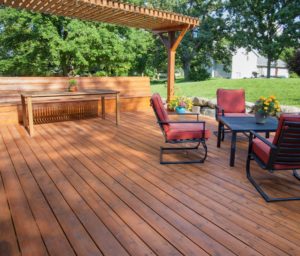 The Oregon Building Codes Division (BCD) has published its first permit-ready plan under the state’s updated Permit-Ready Plans Program. The building plans, available free to the public, are for a code-compliant residential deck. The Permit-Ready Plans Program creates an efficient pathway for the state to develop and make publicly accessible building plans that meet the requirements of the state building code. Plans are published to the BCD website. …The first plan published is a single-level, wood-framed, exterior deck attached to a building regulated by the Oregon Residential Specialty Code. BCD anticipates publishing more permit-ready plans for other residential accessory structures such as pole buildings, detached garages, patio covers, and carports later this year. The division will start developing plans for smaller detached dwelling units by the end of 2025.


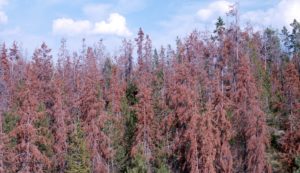 An insect known for turning entire mountainsides the color of rust could be making a resurgence in Colorado. The pest is none other than the mountain pine beetle. After a roughly decade-long period of relatively lower populations, the bugs are rebuilding their numbers along the Front Range and in southwest Colorado, according to an annual forest health report published by the Colorado State Forest Service in late March. “I’m a little concerned moving in this summer because we really haven’t had any precipitation,” said Dan West, the forest entomologist for the Colorado State Forest Service. “I’m worried bark beetles are going to increase their populations in these drought-stricken trees.” Few bugs have had a more visible impact on forests across the western U.S.


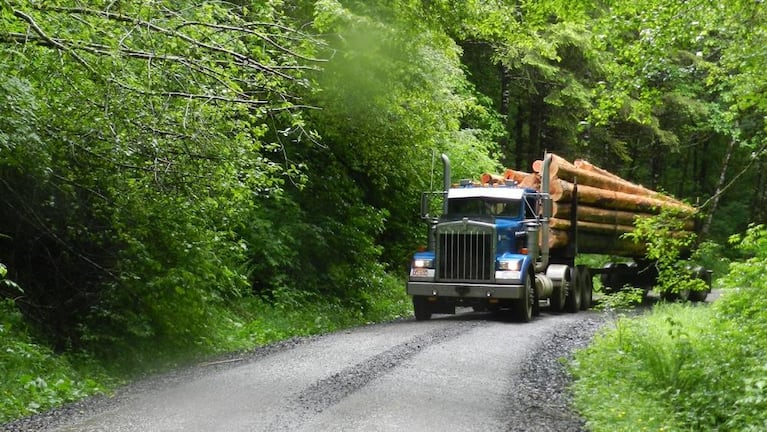


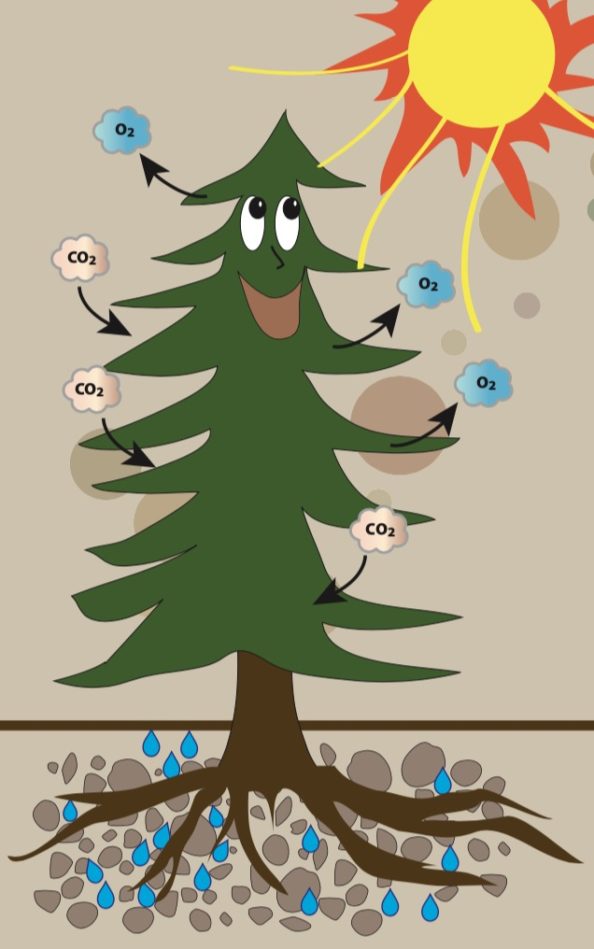 A recent study published by the Colorado State Forest Service took a deeper look into the impact of Colorado’s trees and how they store carbon. The findings reported that some of Colorado’s forests release more carbon than they draw due to dying trees that are actively decomposing. …it should be kept in mind that this data applies to recent years, and results fluctuate and can be nuanced. “(The) bigger picture of this report found that Colorado’s forests hold a lot of carbon, and that continues to this day, and it’s just in recent years that it’s releasing slightly more carbon than it adds,” Vorster said. “But when you just put it in perspective, if you were to compare the amount of carbon that it holds compared to what it releases, it’s like 0.06%, so a very tiny fraction of it at least every year. … It’s pretty close to a balance.”
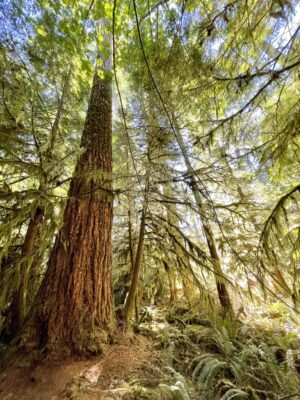 The Pacific Northwest is fortunate to have vast forests and ideal conditions for growing trees quickly. These forests have long been a cornerstone of our rural economies while also protecting streams, sequestering carbon and supporting wildlife. However, we face a troubling trend: a decline in local timber production and a growing reliance on imported lumber. We use science for active forest management with the toughest regulations in the world, we do forestry the best here. It’s time to prioritize local timber and rebuild a robust, sustainable industry right here in Washington… Prioritizing local wood production is a win-win for the Pacific Northwest. Wood is good, but local wood is best if we want to restore a vital, create economic stability and protect our environment.
 It’s a cold day at Sun Mountain Lumber in Deer Lodge, Montana. Outreach Forester Sean Steinebach walks toward the mill’s massive kiln where freshly cut two-by-fours are dried. You can feel the heat radiating off the fresh boards. He stops and inhales. “It smells fresh and it smells bright and it smells wild,” he says. The mill’s lumber yard is filled with stacks of Douglas fir and lodgepole pine logs that will soon become lumber. Having a steady and reliable supply of logs is crucial to keeping the mill in business, says Steinebach. “We drive the economics of Powell County for sure, Anaconda, Deer Lodge County. We’ve got a lot of employees that live there. Granite County, we’ve got employees there. We’re a big impact in the whole state, I think. Forest products in general is a huge impact in the state of Montana.”
 Earlier this month, President Donald Trump signed