
Kevin Mason
Rising inflation and interest rates are getting a lot of press lately for good reason, but one specific force hitting all our companies is skyrocketing diesel prices. Commentary suggests the worst is yet to come, especially as refining capacity has been targeted in various war zones. According to a recent Doomberg article, “It is now certain that a full-blown and extended global diesel emergency is unavoidable, and the only questions remaining are those of degree and fallout.” High diesel prices hurt companies from the start of the supply chain (harvesting) through to delivery of the final product. Companies across our coverage universe have called out diesel and freight-based headwinds on earnings calls and in investor presentations… most notably, Smurfit Westrock.
The reality is that US has plenty of diesel, but prices are rising due to actions in the global market. As such, US prices could be capped, and likely reduced, if the Administration halts/reduces diesel exports. That would be beneficial for many US companies/consumers, but would leave Europeans in the lurch. Given the upcoming mid-terms, it isn’t a stretch to see an export reduction, but problems would spread rapidly around the globe as the U.S. is currently the world’s largest diesel exporter. Does the U.S. share the pain or “export” the pain to others? We think the odds are on the latter. Forestry contractors around the globe are pushing for government intervention, ranging from tax relief to additional grants or supports. A swift response is needed.

 CALGARY — Canada’s lumber and steel industries are warning that expanding overseas sales cannot make up for losing access to the American market as tariffs threaten mills, jobs and manufacturing output. Industry representatives told the Senate national finance committee that Canada faces significant limits in shifting exports to other countries, Blacklock’s Reporter reported. Derek Nighbor, CEO of the Forest Products Association of Canada, said Canadian lumber and wood products sales to the US total about $14 billion annually. “It’s not a matter of just putting sticks on a boat and sending them somewhere else,” Nighbor testified. While producers see potential in Japan, China, South Korea and the European Union, Nighbor cautioned those markets cannot absorb enough Canadian products to replace American demand. … Further growth requires work on building codes, relationships with governments and local businesses, and training builders to use Canadian wood products.
 BRUSSELS — The EU and Canada will use a landmark summit next month to announce an expansive new partnership, ranging from breaking down digital trade barriers to joint support for Ukraine and investing in fighting wildfires. “The world is rapidly changing with unprecedented geopolitical challenges as well as challenges across trade, energy, technology, climate, and resources,” reads a joint statement. …The EU and Canada have been seeking to shore up their strategic ties as they grapple with the fallout from U.S. President Donald Trump’s trade war. …The two sides plan to say at their summit in Montreal that they want to speed up investment in critical mineral projects, strengthen supply chains, and improve supply security, including by stockpiling critical resources to mitigate “market fluctuations and geopolitical impacts.” …Ottawa and Brussels will also announce the joint purchase of 50 De Havilland water bombers, to be ready for use in Canada and Europe in 2030 to fight wildfires.
 President Trump’s ban on nearly $1 billion worth of Canadian goods went into effect Tuesday, marking the latest salvo in a trade war between the U.S. and its longtime ally to the north. The restrictions include Canadian dairy products, motor vehicles and many alcoholic beverages. Trump, in signing the executive orders to ban the goods, cited Canadian “discrimination” against the American equivalents. Jacob Jensen, as the American Action Forum, said the limits cover $967 million worth of Canadian imports, based on 2025 data. The president last month slapped 50 percent tariffs on $27.6 billion worth of Canadian products, levies that Canadian Prime Minister Mark Carney’s government matched “dollar for dollar. …Carney, meanwhile, has used the trade dispute with Trump to shift his country’s cooperative focus elsewhere.
  Plaintiffs led by the Canadian government will appeal the Court of International Trade’s July 27 ruling that upheld the Commerce Department’s use of a differential pricing analysis to detect masked dumping in a case challenging the 2021 administrative review of the antidumping duty order on Canadian softwood lumber, according to a Sept. 23
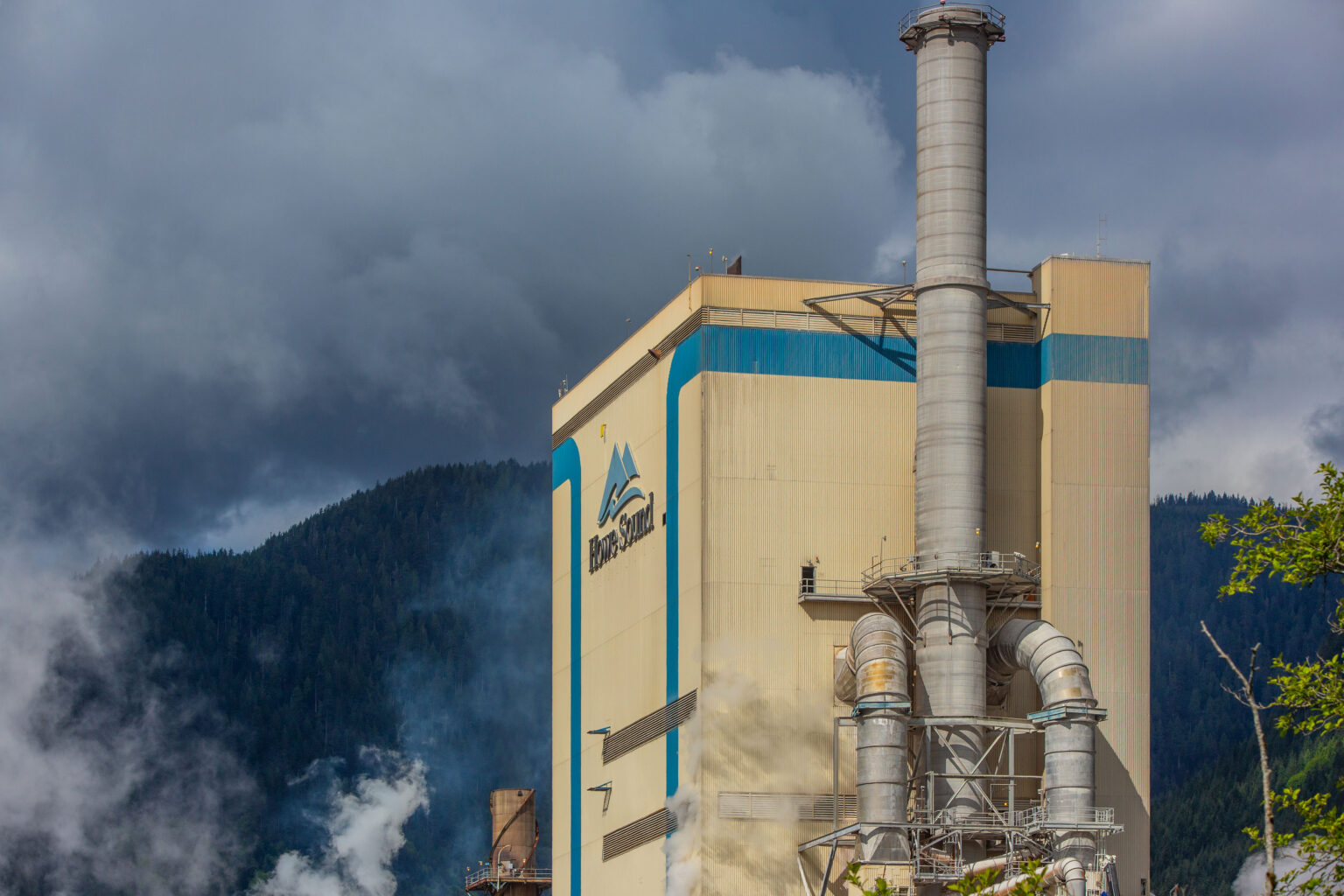
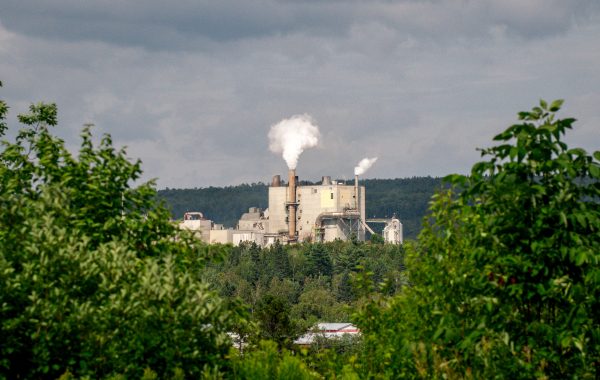
 The announcement that BC’s Howe Sound pulp and paper operation will remain open after securing government support has reignited questions about whether a similar intervention could have been pursued for Canfor’s Northwood pulp mill in Prince George. Domtar’s future has changed dramatically following discussions involving government officials, the company and union representatives. According to Unifor’s Gavin McGarrigle, government assistance played a critical role. …For critics of the provincial government’s response to the Northwood closure, the contrasting outcomes raise difficult questions. …McGarrigle argues the key difference lies in the willingness of the parties involved to engage. …Canfor disputes the notion that support for Northwood was not pursued. …“Canfor has been advocating for years to address the critical shortfall of economic fibre needed to sustain our manufacturing facilities. …With respect to our pulp operations in the region, we are intensely focused on ensuring a strong future for Intercon and Specialty Paper operations in Prince George.





 President Trump’s near-global tariff policy is being challenged in federal court — again. A panel of three judges at the US Court of International Trade heard arguments from a group of small businesses and Democratic-led states who say Trump’s sweeping “Section 301” tariffs overstep the law. It’s the third time in less than two years that the courts have been asked to intervene against the president’s attempt to impose sweeping tariffs on the vast majority of U.S. imports. The latest tariffs put 10% or 12.5% rates on goods from 86 countries, covering 99.4% of US imports. The Trump administration said they were imposed in response to the targeted countries failing to effectively enforce bans on the trade of goods produced using forced labor practices. But an attorney for the challengers said at the start of Wednesday’s hearing that a “constellation of factors” show the government’s justification was a “pretext” in pursuit of reviving Trump’s worldwide tariff regime.
 Imported hardwood timber and lumber could be the next wood products to face a US national security tariff, with the Commerce Department’s one-year deadline to report back to the White House on those imports running out at the end of today in Washington. That is according to the proclamation President Donald Trump signed a year ago this week, which requested the update so he could decide whether the phased import duty that Commerce recommended in July last year is warranted. “By October 1, 2026, the Secretary shall provide the President with an update on imports of hardwood timber and lumber, their markets, and the domestic industry,” the proclamation instructs.” …Trump put off the planned increases to 30 and 50 per cent by a year at the end of last year, with the amended proclamation citing “productive negotiations of agreements with multiple countries” on wood products.
 The US and China reached new trade and investment arrangements during President Xi Jinping’s September 2026 state visit to Washington, including the relaxation of tariffs affecting lumber and other wood products exported from the US to China. …According to a September 25, 2026



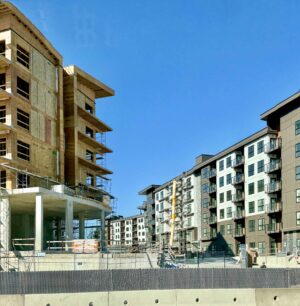 The Carney government says it wants housing starts in Canada to double to 500,000 per year within the next several years. …At first glance, it’s an odd goal for the government to embrace. More than four-fifths of the existing residential housing stock in Canada consists of “market housing” — units constructed by developers and homebuilders guided by market-based signals. These signals include housing demand and business objectives such as making a profit, keeping the firm’s workers employed, etc. Ottawa’s direct role in building the country’s housing stock has been minor. …If markets operate well, the supply of housing will adjust in the face of trends in demand. Unfortunately, the homebuilding industry is subject to a heavy dose of regulation — mainly by municipalities and the provinces — and must grapple with a plethora of taxes and fees that drive up construction costs.
 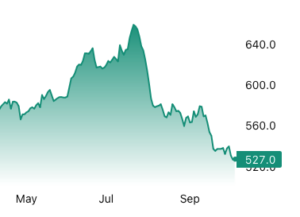 Lumber futures fell to $527 per thousand board feet, reaching their lowest level in two years, as rising borrowing costs weighed on housing demand. Growing concerns over inflationary pressures and government debt have strengthened expectations of higher-for-longer interest rates and fueled a broader sell-off in the bond market, pushing sovereign yields to their highest levels in over two decades. As a result, mortgage rates climbed to 7.3%, their highest level in three years, further straining an already weak housing market. Although lacking any particular economic significance, economists refer to the 7% threshold as a psychological ceiling.
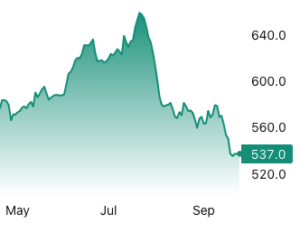 Lumber futures fell to around $530 per thousand board feet, remaining near their lowest level in nine months, as rising borrowing costs weigh on housing demand. Growing concerns over inflationary pressures have fueled a broader selloff in global government debt markets, pushing yields to their highest level in nearly two decades. As a result, mortgage rates climbed above 7%, a level last seen in January 2025, further weighing on prospective homebuyers. Although lacking any particular economic significance, economists refer to the threshold as a psychological ceiling. Meanwhile, lumber-intensive single-family housing starts increased 7.6% in August. Providing an offsetting pressure, Ottawa had announced counter-tariffs of 25% on US lumber and 50% on plywood following US tariffs on several lumber-related goods.
 Time after time, week after week, there is yet another story lamenting Canada’s continued reliance on its resource economy. Wood, minerals, oil, gas and more are written or spoken of as antiquated, crumbling foundations of an economy that must supposedly grow up and embrace the world of tech and renewable energy. In June 2026, Canadian merchandise exports reached a record $78 billion, while imports totalled $73.8 billion, producing a $4.2-billion trade surplus. Why? Because Canada’s natural resource economy has proven once again that it can generate enough export earnings to offset deficits elsewhere in merchandise trade, supporting national income and domestic production. According to Statistics Canada’s merchandise data, five resource and resource-based product categories stand out. …Combined, they accounted for $46.2 billion in exports, while accounting for just $18.9 billion in imports, for a surplus of around $27.4 billion. Compare that with every other merchandise category in Canada, which ran a combined deficit of roughly $23.2 billion.
 Much of the current discussion about BC exports understandably focuses on tariffs and the evolving trade relationship with the US. …A complete picture of what the province sells to earn its way in the world must include services. They generate roughly 40% of the province’s international export earnings. …The shift toward services has been underway for decades, supported by steady growth in gateway transportation and the rapid expansion in technology and professional services. …BC’s export mix has become more diversified partly because services have performed well, but also because merchandise exports have struggled. …The largest contributor to the decline in BC’s real merchandise exports is softwood lumber and other forestry-related exports, which have plunged since 2017. That decline reflects a shrinking timber harvest mainly attributable to provincial policy changes, a dwindling fibre supply, rising costs and other pressures that have reduced the competitiveness of the B.C. forest sector.
 On Monday, President Donald Trump signed an executive order temporarily allowing off-road “dyed” diesel fuel to be used on highways and deferring the applicable federal excise tax for the remainder of the year. The order directs the Secretary of the Treasury to defer payment of the federal excise tax normally imposed when dyed diesel is used on-road. The deferred tax would not accrue interest or penalties, and Treasury is also directed to explore ways to eliminate the obligation to repay those deferred taxes. The Secretary of Transportation is directed to coordinate with states, industry leaders, and labor organizations on access to dyed diesel. …The administration said the temporary measure is intended to reduce fuel costs for farmers, truckers, and other workers affected by restricted global diesel supplies. The full order is available
  The US trade deficit widened to $105.6 billion in August 2026 from a revised $92.8 billion in July, exceeding market expectations of $102.0 billion and marking its largest gap since March 2025. The widening was driven by a $17.2 billion surge in imports to an all-time high of $420.8 billion. Imports of industrial supplies and materials rose $9.1 billion, led by crude oil and nonmonetary gold, while capital goods imports increased $6.2 billion on stronger purchases of semiconductors and other industrial machinery. These gains more than offset a decline in computer accessories. Meanwhile, exports rose $4.5 billion to $315.2 billion, driven by a $6.3 billion increase in industrial supplies and materials, mainly nonmonetary gold and crude oil, and a $1.3 billion rise in capital goods, including semiconductors and computers. Pharmaceutical exports fell $2.4 billion. Exports and imports of services were little changed.
 Mortgage rates rose sharply in September as multiple factors applied significant upward pressure on the U.S. treasury yields. According to Freddie Mac, the 30-year fixed-rate mortgage averaged 6.86% in September, up nearly 20 basis points (bps) from August. The recent increase effectively erased the improvement in mortgage rates over the past year, with the 30-year mortgage rate reaching 7.03% by the end of the month. Compared to a year ago, the average rate is higher by 51 bps. The 15-year mortgage rate averaged 6.20% in September, up 22 bps from August and 70 bps from a year ago. The 10-year Treasury yield, a key benchmark for long-term borrowing, jumped 26 bps to an average of 4.94% in September and surpassed 5.00% toward the end of the month. …Broader concerns over elevated oil prices and geopolitical tensions, the U.S. fiscal deficit, and strong competition for capital from AI and hyperscaler investment also contributed to the rise in long-term yields.



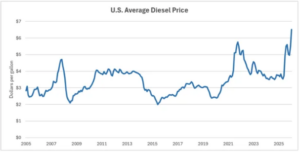 Diesel prices have surged to levels that are creating significant cost pressures for logging and log-hauling businesses, which depend on heavy-duty trucks and fuel-intensive operations. As fuel costs climb, the expense of moving raw forest products rises with every mile, tightening margins and straining contractors who already operate on thin financial footing. These increases ripple through the entire supply chain, affecting delivered wood costs and operational predictability. As FRA President Tim O’Hara notes, “Rising diesel prices are creating real challenges for logging and hauling businesses, and mills have been working with contractors to ease some of that burden. It’s a strong reminder that our wood supply chain succeeds when every link supports the other.” The analysis underscores the need for short-term relief measures to stabilize costs and support the sector during this period of volatility.
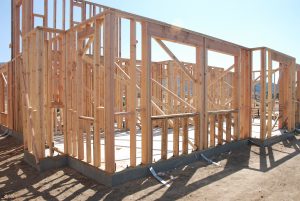 UK residential construction remains in a slump, with the value of started projects 33% lower than the same period last year, according to new data from Glenigan. The value of started projects fell 8% in the three months to the end of September 2026, the construction experts found. The figures, published in the October 2026 edition of the Glenigan Construction Index, show weakness continuing across the housing market despite growing government ambitions to increase housebuilding. The index tracks underlying construction projects valued at £100m or less, unless otherwise stated. The residential figures underline the gap between the government’s housebuilding ambitions and the number of schemes actually getting under way. …Overall construction activity also remained subdued. The value of underlying projects starting on site fell 2% against the preceding three months and was 18% below the level seen a year earlier.
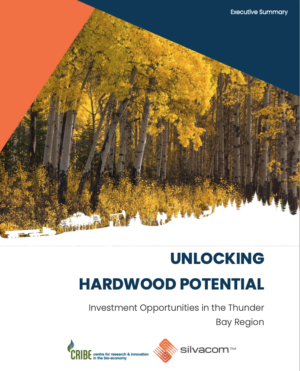 Northwestern Ontario has an abundance of hardwood. That’s what the hosts of an inbound Scandinavian trade mission are promoting in Thunder Bay this week in an attempt to attract offshore investment and new manufacturing to the region’s forest sector. The Northwestern Ontario Innovation Centre will be the venue for the trade mission, Oct. 5-7, that is drawing select companies from Canada and the Nordic countries. The innovation centre, the Thunder Bay Community Economic Development Commission and the Centre for Research and Innovation in the Bio-Economy (CRIBE) are funding and orchestrating this gathering, which will feature a predominant Swedish contingent from as many as seven companies. …CRIBE CEO Scott Jackson said they won’t be shy about drawing attention to underutilized poplar and white birch in the northwest. CRIBE laid out the opportunity and value proposition


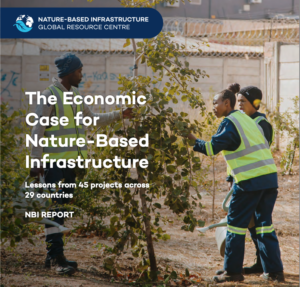 Nature-based infrastructure (NBI) delivers essential services like flood protection, water regulation, and climate resilience, but remains difficult to finance because its value shows up as avoided costs, not direct revenue. Drawing on 45 assessments across 29 countries, this report shows that for every USD invested, NBI delivers USD 3.21 in benefits, and sets out how to finance it at scale. Nature-based infrastructure (NBI), such as wetlands, forests, coastal systems, and urban green spaces, is increasingly recognized as a viable alternative to conventional “grey” infrastructure. NBI delivers essential services such as flood protection, water regulation, and climate resilience, while also restoring ecosystems and supporting local livelihoods. Despite this potential, NBI remains difficult to finance. Its value often shows up as avoided costs and co-benefits rather than direct revenue, making it hard to fit into conventional infrastructure appraisal and budgeting. IISD has spent five years building the evidence base to close this gap.
  LONDON — With rising expectations to prove material origin, a
  The bipartisan 21st Century ROAD to Housing Act — the first major overhaul of housing legislation in more than 30 years — is good news. But the policy, which aims to accelerate housing production across the country, also sets in motion surging demand for one of the oldest and most consequential building materials on Earth: wood. …As cities grapple with the need to increase housing production and decarbonize the built environment, they must take seriously the ecological impact of these material demands. …Since the 1990s, many North American timber operations have received certifications from forestry-standard groups, signaling to eco-conscious developers, architects, and investors that their wood products were responsibly produced. The Forest Stewardship Council (FSC) and the Sustainable Forestry Initiative (SFI) cover the majority of operations in North America. …But SFI policies around clearing primary forests are vague, while the FSC Mix label allows a product to include a majority of wood from non-certified logging operations.
  The Mark Carney government has been open-handed this year when it comes to funding major projects in BC that it deems to be in the national interest. The government promised $3.9 billion for the North Coast Transmission Line… It invested $500 million to expand the Red Chris gold and copper mine and pledged financial support for the $10-billion Roberts Bank port expansion. …A Canadian scientist and a University of BC professor say the federal government’s funds and perks are subsidizing the destruction of nature, contravening Canada’s global biodiversity commitments “Biodiversity again loses out,” Justina Ray, president and senior scientist for Wildlife Conservation Society Canada, said. Ray and Jessica Dempsey, a University of BC professor who studies the political economy of biodiversity loss, both said Prime Minister Mark Carney’s investment summit in Toronto last week underscores that the government’s priority is to facilitate resource extraction, despite the toll on nature.
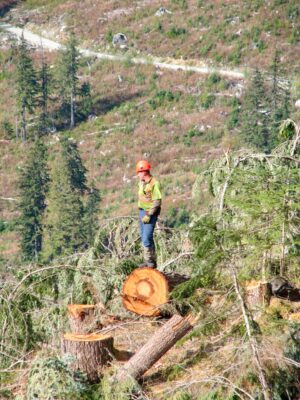 Forest soils store an estimated 40% of the world’s terrestrial carbon, but estimates suggest that around 15–30% of that soil carbon is lost when a forest is harvested. Tracking such losses can be tricky: wildfires, insects, disease and past forest management can all affect forest soil carbon stores, and tree type, climate and harvesting method can all affect how much carbon is lost. The BC Long-Term Soil Productivity (BC-LTSP) study is a long-term forest experiment that researchers used to examine how organic matter removal and soil compaction have affected soil carbon over the past 20 years, how soil carbon and the forest floor recover after heavy harvesting, and how latitude and climate affect soil carbon. The research is published in the
 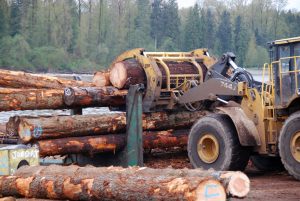 NEW BRUNSWICK — Ken Thomas has been harvesting lumber from forests in Stanley for over 32 years. …But these days, he’s consumed with the thought of what to do next, when he pulls these 20-foot logs out of the forest and looks for a buyer, now that his longtime purchaser is pulling out of the game — at least temporarily. Earlier this month, the AV Nackawic mill announced it will temporarily shut down at the end of October. The mill owner, AV Group, had already stopped purchasing wood in August. …If the Nackawic mill closes permanently, there will be about 257,000 hectares of Crown land licensed to AV Group that will be up for grabs. …In the meantime, while the province decides the next steps for the licence, Herron has allowed the mixed hardwood cut and grown for the Nackawic mill to be exempt from regulations keeping it in the province.
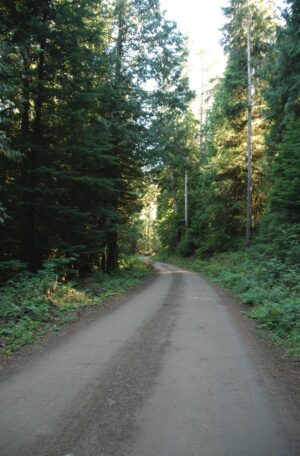 The roadless rule has flaws. Repealing it entirely could create new ones. …Would more roads help or hurt places such as Mill City? A Trump administration proposal would repeal what’s called the “roadless rule,” which prohibits road building and many types of forest management on 45 million acres of national forest. The regulation could be repealed as soon as next year. Supporters of the administration’s plan argue that these areas should be actively managed to reduce wildfire risks, while many conservationists worry that new roads would hurt forests that are home to many vulnerable wildlife species. The forests also provide drinking water and other environmental benefits. Public comment is open through Oct. 6. …However you feel about the rule, the Forest Service currently lacks the capacity to maintain roads and conduct wildfire mitigation and forest restoration projects at the scale needed. [to access the full story a Washington Post subscription is required]
 A California group said in an Instagram post that it had located the largest redwood tree on Earth following a two-year search. While celebrating the remarkable tree, the post also provides a reminder that awe-inspiring forests are not guaranteed to last, especially as old-growth habitat continues to disappear. In its post, Sacramento Food Forest described an old-growth coastal redwood as having a “base width of 116 feet,” and said it is “over 1,500 years old and 310 feet tall.” It also claimed the tree is wider at the base than “the largest tree in the world, a giant sequoia named General Sherman.” While these precise claims aren’t fully verified, the post included a video showing the tree’s remarkable size. Sacramento Food Forest said larger redwoods once occupied a 2 million-acre coastal band before widespread logging drastically shrank that area.
 Tropical Storm Isaias has formed in the Gulf and is expected to approach the U.S. northern Gulf Coast on Friday after becoming a hurricane, according to the National Hurricane Center. Isaias would be the Atlantic Basin’s first hurricane of the season and is its ninth named storm. El Niño continues to bring a more active season in the Pacific. The storm formed with less than two months remaining in the 2026 hurricane season, which ends Nov. 30. Tropical Storm Isaias, which grew from Tropical Depression Nine on Wednesday,” is expected to pass to the north of Mexico’s Yucatan Peninsula on Thursday before approaching the U.S. Gulf Coast the following day, according to forecasters. It is expected to rapidly strengthen. …The hurricane center warned of “an increasing risk of dangerous wind and storm surge impacts” along parts of the northern Gulf Coast and urged people living in Louisiana, Alabama, Mississippi and northern Florida.
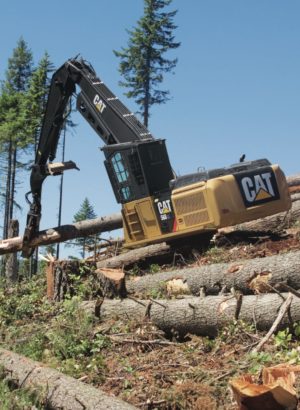 LITTLE ROCK, Arkansas— The timber industry has been vital in Arkansas, contributing more than $7 billion to the state’s GDP. But today, that industry is struggling. …It all has to do with gas prices. …Jeremy Erwin, a 3rd-generation logger running Erwin Resources Services in Fordyce, says “a typical company probably burns a million dollars a year in fuel, and this year, it’s going to hit 2 (million dollars).” …”Our rates probably went up 14-15% on the logging side. …These lifelong loggers are urging Arkansas policy-makers to do something to help stop the bleeding. And as of last week, some relief could be ahead. On September 29th, Arkansas Governor Sarah Huckabee-Sanders signed an executive order that would allow loggers and farmers to use dyed diesel fuel on public highways. This fuel is tax-free and could offer some much-needed assistance.
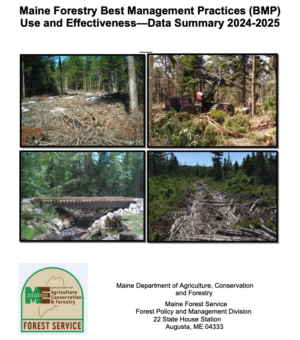 AUGUSTA, Maine — A new Department of Agriculture, Conservation and Forestry Maine Forest Service (MFS) report underscores the effectiveness of environmentally friendly practices during timber harvesting. Released Oct. 1, the “
 NORTH CAROLINA — A few weeks ago, the U.S. Department of Agriculture released the draft environmental impact statement for its plan to open the remaining pristine roadless areas of our national forests to mining, logging and road building. Pushed by anti-public lands corporate and industry interests, this raid on the lands that belong to all Americans raises the alarm about the ability to pass an irreplaceable resource down to future generations. …The release of the draft environmental impact statement opened a 30-day public comment period with a now-past deadline of midnight Sept. 21 – less than half the traditional 60- to 90-day comment period traditionally provided for proposed actions of this magnitude. Conservation organizations and others are formally requesting an extension, but past behavior shows the current administration is not interested in what you or I think. That’s why it is vital to raise your voice in support of the Roadless Rule before Oct. 6.
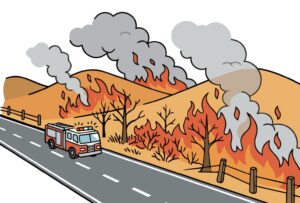 WASHINGTON — The Supreme Court kicked off a new term, with the justices wrestling with an attempt by oil companies to throw out lawsuits alleging they should pay damages for the impacts of climate change. Although the case concerns a specific lawsuit the city and county of Boulder, Colorado, brought against Exxon Mobil and Suncor Energy, the ultimate decision could have broad ramifications. …Boulder officials say they face increasing costs because of the impacts of climate change, including efforts to minimize risks from wildfires. …The lawsuit says Exxon and Suncor misled consumers about the impact that greenhouse gases produced by their products would have on the climate. The companies deny the allegations and warn that if the Boulder lawsuit moves forward… energy companies could face crippling damages. They also argue climate change is an international issue that cannot be the subject of litigation in state courts.
 The Supreme Court appeared divided and searching for consensus Monday in a major case involving climate change that could determine whether local governments can sue producers of fossil fuels for potentially billions of dollars in damages over alleged marketing deception and the impacts of global warming. Boulder, Colorado brought the case against Exxon Mobil and Suncor Energy. …A victory for the city would clear the way for its claims — and dozens of similar cases elsewhere — to move forward in state courts but would likely not be the final word in the dispute. “This case involves an unprecedented effort to use state law to regulate global conduct,” argued Kannon Shanmugam, an attorney for the energy companies. “If Boulder’s claims are allowed to go forward, some 90,000 municipalities across the country will have the ability to make national and international energy policy by asking juries to impose catastrophic damages on selected fossil-fuel producers.”
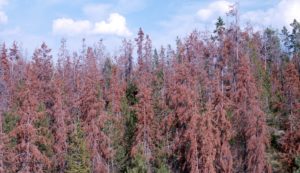
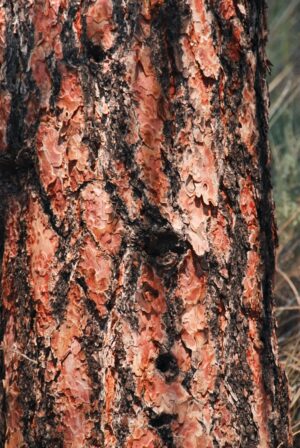 BOULDER, Colorado — To walk deep into the mountain forests at the doorstep of the Rocky Mountains, is to encounter the fragrant majesty of century-old ponderosa pine trees famous for lining ski slopes, National Park trails and residential neighborhoods. Now, those iconic Colorado trees — already under strain from record heat and prolonged drought — are threatened by a rapidly growing outbreak of silent killers: the mountain pine beetle. The mountain pine beetle is the size of a grain of rice but can inflict colossal harm to forests. …More than 700,000 acres in Colorado are affected, officials say. Climate change is blamed for supercharging the emerging outbreak, with no end in sight. …The cost of responding to the pine beetle outbreak, along with the financial impacts from other climate-change influenced environmental threats, are at the heart of a major
 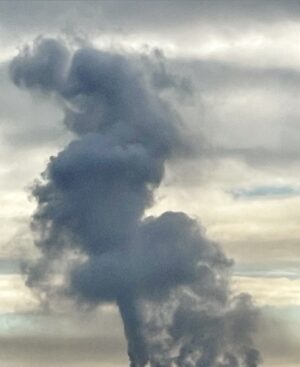 States and cities sued the Trump administration Thursday for repealing rules that limit planet-warming