 The province of Quebec is facing an issue its counterpart in British Columbia is resolutely ignoring. Quebec is trying—through legislation—to fairly rationalize land use planning on public lands in the province. It’s important because public lands occupy about 92% of Quebec’s surface area. The province has received a rough ride with its initial proposal, but is working toward a solution. The Quebec government introduced a bill into the legislature earlier this year proposing the creation of three priority land use zones for the province: a conservation zone, multi-purpose zone and a forest development zone. …Reactions to the bill… led to demonstrations and blockades of sawmill millyards. The government subsequently agreed to make amendments to the proposed bill with further First Nations consultation. The sides have been talking, at least, and moving however tentatively toward what will hopefully be an equitable compromise solution.
Imagine that happening in the wild west of BC. …Eby’s tactics during at least the last three years has largely been to ignore industry pleas to improve access to timber on public lands. That is despite forest companies and their dependant communities continuing to suffer as a result. An exception being the appointment of a panel to review BC Timber Sales. …The BC Council of Forest Industries (COFI) has consistently plugged away to keep the industry on the provincial government’s radar, despite its apparent indifference, adding: “The best way to support forest workers is to keep mills operating and people working.” …Most of COFI’s recommendations involve internal reorganization and co-operation and of course, a government willingness to make it happen. But nothing positive had happened by early September. Sections of the BC forest industry have already forged mutually beneficial working relationships with First Nations in the province. But more opportunities await with the parallel provincial government.
 The head of the Forest Products Association of Canada wants the upcoming federal budget to help “future-proof” the forestry sector while tariffs and duties pile up, as some mills have already been forced to curtail production or close. “Let’s not waste a crisis,” said Derek Nighbor, FPAC’s president and CEO. “Let’s use this as a moment to future-proof and future-ready our industry, and to support our workers and ensure that some of these mills can operate, for decades to come.” …When the budget is shared Nov. 4, Nighbor will be looking for more details on spending to help the forestry industry diversify its export markets. He also expects to learn more about spending on innovation to help retool mills and support a growing, mass timber, prefabricated modular homebuilding industry. …Lana Payne, Unifor’s national president, said she also wants to see a made-in-Canada housing strategy that relies on Canadian lumber.
 WASHINGTON — Donald Trump’s tariff agenda is set to face a major legal hurdle in the US Supreme Court this week but no matter the ruling, it will not spare Canada from all of the president’s devastating duties. The US Supreme Court will hear arguments Wednesday from businesses and states that say Trump’s use of a national security statute — the International Emergency Economic Powers Act of 1977 — to hit nearly every nation with tariffs is illegal. The hearing will combine two cases: one pushing back on what are usually referred to as Trump’s reciprocal tariffs and the other which also argues against the fentanyl-related duties on Canada, Mexico and China. It will not impact Trump’s expanding use of tariffs under Section 232 of the Trade Expansion Act of 1962. …Carlo Dade at the University of Calgary’s School of Public Policy, said no matter the outcome of the hearing, Canada will be facing tariffs.
 VANCOUVER — Politicians from B.C. and Ottawa will meet in Vancouver today for a forestry summit on how to prop up the industry in the face of American fees and tariffs topping 50 per cent. Federal politicians including Dominic LeBlanc, the minister responsible for Canada-U.S. trade, along with B.C. Premier David Eby and his forests and jobs ministers, are set to discuss ways to support workers and businesses being hammered by the increased fees. In September, the Americans imposed anti-dumping and countervailing duties on Canadian companies ranging from 26 per cent to more than 47 per cent, and then added another 10 per cent last month, claiming Canada’s industry is a U.S. national security threat. B.C.’s goal for the summit is to push for more federal help for the industry that employs tens of thousands of workers in the province. The softwood lumber dispute has been a friction point for decades.
 FORT MILL, South Carolina and MONTRÉAL and RICHMOND, BC — Domtar is proud to celebrate its one-year anniversary of uniting under a single brand: Domtar – The Fiber for the Future. The year has been one of expansion, achievement and living Domtar’s new values. “Reflecting on the last 12 months, I’m deeply impressed by the extraordinary progress our teams have made,” said John Williams, Non-Executive Chairman, Management Board. “Their hard work and commitment have been essential to the success of this integration. While we can’t acknowledge every achievement today, it’s important to pause and recognize the milestones that define our first year as one company.” They include: Reaching a historic agreement with Tla’amin Nation…; Investing in Wisconsin and the Rothschild Dam…; Donating lands to the Nature Conservancy of Canada… ;Publishing our first unified sustainability report…; Expanding our network in point-of-sale receipt rolls… ; and Winning industry recognition.
 WASHINGTON — The US Senate passed legislation Wednesday that would nullify US tariffs on Canada, just as US President Trump is engaged in trade talks in Asia as well as an increasingly bitter trade spat with US’s northern neighbour. The 50-46 tally was the latest in a series of votes this week to terminate the national emergencies that Trump has used to impose tariffs. While the resolutions won’t ultimately take effect, they have proven to be an effective way for Democrats to expose cracks between the president’s trade policy and Republican senators who have traditionally supported free trade arguments. …The Senate passed a similar resolution applying to Brazilian tariffs on Tuesday. …Vice-President JD Vance visited Republicans during a closed-door luncheon this week and also argued that they should steer clear of trade policy while the president negotiates deals.
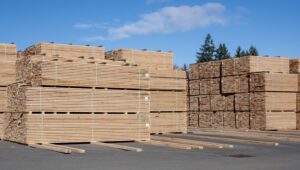 Politicians from BC and Ottawa met in Vancouver Monday for a forestry summit, where they agreed to create a working group on supporting the industry in the face of ever-increasing U.S. fees and tariffs. …Speaking after the forestry summit on Monday, he said the federal government’s commitment to a working group with the province felt “very heartening.” Kim Haakstad, the president of the B.C. Council of Forest Industries, said in a statement that the group is pleased the governments are working together to keep people working — even when markets are challenging. Haakstad said the working group should also include the industry to help focus on keeping mills open, which means prioritizing a new softwood lumber deal and accelerating the rollout of the $1.2 billion from federal government.
 Uh oh. BC Premier David Eby is about to launch his own anti-tariff advertising campaign aimed at US citizens. Eby said this week he expects ads targeting US lumber penalties to begin airing some time in November. It’s safe to say they will not mention Ronald Reagan. …Eby’s teaser for the BC ad campaign shows stacks of Canadian lumber, overlaid with a simplified graph of “winners” and “losers,” terms US President Trump likes to use. In these ads, the losers are American consumers and the Canadian lumber industry, and the winners are the Russians. “It’s important to speak directly to Americans looking to build homes or renovate,” Eby said. …Eby’s got a better case on lumber trade than Ford has on cars and trucks. US home builders have acknowledged that they can’t produce enough lumber for domestic needs, despite Trump’s claim that the US has plenty of trees.
 SASKATCHEWAN — A massive pile of logs that caught fire Monday morning at the Meadow Lake Mechanical Pulp yard was continuing to burn Tuesday, and fire crews say the blaze won’t stop anytime soon. “It’s actually probably going to burn for at least a week, maybe longer, just due to the amount of material burning,” Meadow Lake fire department Chief Joe Grela said. …“We’re probably talking about 100,000 cubic meters of logs here, so quite an immense material,” Grela said. The company that owns the mill, Domtar, said the destruction of the wood is a huge loss. …”It’s always unfortunate when something like this happens, but it’s particularly unfortunate at a difficult time for the sector across the country.” The mill’s wood room was shut down as firefighters kept an eye on the smouldering logs. The fire department said the rest of the mill was running as usual.
 Efforts are underway to diversify and strengthen British Columbia’s forestry sector with a new office in London, England. The office will be a hub for BC’s forestry sector to expand its market share across Europe and the United Kingdom. “British Columbia is the second largest exporter of softwood lumber in the world, and with US President Trump’s continued attacks on our forestry workers and economy, we are not sitting idly by,” said Ravi Parmar, Minister of Forests. BC’s Crown corporation, Forestry Innovation Investment (FII), will be expanding its presence to the U.K. to work with the forestry industry there, around Europe, and eventually, select markets in the Middle East and northern Africa, to grow BC’s forestry sector footprint internationally. This new office will give B.C.’s forestry sector a representative to help expand growing wood markets in the UK and Europe. …This is the newest FII office, joining offices in China, India and Vietnam, and industry-led offices in Japan and South Korea.







 Luke Lindberg, U.S. under secretary of agriculture for trade and foreign agricultural affairs with the USDA, in conjunction with U.S. Secretary of Agriculture Brooke Rollins, has announced a three-point plan to increase exports, advance rural prosperity, and chip away at the trade deficit. The three-point plan includes:

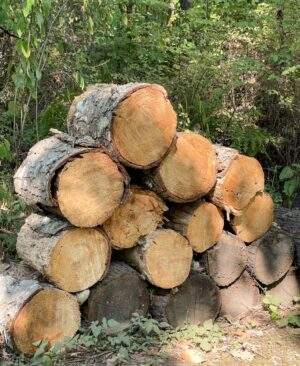 Arkansas’ timber industry, like Arkansas’ agriculture industry, is in trouble. The causes of the trouble are various, but one cause stands out for both: the Trump administration’s trade war. In October, Arkansas House Speaker Brian Evans, R-Cabot, joined the speakers of the Alabama, Georgia, Florida and South Carolina houses of representatives urging Congress to move to relieve “an industry in crisis.” “Under current US trade policy, products and shipments from US exporters are becoming stuck en route to their final destination due to immediately imposed tariffs,” the letter said. The state’s forestry sector supports more than 50,000 jobs and contributes about $6.1 billion to Arkansas’ economy, more than 4% of the state’s GDP. “The trade war has impacted our ability to export hardwood logs out of Arkansas,” Matthew Pelkki, at the University of Arkansas at Monticello, said. [to access the full story an Arkansas Business subscription is required]

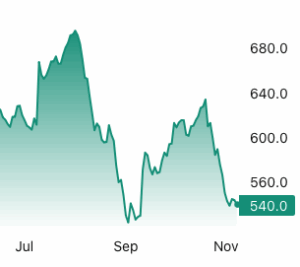 Lumber futures steadied around $540 per thousand board feet, hovering near seven-week lows, after a sharp selloff driven mainly by softer US construction demand and lingering post-rally inventories. US housing starts and builder activity failed to accelerate, leaving order flow thin and dealer and distributor stocks higher than the summer buying binge implied. Supply has only partially adjusted, with North American mills signaling temporary curtailments, but looming US softwood measures and announced support for Canada’s industry have kept export channels and production incentives intact, preventing a rapid physical tightening. Traders are now pricing a likely mix of modest Q4 production cuts, seasonal pre-winter restocking and the risk of trade-related disruptions.
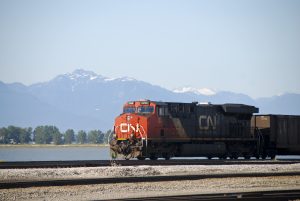 MONTREAL — CN Rail reported its financial and operating results for the third quarter ended September 30, 2025. Highlights include: Revenues of C$4,165 million, an increase of C$55 million, or 1%; Net income of C$1,139 million, an increase of C$54 million, or 5%. …Tracy Robinson, President and Chief Executive Officer said, “We are taking decisive actions to navigate a challenging macro environment including doubling down on productivity efforts, setting our 2026 capital spend at C$2.8 billion*, down nearly C$600 million from this year’s levels, driving increased free cash flow on a go-forward basis. We are positioning this business to benefit from higher future volumes and ensuring everything we do enhances our customers and shareholders long term value.”
 Canadian Pacific Kansas City reported a big profit boost in its latest quarter despite US tariff disruption and fears over fallout from a potential merger of rivals down the line. The railway saw net income for the quarter ended Sept. 30 rise 10% year-over-year to $917 million. Revenues increased three per cent to $3.66 billion on the back of higher shipping volumes. Grain, potash and container volumes rose markedly year-over-year while forest products — struggling under a sectoral tariff imposed by US President Trump — and energy, chemicals and plastics sagged. …Cross-border steel shipments also dropped due to 50% US tariffs on imports of the metal, though CPKC helped make up the decline with domestic traffic and direct Canada-to-Mexico trade, said chief marketing officer John Brooks. A new item of concern crossed the CEO’s desk over the summer. Union Pacific announced in July it wants to buy Norfolk Southern, and potentially trigger a final wave of rail mergers.
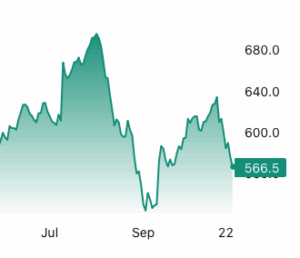 Lumber futures tumbled toward $560 per thousand board feet, a seven-week low, as weakening demand, persistent oversupply, and trade-policy uncertainties converged. US tariffs are intensifying pressure on Canadian softwood, with existing antidumping and countervailing duties around 35%, plus new Section 232 levies of 10% on timber and 25% on wood products, lifting import costs above 45%. Weak demand compounds the decline, with US residential building permits at a seasonally adjusted 1.4 million units in July, the lowest since June 2020, and construction spending down 3.4% from May 2024. Housing starts remain near five-year lows, keeping retail price pass-through muted despite higher import costs. Export channels have narrowed, with Canadian softwood constrained by tariffs and hardwood exports to China dropping from 40% of volume in 2017 to 7% today. Temporary curtailments and mill closures are emerging, yet abundant inventories and sluggish construction sustain downward pressure. [END]
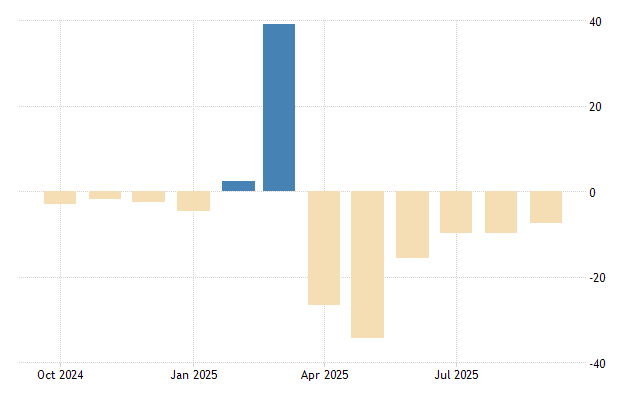
 US tariffs on key Canadian goods and weakening global demand triggered a sharp pullback in exports in the second quarter of 2025, according to new data released by
  The Bank of Canada cut its interest rate by 25 basis points to 2.25 per cent on Wednesday, but signalled that it may end its easing cycle there if the economy operates in line with its latest forecast. …Bank of Canada governor Tiff Macklem said, “If the economy evolves roughly in line with the outlook in our Monetary Policy Report, governing council sees the current policy rate at about the right level to keep inflation close to 2% while.” …The central bank presented its first baseline forecast since January after trade war uncertainty prompted policymakers to instead assess multiple potential scenarios. After a contraction in the second quarter, the bank expects weak growth for the remainder of 2025, with 0.5% annualized GDP growth in the third quarter and 1% growth in the last quarter of this year. It projects GDP growth of 1.1% in 2026 and 1.6& in 2027.
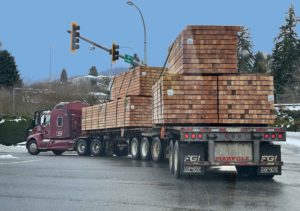 Let’s keep this simple: lumber and steel are two of the biggest drivers of flatbed freight in this country. …So where are we right now, closing out 2025? Lumber futures are sliding off their highs and steel demand is soft with some pockets still running hot. That combination is sending a pretty clear message to flatbed haulers: expect mixed demand instead of broad “every lane is on fire” demand. Some regions will stay busy. Some will get quiet. …Lumber futures have fallen back into the $590–$610/mbf range, down double digits from that August spike, and recently touched the lowest levels in weeks. …There are two main reasons for that weakness: Housing affordability is still brutal. Inventory is sitting. So instead of steady flatbed freight — lumber from mill to yard, yard to jobsite, jobsite to next jobsite — you get pauses. …Lumber and steel tell the truth before the broader market does.
 MONTREAL, Quebec – Stella-Jones announced financial results for its third quarter ended September 30, 2025. Highlights include: Sales of $958 million, up 5% from Q3 2024; Operating income of $135 million, up 4% from Q3 2024; EBITDA of $171 million, or 17.8% margin, up 6% from Q3 2024; and Net Income of $88 million, up 10% from Q3, 2024. …“Stella-Jones achieved another solid performance in the third quarter, supported by volume improvements, robust margins, improved cash flow and a strong balance sheet,” said Eric Vachon, CEO. …The increase in pressure-treated wood sales resulted from an increase in utility poles and industrial products volumes and higher pricing for railway ties and residential lumber. This was partially offset by lower pricing for utility poles. Logs and lumber sales decreased by $14 million or 47%, mainly driven by lower logs activity.
 EDMUNDSTON, New Brunswick – Acadian Timber reported financial and operating results1 for the three months ended September 27, 2025. Acadian generated sales of $23.0 million, compared to $26.0 million in the prior year period. …Operating costs and expenses decreased $2.0 million compared to the prior year period as a result of decreased timber sales volumes and timber services activity, partially offset by higher average operating costs and expenses per m
 An extended slowdown in sales of cardboard boxes is intensifying concern that this holiday season will be a disappointing one for US retailers. US corrugated box shipments fell to the lowest third-quarter reading since 2015, maintaining the more measured pace seen in the previous quarter, according to the Fibre Box Association. Packaging companies in recent weeks have warned that economic uncertainty is weighing on retailers and consumers. …This time of year is crucial for the box industry, with shipments typically peaking in October as retailers prepare for the holidays. Box plants said orders were flat or below normal in October, while US consumer sentiment fell to a five-month low and manufacturing activity dropped for an eighth straight month. …US box industry shipments are poised to drop 1% to 1.5% this year versus 2024,” IP’s Andy Silvernail said last week. [to access the full story a Bloomberg subscription is required]
 Kimberly-Clark is buying Tylenol maker Kenvue in a cash and stock deal worth about $48.7 billion, creating a massive consumer health goods company. Shareholders of Kimberly-Clark will own about 54% of the combined company. Kenvue shareholders will own about 46%. The combined company will have a large stable of household brands under one roof, putting Kenvue’s Listerine mouthwash and Band-Aid side-by-side with Kimberly-Clark’s Cottonelle toilet paper, Huggies and Kleenex tissues. It will also generate about $32 billion in annual revenue. Kenvue has spent a relatively brief period as an independent company, having been spun off by Johnson & Johnson two years ago. The deal announced Monday is among the largest corporate takeovers of the year. …The deal is expected to close in the second half of next year. It still needs approval from shareholders of both both companies. …Shares of Kimberly-Clark slipped more than 15% before the market open, while Kenvue’s stock jumped more than 20%.
 Shares of D.R. Horton took a hit Tuesday, as the home builder confirmed that the market for new houses was still weak, and it wasn’t just because prices and mortgage rates were too high — people are afraid to shell out so much for a new house when they’re worried about the economy and their jobs. …But even with lower prices and mortgage rates, the number of homes closed fell 1.2% to 23,368, which was below the average analyst estimate. And that weakness comes despite higher incentives to home buyers to boost sales, which pushed profits below what Wall Street was expecting. …Chief Executive Paul Romanowski said affordability was certainly still an issue. But consumers were also concerned about the “volatility and uncertainty” in the economy, which may be leading to worries about the job market. It certainly won’t help matters to see large layoff announcements from high-profile companies.




 Understanding the differences between lyocell vs cotton becomes crucial when choosing sustainable, comfortable fabrics for your wardrobe and home. Over 68% of US consumers now prioritize eco-friendly textiles in their purchasing decisions, yet many remain confused about lyocell’s advantages over traditional cotton. This comprehensive guide reveals the exact properties, environmental impact, and performance characteristics that distinguish these two popular fabrics in 2025. …Lyocell is a regenerated cellulose fiber made from wood pulp through an innovative closed-loop manufacturing process that recovers over 99% of solvents used in production. …The choice between lyocell vs cotton depends on your priorities: sustainability goals, budget constraints, specific use applications, and care preferences. Neither fiber is universally superior—each excels in different scenarios. Choose lyocell if you prioritize: environmental sustainability, moisture-wicking performance, luxury feel, and durability. …Our sustainability analysis shows lyocell winning decisively with 78% less water usage, no pesticide requirements, and complete biodegradability.
 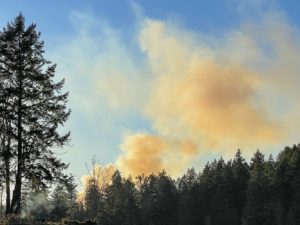 FORT ST. JOHN, BC — Every single wildfire in northeast B.C. is now either ‘under control’ or extinguished as temperatures decline and snow starts to fall across the province. The BC Wildfire Service website shows the last two ‘out of control’ wildfires in the region, both located near Fort Nelson — are now ‘under control.’That means they’re not expected to spread beyond their current boundaries, as opposed to an ‘out of control’ wildfire that’s expected to keep burning aggressively. …Several other wildfires that were previously listed as ‘being held’ — meaning they’re expected to temporarily remain within their current boundaries, but could become ‘out of control’ again — have also been downgraded to ‘under control.’ …This year’s wildfire season saw over 300 wildfires in the PGFC coverage area.
 The world’s largest green timber label will vote next week on whether to begin work on new traceability rules, amid renewed scrutiny and accusations over whether the body is doing enough to prevent fraud within its supply chains. The Bonn-based Forest Stewardship Council (FSC) bills itself as “the world’s most trusted mark for sustainable forestry.” …But forestry experts and whistleblowers have alleged for years that the FSC lacks a proper control system, allowing bad actors to fraudulently pass off timber that was illegally or unsustainably logged as FSC-certified. Phil Guillery, who was the FSC’s integrity director from 2011-21,
 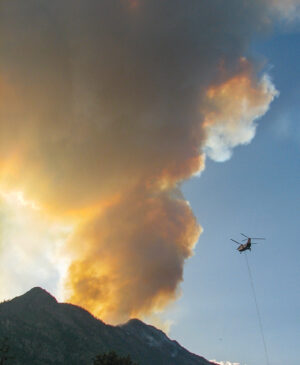 Alberta’s wildfire season unofficially came to an end Oct. 31, though there are still 30 burning. Since the season began on March 1, there have been 1,245 wildfires across the province. Nearly 682,000 hectares were scorched—slightly less than 2024 (705,621) and much less than 2023 (2,212,399). The Calgary Forest Area had 63 wildfires that burned around 35 hectares—the lowest number compared to the other zones in the province. The Slave Lake Forest Area was the most damaged, with more than 379,000 hectares burned from 214 wildfires. The moderate fire season around Calgary was thanks to normal temperatures from June to August, with a warmer May and September. The rain also kept fires at bay with the third-wettest July on record in Calgary. According to Environment and Climate Change Canada, there were 110 hours of smoke this year. “This is not a lot compared to most of the recent years,” said Natalie Hasell, ECCC warning preparedness meteorologist.
 BANFF – Most of the homes destroyed by the destructive Jasper wildfire were in neighbourhoods with many combustible roofs, highly flammable conifer trees and woody vegetation close to buildings after embers showered down on the national park townsite. That’s according to one of two independent Parks Canada-commissioned reports released last week, which examined the devastating wildfire in Jasper in July 2024 that destroyed 358 buildings – approximately one-third of the national park townsite. …“Once structures ignited, strong winds drove fire growth through densely-built up neighbourhoods, with structure to structure ignition dominating the spread,” according to the 71-page report by FP Innovation Wildfire Operations. “In the areas surrounding the townsite, continuous fuel pathways were often present between the wildland and structures. Consequently, a high proportion of ignitions were likely caused by direct flame contact and radiant heat emanating from burning wildland fuels. …The findings in FP Innovation’s report, said Martens, reiterate that “FireSmart works.”
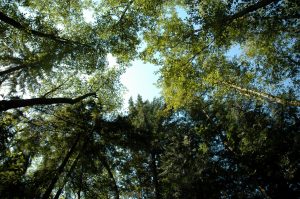 QUESNEL, BC — Given what’s going on around the world, it’s easy to understand why more areas in BC are taking a closer look at the Community Forest form of log harvesting tenure. It returns the management and responsibility for small, designated areas of forest land back into the hands of appointed people who live, work and care about them. Some control of what happens to and on the forest land in their own back yard has a growing appeal to its residents. …A community forest attempts to better accommodate other land users. …Co-operating with others as one cohesive unit becomes the catalyst for achieving dynamic, site specific land use solutions. It’s challenging but exciting work. It requires administering a cocktail of flexibility and responsiveness. Nick Pickles understands all that. It’s part of the appeal to being manager of the Three Rivers Community Forest based in the Cariboo region.
 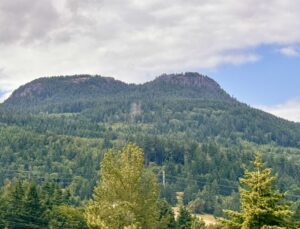 North Cowichan Mayor Rob Douglas has, again, sent a letter to Minister of Forests Ravi Parmar asking the province to help increase the amount of timber that the municipality’s saw and pulp mills have access to. Douglas said that three tree-farm licenses held by Western Forest Products supply much of the timber and fibre for local mills. He said that improving access to timber in these areas could help stabilize mill operations and reduce the impact of challenging market conditions and trade pressures. Douglas said Parmar’s mandate is to ensure a sustainable land base to enable the harvest of 45-million cubic metres of timber while the province is on track to harvest only 29-million cm this year. …The Domtar pulp mill in Crofton, along with Western Forest Products’ sawmills and remanufacturing plant in Chemainus and Cowichan Bay, collectively employ more than 670 workers and generate $7.7 million per year in property taxes for North Cowichan.
 TORONTO — As the 2025 fire season ends, Ontario’s fire crews, aviation services and support staff responded to 643 fires between April and October with 597,654 hectares burned. While the 2025 fire season began with an early active start, the coordinated efforts of frontline staff, municipalities, Indigenous communities and firefighting crews ensured a rapid response to protect people and communities from wildland fires. …With the rest of Canada also experiencing a demanding fire season, Ontario extended support to our partners, with over 400 fire personnel and six aircraft supporting firefighting in British Columbia, Manitoba, Saskatchewan, Nova Scotia, Newfoundland and Labrador, New Brunswick, as well as south of the border in Minnesota. As this year’s fire season ends, Ontario is now turning its focus to ensuring provincial fire crews are ready to respond next fire season. …The 2026 fire season will begin on April 1, 2026.

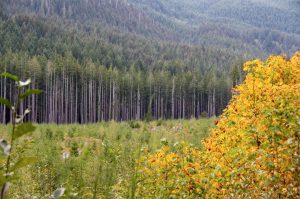 A yearslong endeavor to change logging and environmental policies for millions of acres of Pacific Northwest forests is getting a restart. The US Forest Service will update the Northwest Forest Plan, a set of policies that broadly dictates where logging can occur on 25 million acres of forests in Oregon, Washington and northwest California. …Environmental groups worry new changes that could be made to this plan under the Trump administration will increase logging in mature and old-growth forests. …The Forest Service published its proposed changes in a draft environmental impact statement in November 2024 and received over 3,400 public comments. Now the Forest Service under the Trump administration wants to issue a new draft. …A Forest Service spokesperson said the agency will publish a new draft amendment next fall, and that the Forest Service will allow people to review the draft and weigh in during a 90-day public comment period.

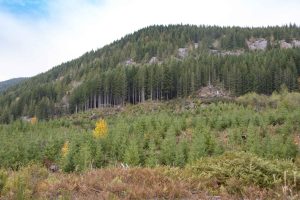 Durable, renewable and biodegradable, wood is an ideal material. And as we grapple with the aftermath of synthetic materials, such as forever chemicals and microplastics, the humble material growing in our literal backyards is suddenly looking pretty appealing again. But how do you know it wasn’t clearcut from a rainforest? Figuring out logging practices, deforestation policies, impact on wildlife, pesticide use, and impact on indigenous communities “can be really challenging”, said Linda Walker at the World Wildlife Fund. …That’s where certifications come in. A growing number of wood industry certifications are designed to guide consumers. They’re not perfect. Some have rules written by big timber. Almost all of them receive payments from companies seeking certifications. There is no seal that encompasses every issue, but don’t let perfect be the enemy of good – even the most flawed badges have some baseline value.
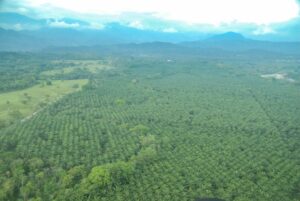 Chopping down rainforests is daft. The social costs of clearing a typical patch of Brazilian Amazon are perhaps 30 times the benefits of rearing cows on it, by one estimate from 2023. The problem is, those costs, which include aggravating climate change, are spread across the entire world’s population, whereas the profits from cutting down the trees go to the men commanding the chainsaws. Somehow, the world has to find a way to make conservation pay. …Yet there is hope. Though Brazil lost more rainforest than any other country last year, due to to wildfires, it also shows how better policy can make a difference. …The pace of deforestation fell by 80% during Lula’s first terms (2003-11), and fell again when he returned in 2023, before the wildfires set things back. …Since preserving rainforests is a global public good, the world should help pay for it. [to access the full story an Economist subscription is required]

 ARIZONA — Restoring Arizona’s wildfire-threatened forests depends on building a second biomass-burning power plant, a coalition of public officials and timber industry executives said. The state’s only biomass-burning plant is operating at capacity, which means many forest thinning and restoration projects will stall without a second plant to process low-value wood slash and biomass, speakers said at the October meeting of the Natural Resources Working Group. “It’s a biomass apocalypse,” said Brad Worsley, head of Novo BioPower, the state’s only biomass-burning power plant. Eastern Arizona Counties Executive Director Pascal Berlioux said he was frustrated by the lack of state and federal action after years of discussion about how to make forest restoration economical. …Novo BioPower in Snowflake remains the state’s only biomass-burning power plant. …Worsley said the plant survived shortages caused by delays in Forest Service approval of thinning projects and is now operating at its limit.

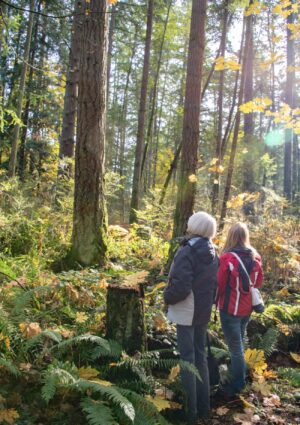 BOSTON — Susan Abookire, an internist and professor at Harvard Medical School, had a cure for all that ailed me. But I was going to have a difficult time getting her prescription filled at CVS. …I was participating, somewhat skeptically, in a forest bathing session Abookire was leading at Harvard’s Arnold Arboretum for seven young doctors. It’s part of resident training at Harvard-affiliated Brigham and Women’s Hospital, which is looking for ways to reduce stress and burnout within the profession. …Before I looked into forest bathing, I had feared it might be another goofy wellness fad like Gwyneth Paltrow’s jade eggs and Tucker Carlson’s genital tanning. But here was a doctor from a top medical school guiding some of the brightest young medical minds into the woods. …So I did what the doctor ordered. I introduced myself to a mushroom. [to access the full story a Washington Post subscription is required]