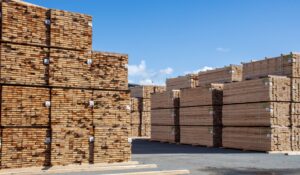
 KELOWNA — Prime Minister Mark Carney’s government is preparing financial supports for the forestry sector as the United States ratchets up duties on Canadian softwood lumber. …It comes amid heightened trade tensions with the United States over softwood lumber, a decades-long friction point in the Canada-U.S. trade relationship. The US Commerce Department recently announced it intends to hike anti-dumping duties on Canadian softwood to just over 20%. The prime minister outlined a series of supports at a lumber mill in West Kelowna, B.C., on Tuesday, saying Canada will be its own best customer by relying on more Canadian timber as it works to double the pace of new home building to almost 500,000 homes a year over the next decade.
In support of the Canadian announcement:
- FPAC’s Derek Nighbor: Welcomes Prime Minister Carney’s Support for Forest Sector Employees and Businesses
- CWC’s Rick Jeffrey: Welcomes Federal Investment in Forestry Innovation and Housing Solutions
- COFI’s Kim Haakstad: This support comes at a critical moment for forestry workers, communities, and companies
- Alberta Softwood Lumber Trade Council’s Jason Krips: Is encouraged to see the federal government recognize the importance of Canada’s forest sector
- BC Lumber Trade Council’s Kurt Niquidet: Resolving the lumber dispute with the US must remain the top trade priority
- United Steelworkers’ Jeff Bromley: United Steelworkers union welcomes federal softwood announcement, calls for urgent follow-through to protect jobs and communities



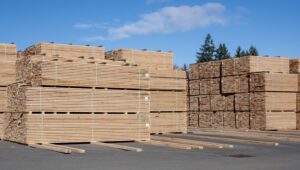 A $1.2-billion lifeline from Ottawa that’s being thrown to the forest industry is welcome news to northwestern Ontario mayors and the Canadian Wood Council. …The 37-member Northwestern Ontario Municipal Association (NOMA) called it a “significant and timely commitment to ensuring the long-term competitiveness of the forest sector” and comes at a crucial time when local jobs, economic growth and municipal stability is on the line. …“These measures recognize the vital role of forestry in Northwestern Ontario and across Canada,” said Marathon Mayor and NOMA president Rick Dubas in a statement, “helping our sector adapt to ongoing trade challenges, protect local jobs, and create opportunities for both Indigenous and non-Indigenous communities.”
 Kalesnikoff Mass Timber has been recognized by the federal government for its role in advancing Canada’s housing goals. In June, Kalesnikoff opened North America’s first mass timber pre-fabrication and modular facility, expanding its product for use in multi-storey affordable and market housing, schools, workforce housing, and more. The facility aligns closely with Prime Minister Mark Carney’s new Build Canada Homes Program, which he discussed during a stop in Kelowna on Aug. 5. Carney plans to launch the program this fall, offering federal financing to homebuilders who use Canadian materials, as the government aims to develop around 500,000 homes per year. He praised Kalesnikoff as a catalyst for this effort, while announcing several other initiatives aimed at increasing housing supply and market diversification – including a $25-billion commitment for private builders who prioritize Canadian materials in housing and infrastructure projects.
 VICTORIA — BC’s minister of jobs and economic growth is urging the federal government to stand firm and “negotiate hard” when trying to find a solution to tariffs imposed by President Trump. …He said he believes Carney and Canada-US Trade Minister Dominic LeBlanc are taking the right approach, “which is keeping their head down… and not getting distracted by the day-to-day swings of the president of the United States.” He said he would also highlight the importance of the softwood lumber industry for BC, which is just as crucial as the auto industry is to Ontario. …Both Eby and Kahlon have repeatedly argued that the long-running softwood lumber dispute with the United States should be part of a larger deal. Brian Menzies, executive director of the Independent Wood Processors Association, said he is “not very optimistic” that a future deal would also resolve the softwood dispute.

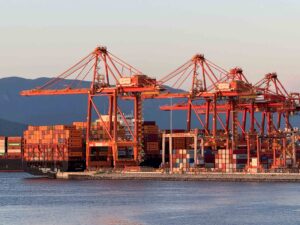 President Trump’s expanded reciprocal tariffs will not apply to any products loaded onto a vessel for transport into the US before 12:01 a.m. New York time on Thursday, according to guidance issued by
 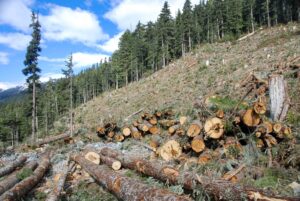 Wyoming’s few remaining lumber mills have been struggling, but a shift in federal and state timber policy might herald a new era for the industry here. Gov. Mark Gordon on Friday signed an executive order calling for an “increase of active forest management in Wyoming.” It mirrors President Donald Trump’s March 1 executive order for “immediate expansion of American timber production.” That might be the break that Wyoming logging companies and timber mills have for years been anxiously awaiting, Jenny Haider, of the Evanston-based Smith & Jones Timber Company, told Cowboy State Daily on Monday. The fourth-generation family-owned business has been going for 80 years but barely survived the past few, she said. …Trump’s order, coupled with tariffs on Canadian timber being imported into the US could be a game-changer for logging operations and mills in Wyoming. …Now, Wyoming timber companies are “using the word ‘hope’ again,” she added.
 KINGSPORT, Tennessee — Vera Gilmer, a 30-year Kingsport resident, arrived at the Kingsport Economic Development Board meeting for the update on Domtar’s packaging mill. She shared her frustration with the board about the mill’s odor over the last month. …Gilmer stressed that the smell has worsened recently. …Domtar mill manager Troy Wilson gave an update on the digester’s construction and addressed what could possibly worsen Domtar’s odor in the meantime. …Wilson said worsening odor is likely attributable to Domtar’s current wastewater treatment system, a lagoon system which he described as “antiquated” and sensitive to the weather. He also shared that the rainstorm that passed over Kingsport Wednesday last week put a strain on the wastewater system. …Domtar has spent $20 million on the digester so far. At its peak, the digester project will employ 140 people, according to Wilson.
 VANCOUVER, BC – Western Forest Products reported its second quarter 2025 financial results. Highlights include: Revenue of $289.1 million (versus $309.5 million in the second quarter of 2024, and $262.5 million in the first quarter of 2025); Adjusted EBITDA of $0.5 million in the second quarter of 2025 (versus $9.4 million in the second quarter of 2024, and $3.5 million in the first quarter of 2025; Net loss was $17.4 million in the second quarter of 2025, as compared to a net loss of $5.7 million in the second quarter of 2024, and net income of $13.8 million in the first quarter of 2025. …Markets in North America are expected to be volatile through the third quarter of 2025 as softwood lumber duties have increased significantly. Persistently high interest rates, low consumer confidence and general economic uncertainty are leading to a slower pace in repairs and renovations, and housing activity. Expectations are for this trend to continue throughout the third quarter of 2025.
 BURNABY, BC — Interfor recorded net earnings in Q2’25 of $11.1 million compared to a net loss of $35.1 million in Q1’25 and a net loss of $75.8 million Q2’24. Adjusted EBITDA was $17.2 million on sales of $780.5 million in Q2’25 versus Adjusted EBITDA of $48.6 million on sales of $735.5 million in Q1’25 and an Adjusted EBITDA loss of $16.7 million on sales of $771.2 million in Q2’24. …North American lumber markets over the near term are expected to remain volatile as the economy continues to adjust to changing monetary policies, tariffs, labour shortages and geo-political uncertainty. …Overall, the Company is well positioned to navigate this volatility with a diversified product mix in Canada and the US, with approximately 60% of its total lumber produced and sold within the US Ultimately, only about 25% of the Company’s total lumber production is exported from Canada to the U.S. and exposed to duties and any potential tariff.
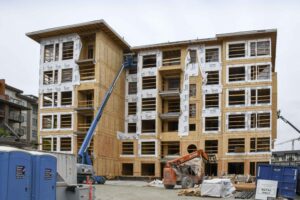 The Canada Mortgage and Housing Corporation (CMHC) has just issued a sobering warning to policymakers regarding the state of Canadian housing. Yet, governments do not appear to be getting the message, nor do they seem willing to take the necessary steps to address the crisis. In their
  Canada’s merchandise trade deficit widened in June to C$5.9 billion as imports grew faster than exports due to a one-time high-value oil equipment import. The deficit observed in June is the second highest on record after the deficit expanded to its largest in history in April to C$7.6 billion, when the impact of US tariffs first started to weigh. Canada’s exports to the US as a share of total exports shrank to 70% in June from 83% in the same period a year ago while its surplus with the US contracted by a half in the same period, data showed. Total imports were up 1.4% in June to C$67.6 billion from a drop of 1.6% in the prior month, Statistics Canada said. Canada’s total exports grew 0.9% in June to C$61.74 billion following an increase of 2% in May, led primarily by an increase in crude oil exports.
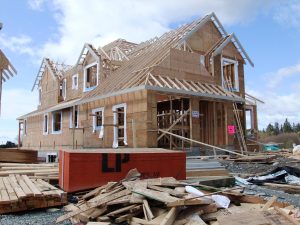 It’s been over a week since the U.S. Commerce Department confirmed that it’s nearly tripling its anti-dumping duties on Canadian lumber imports from 7.66% to 20.56% following its annual review. The response from north of the border has been apoplectic, to say the least. …In the US, several entities are worried about the hiked duties, too. The NAHB continues to sound the alarm that new duties will raise the cost of homebuilding. …”We are also urging the administration to move immediately to enter into negotiations with Canada on a new softwood lumber agreement.” …The US Lumber Coalition continues to be the loudest voice in the room in favor. …”Canada continues its relentless shipments of dumped and subsidized lumber with devastating consequences for mills, workers, and communities.” …The downstream effects of all these trade war machinations remain to be seen, though the cross-border lumber trade has already slowed down considerably.
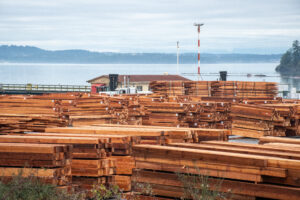 Lumber futures hit their highest price in three years Friday despite a home-building slump and a lackluster remodeling market. Though wood demand is tepid, traders are pricing in dramatically higher duties on lumber imports from Canada. Lumber futures for September delivery hit $695 per thousand board feet Friday, up 39% from a year ago and the highest price since summer 2022, when the price of two-by-fours was tumbling down from its pandemic surge. November futures are trading even higher, around $710. The US raised its antidumping duty Tuesday to nearly 21% from 7.7%… [and] The Commerce Department said it would impose a higher countervailing duty in the coming days. The combined rate is expected to be around 35%. …”We don’t make a tremendous amount of money on distributing lumber,” Builders FirstSource CEO Peter Jacksons told investors. “We’re not eating a 20-point increase in lumber. It’s not possible. So it will be passed through. The market will adapt.” [to access the full story a WSJ subscription is required]
 EDMUNDSTON, New Brunswick – Acadian Timber reported financial and operating results for the three months ended June 28, 2025. “During the second quarter, Acadian delivered mixed results,” said Adam Sheparski, CEO. …Acadian generated sales of $17.1 million, compared to $41.2 million in the prior year period. The second quarter of 2024 included $19.7 million in carbon credit sales, while no carbon credit sales occurred in the second quarter of 2025. Acadian generated $0.8 million of Free Cash Flow during the second quarter and declared dividends of $5.2 million or $0.29 per share to our shareholders. …While the second quarter of the year is traditionally our weakest due to seasonal operating conditions, operating activity in Maine was impacted by prolonged wet conditions which significantly delayed the commencement of deliveries in the spring.




 TORONTO — George Brown College’s (GBC) Limberlost Place has helped trigger major changes to Ontario’s building codes and is playing a key role in the province’s strategy to grow its mass timber construction sector, college officials say. The 10-storey academic building—Canada’s first institutional structure made from mass timber and designed to achieve net-zero carbon emissions—has served as a catalyst for the Ontario government’s Advanced Wood Construction Action Plan, unveiled on June 26. The action plan outlines four goals: Promote awareness and use of advanced wood construction; Remove regulatory barriers in codes and standards; Stimulate innovation and investment in advanced manufacturing; and Showcase successful projects to build industry confidence. Limberlost Place embodies all four goals. …By demonstrating the viability and benefits of mass timber at scale, George Brown College has positioned itself—and Ontario—as a leader in sustainable construction and advanced wood manufacturing.
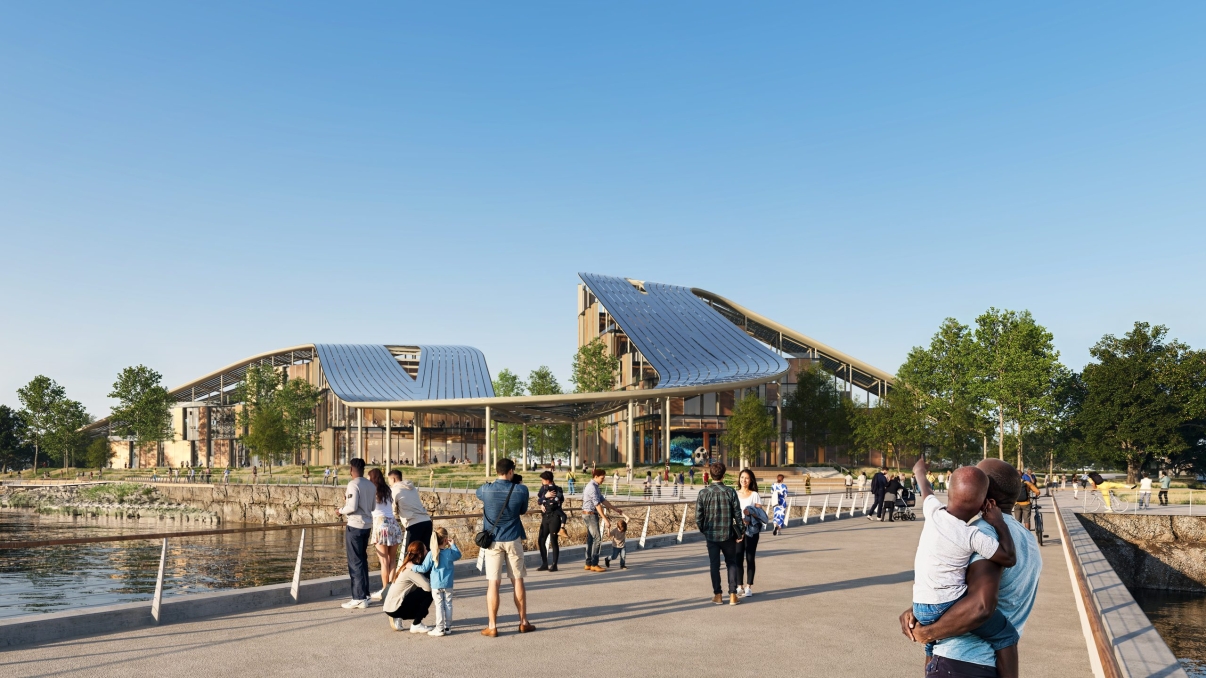
 PENSACOLA, Florida — A Beloit, Wisconsin-based general contractor will have a share in redeveloping a beachfront park in Florida. Pensacola, Florida-based The Dawson Company announced Beloit-based Corporate Contractors will be a co-developer, co-owner and investment partner in the first phase of a $200 million redevelopment of Community Maritime Park in Pensacola. Diane Hendricks, named the richest self-made woman in the US by Forbes and cofounder of ABC Supply, owns Corporate Contractors through the Hendricks Holding Company. …The first phase of construction involves two mass timber towers for the Reverb by Hard Rock Hotel and Rhythm Lofts, plans showed. The project will also have an affordable aspect, plans added. …In Wisconsin, CCI’s portfolio includes the Beloit College Powerhouse and The Grain mass timber development in Delafield. CCI is currently the owner’s representative for the $500 million Ho-Chunk Nation Casino and Convention Center underway in Beloit.
 AUCKLAND, New Zealand — Consent has been granted for construction to begin on a $100 million development on Auckland’s Karangahape Rd that will have retail and office spaces. The 11-storey timber building will be located minutes from the new Karanga-a-Hape Station which is part of the City Rail Link*. Developers James Kirkpatrick Group (JKG) are planning to begin construction in early 2027 after reaching an agreement with Auckland Council. JKG managing director James Kirkpatrick said “This development will create a new benchmark for sustainable urban design and construction in New Zealand and will enable the city to realise the full social and economic potential of the City Rail Link. The building is designed by globally renowned local architects Fearon Hay and is targeting a world-leading 6 Green Star sustainability rating.
 WASHINGTON, DC – U.S. Secretary of Agriculture Brooke Rollins announced the US Forest Service is investing $106 million to support state and landowner efforts to conserve private working forestlands across the country. Funded through the Forest Legacy Program, these projects will protect forests vital to the economic and social fabric of local communities – ensuring they remain productive, working forests for Americans and tourists to use and enjoy. …In total, the Forest Service will fund 10 projects across 177,000 acres of state- and privately owned forestlands in Arkansas, Hawaii, Iowa, Michigan, Mississippi, New York, Oregon and South Carolina. The investments advance President Trump’s Executive Order on
  WASHINGTON STATE — Washington’s rural counties and school districts are preparing to start the school year without millions of dollars from a program meant to offset reduced revenue from logging on federal lands. The Secure Rural Schools program expired at the end of 2023 after Congress failed to renew it. Democratic and Republican lawmakers, along with local officials, are pushing US House leadership to bring a bill renewing the program to the floor. The lapsed program helps pay for roads and schools, providing $7 billion in payments to more than 700 counties and 4,400 school districts across 40 states since it was enacted in 2000. …Counties and schools have received logging revenue from the federal government for roads and schools since 1906. Federal law currently mandates that all counties annually receive 25% of the seven-year average of revenue generated by that county’s forests.
  The forest products industry is an important part of the European economy and a crucial pillar for the transition to a low-carbon economy in the future. At the same time, this sector is not immune to trade uncertainty and geopolitical risks. As Europe looks to rely more on its own resources, there is an opportunity to better utilise the continent’s forests through investment and active management. …Although the EU has just 5% of the world’s forests, it produces approximately 20% of the world’s roundwood each year. Over the past decade, the EU has gone from being a net importer of roundwood and fuelwood to a net exporter – with the EU’s net trade surplus reaching 15.4m sqm in 2023. …Despite unpredictable trade flows… Research indicates that total demand for wood fibre in the EU will grow by 25% between now and 2050.
