
Mark Carney
Prime Minister Carney says any future trade deal with the US could include “some element of managed trade,” including quotas, on softwood lumber exports. Carney’s comments come after B.C. Premier David Eby said that the federal government has been speaking with the provinces about quotas to resolve the softwood lumber dispute. Carney added that resolving the conflict is a “top priority” as the US prepares to double various duties to 34.45%. Canada and the US have been without a softwood lumber agreement since 2015, and Eby has previously said that resolving the dispute could “build momentum” for a larger trade deal. US President Trump’s latest threat is to impose 35% tariffs by Aug. 1 on Canadian goods currently not compliant with the US-Mexico-Canada Agreement. Carney says he agrees with Eby’s idea of resolving the lumber dispute as part of a larger trade deal, but notes that both issues are unfolding along different times lines.
Related coverage in: Business in Vancouver: Carney confirms possibility of lumber quotas in trade deal with US


 Prime Minister Carney says securing a truce in the long-running Canada-US lumber dispute is a top priority as Canadian producers brace for even heftier US levies as early as September. …Mr. Carney declined to say what level of baseline tariff Ottawa would accept in a new trade and security pact with Washington. …Mr. Carney was asked whether Canada would impose tariffs on US products if the US keeps a baseline levy on Canadian goods. “We’ll see what the final agreement is, if there is an agreement,” he said. …Historically, Mr. Carney said lumber deals with the US contain “some element of managed trade” such as quotas on Canadian shipments to the US. …Mr. Pellerin, a former Canadian government softwood litigator, said he thinks it would be unwise to strike a deal before litigation related to the softwood dispute plays out. There are several challenges of US duties on softwood proceeding under the United States-Mexico-Canada Agreement dispute mechanism. [This story is for Globe and Mail subscribers only]
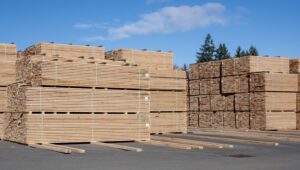 Canada is open to considering limits on softwood lumber exports to the U.S. to try to ease some trade friction between the neighboring countries, British Columbia Premier David Eby told Bloomberg News in a report published on Wednesday. “One of the asks for years out of the American coalition has been a quota — that there’s a fixed amount of lumber that gets to come from Canada,” Eby told Bloomberg News. “And I think that, for the first time, there’s some willingness to have a conversation about what that could look like.” [to access the full story, a Reuters or Bloomberg Economics subscription is required]
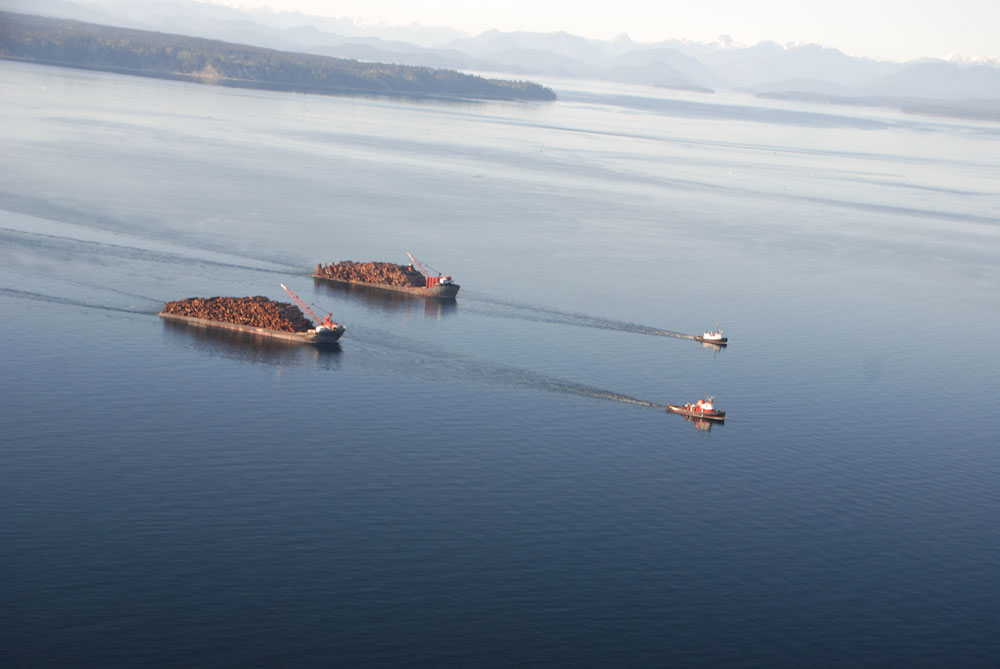
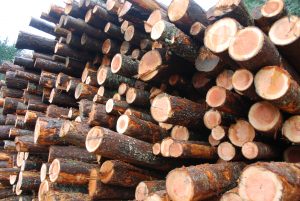 Days after Nova Scotia’s forestry sector was dealt a major blow, the province is promising to use more wood to heat and construct public buildings — although officials deny any connection between the two developments. Two cabinet ministers made the announcement Thursday at Ledwidge Lumber, a sawmill in Enfield, N.S. Public Works Minister Fred Tilley said every government department is being directed to look for opportunities to use wood products that are leftover after trees have been harvested and milled for lumber. The products could include mass timber, wood pellets, biomass and biofuels. Tilley said the move was driven by the province’s desire to become more self-reliant, reduce fossil fuel use and produce more locally-made construction materials. …Meanwhile, lawyers for Northern Pulp were in a British Columbia courtroom on Thursday where they received approval for a plan to extend creditor protection while preparations continue to auction off the outfit’s Nova Scotia assets.
 Stop me if you have heard this one before. A company from away lands and makes loud noises about hiring hundreds of people in a job-hungry rural part of Nova Scotia. Government puts up millions of our dollars to bring in a new industry it really doesn’t understand. …Sometimes it works, other times the receivers move in or the multi-nationals move out. Then the recriminations begin. They already have in the 58-year-long saga of Northern Pulp and its predecessor companies which limps to a conclusion in Nova Scotia. This province has had a few successful commercial transplants. …But it is our high-profile failures, like this week’s announcement that Northern Pulp not only wouldn’t build a mill on the South Shore but has started selling off its assets, that seem to stick. …Enough companies have gone bust, sometimes spectacularly so, that they should serve as cautionary tales.
 TERRACE BAY, Ontario — AV Terrace Bay has been convicted on two charges: Failing to control the quality of discharged effluent to ensure that acute toxicity tests resulted in no more than a 50% mortality rate for the test organisms; and Failing to comply with an industry standard by discharging Total Reduced Sulphur compounds. …AV Terrace Bay was convicted of two violations under the Environmental Protection Act, fined $525,000 plus a victim fine surcharge of $131,250, and given 12 months to pay. …Due to financial constraints and market conditions, the mill has been in a warm idle state and has not been producing product or revenue since at least January 2024. The mill generates industrial effluent that undergoes primary and secondary treatment prior to discharging to Lake Superior via Blackbird Creek. …On May 1, 2023, 100% of the Rainbow Trout died during an acute lethality test performed on a grab sample of the mill’s final effluent.
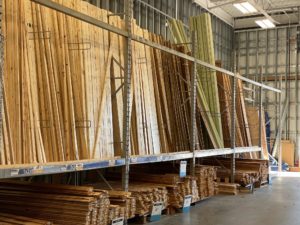 Investigators at UK-based non-profit, Earthsight, have uncovered a booming trade in illegal Russian timber stretching throughout Europe and breaching war sanctions. The investigation ‘
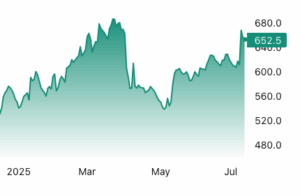 Lumber futures traded above $650 per thousand board feet, hovering near April highs driven by tightening US sawmill output and dwindling import volumes, both of which are near their lowest levels in half a decade. Domestic production in the first quarter slipped year-on-year, and imports, including softwood lumber from Canada, have contracted sharply, leaving US framing material availability at its leanest since 2019. At the same time, builders are contending with looming tariff hikes that could push duties on Canadian lumber from roughly 14.5% today toward the mid-30s, adding several thousand dollars to the cost of new homes. Although a modest pull-back in construction activity has softened recent gains, overall demand remains sufficient to absorb current supply, and without a rapid expansion in US mill capacity or alternative sourcing, these supply constraints, compounded by rising trade barriers, are likely to sustain upward pressure on lumber prices in the months ahead.
 OTTAWA — Canada’s annual inflation rate rose to 1.9% in June, meeting analysts’ expectations, as increases in the price of automobiles and clothing and footwear pushed the index higher, data showed on Tuesday. The consumer price index was at 1.7% in the prior month. Statistics Canada said on a monthly basis the CPI increased 0.1%, matching analysts’ forecasts. It is for the third month in a row that the CPI has been under 2%, or the mid-point of Bank of Canada’s inflation target range. This is the last major economic indicator to be released before the Bank of Canada’s rates decision later this month. The slight rise in prices across many segments, along with a strong jobs number last week, is likely to take away any incentive to cut interest rates, economists had earlier predicted. …Shelter prices rose by 2.9%, its first drop below 3% in more than four years.
 President Donald Trump’s flurry of tariff letters to more two dozen countries has triggered new threats of retaliation. Key US industries are increasingly worried they are going to be collateral damage. The European Union on Monday released a targeted list of $88 billion worth of US goods it plans to tariff if it doesn’t make more progress in trade talks with Trump. Brazil, staring down a 50% duty on its exports to the US over Trump’s frustration with their domestic politics. …While the hardening battle lines in the negotiations could be part of each sides’ effort to force more concessions, domestic business groups aren’t counting on it. Instead, they are mobilizing to try and convince both the Trump administration and foreign governments that it would be a mistake to target their industries. …On Tuesday, the president dismissed the idea that the EU may go through with their proposed retaliatory tariffs.

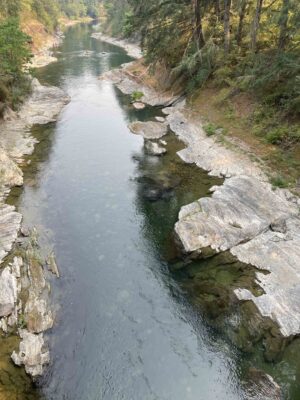 Warm temperatures, low river flows and declining water quality are sparking fears of another mass fish die-off in the Cowichan River this summer. The Cowichan Watershed Board said river conditions this summer “mirror” those of 2023, when an estimated 84,000 to 100,000-plus fish died after prolonged drought and heat. Samples recently collected from six points along the Cowichan River show the water is seeing significant daily fluctuations in pH and dissolved oxygen levels similar to those of 2023. …Weir flows were reduced this spring so more water could be maintained in the summer. Researchers are also looking to identify, protect and improve cold-water refuge areas along the river that could provide fish a respite from the heat when waters warm. …Built in the 1950s to provide water for the pulp mill at Crofton, the Cowichan weir is owned and operated by Domtar.
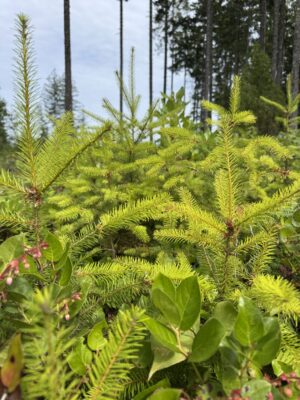 WHITBY, Ontario — Ryan Turnbull, Parliamentary Secretary to the Minister of Finance… highlighted a $4-million federal investment for tree-planting projects in urban and suburban areas in southern Ontario. Trees For Life will collaborate with planting partners to plant an average of 24,000 trees annually over five years, for a total of 120,000 trees in communities across southern Ontario. The collaboration with Trees For Life is already ahead of target, supporting the planting of 83,000 trees in southern Ontario with 35,000 trees planted in 2024 and 48,000 trees planted across 40 projects in 2025 to date. This project builds on a successful regional model piloted in the Durham Region.
 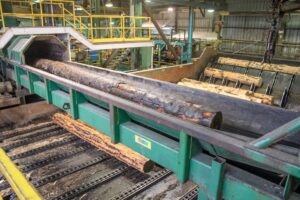 SPEARFISH, South Dakota — The Black Hills of South Dakota and Wyoming are not only a beautiful tourist destination but also a major part of the agricultural industry. Many are working to maintain the important role of forest management as a way of supporting agriculture, economies and public health. Jeremy Dedic, forest partnership coordinator for Wyoming State Forestry said, “It’s not like we’re growing corn, but it’s growing plants, and we can manage that and get our results,” Dedic said. …“Most recently, we’ve had some of our larger operators having to scale back their operations,” said Marcus Warnke, state forester for South Dakota. …“Thinning our forest, giving our trees space so that they have enough water, sunlight and nutrients to be healthy and resilient to fire and bugs,” Pierson said. “Those activities produce logs that we bring to our sawmills and make boards out of for public sale.”
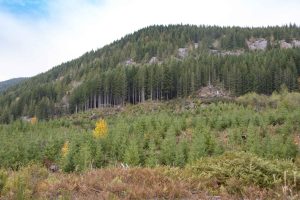 Forests cover more than 30 million of Oregon’s 62 million acres – almost half of the state’s landmass. According to the Oregon Employment Department’s covered employment statistics, forestry and logging’s 681 establishments employed 8,787 workers statewide and added $717 million in payroll to Oregon’s economy in 2024. The Oregon Department of Forestry (ODF) estimates logging harvests totaled 3.6 billion board feet in 2022. While much of this timber feeds Oregon’s wood products industry, creating jobs and income, many jobs are also created planting, growing, and harvesting this resource. …The high level of forestry activity in Oregon also creates demand for a support activities industry. …Employment Department projections show that the logging industry in Oregon is expected to lose about 200 jobs, or 5% between 2023 and 2033 partly due to continued mechanization. Other industries within timber production, such as timber tract operations and support activities for forestry do not have published Oregon Employment Department forecasts.
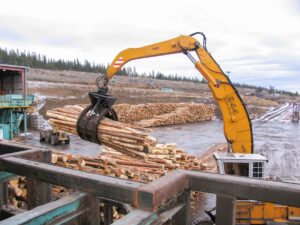 Russia’s timber industry is warning of widespread production shutdowns as the sector reels from Western sanctions, declining demand and a surging ruble that has battered the country’s export competitiveness. …The Russian Association of Organizations and Enterprises of the Pulp and Paper Industry described the current moment as one of the industry’s most difficult periods in modern history. Industry data show that timber harvesting fell 13% in 2024 compared with pre-war levels in 2021, lumber production dropped 11% and plywood output declined 23%. Even pulp production, one of the sector’s more stable outputs, decreased by 3%. Major industry players including Segezha Group and ULK Group have been restructuring loans over the past two years in response to falling output, sliding prices and soaring costs. But the situation has continued to deteriorate, especially within the export-heavy pulp and paper sector. Compounding the problem is the Central Bank’s steep 20% key interest rate along with a hike in the profit tax rate from 20% to 25%.
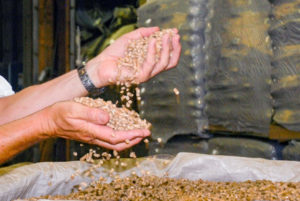 …In the aftermath of the earthquake and tsunami, Japan shut down not just Fukushima but all of its nuclear plants, a move that resulted in the loss of a third of its electrical power. …Japan faced a daunting energy crisis that it addressed… with conventional fuels such as natural gas and “bioproducts” including wood pellets derived from the logging of BC’s Interior forests. …Last year, roughly two million tonnes of those pellets arrived Japanese ports from BC, linked to a dozen mills in the province that make wood pellets derived from trees logged in the province’s rapidly dwindling primary forests — natural forests never previously subject to industrial logging. …Which means that in the name of creating allegedly clean energy, forests are being razed just to burn the wood. …The strain on the province’s stressed forests is [also] coming from other bioenergy producers, including those who want to use wood to make jet fuel.
 New Brunswick’s biggest industrial carbon emitters pumped out lower amounts of greenhouse gases in 2023, but the reductions were not enough to keep pace with tightening emissions standards. The gap between the total emissions by the province’s 15 biggest industrial polluters and their regulated emissions limits grew larger, according to numbers from the provincial government. That left them paying more under the province’s credit-trading carbon pricing system. Even so, that system is gaining traction, with more of those credits changing hands. …New Brunswick’s industrial carbon price is based on a credit trading system, a financial incentive for the 15 largest industrial emitters to stay below their emissions standards. If they do, they earn what are called performance credits they can sell for a profit. Plants that go above their standards must buy credits, adding to their cost. …The 15 big emitters collectively bought $21.1 million worth of fund credits in 2023, up from $12.6 million in 2022.
 NB Power’s estimated $300-million plan to convert its biggest plant in northern New Brunswick from burning coal to wood pellets would be environmentally damaging and waste a lot of energy, warns a new report. The Conservation Council of New Brunswick, an environmental organization looked at the plan. …They came up with findings that are at odds with NB Power’s rosy view. Running the plant full time on wood pellets, the critics said, would need more offcuts, forcing NB Power to import fuel from Europe. Furthermore, they warn that sourcing as much wood as possible locally would hurt the forest ecology. And lastly, they argue that burning pellets to create electricity is hugely inefficient and would drive up greenhouse gas emissions. …Energy Minister René Legacy told Brunswick News his department would take a close look at the report. But he alluded to the more than 100 jobs NB Power has created.

 Environment Canada has once again issued a special air quality statement for the North Bay area. …Environment Canada says smoke is causing or expected to cause poor air quality and reduced visibility. “Smoke from forest fires over northern Ontario is causing poor air quality that may persist throughout the day for some areas,” EC stated. “As smoke levels increase, health risks increase. Limit time outdoors. Consider reducing or rescheduling outdoor sports, activities and events. …EC suggests when indoors, keep windows and doors closed as much as possible. “Protect your indoor air from wildfire smoke. Actions can include using a clean, good quality air filter in your ventilation system and/or a certified portable air cleaner that can filter fine particles.
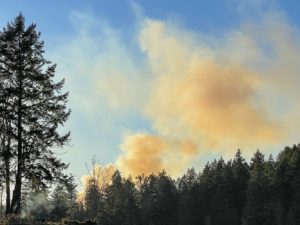 MOUNT HOOD, Oregon — The Clackamas County Sheriff’s Office on Thursday afternoon issued a Level 3 (go now) evacuation order for a new, five-acre wildfire on Mount Hood that was first reported late in the morning about three miles northwest of Timothy Lake. As of 4 p.m., the evacuation order does not affect the campgrounds and trails immediately around Timothy Lake, a popular recreational spot about 90 minutes from Portland. But helicopters are scooping large buckets of water from the lake to suppress the fire. Firefighters on the ground also have started an “aggressive initial attack,” the U.S. Forest Service said. The evacuation order affects a two-mile radius around the much smaller Dinger Lake and includes Anvil Lake and the Anvil Lake Trail 724. The order so far only affects remote campsites and hikers. …Dubbed the Anvil fire, it is burning near Forest Road 5820.