Kevin Mason
In looking across the entire forest products space this year, it is abundantly clear that demand is weak across all segments. There is no expectation of an improvement in 2025 as consumption remains poor and restocking efforts are expected to be limited. As such, any hopes of better supply/demand dynamics are going to come down to supply discipline (slowbacks/downtime/closures). We have some thoughts about how this might play out in the various sectors: Timber and Timberland—Timber harvest guidance will naturally follow wood products demand. Finding a home for pulpwood has been problematic for several years and will only become more difficult amid ongoing downstream capacity shuts. New demand is possible over time, but nothing is expected in the near-term.
Solid Wood—A raft of capacity closures in both Canada and the US had brought the lumber market into better balance to begin 2025. However, with demand weakening further through the first half of 20025 (and given a bleak medium-term outlook), further capacity rationalization will be required to restore balance and lift prices (Canada will be the focus, but the US could also see shuts). In OSB, prices are already at cash- cost levels, demand could slip further in the coming months, and new greenfield capacity is slated for late ’25 and early ’26. Accordingly, closures/downtime are sorely needed. For both lumber and OSB, producers may be awaiting the outcome of the Section 232 investigation before making major changes to operations.


 Donald Trump announced Thursday the US will charge a 35% tariff on Canadian imports starting Aug. 1. In an open letter to Prime Minister Carney, he wrote “if you decide to raise your Tariffs, we will be added onto the 35% that we charge.” …“These Tariffs may be modified, upward or downward, depending on our relationship with your Country.” Carney posted on social media that Canada would work towards a revised deadline of Aug. 1 in reaching a new trade deal with the US. “Canada has made vital progress to stop the scourge of fentanyl in North America,” Carney wrote. …Trump pointed to what he called “unsustainable” trade deficits, as well as the Canadian dairy sector. On Wednesday, Trump announced a 50% tariff on copper imports. The US was Canada’s largest copper importer in 2023, accounting for 52% of the total export value. That same year, Canada’s exports of copper and copper-based products were valued at $9.3 billion.
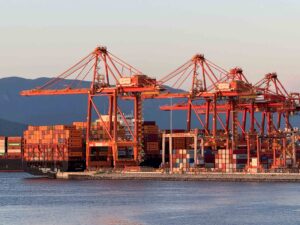
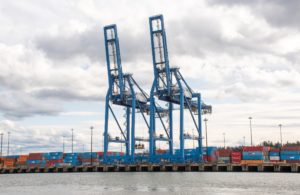 The Vancouver Fraser Port Authority is now searching for a construction company to plan and build the Roberts Bank Terminal 2 container port project wharf and landside facilities. The port said the state-of-the-art marine container terminal will unlock over $100 billion in new trade capacity and contributing $3 billion in GDP annually. …Construction is planned to begin in 2028, and the terminal is expected to be in operation by the mid-2030s. …The port authority has signed mutual benefits agreements with 27 First Nations. …Following the federal and provincial governments’ 2023 approval of the project, the port authority submitted a Species at Risk Act-compliant Fisheries Act authorization application in 2024. A decision on that, the final major permit, is expected no later than October 2026, the port authority said. …Pang said the terminal will be a catalyst for economic transformation nationally. He said it aims to support Prairie grain exports and BC’s forestry sector.
 ST. JOHNS, Newfoundland — St. John’s lawyer Bob Buckingham is not sure how an investigation into the illegal burial of hazardous and contaminated materials in Deer Lake will take place, but he’s giving all the credit for it happening to one man. Buckingham represents Richard Dewey, a resident of Deer Lake who, for more than a decade, has worked to bring attention to three separate environmental issues in the town: the burial of the hazardous and contaminated materials, pollution of the town’s drinking water and property damage caused by seepage from the Humber Canal. …Dewey made a complaint to the provincial government claiming that creosote-contaminated soil was trucked from beneath the penstocks on the Humber Canal and buried near the town’s water supply, and that creosote-soaked penstocks were dumped at the closed town landfill.
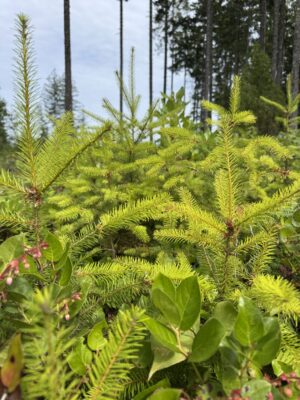 After funding 5 million seedlings for 289 projects, in 38 states and 4 foreign countries, the Hardwood Forestry Fund (HFF) has decided to voluntarily dissolve its operations. The Board announced its final distribution of $190,000 to the Arbor Day Foundation and One Tree Planted to implement Hardwood Tree plantings in line with the HFF’s mission and goals. The Hardwood Forestry Fund promoted hardwood timber growth, management, education, and environmentally sound uses of renewable forest resources by providing grant funding to partnering organizations. …The HFF was formed in 1990 by members of the Hardwood Plywood and Veneer Association, which eventually became the Decorative Hardwoods Association. …During its 35 years of operation, the
  CHILLICOTHE, Ohio — Possibly 18 potential buyers have looked at the Pixelle facility before Thursday’s deadline to make offers. And again, the weekly Monday meeting of the ‘paper mill response team’ was in executive session to be free to hash out plans – as reminiscences from employees, as well as rumors about what is happening there and what is being removed, fill the internet. Mill operator Pixelle – based in Pennsylvania, and owned by H.I.G. Capital of Miami, Florida – has been cooperative with corporate tours of the facility that has been largely shut down. …“The deadline set by HIG for purchase offers to be submitted – July 3 – has passed. To date, no information has been shared with local leaders or regional economic development partners regarding a sale or the future of the mill.
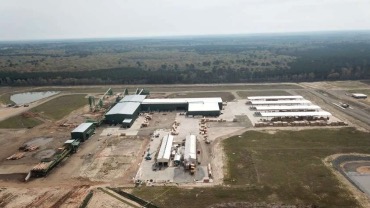 Sumitomo Forestry, a prominent Japanese timber and construction firm, completed July 1, 2025, the acquisition of Teal Jones Louisiana Holdings and plans to launch its first timber industrial complex in the US. This complex may also include taking wood waste and turning it into mass timber. …In addition to outside purchasers, Teal Jones-Plain Dealing (TJPD) plans to supply product to its group operations, such as the Fully Integrated Turn-key Provider operations and its residential property and real estate development operations. Furthermore, the company plans to utilize the approximate 40 hectares of unused land on the site to manufacture and sell mass timber and wood products in preparation for future increased demand. “We are also considering processing wood chips and lumber residue generated from the manufacturing process into biomass power generation fuel, bio-refineries and other,” the company said.
 The Albanese Labor Government released a
  Canada’s labour market defied expectations in June, adding a net 83,100 jobs while the unemployment rate dropped to 6.9%, according to Statistics Canada data released on Friday. The figures make a Bank of Canada interest rate cut less likely, economists say, and will likely move the focus to upcoming inflation data. Financial industry experts had expected the job market to stay essentially flat last month, forecasting a net loss of 3,000 jobs, according to consensus estimates published by the Bank of Montreal. Expectations were for the unemployment rate to increase 0.1 percentage point to 7.1%. The results show the “resilience” of Canada’s labour market, which will be noted by the Bank of Canada, CIBC economist Katherine Judge writes following the release. “While the unemployment rate is still elevated, the strength in other measures in this report clearly diminishes the odds of a BoC cut” at the July 30 interest rate announcement, she says.
 In the second quarter of 2025, the NAHB/Westlake Royal Remodeling Market Index (RMI) posted a reading of 59, down four points compared to the previous quarter. While this reading is still in positive territory, some remodelers, especially in the West, are seeing a slowing of activity in their markets. The second-quarter reading of 59 marks only the second time the RMI has dipped below 60 since the survey was revised in the first quarter of 2020. Higher interest rates and general economic uncertainty have affected consumer confidence and are headwinds for remodeling, but not to the extent that they have been for single-family construction, as is evident in June’s negative reading from the NAHB/Wells Fargo Housing Marketing Index (HMI). As a result, NAHB is still forecasting solid gains for remodeling spending in 2025, followed by more modest, but still positive, growth in 2026. …The Current Conditions Index averaged 66, down five points from the previous quarter.
  Economists, researchers and analysts have warned that President Trump’s tariffs on most goods will deliver a taxing blow to consumers via higher prices. However, recent months’ economic data has shown that overall inflation has remained fairly tame. Trump touts the positive economic reports as signs that tariffs are working. However, the chorus of concern is growing: Prices are moving higher, and economists say this is just the beginning. Here’s a look at the mechanisms behind why price hikes, and hotter inflation, are a slow burn: Tariffs have been applied in a staggered manner; …Trade policy and tariffs are in flux; …Shipping takes time; …Domestic supply chains take time, too; …Inventories were loaded up before tariffs hit; …Some costs are being eaten; …Businesses are hesitant to pass on higher prices; …Awareness of goods prices is lower in summer than fall and winter; …Economic data is often lagged; …Inflation indices are comprehensive.
 This week was supposed to mark the deadline for other countries to strike trade deals with the US — or face tariffs of up to 49% on the goods they sell in the United States. President Trump is still threatening sky-high import taxes, but he has pushed back the effective date to Aug. 1, sowing even more uncertainty. Here’s an update on where Trump’s tariff policy stands, from which tariffs he has in place to which countries are currently affected. A 10% tariff applies to just about everything the US imports. …Higher tariffs on tap for other countries — maybe. …China already has a higher tariff after tit-for-tat retaliations. …The European Union could also face stiffer tariffs. …Mexico and Canada face special scrutiny. …The U.K. and Vietnam are the only two countries with deals in place. …Separate tariffs apply to steel, aluminum and autos. …But tariffs also face a legal challenge.
 WASHINGTON, DC – Fannie Mae published the results of its June 2025
  The top ten builders captured a record 44.7% of all new US single-family home closings in 2024, up 2.4 percentage points from 2023 (42.3%). This is the highest share ever captured by the top ten builders since NAHB began tracking BUILDER magazine data on new single-family home closings in 1989. The 2024 share constitutes 306,932 closings out of 686,000 new single-family houses sold in 2024. However, closings by the top 10 builders only represent 30.1% of new single-family home completions, a wider measure of home building that covers not-for-sale home construction. Also of note, the top 15 builders accounted for more than half of all closings (51%) for the first time ever in 2024.
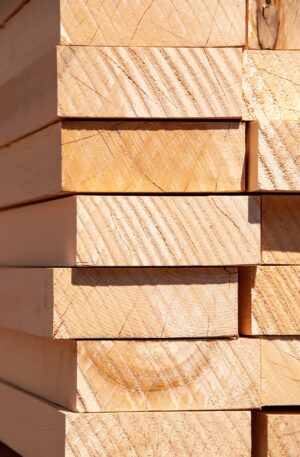 UK softwood traders enjoyed a period of strong trading through the first two months of Q2, supported by a rise in demand gaining momentum through both April and May. This followed on from a stable Q1 when imports increased by just under 2% against the same period in 2024. Since the beginning of this year, a number of Nordic producers were short of spruce logs for structural grades, and in many cases switched to pine. That move had a knock-on effect on the amount of redwood available for production at some mills. With good demand and some shortages, Q2 prices moved upwards, not only to the UK but other markets in Europe and the US as well. However, the UK merchants adopted a more sceptical and cautious approach. Many held back from making longer-term commitments on the forward market to ensure the recovery and stability in the market was sustainable.
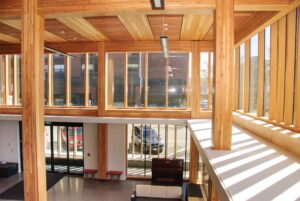 Although mass timber is widely praised for speedy, low-carbon construction, not everyone has boarded that train yet. Many people in construction still believe the risks of using mass timber outweigh the benefits. To shed some light on the subject, Urbanarium and the UBC School of Architecture and Landscape Architecture recently sponsored a debate in Vancouver on the proposition: “Mass timber is not worth the risk(s).” On the pro side (not worth the risk) were Adam Rysanek, an associate professor at SALA, and Graham Brewster, the senior director of development at Wesgroup Properties. On the con side were Shawn Keyes, the executive director of WoodWorks BC, and now VP strategic growth and development at Intelligent City, and Jana Foit, a principal and higher education practice lead in the Vancouver studio of Perkins&Will. …“Everybody came in wanting mass timber to work. What they heard were practical arguments that showed that it’s not that easy.”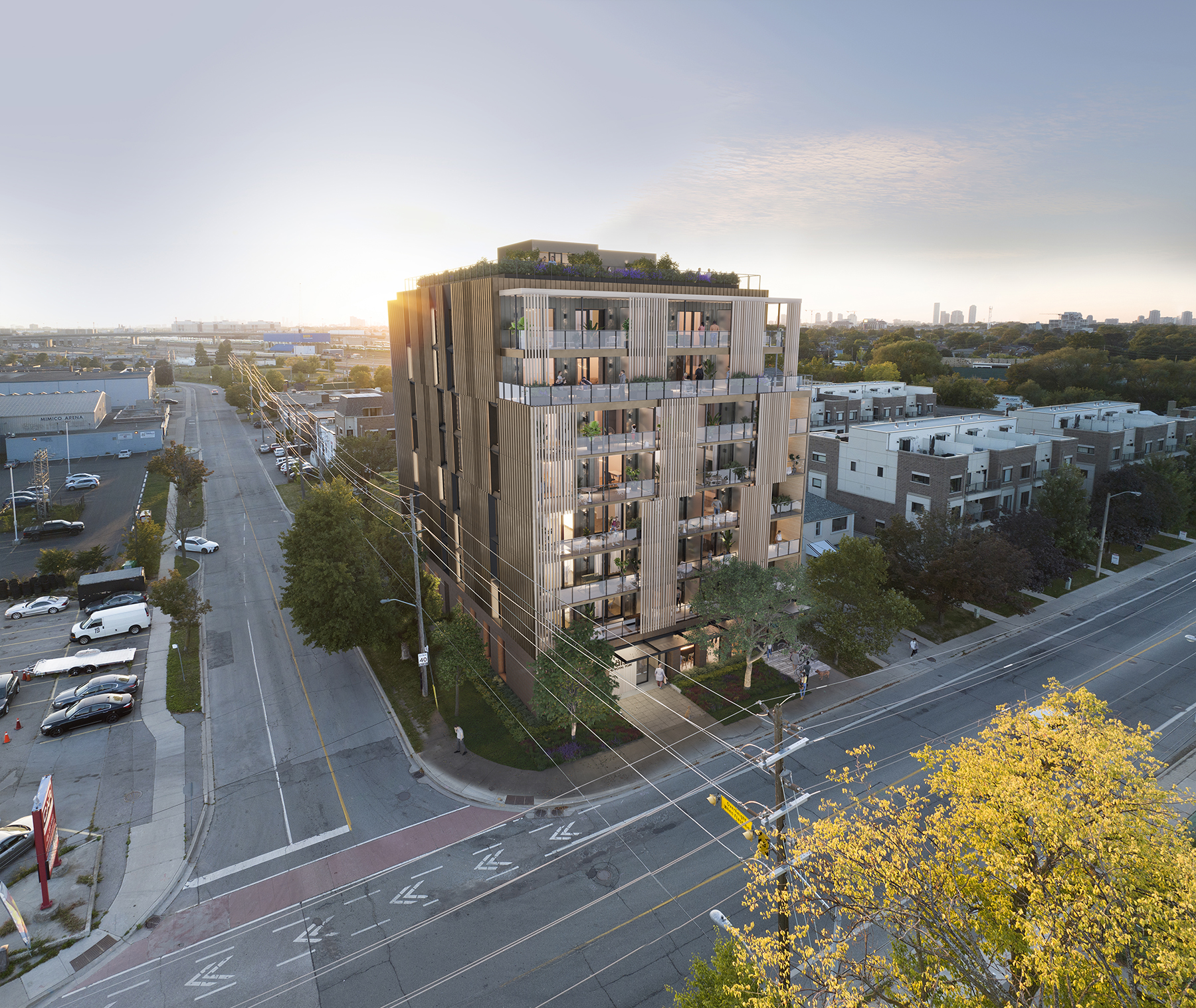
 The State, Private and Tribal Forestry division’s budget would be eliminated in a proposed bill in the Senate. The Forest Service division deals most directly with pests that affect forests. The State, Private and Tribal Forestry is the federal leader in providing technical and financial assistance to landowners and resource managers to help sustain the nation’s forests. The federal investment leverages the capacity of state agencies and partners to manage state and private lands and produce ecological, social and economic benefits for the American people. Part of that money goes locally to companies to invest in innovative ways to use lumber. Collins Pine in Kane, Pa., received a $300,000 grant to install dry kilns in 2024. …Nationally, the State, Private and Tribal Forestry division funds research into wood energy and the use of advanced wood products, such as cross laminated timber, in building construction.
 GALWAY, Ireland — Minister of State with responsibility for Forestry, Michael Healy-Rae, announced a new report “
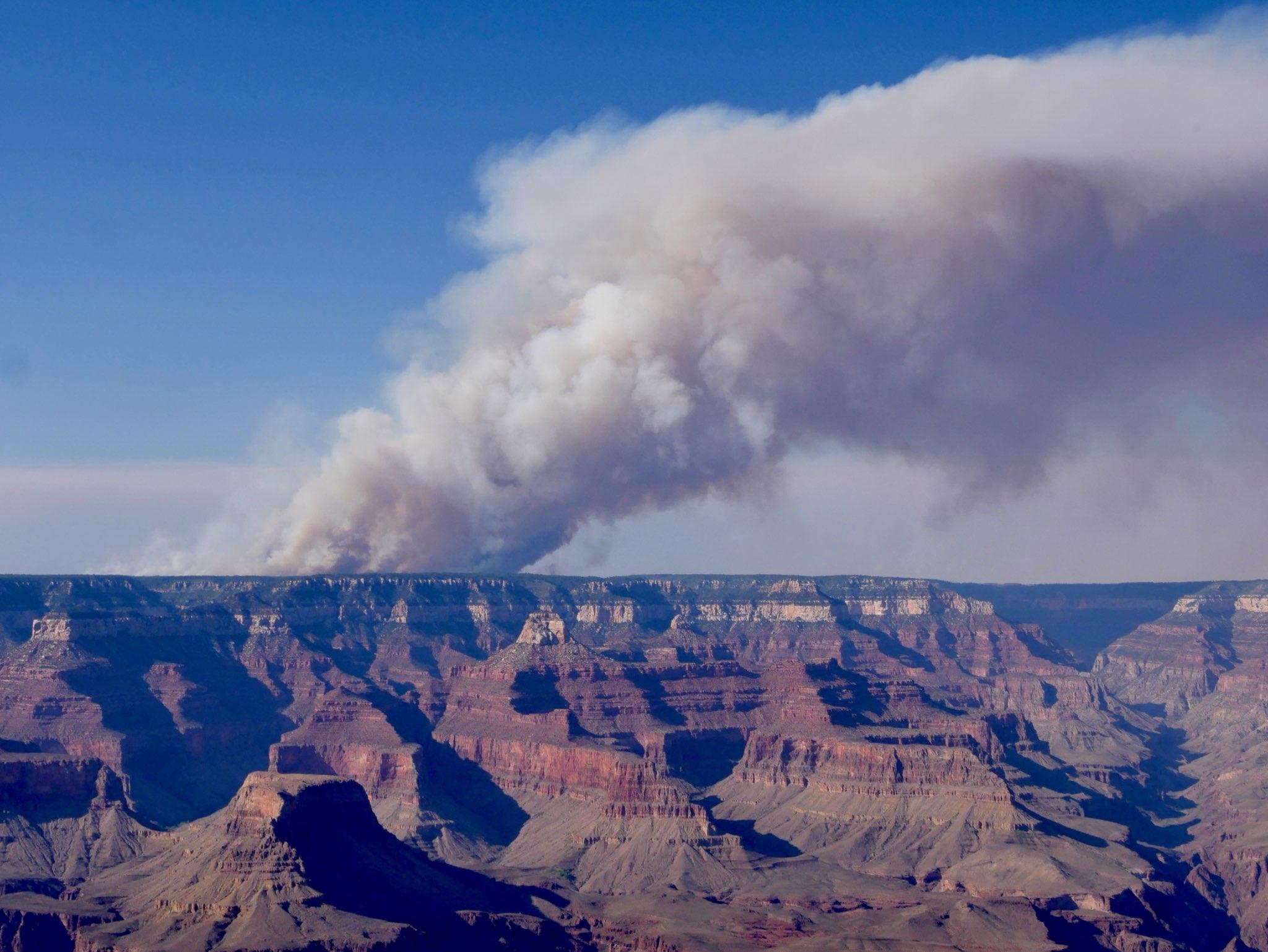
 It had to be a joke, right? A group of MAGA lawmakers moaning about “suffocating Canadian wildfire smoke”. …But, no. …It makes no mention of the tens of thousands of Canadians forced to evacuate this year or those who have died. The signatories conveniently ignore the fact that smoke from the US side of the border regularly smothers those of us who live north of it. In fact, the complaint does not mention fires in the US at all, even though more than two million acres have burned so far this year, and Canadian firefighters have deployed to assist their US colleagues, just as US wildland firefighters have been helping in Canada. Given the MAGA credentials of the complainants, you may not be surprised to hear their complaint blames a “lack of active forest management”… admonishes Canada for not preventing arson and makes no mention of climate change whatsoever.
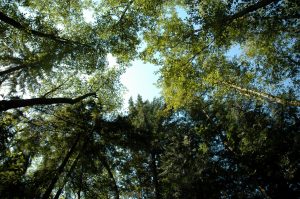 NELSON, BC — BC Timber Sales is talking to residents about logging and wildfire protection planned for the Falls Creek watershed in the Bonnington area. In a June 6 letter to residents posted on social media, Mark Tallman, planning forester for BCTS, said the agency is beginning a community watershed planning process that will include local residents. …Will BCTS have already decided which trees will be cut before the watershed plan is created? …A Ministry of Forests spokesperson said potential cut blocks have not yet been mapped. “The project is being designed to use early engagement with interested parties to help guide BCTS planning around forest harvesting, road construction, and wildfire risk reduction.” …An initial draft of the watershed forest plan is expected to be completed by “early winter 2026” and the “timing of the timber sale is anticipated to be around 2028-29 at the earliest.
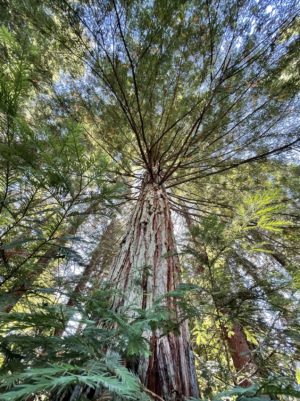 The U.S. Forest Services plans to cut its budget by $391 million for fiscal year 2026, according to a
 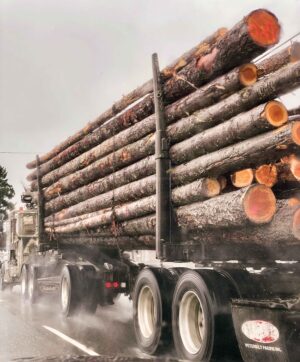 OREGON — Jeff Brink takes pride in working on the same land his father did, in the national forests surrounding Oakridge, Oregon. But in the decades since, less and less timber has been harvested, and more and more megafires have threatened his hometown. “There needs to be some active management, because no management has given us this result,” he said. When the Trump administration announced executive actions aimed at increasing timber production on federal lands, Oregonians had mixed responses. Loggers and timber towns celebrated the attention, while environmentalists sounded the alarm over fears of deregulation and environmental harm. Local stakeholders wonder what forest management will look like in practice. …The timber industry and environmentalists still have questions as to the actual implementation of policy and changes in practices by federal agencies. Oregon Wild is one of many environmental groups that believe the new executive actions threaten landmark environmental laws.
 Don Hardin’s hillside was largely cleared of trees killed by the mountain pine beetle. Some of the trees have died in just a few weeks with Ips beetles munching their tops and mountain pine beetles coming through their bark in large visible holes. …Across Colorado, mountain pine beetles also are on the rise in Douglas, Jefferson and Gilpin counties, among other areas, said Dan West, forest entomologist with the State Forest Service. The agency’s annual aerial survey shows the number of infected acres increasing from less than 2,000 acres in 2021 to nearly 6,000 acres last year. …To combat the beetle, the State Forest Service is putting small packets on trees to send the message to mountain pine beetles to seek a home elsewhere, West said. The message will be sent through a synthetic replication of beetle pheromones that sends a “no-vacancy signal” to adult pine beetles looking for a healthy tree to infest.
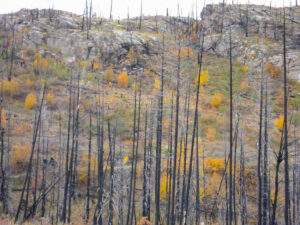 ALEXANDRIA, Louisiana — Wildfires and drought destroyed over 60,000 acres of trees in the summer and fall months of 2023 and costing the state $71 million in timber loss. …The wildfires came from record-breaking high temperatures and little to no measurable rainfall that summer. Now, as Louisiana continues to revive its timber industry, there is a renewed interest in the Virginia pine trees that are across the state. But that is also being facilitated by the potential for tariffs on Canadian and Chinese wood and wood products. “The issue has been of Canada and China flooding our markets with their products,” Dr. Mike Strain, the commissioner of Louisiana’s Department of Agriculture and Forestry said. “So, all of that together, I think we’re going to see a strengthening in the timber industry.” …Strengthening the timber industry also calls for more paper mills. “We really need a mill in the Florida parishes,” he said.

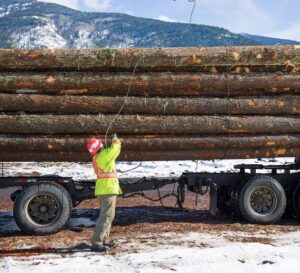 COLLEGE STATION, Texas — Forestry workers could benefit from the use of exoskeletons that support their back and upper limbs, results of a