 A two-year investigation by the Forest Practices Board has found outdated rules and unclear responsibilities are preventing forestry from becoming a powerful wildfire-defence tool. The board examined forestry operations from 2019 until 2022 in the wildland-urban interface — areas where communities and forests meet. …It begins with fire hazard assessments, a cornerstone of wildfire risk reduction. The investigation found that 70% of assessments met content requirements. However, fewer than one in four were completed on time. …Municipalities, the most populated areas of the province, are excluded from the legal interface. …Despite the challenges, the board observed strong examples of wildfire-conscious forestry. …The board is recommending five actions to the Province. … If adopted, these changes would help turn everyday forestry into a proactive wildfire prevention tool, supporting faster fuel cleanup, better co-ordination and more consistent protection for people and communities throughout B.C. “This is an opportunity to improve our policies and processes toward proactive, risk-reducing forestry,” Keith Atkinson said.
Related coverage in:


 SURREY, BC — Mackenzie Sawmill is back in the courts, a little more than a decade after the sum of three fires ruined a large mill built in 1938. The first of three fires was on Nov. 12, 2010, followed by a second on Jan. 25, 2011 and the third on Oct. 31, 2014 essentially destroyed what was left of it. …Judge Rory Krentz, presided over a hearing in B.C. Supreme Court in Vancouver, where the defendants applied for a dismissal for want of prosecution. Mackenzie ceased operations in early 2011 after the second fire, with two groups of employees entitled to severance pay. The court heard Mackenzie told the union the company intended to build another mill on site, enabling the union employees to keep their jobs. …This was before the third fire, after which Mackenzie indicated it still planned to rebuild the mill. But the union alleges MacKenzie decided before the last fire happened that it wouldn’t rebuild.

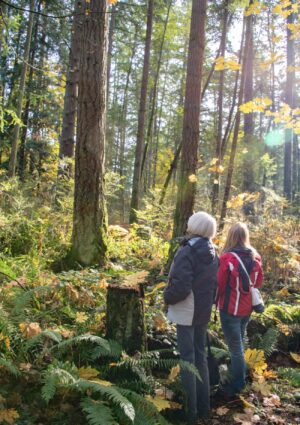 A program that protects privately owned forests for timber and other uses has survived in a megabill being put together in the Senate, after falling victim to House budget cutters in May. The Senate Agriculture, Nutrition and Forestry Committee saved the Forest Legacy Program in its piece of the big tax-cut and spending bill, refusing to cut off $100 million in Inflation Reduction Act funding. “This is a victory not only for forests, but for the families, economies, and ecosystems that depend on them,” said Lesley Kane Szynal, chair of the Land and Water Conservation Fund Coalition, an advocacy group, in a news release Thursday. The Forest Legacy Program pays for conservation easements and land purchases that prevent privately owned forests from being converted to other uses. In many cases, they’ve been used to keep timber operations in business while protecting forest watersheds and allowing for recreational access. [to access the full story an E&E News subscription is required]
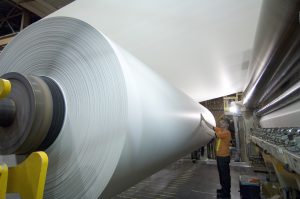 USK, Washington — The owners of the defunct Ponderay Newsprint Mill plan to sell its equipment at auction next month after years of empty promises to reopen what had been one of the largest employers in northeast Washington. The sprawling 927-acre property in Usk has 29 buildings and storage facilities. It is situated adjacent to the Pend Oreille River and the Pend Oreille Valley Railroad. Instead of making paper or reconfiguring the mill to make cardboard, as the new owners promised multiple times in public hearings, the site has produced nothing for the past several years. Instead the owners used vast amounts of electricity to run computers mining for cryptocurrency. The paper mill previously was owned by Lake Superior Forest Products, a subsidiary of Quebec-based Resolute Forest Products, and five major U.S. publishers. They declared bankruptcy in 2020, ending the jobs of about 140 workers. Now that equipment is being listed by Capital Recovery Group to be viewed on July 21 with online auctions to commence on July 22 and July 23.


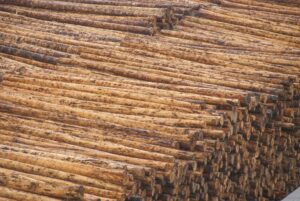 NEW ZEALAND — Forestry Minister Todd McClay has unveiled two-way forestry trade missions with India this year. The inbound visit – supported by industry partners – is expected to showcase New Zealand’s forestry systems and sustainable management practices. “The outbound mission will continue to open doors for deeper commercial and government partnerships,” McClay said. …McClay was speaking at the Fieldays Forestry Hub on Friday. Trade between New Zealand and India was valued at $3.14 billion in 2024. New Zealand’s exports to India last year included forestry products valued at $126 million. New Zealand’s wood exports to India have surged from $9.5 million in 2023 to an estimated $76.5 million this year. Pulp exports have more than doubled, from $20 million to $45.6 million. “India is one of the fastest-growing markets for our forestry exports – and we’re focused on turning that growth into long-term opportunity for New Zealand exporters,” McClay said.


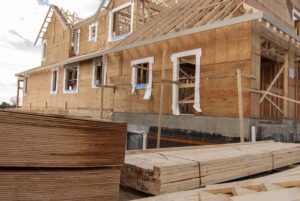 Construction of new homes fell 9.8% in May, as builders pulled back amid waning demand from home buyers. Housing starts fell to a 1.26 million annual pace from 1.39 million the previous month, the government said. The annual pace refers to how many houses would be built over an entire year if May’s rate of construction were to continue. The pace of home building is down to the lowest level since May 2020 — during the peak of the COVID-19 pandemic. New-home construction is down 4.6% from the same period a year ago. Building permits, a sign of future construction, also fell 2% from the previous month to a 1.39 million rate. Builders have slowed down the construction of new homes primarily due to a pullback in buyer demand. Rising inventory levels and weak buyer demand have resulted in homes sitting longer on the market. More builders are also resorting to home prices to encourage buyers.

 The American military is looking at the possibility of using 3D printing, additive construction methods and cross-laminated timber (CLT) to build new military barracks and other buildings at various bases. The U.S. Army Corps of Engineers has already built new barracks at Fort Bliss, Texas, using 3D printing. …CLT is also being used in another centre planned at Joint Expeditionary Base Little Creek-Fort Story, also in Virginia. …Engineers at the Air Force Civil Engineer Center of the Air Force Installation and Mission Support Center are leading the way with research and development on the possibility of implementing concrete building construction techniques in future military construction projects. They discussed a number of topics, including additive construction, 3D-printed buildings, high performance cement and concrete mixes, geosynthetics, mass timber, composite materials, industrialized construction, tension fabric structures and carbon fiber-reinforced polymers.
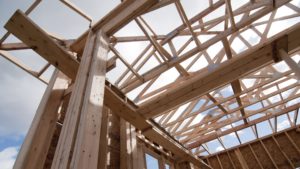 In an age of sleek finishes and synthetic shortcuts, timber framing offers something few modern materials can: substance. There’s a quiet grandeur to exposed beams that hold not only the weight of a home but the stories it gathers over time. The appeal isn’t rooted in nostalgia—it comes from discernment. Choosing timber is a commitment to craftsmanship, to the feel of hand-hewn structure beneath polished design. Bespoke estates, mountain retreats, and coastal getaways are embracing timber as both a form and a functional element. No longer reserved for rustic cabins or historical reproductions, it’s becoming the architectural signature of homes designed with permanence in mind. That kind of durability begins with sourcing, ensuring the materials behind the beauty are as intentional as the design itself. Timber framing is one of the oldest construction methods still in use, with roots stretching back over a thousand years.
  I recently gave my electric pressure washer a vigorous workout. …Years ago, I walked into a lumber company to purchase materials and saw a placard on the counter advertising new maintenance-free pressure-treated lumber. Yes, at one time, residential pressure-treated lumber was a new thing. …We all discovered the claim was wrong. Pressure-treated lumber requires extensive maintenance. …This reality led to the first generation of composite decking. I remember when Trex was introduced. It dominated the marketplace, even though it was quite unattractive. It, too, was marketed as maintenance-free. Millions of other homeowners demanded a more realistic composite deck material. Generations two and three of composite decking followed. …The corporate attorneys for some decking manufacturers have reined in the optimistic marketing managers. You’ll now see clever descriptions such as “minimal maintenance.”
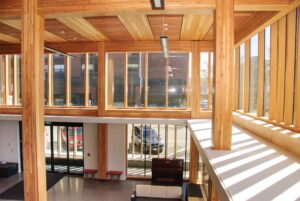 IRELAND — The Government is branching out in its bid to solve the housing crisis with a new “Wood First” plan that will see timber become the main building material used to build our homes, schools and libraries. It comes as the Cabinet will today give the green light to emergency legislation to extend rent pressure zones across the country in a scramble to stop greedy landlords cashing in on the Coalition’s rental policy changes. Forestry Minister Micheal Healy-Rae said Ireland has excellent forest resources that are being underused in our construction sector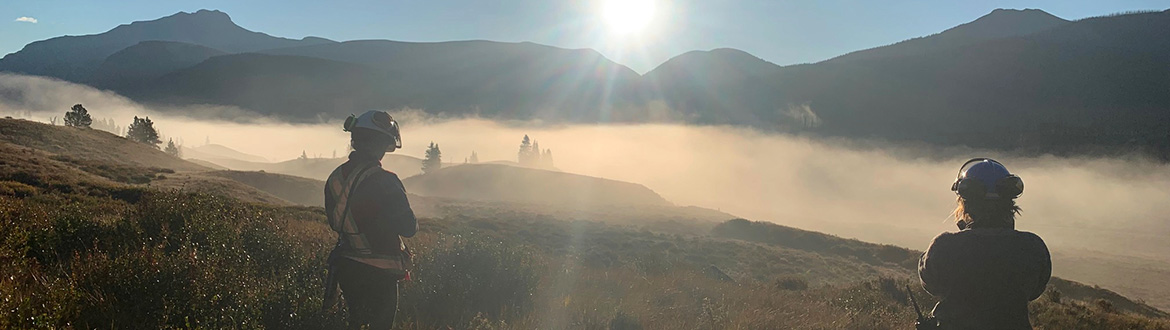
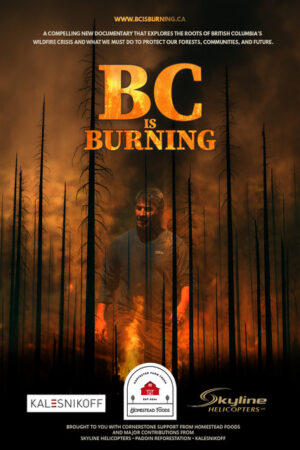 A wildfire documentary funded in part by community donations and Okanagan businesses will be screened in Kelowna and Vernon later this month. B.C. is Burning is a 45-minute film that explores the causes and consequences of the megafires that have devastated communities in the province in recent years. It also looks at science-based solutions that could protect communities, forests and B.C.’s future. The documentary was produced and written by retired forester Murray Wilson, initiated by association producer Rick Maddison and directed/edited with production support from Ryan Tebbutt of Edge Digital Media in Kelowna. It combines expert interviews, government data, and powerful footage from both British Columbia and California. …We know how to stop this,” says Wilson. “B.C. can lead — if we stop solely reacting and start managing our forests to protect lives, cut emissions, and reduce wildfire risk.”
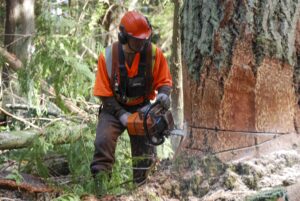 The buzz of saw teeth and scent of crushed pine needles filled the air as Roy Blackburn walked up a muddy path tucked away in the Willamette National Forest. …Timber once drove the economies of states like Oregon. But forest harvests nosedived beginning in the early 1990s due to stricter environmental regulations, a changing lumber market and other factors. President Trump hopes to reverse that trend by executive fiat, ordering the US Forest Service to ramp up logging on federal lands in what environmental groups like Earthjustice call a “cynical attempt to justify destructive logging.” …The amount of timber harvested on Forest Service land has decreased nearly 80% since reaching a high in 1987. …Canadian competition was on Trump’s mind in March when he signed an executive order to immediately expand timber production on federal lands. …Previous administrations allowed environmental groups to drive “the decision-making on our forests.” That’s changing.
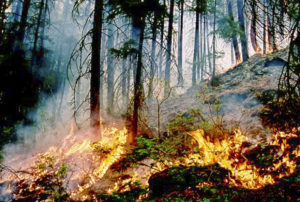 HOPLAND, California — …Dripping gasoline onto dry grass and deliberately setting it ablaze in the California countryside felt wildly reckless, especially for someone whose job involves interviewing survivors of the state’s all too frequent, catastrophic wildfires. But “good fire,” as Nielson called it, is essential for reducing the fuel available for bad fire, the kind that makes the headlines. The principle is as ancient as it is simple. …With that in mind, the state set an ambitious goal in the early 2020s to deliberately burn at least 400,000 acres of wilderness each year. …But California officials worry their ambitious goals are likely to be thwarted by deep cuts to those federal agencies. Gov. Gavin Newsom added $72 million to the state’s forest management budget to bridge some of the gap expected to be left by federal agencies. But wildfire experts say that’s just a drop in the bucket.
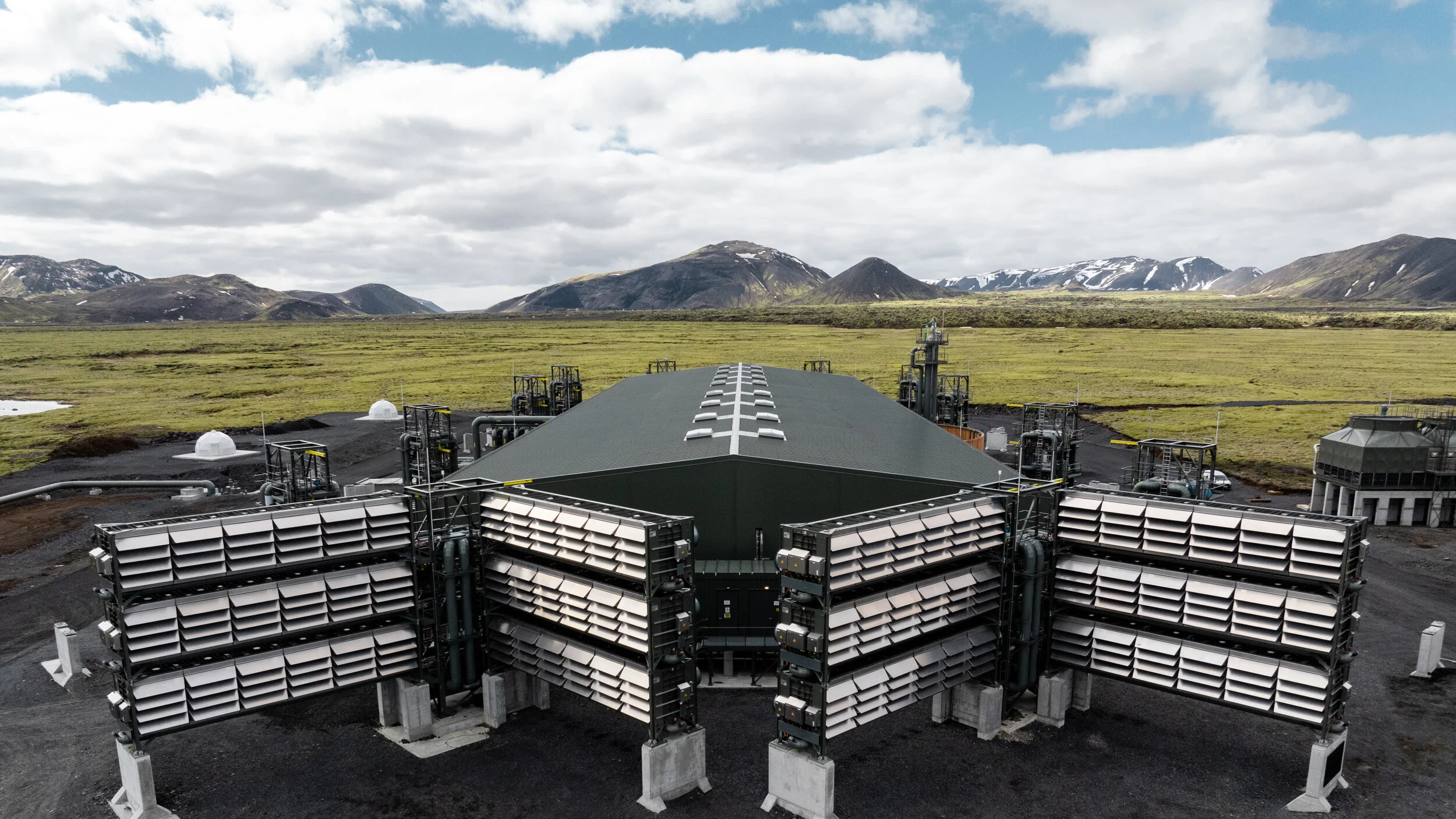
 Earlier this year, Burnaby’s Svante Technologies made inroads in Alberta. The move eastward is partially powered by a newly formed partnership with Mercer International. The Canadian cleantech’s carbon capture project is targeting biogenic CO2 emissions from Mercer’s Peace River pulp mill. …One of the strategies the firm intends to adopt in Canada is carbon sequestration. Within Alberta, carbon sequestration is a sensible tactic to apply, according to Mercer International’s chief executive officer, Juan Carlos Bueno. “The reason why we’re doing it there is because the mill is located in Alberta, where you have geological formations that are suitable for sequestering CO2,” Bueno informed Andrew Snook of Pulp & Paper Canada. …Finalizing investment in the project, however, is no small consideration. There is a price tag north of $500 million and moving forward would require extensive support from both the Province of Alberta and Government of Canada.
 Satellite data used by archaeologists to find traces of ancient ruins hidden under dense forest canopies can also be used to improve the speed and accuracy to measure how much carbon is retained and released in forests. Understanding this carbon cycle is key to climate change research, according to Hamdi Zurqani, for the Arkansas Forest Resources Center and the College of Forestry, Agriculture and Natural Resources at the University of Arkansas at Monticello. The center is headquartered at UAM and conducts research and extension activities through the Arkansas Agricultural Experiment Station. …In a study recently published in Ecological Informatics, Zurqani shows how information from open-access satellites can be integrated on Google Earth Engine with artificial intelligence algorithms to quickly and accurately map large-scale forest aboveground biomass, even in remote areas where accessibility is often an issue.
 The trucking industry has been facing unprecedented challenges in recent years, with a shortage of qualified drivers, rising fuel and insurance costs… and now economic uncertainty caused by tariffs. …Now, one large lawsuit against a trucking company highlights a dangerous practice that has been going on. …The Estate of Sarah Susman v. Starker Forests, Inc., R&T Logging of Oregon, Wolf Cr. Timber Services, Shane Mcvay – is a $65 million wrongful death claim. Sarah Susman… was driving to work in September 2021 when a logging truck operated by a 67-year-old driver rolled over and lost its load. …Family members of the victim believe that the incident can be attributed to a dangerous injury practice referred to as “double brokering.” …Court filings explained that double-brokering is a practice within the trucking industry where multiple contractors pass hauling jobs between them with very little oversight or enforcement of safety regulations.