
Kevin Mason
In mid-April, the Harvard Joint Centre for Housing Studies (JCHS) released its Leading Indicator of Remodeling Activity update, forecasting R&R growth ~+1.6% per quarter between now and Q1/26. This projected growth comes after a modest pullback in R&R spending in 2024 and will be welcomed by North American solid-wood producers given expected declines in demand from new residential construction in the coming quarters. …Recent pricing trends persisted in North American lumber markets over the past month, with S-P-F prices continuing lower while SYP prices moved higher. …A modest seasonal uptick in demand from treaters appears to be one of the catalysts creating SYP price improvement, while the pause on tariffs—the threat of which had previously boosted S-P-F prices—has now precipitated a drop in S-P-F lumber pricing.
As we’ve highlighted exhaustively over the past several months, duties on Canadian lumber exports to the US are scheduled to more than double later this year, and there is still potential for incremental lumber tariffs following a Section 232 investigation (there is the potential for tariffs to extend to panels, etc., but even producers don’t have any clarity). Barring an unlikely spike in lumber demand, many Canadian sawmills are likely to discover that the economics of selling lumber into the US no longer work (unless prices move substantially higher—but that will be driven by closures in Canada). …For Canadian producers, do alternative markets exist, or could a surge in Canadian homebuilding replace some of the lost volumes to the US? In short, there are no easily accessible markets that come close to the size of the US and that can be supplied by Canadian mills.


 President Trump’s tariffs on Canada may not be “totally removed” under a future trade agreement, the US ambassador says, but the two countries are on the path toward a stronger relationship. Pete Hoekstra, who serves as Trump’s envoy to Canada, says there are opportunities to secure new economic and security partnerships on the foundation set by Prime Minister Mark Carney’s visit to the White House last week. …“We had a few rough months and those types of things. But we have strong economic ties, we have strong national security ties, we have personal ties. … There is so much to this foundation. …However, Hoekstra said Canada should expect some level of tariffs on its exports under a new trade deal, even a rate lower than the ones it currently faces. He pointed to the new framework with the United Kingdom announced last week.


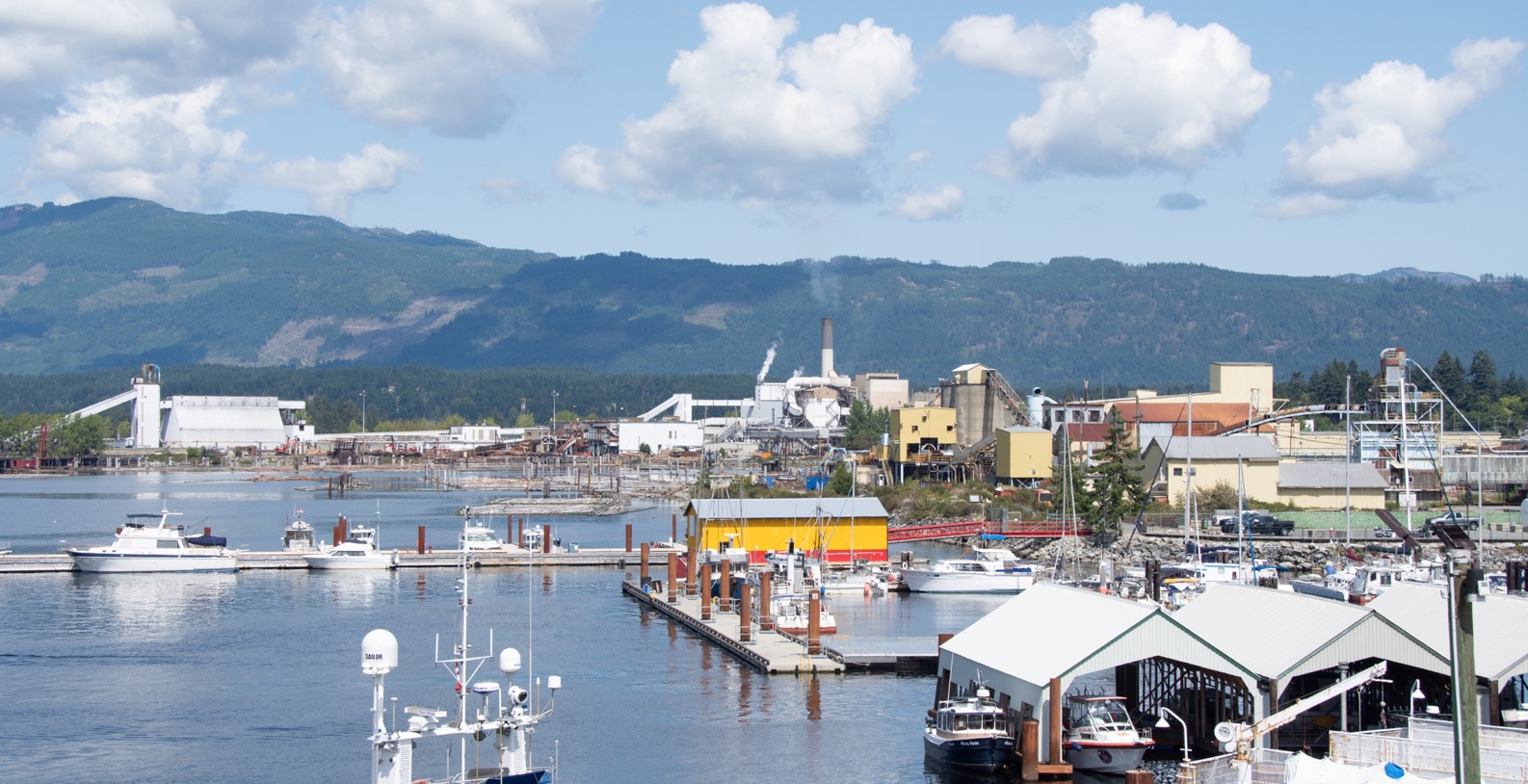 PORT ALBERNI, BC — An ambitious project to redevelop Western Forest Products former Somass mill site on the Port Alberni waterfront is moving forward, infusing fresh hope in a city hit hard by the challenges dogging the coastal forest industry. …“Exciting times for the City of Port Alberni moving forward and getting to revision an old mill site,” said Mike Fox, chief administrative officer with Port Alberni. …The amenities are needed. …The need for new housing is likely to grow as new businesses bring jobs to replace those lost by troubles in the forest sector. San Group, once Port Alberni’s key employer, filed for creditor protection last November, but the Amix Group and Canadian Maritime Engineering Ltd. are looking to expand. …Amix Marine Services recently bought 45 acres from Western Forest Products Ltd. for $7.3 million for a new marine terminal and will make Port Alberni its home port.
 US Representatives Glenn “GT” Thompson (R-PA) and Terri Sewell (D-AL) have introduced the “
 The US Endowment for Forestry and Communities is proud to partner with the US Forest Service to support the backbone of sustainable forest management—wood products manufacturers. …Endowment staff joined colleagues from the US Forest Service to visit several facilities benefitting from the Wood Products Infrastructure Assistance funding, a component of the Wood Innovations Program. One notable stop was Shasta Green, a family-owned logging and sawmill operation in Burney, California. With support from the program, Shasta Green has been able to upgrade sawmill equipment and modernize kiln controls. …The Endowment and the Forest Service are also offering technical assistance through the Wood Manufacturing Facility Assistance Program. This initiative is designed to help existing manufacturers improve operations, remain competitive, and continue contributing to forest stewardship and community well-being.
 President Trump’s deal to dramatically slash tariffs on China thrilled markets and offered a sliver of relief for businesses across the country. It also revealed an important lesson: Even Teflon Don can’t outrun economic reality. The deal in which both sides agreed to lower tariff rates by triple-digit percentages, came as anxiety mounted about a potential downturn in the US. …The agreement is an acknowledgment that a full-on economic divorce of the US and China would be too painful for both sides. …For U.S. corporations operating across borders, the de-escalation might offer some solace. But the remaining 30 percent tariff added to Chinese goods will cut heavily into profits — and be cost-prohibitive in some sectors. …One former Trump administration official said the meeting between the U.S. and China resulted from pressure on the White House from a variety of industries. …Beijing, too, was watching its economy falter.



 An American timber business owner who supports Donald Trump is grappling with unsold inventory and shrinking cash flow due to the ongoing trade war, as Washington’s punitive tariffs weigh heavily on his operations and push him to seek alternatives to the Chinese market. Brandon Arbogast, the owner of Valley Log Sales in Timberville, Virginia, has spent decades in the lumber industry, exporting premium Virginia timber, primarily to China. …Sitting on 120,000 to 130,000 U.S. dollars’ worth of unsold wood, Arbogast is contemplating selling some of his land to maintain cash flow. …As a self-identified Trump supporter, Arbogast is willing to endure the hardship, hoping that a resolution to the trade dispute will eventually bring relief. For now, his premium walnut logs, which are typically transformed into furniture, flooring, and kitchen cabinets, remain idle.
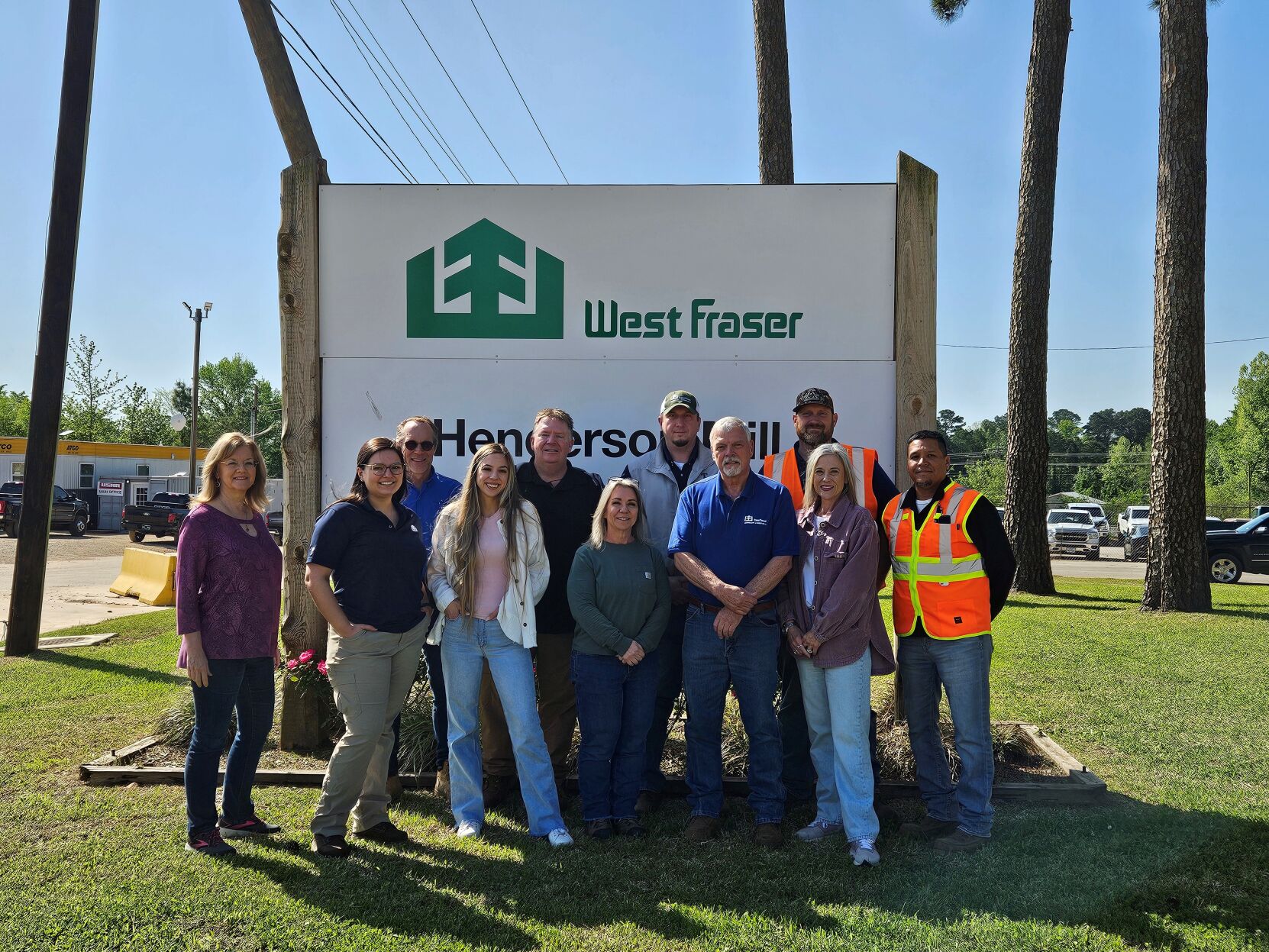
 MINNESOTA — The Beltrami County Work Session held on May 6, 2025… featured discussions on a proposed $137 million investment to upgrade the West Fraser facility, which is crucial for both the mill’s future and the local economy.Jeremy Buck from West Fraser presented plans to modernize the mill, which has been operational since 1981 and still uses much of its original equipment. The proposed renovations aim to enhance energy efficiency and reduce environmental impact, with the potential to preserve approximately 32 direct jobs and support an estimated 500 indirect jobs in the community. The company has applied for assistance from the Minnesota Department of Employment and Economic Development (DEED) through the Job Creation Fund, which requires a resolution of support from the county. …The next steps will involve further discussions on the budget and the resolution to support West Fraser’s investment.
 A federal judge in Jackson, Mississippi, issued an order April 28 allowing a lawsuit by a newspaper publisher and lumber company against the Mississippi River Commission (MRC) to proceed. The lawsuit alleges a lack of transparency in meetings. The suit was originally filed in September 2024. Emmerich Newspapers Inc., which publishes dozens of publications across Mississippi, Louisiana and Arkansas, sued the MRC over what it claimed were secret meetings where proper records were not kept and the public was not notified or admitted. Emmerich was joined as plaintiff by a lumber company that manages hundreds of acres alongside the Mississippi River. The lumber company claims the Corps of Engineers’ decisions on flood control, informed by advice from the MRC, adversely affect its properties. The judge’s decision allows the lawsuit to proceed without ruling on the merits of the allegations.
 Tariff discussions about reducing US dependence on foreign goods became a focus for the second Trump administration. …However, the US forest products industry’s reliance on Canadian wood raises questions about eliminating Canadian wood imports entirely. This piece is the second in a two-part series by the Fastmarkets team.

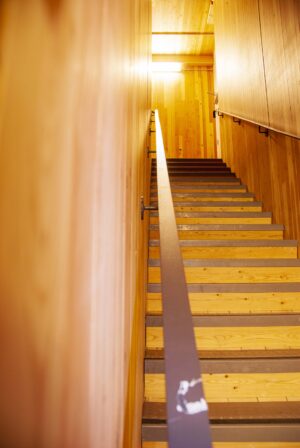 The effects have been felt by building industries in terms of increased costs, disrupted supply chains and economic uncertainty. Last week’s webinar, “Trump’s Tariffs: Transition or Turmoil?… focused on the near-term effects of tariffs, how trade environments have shifted in response, and what the next steps of the Trump Administration might be. …Ari Hawkins, a Politico trade reporter, agreed that the administration is likely looking to the USMCA renegotiations to “really get into the weeds of a lot of these tariff disputes” with Canada. …Hawkins says that further Section 232 investigations could lead to new tariffs in the coming months on a range of products, including semiconductors, lumber and critical minerals. While the administration might make exemptions on materials like lumber before those investigations are completed, Hawkins says, they are still likely to face the Section 232 tariffs as part of the administration’s focus on incentivizing manufacturing and development within the US.
 The downward price slide of recent weeks was unabated across most framing lumber species. Uncertainty surrounding the economy and potential new developments in US trade policy contributed to a cautious market tone. Many traders lamented that they anticipated at least a modest decline in mortgage interest rates by now that has not materialized. With discounts cutting deeper across most species, the Random Lengths Framing Lumber Composite Price tumbled $14. That’s the composite’s first double-digit drop since April 2024. Downward price pressure intensified across the South. …Competitively priced Western S-P-F crept deeper into traditional Southern Pine markets, especially lower grades, which contributed to the downward price pressure on SYP. …Lumber futures settled sharply higher on Thursday after a prolonged downward trend.
 Executives at two of North America’s lumber producers said they are bracing for volatile wood prices this building season before sharply higher US duties on Canadian lumber kick in. Despite President Trump’s threats, his April 2 tariff barrage didn’t hit Canadian lumber. Nonetheless, duties related to a long-running trade dispute are set to more than double later this year. Canfor and Interfor are not sure there won’t also be additional levies tied to Trump’s March 1 order for an investigation into the national security threat of imported wood. …Canfor’s Susan Yurkovich said “Either people won’t be able to access their products and there’ll be a slowdown… or there will be a price response, which also, of course, will have an impact on affordability.” …Interfor’s Bart Bender said he expects volatile pricing this spring and summer while sawmills figure out what sort of increases buyers will bear. [to access the full story a WSJ subscription is required]
 Interfor recorded a Net loss in Q1’25 of $35.1 million compared to a Net loss of $49.9 million and a Net loss of $72.9 million. Adjusted EBITDA was $48.6 million on sales of $735.5 million in Q1’25. …Notable items include: Lumber prices increased during Q1’25 as reflected in Interfor’s average selling price of $712 per mfbm, up $53 per mfbm versus Q4’24; lumber shipments totalled 863 million board feet, representing a 77 million board foot decrease over the prior quarter. The decrease primarily relates to the sale of the Quebec operations, weather-related curtailments and shipment delays resulting from tariff uncertainty. …The Company is well positioned with a diversified product mix…only about 24% of the Company’s total lumber production is exported from Canada to the US and exposed to a potential tariff. …Interfor expects that over the mid-term, lumber markets will continue to benefit from favourable underlying supply and demand fundamentals.
 VANCOUVER — Canfor Corporation reported its Q1, 2025 results. The Company reported an operating loss of $28.5 million for the first quarter of 2025, compared to an operating loss of $45.9 million in the fourth quarter of 2024. …These results largely reflected improved lumber segment results and, to a lesser extent, the pulp and paper segment. Canfor’s CEO, Susan Yurkovich said, “While improved lumber benchmark prices provided some relief, rising global economic and trade uncertainty, and US lumber duties, create a challenging backdrop. Through our diversified operating platform in Canada, the US South and Europe, we are positioned to mitigate these challenges, while remaining focused on what we can control. …“For our pulp business” Yurkovich added, “this was another solid quarter with improved results and a strong operational performance. However, global economic uncertainty is also putting pressure on global softwood pulp markets in the near term.”
 Fresh trade data shows deepening US reliance on Canadian goods, even as the president claims the opposite. …According to the US Census Bureau and Bureau of Economic Analysis, the US goods trade deficit with Canada widened to $4.9 billion in March, up sharply from prior months. The surge was driven by higher imports of Canadian-made cars, crude oil, and finished wood products — the exact categories Trump dismissed. Automotive imports rose by $2.6 billion, including a $2.1 billion spike in passenger vehicles, many of which are assembled in Canada. Oil and lumber purchases also increased, contributing to a 14% month-over-month jump in the broader US trade deficit, which hit a new monthly high of $140.5 billion in March. …The US typically runs a services surplus with Canada, and American firms rely heavily on Canadian supply chains in autos, energy, and materials, as the fresh BEA data suggests.
 Uncertainty over international trade barriers has caused significant fluctuations in lumber prices in recent months, according to Keta Kosman, publisher of Madison’s Lumber Reporter. “The whipsaw fatigue of conflicting tariff announcements over two months had Western Canadian suppliers hoping to see the market settle down,” Kosman. …Some stakeholders held off on buying lumber altogether, while others ordered early in hopes of securing delivery ahead of any potential trade restrictions. “Others decidedly switched their purchasing to Southern Yellow Pine from SPF,” Kosman says. …Data from the WWPA indicates US sawmills were running at only 67% of full capacity in January, compared to 72% for the full-year 2024. In Canada, sawmill utilization was 74% of capacity, down just one percentage point compared to the previous year. …“At this time, there is significant lumber supply able to come back online at existing facilities should demand improve into the summer.”
 Lumber futures fell below $550 per thousand board feet, hovering at yearly lows as excess supply from winter restocking collided added to a decline in demand. A 14.2% drop in U.S. single-family housing starts to an annualized 940,000 units in March, pushed new-home inventories to nearly eight months of supply. While a federal directive to raise timber production from public lands by 25% may ease constraints in the long term, the 90-day pause on new reciprocal tariffs has removed near-term urgency for buyers to cover import risks. At the same time, expectations of sharply higher anti-dumping duties on Canadian lumber have prompted mills to hold back supply, further pressuring prices as domestic inventories accumulate and demand remains subdued despite the onset of the spring building season.
 VANCOUVER, BC — Conifex Timber reported results for the first quarter ended March 31, 2025. EBITDA was $4.9 million for the quarter compared to EBITDA of negative $2.1 million in the fourth quarter of 2024 and negative $0.5 million in the first quarter of 2024. Net income was $0.6 million for the quarter versus net loss of $7.8 million in the previous quarter and negative $4.5 million in the first quarter of 2024. …lumber production in the first quarter of 2025 totalled approximately 46.3 million board feet, representing operating rates of approximately 77% of annualized capacity. …Power Plant sold 47.6 GWh of electricity under our EPA with BC Hydro in the first quarter of 2025 representing approximately 88% of targeted operating rates.
  VANCOUVER – Western Forest Products reported improved financial results in the first quarter of 2025, as compared to the same period last year. Net income was $13.8 million in the first quarter of 2025, as compared to a net loss of $8.0 million in the first quarter of 2024, and a net loss of $1.2 million in the fourth quarter of 2024. …lumber production of 134 million board feet (versus 145 million board feet in Q1 2024); average lumber selling price of $1,533 per mfbm. …North American markets are expected to be volatile due to concerns around the economic impact caused by potential further US tariffs and retaliatory tariffs. The spring building season which typically leads to gains in softwood lumber demand could be more muted. …In Japan, the spring housing demand is stronger than expected and channel inventories have declined. …Demand for our Industrial lumber products in North America are expected to strengthen as supply remains tight across all species.
 MONTREAL — Stella-Jones announced financial results for its first quarter ended March 31, 2025. Highlights include: Sales of $773 million, relatively unchanged from Q1 2024; Operating income of $143 million, including insurance settlement of $38 million; EBITDA of $179 million, or 23.2% margin; Acquisition post-quarter of a steel transmission structure manufacturer, aligned with strategy to support North American infrastructure. …Eric Vachon, President and Chief Executive Officer of Stella-Jones said “Though macroeconomic headwinds continue to impact volume growth, at this stage we remain confident in our ability to achieve our financial objectives. …“The Company entered into a definitive agreement to acquire Locwel., a leading manufacturer of lattice towers and steel poles for electrical transmission. This transaction marks a step forward in Stella-Jones’ long-term vision, allowing us to enhance our infrastructure offering and establish a presence in the growing steel transmission structure industry.”
 The Producer Price Index declined 0.5% in April, according to data released Thursday by the US Bureau of Labor Statistics. However, of the 10 key commodities in the hardware and building supply space tracked below, only two (millwork and plywood) index lower compared to a year ago. And only one (plywood) declined from March to April. The softwood lumber index increased 8.6% year-over-year. A month ago, the increase was 12.6%. …Construction input prices decreased 0.1% in April compared to the previous month. Nonresidential construction input prices increased 0.2% for the month. “Construction input prices declined in April, but that was largely due to falling energy prices,” said ABC Chief Economist Anirban Basu. “Materials directly affected by tariffs saw sharp price increases for the month. Steel mill product prices, for instance, rose 5.9%, while copper wire and cable prices increased 5.0%.
 Builder confidence fell sharply in May on growing uncertainties stemming from elevated interest rates, tariff concerns, building material cost uncertainty and the cloudy economic outlook. However, 90% of the responses received in May were tabulated prior to the May 12 announcement that the US and China agreed to slash tariffs for 90 days to allow trade talks to continue. Builder confidence in the market for newly built single-family homes was 34 in May, down six points from April, according to the NAHB/Wells Fargo Housing Market Index (HMI). This ties the November 2023 reading and is the lowest since the index hit 31 in December 2022. …All three of the major HMI indices posted losses in May. The HMI index gauging current sales conditions fell eight points in May to a level of 37, the component measuring sales expectations in the next six months edged one-point lower to 42 while the gauge charting traffic of prospective buyers dropped two points to 23.
 While the Commerce Department released a report on Friday showing a rebound by new residential construction in the U.S. in the month of April, the report also showed a substantial pullback by building permits during the month. The Commerce Department said housing starts shot up by 1.6 percent to an annual rate of 1.361 million in April after plummeting by 10.1 percent to a revised rate of 1.339 million in March. However, economists had expected housing starts to surge by 3.5 percent to a rate of 1.370 million from the 1.324 million originally reported for the previous month. “Soft housing starts in April are another sign that builders are hitting the brakes this year in response to high uncertainty for costs and future demand,” writes Nationwide Senior Economist Ben Ayers. …The smaller than expected rebound by housing starts came as a sharp increase by multi-family starts was partly offset by a continued slump by single-family starts.
 Inflation was slightly lower than expected in April as President Trump’s tariffs just began hitting the slowing US economy, according to a Labor Department report Tuesday. The consumer price index, which measures the costs for a broad range of goods and services, rose a seasonally adjusted 0.2% for the month, putting the 12-month inflation rate at 2.3%, its lowest since February 2021. The monthly reading was in line with the Dow Jones consensus estimate while the 12-month was a bit below the forecast for 2.4%. Markets reacted little to the news, with stock futures pointing flat to slightly lower and Treasury yields mixed. ″“Good news on inflation, and we need it given inflation shocks from tariffs are on their way,” said Robert Frick, at Navy Federal Credit Union. …Shelter prices again were the main culprit in pushing up the inflation gauge.
 BEIJING — China announced a barrage of measures meant to counter the blow to its economy from US President Donald Trump ’s trade war, as the two sides prepared for talks later this week. Beijing’s central bank governor and other top financial officials outlined plans Wednesday to cut interest rates and reduce bank reserve requirements to help free up more funding for lending. …Trump’s tariffs on imports from China, have begun to take a toll on its export-dependent economy at a time when it’s already under pressure from a prolonged downturn in the property sector. China has retaliated with tariff hikes of up to 125% on US goods and stopped buying most American farm products. Late Tuesday, China and the US announced plans for talks. …The agreement to talk comes at a time when both sides have remained adamant, at least in public, about not compromising on the tariffs.
 Mortgage loan applications saw little change in April, as refinancing activity decreased. The Market Composite Index, which measures mortgage loan application volume based on the
  The Federal Reserve is likely to hold interest rates steady later on Wednesday amid fears that President Trump’s tariffs will rekindle inflation and slow economic growth. The decision to keep the Fed’s benchmark borrowing rate between 4.25% and 4.5% is widely expected by financial markets despite the president’s repeated demands for the Fed to lower interest rates. …Trade tensions have led to a sharp drop in consumer confidence. But they’ve yet to put much of a dent in the job market. …So long as tariffs threaten to put upward pressure on prices, the Fed will be inclined to keep interest rates relatively high, in an effort to prevent inflation from spiking again. That calculation could change, however, if the job market softens and unemployment starts to climb. Ordinarily, that would push the central bank toward lowering interest rates.

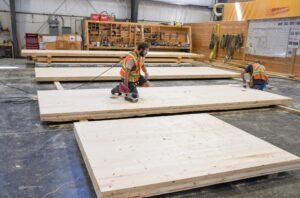 Prime Minister Carney has pledged billions of dollars in financing for makers of prefabricated homes to help end the country’s housing shortage. Experts say the plan is visionary – and laden with risks. Mr. Carney has promised to provide $25-billion in loans and $1-billion in equity financing for companies that largely build homes in factories rather than on construction sites. The federal government will also place bulk orders of prefabricated housing to help jump-start a nascent industry. …It’s a big, bold bet that could make it faster, cheaper and more environmentally friendly to build a chunk of the 3.5 million homes that Canada needs to add by 2030. But factories need sustained demand, a large enough market and streamlined production. That’s what must weave out of the web of housing bureaucracy and hyperlocal rules that currently tangles up residential construction, the experts caution. [to access the full story a Globe and Mail subscription is required]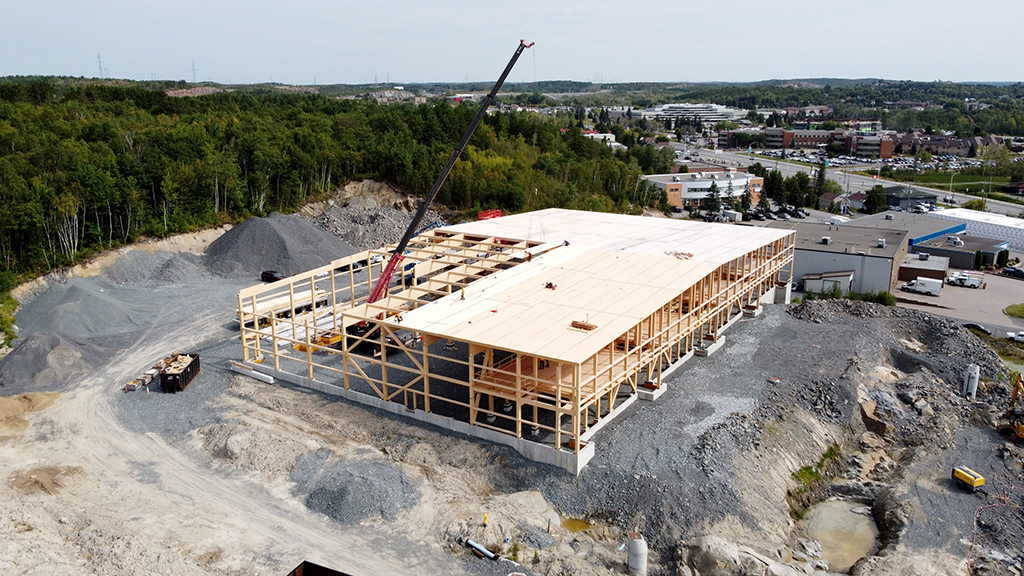
 House Republicans have approved an amendment that authorizes the sale of thousands of acres of federal public land in Nevada and Utah; two states where the federal government owns most of the land that have long been at the forefront of a controversial movement to cede control of it to state or private entities. The House Natural Resources committee approved the amendment late Tuesday night after previously indicating federal land sales wouldn’t be included in a budget reconciliation bill. Most of the proposed land sales or exchanges appear to be aimed at building affordable housing on US Forest Service and Bureau of Land Management land outside Las Vegas and Reno, Nevada and in fast growing southwestern Utah around the tourist town of St. George, Utah. …Democrats and environmentalists say the amendment is part of a broader far right push for a wholesale transfer of federal public lands.
 New York City Mayor Eric Adams and New York City Economic Development Corporation’s Andrew Kimball announced that Artimus and Phoenix Realty Group have been selected to build over 500 new mixed-income housing units along the waterfront on the north shore of Staten Island, with a quarter of the new units set aside for affordable housing. The development will be the largest mass timber residential project in New York City… advancing commitments in Mayor Adams’ “Green Economy Action Plan,” a roadmap to grow the city’s green economy, invests in jobs and sectors that help the city combat climate change, and positions New Yorkers to benefit from the nearly 400,000 projected “green-collar” jobs in New York City by 2040. Mayor Adams… “We are not only building the affordable homes New Yorkers need but using sustainable materials to reduce our carbon footprint and help turn New York City’s waterways into the ‘Harbor of the Future.’”
 A metro Atlanta nonprofit is teaming up with college students to find the exact age of historic buildings using a unique area of study. While historical documents may say a building was constructed in a certain year, the wood used to create the structure could tell us a different story. Cobb Landmarks is using dendrochronology — the study of tree rings — to pinpoint when wood for metro Atlanta buildings was harvested for construction. Trevor Beemon, Cobb Landmarks’ executive director, said they are partnering with University of West Georgia students who, under the guidance of two professors, will take 12 to 15 samples from structures around metro Atlanta. …The partnership is “really the one chance” South Downtown has to learn about these buildings before they are redeveloped, Capps said.
  MARYLAND — After five years of work and many interim steps, Maryland became the sixth US state to pass extended producer responsibility legislation for paper and packaging, continuing the policy’s evolution in the country. Sent to the governor on April 7, SB 901 would direct a producer responsibility organization to set goals for post-consumer recycled content, recyclability, recycling and reuse rates, source reduction, composting rates and contamination reduction. However, it also builds on newer elements, such as a phased-in approach to reimbursement, seen last year in Minnesota’s law. …The American Forest and Paper Association has called the bill “misguided.” “EPR programs are helpful for materials that don’t have strong end markets or aren’t highly recycled,” the association wrote. “Paper is a highly recycled material with strong end markets.” …Any EPR program must fully and fairly credit our early and voluntary actions to increase recycling in Maryland and across the country.”
 SEATTLE — Recent controversy over the management of Washington’s older state-owned forests has been dominated by an either/or framework: Either we clear-cut these tracts or prevent any harvest at all. Cut it all now or don’t cut any, ever? The human brain loves to dichotomize, but this type of either/or thinking doesn’t work in the woods. Ecologically, economically and culturally, our forests are too complex. Ecologically, climate change is altering our forests rapidly and radically. …Economically, rural areas in Washington state are a microcosm of a pattern that is global in scope. …Cultural values need to be considered as well. …We have to implement a broad array of management models and tools. Instead of re-fighting the 1980s War in the Woods and practicing lawsuit-driven forestry, we need to create flexible, forward-looking practices that will support the health of our forests and rural communities in a time of rapid change.
 The National Oceanic and Atmospheric Administration will no longer track the cost of climate change-fueled weather disasters, including floods, heat waves, wildfires and more. It is the latest example of changes to the agency and the Trump administration limiting federal government resources on climate change. NOAA falls under the US Department of Commerce and is tasked with daily weather forecasts, severe storm warnings and climate monitoring. It is also parent to the National Weather Service. The agency said its National Centers for Environmental Information would no longer update its Billion-Dollar Weather and Climate Disasters database beyond 2024. For decades, it has tracked hundreds of major events across the country, including destructive hurricanes, hail storms, droughts and freezes that have totaled trillions of dollars in damage. The database uniquely pulls information from the Federal Emergency Management Agency’s assistance data, insurance organizations, state agencies and more to estimate overall losses from individual disasters.
  Wildfires driven by climate change contribute to as many as thousands of annual deaths and billions of dollars in economic costs from wildfire smoke in the United States, according to a new study. The annual range of deaths was 130 to 5,100, the study showed, with the highest in states such as Oregon and California. The paper, published Friday in the journal
  MOUNTAIN VIEW COUNTY, Alberta – Provincial officials elevated the wildfire danger rating to extreme across the Rocky Mountain House Forest Area Saturday after five new wildfires ignited in the area in recent days. Parts of Mountain View County are included in the forest area, namely west of Sundre and Bergen, covering Coal Camp and Bearberry west of Range Road 60 from Township Road 312 to the north boundary of the county. “The wildfire danger is now extreme in the Rocky Mountain House Forest Area,” the province said in its May 3 update for the forest protection area. “Dead and dry vegetation continues to be a major concern, as it is highly flammable and provides an easily available fuel source for wildfires.” …On Thursday, two wildfires were discovered in the Rocky Mountain House Forest Area while three more were discovered on Friday.
 Quebec’s forest fire prevention agency says it is sending reinforcements to Ontario and Saskatchewan to help teams fight several forest and brush fires. Two CL-415 firefighting aircraft and their crews will head to Dryden, Ont., while two other of the same aircraft will head to Meadow Lake, Sask. Quebec’s forest fire prevention agency, known as SOPFEU, says the teams departed Sunday from Quebec City. The agency says the current situation in Quebec allows for resources to head to other provinces. In Ontario, there were six active fires burning across the province shortly before noon Sunday, including one in Haliburton, located about 170 km north of Oshawa, according to the Ministry of Natural Resources’ interactive map. The Saskatchewan Ministry of Public Safety map showed there were 18 active wildfires burning Sunday, for a total of 142 fires since the season began on April 1. There were 19 active fires burning in Saskatchewan on Saturday.