 Canada continues to stare down the barrel of the American trade war. The United States-Mexico-Canada Agreement faces its first big review in 2026. This country remains in a uniquely high-stakes moment. …This will, and will always be, an uneven fight. Canada is 40 million people and only the world’s ninth largest economy. A middle power is going up against the world’s richest and most powerful country. How exactly is it even possible for Canada to win in this asymmetric trade war? Crucially, this conflict isn’t just about steel, soybeans or softwood lumber – it’s about narrative and power. …US President Trump frames trade deficits as proof that the US is “losing”:
- Give Trump some face-saving concessions that look like a win for him
- Use oil, Canada’s unique economic hard power
- Play defence: Reform our corporate tax regime
- Northern gambit: Arctic crisis for trade leverage
[to access the full story a Globe and Mail subscription is required]
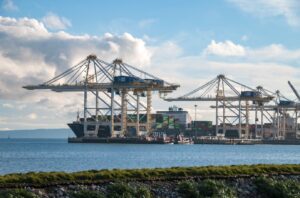 A federal appeals court temporarily reinstated the most sweeping of President Trump’s tariffs, a day after a US trade court ruled that Trump had exceeded his authority in imposing the duties and ordered an immediate block on them. The United States Court of Appeals for the Federal Circuit in Washington said it was pausing the lower court’s ruling to consider the government’s appeal. Wednesday’s surprise ruling by the US Court of International Trade had threatened Trump’s Liberation Day tariffs and additional tariffs on goods from Canada, Mexico and China. The trade court ruled that the Constitution gave Congress, not the president, the power to levy taxes and tariffs, and that the president had exceeded his authority by invoking the International Emergency Economic Powers Act. …Trump administration officials had said they were undeterred by the trade court’s ruling, saying they expected either to prevail on appeal or employ other presidential powers to ensure the tariffs go into effect.
 Domtar has been penalized $17,200 for nearly two dozen failures to control the release of emissions from its Skookumchuck, BC, mill. The kraft pulp mill was found to have violated pollution levels 23 times over eight months starting in 2021, according to a decision from director of the Environmental Management Act Bryan Vroom. On at least six occasions, the decision found Domtar failed to keep smoke emissions from a wood-waste-fired power boiler below the 40 per cent opacity required under its 2013 permit. …The company disputed the findings, arguing that a nearby air quality impact assessment showed the impacts to human health were “not significant” and that the ministry failed to show the violations would impact workers. In his decision, Environmental Management Act Bryan Vroom responded by reducing the severity of the failures to a level of “low to none.” …Domtar acknowledged the penalties in an email, and said it is working with B.C.’s environment ministry in response.
 SEELEY LAKE, Montana — A law passed during the 2025 legislative session could provide $6 million in low-interest rate loans for an entity that wants to start up a wood products facility. The measure could impact Seeley Lake, where Pyramid Mountain Lumber once operated. “I think the likelihood of you know, somebody coming here, obviously, there’d be opportunity at other mills as well, but they really like the, the ability to source timber from this site,” said Pyramid Mountain Lumber owner Todd Johnson. Johnson says the new law would incentivize anyone looking to open a new facility by providing funding for one portion of the total for opening a new mill. “I think the, the main designs behind it were so that it would allow somebody to secure a site. Six million dollars would go a long ways towards securing, you know, a site here in Montana,” said Johnson.
 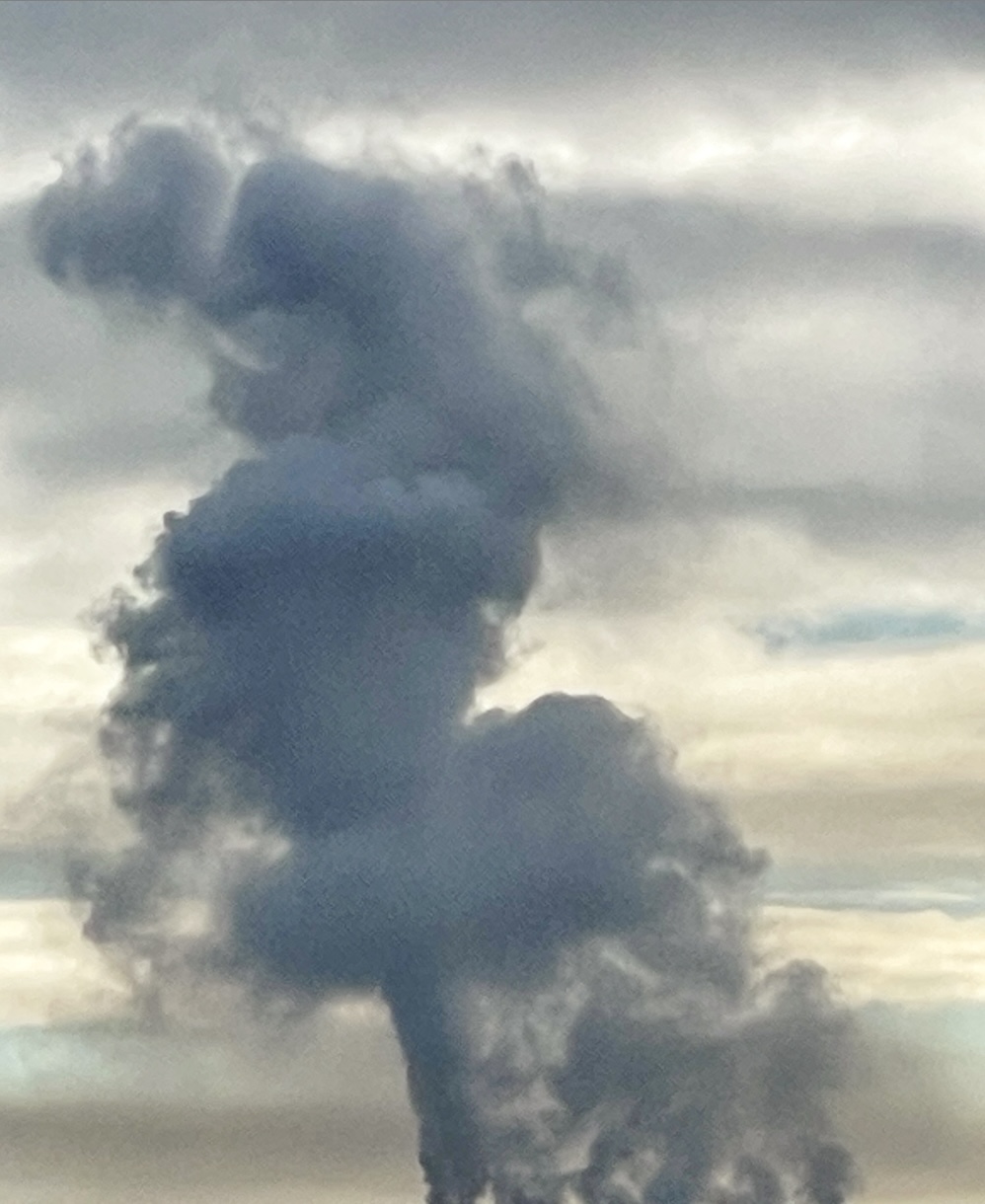 YORK COUNTY — South Carolina’s New Indy paper mill… releases more of a powerful neurotoxin into the air than any other major paper plant in the country, a new report says. The amount of mercury leaving New Indy’s York County plant is
  US market conditions have been lackluster since the Trump tariffs on Canadian lumber were postponed for the second time in early April. …The proposed 25% tariffs were the catalyst for SPF prices rising in the first two months of 2025. …Today, this puts BC Interior SPF mills back near break-even levels at current lumber prices and 14.4% duties with other Canadian regions looking to be marginally profitable. With tariffs in suspension mode, the US market fundamentals have now been exposed – the market is weak and remain weak – and there is too much supply – again! ….The silliness of the Trump administration’s irrational rhetoric as well as biased trade policies will only result in raising all lumber prices to the US home builder, the renovation contractor, and the consumer. How much of the tariffs (or Canadian duties) are passed on to the consumer is the only wild card, but it will likely be the majority.
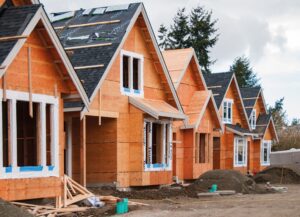 A pause on some tariffs creates a window for Canadian companies to re-examine their risk profiles and work with brokers to secure needed coverage. Both Bay Street and Wall Street are cheering the ruling from the US Court of International Trade that, at least temporarily, tamps down the 10% tariffs the White House imposed on most countries, and drug-related emergency orders setting 25% tariffs on some goods from Canada and Mexico. …Some companies may use tariff lulls to stock up on certain key materials. …Construction companies, for example, often import flooring products from the US, even though Canadian builders have good access to lumber. For them, stockpiling those materials reduces the economic impacts of both US tariffs and Canadian retaliatory tariffs. …Additional optimism arrived via King Charles III’s Speech from the Throne this week. The document opening Canada’s parliament commits to major economic initiatives, including large-scale increases in housing construction.
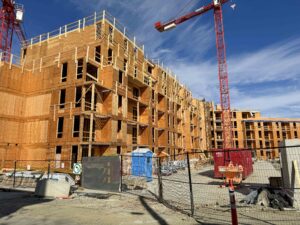 New homes development got a shot in the arm this spring with April starts rising in Canada and the United States. Recent reports from TD Economics examined new home data in both markets, finding month-over-month rises in starts for April. In Canada, starts jumped 30 per cent month over month, marking the largest rise since June 2023. Driving growth was the multi-family family segment that saw starts rise 34 per cent, whereas single-family detached home starts gained six per cent from March. …TD noted the “bounce-back” in activity was not unsurprising given levels were so low to start the year. What’s more, housing starts could “be softening,” amid higher construction costs and lower immigration, it cautioned. In the U.S., activity was less robust by percentage growth. Starts there increased less than two per cent month over month.
 The US economy shrank at a 0.2% annual pace from January through March, the first drop in three years, as President Trump’s trade wars disrupted business… a slight upgrade of its initial estimate. First-quarter growth was brought down by a surge in imports as companies in the United States hurried to bring in foreign goods before the president imposed massive import taxes. The January-March drop in gross domestic product — the nation’s output of goods and services — reversed a 2.4% gain in the fourth quarter of 2024. Imports grew at a 42.6% pace, fastest since third-quarter 2020, and shaved more than 5 percentage points off GDP growth. Consumer spending also slowed sharply. And federal government spending fell at a 4.6% annual pace, the biggest drop in three years. …From January through March, business investment surged 24.4%. An increase in inventories — as businesses stocked up ahead of the tariffs — added more than 2.6 percentage points to first-quarter GDP growth.


 Q1 2025 exports of Southern Pine lumber (treated and untreated) were 12% behind the same quarter in 2024 at 122 MMBF, but up 2% over the fourth quarter of 2024. On a monthly basis, Southern Pine lumber exports were down 20% in March over March 2024 but up 4.6% over February 2025. When looking at the report by dollar value, Southern Pine exports are down 7% to $50 million in the first quarter of 2025 compared to the same period in 2024, but down 17% over the fourth quarter of 2024. Mexico led the way at $13.2 million, followed by the Dominican Republic at $10.4 million, and Canada at $4.3 million. The total global value in March hit a six-month high of $18 million. Treated lumber exports, meanwhile, were down 19% compared to the first quarter of 2024 at $28 million and down 6% over the fourth quarter of 2024.
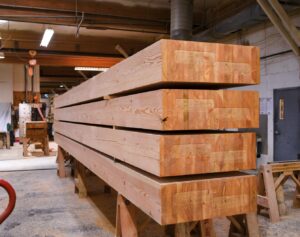 Mass timber continues to gain traction in the United States for its sustainability, strength and aesthetic appeal. …In just the last four years, Texas saw a 168% increase in the amount of mass timber projects either in design, construction or completed. As mass timber developments in Texas increase in popularity, owners and contractors face a critical decision: whether to source the material domestically or internationally. The decision isn’t as simple as price — although it is a big factor. There are other points to consider when selecting your mass timber provider. …With threats of tariffs and rising material costs, builders might feel inclined to source mass timber from domestic providers. According to Forisk, an industry research and consulting firm, there are 38 mass timber production facilities across the United States and Canada —24 of which can produce cross-laminated timber (CLT). Nearly 51% of those facilities are located in the Northwest region of the United States.
 The BC government spent a decade killing wolves to protect caribou. Now, critics warn that despite questions about its effectiveness, ethics and impact on the rest of the environment, the government is moving to make the wolf cull a permanent part of its strategy. Launched as a short-term emergency measure in 2015, the decade-long wolf cull is a morally outrageous tactic to divert public attention from the root cause of caribou declines — the province’s failure to significantly address habitat destruction — said Pacific Wild co-founder Ian McAllister. …The future for caribou and wolves is looking even more dire given the federal and provincial plans to fast-track permitting and reduce environmental assessments for development, McAllister said. …The province is looking to make its “short-term emergency” measure of shooting wolves to protect caribou a permanent practice in lieu of protecting habitat, critics warn.
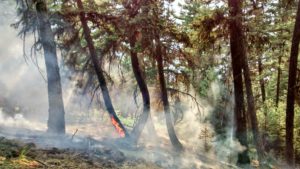 The Red Flag Warning has been sounded by Alberta Wildfire. But what does it mean? It means conditions are ripe for the ignition and fast-moving spread of wildfires. The forest-fire experts use a sliding scale, first adopted by the U.S. National Weather Service, to determine how dry the conditions are in the forest areas, and how the wind could help fan the flames if that dry tinder is ignited. Basically, a score is calculated based on wind speed, heat and the lack of humidity. A sample document provided by Alberta Wildfire shows a hypothetical watch being created when the maximum daily temperatures is expected to hit 33 Celsius, the humidity is at 25 per cent or lower, and wind speeds are 10 km/h. Basically, when it is punishingly hot and dry, it doesn’t take a lot of wind to trigger an alert. “And, just like weather alerts, “watch” is one level below “warning.”
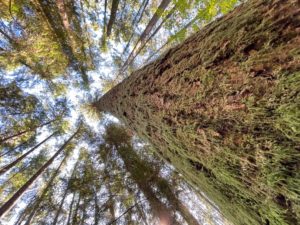 MAINE, USA — A law signed by Gov. Janet Mills last week requires landowners who are participating in the forest carbon credit market to report basic data — including a landowner’s name, contact information, date of enrollment and total enrolled acreage — to the state on an annual basis, information the state will use to create a database and track the impact of carbon credits on Maine’s forests. “We need to understand how Maine woodland owners are participating in the emerging forest carbon market, given both Maine’s forest-based economy and its climate change initiatives,” said Morten Moesswilde, the division director of Forest Policy and Management for the Department of Agriculture, Conservation and Forestry, in a work session on the legislation in February. …The law was supported by conservation organizations as well as the Maine Forest Products Council and several woodlot owners, who stressed the importance of understanding an emerging market.
 This study investigates the role of Forest Stewardship Council (FSC) certification in advancing sustainable forest management and influencing forest cover changes across 70 countries from 2000 to 2021. Using dynamic panel data model and Generalized Method of Moments (GMM) estimations, the analysis addresses endogeneity concerns, such as those stemming from lagged dependent variables, providing robust and unbiased estimates. Results indicate that FSC certification significantly enhances forest cover, with the most pronounced effects observed in low- and middle-income countries. Additionally, the study explores how FSC certification interacts with income levels and climatic conditions, revealing region-specific variations in its effects. These findings highlight the importance of market-based conservation tools, such as FSC certification, which align economic incentives with sustainability objectives. The analysis provides practical insights, recommending the integration of FSC certification into responsible trade practices and the development of regionally tailored forest management strategies to maximize conservation outcomes.
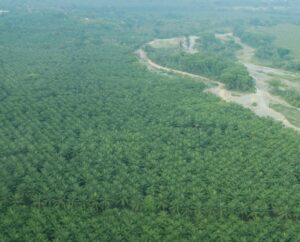 BRAZIL — Fallen logs are rotting, the trees grow sparser and the temperature rises in places sunlight hits the ground. This is what 24 years of severe drought looks like in the world’s largest rainforest. But this patch of degraded forest, about the size of a soccer field, is a scientific experiment. Launched in 2000 by Brazilian and British scientists, Esecaflor — short for “Forest Drought Study Project” in Portuguese— set out to simulate a future in which the changing climate could deplete the Amazon of rainfall. It is the longest-running project of its kind in the world, and has become a source for dozens of academic articles. …This resulted in the loss of approximately 40% of the total weight of the vegetation and the carbon stored within it from the plot. The main findings were detailed in
 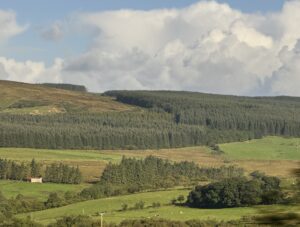 On May 22, the European Commission released its long-awaited country benchmarking classifications under the EU Deforestation Regulation (EUDR). …After years of development, one might have expected a risk classification tool robust enough to help companies navigate the complex terrain of global sourcing. Instead, the rankings are poised to mislead businesses into thinking certain countries are “low risk” when the realities on the ground tell a very different story. …The EUDR sets out dual requirements: products placed on or exported from the EU market must be both “deforestation-free” and “produced in compliance with the laws of the country of origin.” However, the EC’s benchmarking appears to focus overwhelmingly on deforestation metrics and existing EU political sanctions—giving little attention to equally critical issues like governance, corruption, and law enforcement capacity. Findings from Forest Trends’
 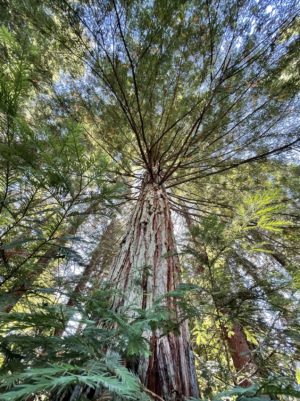 BRUSSELS – According to a document obtained by, 11 governments are urging the European Union to delay or weaken its upcoming deforestation law. This policy, a world first, aims to stop the 10% global deforestation caused by EU imports of soy, beef and palm oil, among other products. However, it has become a controversial part of Europe’s environmental agenda. After complaints from Brazil and the US and a reduction in reporting rules, the EU has already delayed its launch for a year, until Dec. 2025. The Commission announced last week that it would spare most countries from the strictest checks. A group of eleven countries led by Austria, Luxembourg and Germany, have demanded that the European Commission further simplify the rules and delay the application date. …The countries’ paper, that the EU agriculture ministers in Brussels will be discussing on Monday, said the requirements are “disproportionate” to the regulation’s goal.
 Climate change has put Western Canada’s glaciers on track for devastating loss over the coming decades, with the southern half of BC expected to lose nearly 75% of the alpine ice — even if warming stops today, a new study has found. The planet has so far warmed an average of about 1.2 degrees Celsius above pre-industrial temperatures. If that increase climbs to 1.5 degrees C, 81% of Western Canadian and US glacier mass would melt, according to the study published Thursday in the journal Science. …Harry Zekollari, the study’s lead author and a glaciologist at Belgium’s Vrije Universiteit Brussel, said the international research team used eight glacier computer models to analyze the potential long-term evolution of the year-round ice. The results painted a dire picture for the world’s glaciers, as the planet has already locked in enough warming to melt 40% of the Earth’s year-round ice by the end of the century.
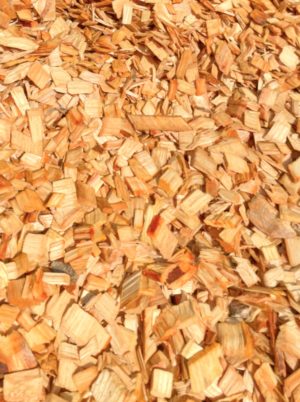 Even if conversations are dominated by electrification, Toyota is working on a different course to keep combustion engines relevant. A recent Nikkei Asia report reveals that Japanese automakers led by Toyota have opened a bioethanol facility in Fukushima, aiming to slash the carbon footprint of conventional engines with a new kind of “better biofuel”. …What sets this project apart is its focus on second-generation biofuels: non-edible plants and agricultural waste serve as the feedstock, rather than food crops like corn or sugarcane. By avoiding feedstocks that compete with food supply, Toyota’s program addresses a key criticism of traditional biofuels. …The choice of Fukushima for the facility is symbolic. The site reuses land in an area devastated by the 2011 nuclear disaster, turning “disaster zones” into productive, green-energy facilities. In doing so, Toyota’s project ties regional recovery to climate innovation. …Feedstock: Uses non-food biomass (e.g. wood chips, rice straw, plant waste) instead of edible crops.
 FLIN FLON, Manitoba — More than 25,000 residents in three provinces have been evacuated as dozens of wildfires remained active Sunday and diminished air quality in parts of Canada and the US, according to officials. Most of the evacuated residents were from Manitoba, which declared a state of emergency last week. About 17,000 people there were evacuated by Saturday along with 1,300 in Alberta. About 8,000 people in Saskatchewan had been relocated as leaders there warned the number could climb. Smoke was worsening air quality and reducing visibility in Canada and into some US states along the border. “Air quality and visibility due to wildfire smoke can fluctuate over short distances and can vary considerably from hour to hour,” Saskatchewan’s Public Safety Agency warned Sunday. “As smoke levels increase, health risks increase.” …In some parts of the U.S., air quality reached “unhealthy” levels Sunday in North Dakota and small swaths of Montana, Minnesota and South Dakota.
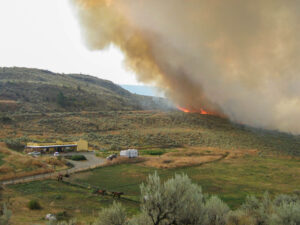 Saskatchewan is battling the worst wildfire it’s seen in decades — including the 300,000-hectare Shoe Fire in northern Saskatchewan — and experts say it’s largely caused by climate change. “This is classic climate change,” said Colin Laroque, head of soil science and professor at the University of Saskatchewan. Laroque said climatology is studied using 30-year timeframes of weather patterns, which “weren’t that different” until recently. …”These are things that we traditionally saw more in June, July and later summer, when everything dried out and then the fires took off,” Laroque said. Saskatchewan is making its way out of a relatively dry period. Few places had snow for long periods of time over winter. In the past, “snowpacks” would take time to fully melt and trickle into the ground as it warmed up. This would recharge the moisture of the soil.
 FLIN FLON, Manitoba – Cooler temperatures and a chance of rain this week is expected in a northwestern Manitoba city that’s had to evacuate thousands of people due to wildfire. Environment Canada says temperatures in the mid teens to mid 20s are forecasted this week, with a good chance of rain coming Saturday in Flin Flon. Fire crews have been trying to keep a blaze near Flin Flon at bay, and have said the fire has been contained to outside its perimeter highway. Crews say there have been no structures lost due to the wildfire. More than 17,000 people have been displaced by wildfires in Manitoba, including 5,000 from Flin Flon. Thousands have been affected by wildfires across the Prairie provinces, with Saskatchewan issuing an evacuation alert Sunday morning for dozens of residents in the small northern community of Timber Bay, located about 260 kilometres northeast of Saskatoon. [END]
 It’s not yet summer, but out-of-control wildfires are raging across Western Canada, fuelled by drought, warmer temperatures and lack of rainfall. Residents in northeastern BC, near Kelly Lake, have fled their homes, as Manitoba and Saskatchewan declared provincial emergencies this week. As of Friday, wildfires in Manitoba had displaced more than 17,000 people. Thousands more have been given evacuation orders because of wildfires in Saskatchewan and Alberta, including 1,300 residents of Swan Hills, a community northwest of Edmonton. …“We did see similar early-season activity like this in the far northeast in 2023 and in 2024 in BC,” said Budd. “That’s really the result of prolonged drought in the region that goes back as early as 2022.” …Manitoba is also facing a dire situation. The Flin Flon fire, located on the Manitoba-Saskatchewan border near Creighton, started at a landfill before crossing over the Manitoba border. It has grown to more than 200 square kilometres.
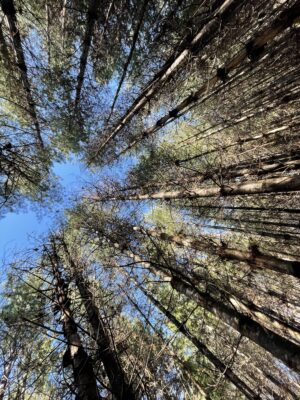 The wildfire season in Nova Scotia has been off to a “slow” start, according to the manager of forest protection with the province’s natural resources department. Scott Tingely told CBC News that so far, the number of fires and the amount of hectares burned are both below average at this point. “We had a pretty cool, wet spring so far, so that has certainly helped kind of mitigate the conditions and the risk,” Tingley said. As of Thursday, 39 fires have burned about 35 hectares across the province so far. …The wildfire situation in Nova Scotia has changed rapidly over the last week, according to data from Natural Resources Canada. On Tuesday, the department listed the fire danger across most of the province as low. And as of Thursday, that classification was raised to high for the bulk of the mainland and Cape Breton.
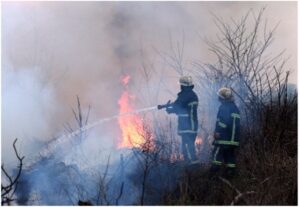 Ontario’s Ministry of Natural Resources (MNR) continues to monitor wildfires across the province, with varying conditions in the northeast and northwest regions. While some fires have been brought under control, others remain active, prompting ongoing suppression efforts and precautionary measures. The northeast region reports two active wildfires, with one recently contained. Sudbury 13, a 0.5-hectare fire near Wikwemikong that was identified on Saturday, was declared out Sunday morning. Cochrane 2, an 8-hectare fire northwest of Attawapiskat, is now under control. Cochrane 3, burning 48 kilometres west of Attawapiskat, remains not under control at 150 hectares. Though the MNR confirms no immediate threats to communities or infrastructure at this time. The northwest region remains a focal point, with 15 active fires and persistent high-risk conditions.