 The situation surrounding tariffs remains fluid, with a flurry of activity in Washington this week. …On March 6, Trump announced a one-month tariff delay until April 2 on all products from Mexico and Canada that are covered by the United States-Mexico-Canada Agreement (USMCA). While there is no specific language in the USMCA addressing Canadian softwood lumber, NAHB worked with the White House to ensure it was covered under the latest pause on tariff implementation. Two essential materials used in new home construction, softwood lumber and gypsum (used for drywall), are largely sourced from Canada and Mexico, respectively. …If the new tariffs on Mexico and Canada go into effect next month, they are projected to raise the cost of imported construction materials by more than $3 billion. NAHB has received anecdotal reports from members that they are planning for tariffs to increase material costs between $7,500 and $10,000 on the average new single-family home.
 WASHINGTON — Canadians are waking up to a new and uncertain reality after U.S. President Donald Trump’s deadline for economy-wide tariffs passed with no relent overnight, triggering a continental trade war. The president’s executive order hitting Canada and Mexico with 25 per cent across-the-board tariffs, with a lower 10 per cent levy on Canadian energy, took effect at 12:01 a.m. ET. …Prime Minister Justin Trudeau is set to hold a press conference in Ottawa Tuesday morning with Finance Minister Dominic LeBlanc, Foreign Affairs Minister Mélanie Joly and Public Safety Minister David McGuinty. Canada’s response is to start with tariffs on $30 billion worth of goods immediately and tariffs on the remaining $125 billion worth of American products 21 days later. The S&P 500 dropped two per cent in Monday afternoon trading. The Dow Jones Industrial Average dropped 1.5 per cent and the Nasdaq composite slumped 2.6 per cent. Ontario Premier Doug Ford warned Americans that Canada would have a strong response and suggested he could shut down the movement of critical minerals and energy into the United States. He said Trump needs to pull back for the sake of Americans and Canadians.
 While the market tries to process what’s to come on the trade front, it’s abundantly clear that the new administration is paying special attention to lumber and likely other wood products. Trump and his surrogates have emphasized the point of view that the US has the underlying resources to produce all its own lumber and wood product needs. In response, there have been a number of news articles highlighting the statements and questioning the idea of whether or not America can quickly and completely wean itself off Canadian wood products. …Canada currently supplies about 12.0 BBF of softwood lumber to the US market. After accounting for the 1.3 BBF of exports the US has shipped in recent years, the US is still short just over 3.2 BBF of operable capacity to quickly fill Canadian lumber supply and still meet current demand levels. In other words, at current demand levels, the US softwood lumber market does not clear without Canadian supply.
 The U.S. Commerce Department today announced new preliminary anti-dumping duties on Canadian softwood lumber imports of 20%. …The duties won’t become final until August, when final determinations are expected to be made. …The new preliminary duties is just the first shot across the bow in what is expected to be a nasty trade war, with additional tariffs that may be layered on top of duties. …Anti-dumping and countervailing duties have been in place on Canadian softwood lumber at varying levels since 2017, following the expiration of the last softwood lumber agreement in 2015. The duties on Canadian softwood lumber have been effective in shrinking Canada’s market share… from about 35% in 2016, to about 24% as of the end of 2024.




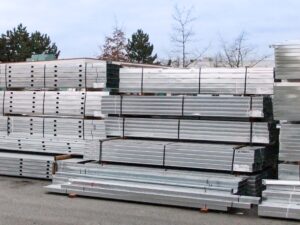 US Commerce Secretary Howard Lutnick signaled he doesn’t expect a reprieve on 25% tariffs for steel and aluminum imports scheduled to take effect on Wednesday. The levies, ordered by U.S. President Donald Trump in February, include imports from Canada and Mexico — which are among the top foreign suppliers — and apply to finished metal products, too. U.S. steelmakers have urged Trump to resist exemptions to the tariffs, which risk hitting US companies that use aluminum and steel. Administration officials have said the policy is aimed at cracking down on efforts by countries including Russia and China to bypass existing duties. Last week, Trump imposed sweeping tariffs on imports from Canada and Mexico but later walked back some of the changes — offering a one-month reprieve to automakers and then expanding that pause to all imported goods covered by the free-trade agreement between the US, Canada and Mexico.
 President Donald Trump on Thursday signed executive actions that delay for nearly one month tariffs on all products from Mexico and Canada that are covered by the USMCA free trade treaty, a significant walkback of the administration’s signature economic plan that has rattled markets, businesses and consumers. The executive actions follow a discussion Trump held Thursday with Mexican President Claudia Sheinbaum and negotiations between Canadian and Trump administration officials. …Energy from Canada, however, is not included in the USMCA, the White House official said. So that lower 10% tariff is expected to remain in place… but the Trump reduced the tariff on Canadian potash to 10%. …Canada will now pause their planned second round of tariffs on over 4,000 US goods until April 2, Canadian Minister of Finance Dominic LeBlanc said.
 GENEVA — Canada has requested consultations with the United States on “unjustified tariffs” at the


 US President Trump on Saturday
 Overnight, Jake Power went from reflecting on one of the best months that his Agassiz-based custom sawmill has ever had to staring into a potential recession sparked by U.S. President Donald Trump’s tariffs. Power, along with every other British Columbian, woke up to the reality of a trade war. …“Our business was growing, our customers were doing well,” said Power, CEO of Power Wood. “Now, I think we all expect a North American recession if this continues.” …Premier David Eby declared that “all bets are off” in terms of his response to standing up for the province. …Trade economist Werner Antweiler said he worries the most about B.C.’s forest industry, which was “already struggling (at) the edge of profitability.” …There is another looming danger in a trade war if it results in continuing depreciation of the Canadian dollar versus the U.S. currency, according to economist Bryan Yu.
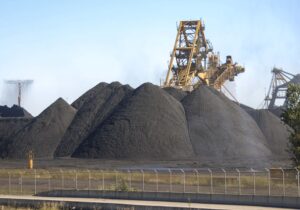 KAMLOOPS — The U.S. Department of Commerce has announced plans to almost triple the anti-dumping duties on Canadian softwood lumber. …“It’s going to be devastating for our industry if we can’t come up with some cost saving methods to be able to not only be more competitive but also trading with our largest partner when it comes to our softwood lumber agreement. …Kamloops-North Thompson MLA and Forest Critic Ward Stamer believes B.C. needs to place a carbon tax on coal as a response. “Our party proposed a carbon tax on U.S. thermal coal through our ports last Monday, and really what we should be doing — whatever they are charging us in duties, we should be charging them back with a carbon tax. …The BC Conservatives asked for an update on their carbon tax proposal during Monday’s question period.


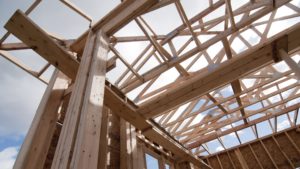 When President Trump threatened new tariffs on Mexico, Canada and China at the beginning of February, Steve Martinez flew into action. The Idaho-based general contractor spent hundreds of thousands of dollars on materials like lumber, windows, cabinetry and steel to stockpile them before the tariffs hit. …Since his lenders wouldn’t finance these purchases, he is paying out of pocket and using cash. Then after the president abruptly walked them back, Martinez was left with an upended business plan, less cash and feeling confused about what to do next. “I can’t keep ping ponging back and forth,” Martinez said. …Builders have been doing what they can to insulate themselves from higher import costs, from stockpiling materials and appliances to shrinking the size of the homes they will build. But if tariffs take effect long term, they will only be able to absorb so much cost. [to access the full story a WSJ subscription is required]
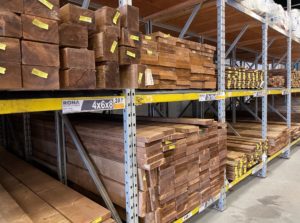 As we enter what are typically the most profitable months for US builders, widespread uncertainty regarding pricing is casting a pall over the industry. Northeastern Retail Lumber Association (NRLA) crystallizes these concerns, noting that: “Despite repeated delays of tariffs on imports from Mexico and Canada, prices continue to fluctuate unpredictably, leading to hoarding by customers, delayed orders for restocking, and customers abandoning purchases due to sudden cost increases.” The NRLA says the current situation recalls the tumult of pandemic-era supply chain shortages. “Now, dealers are reporting the same patterns: unpredictable cost increases, uncertainty in securing supply, and customers unable to move forward with purchases due to rapidly shifting prices.” …NRLA writes that daily price changes are making it impossible for retailers to provide accurate quotes, which constricts pricing guarantees. …NRLA dealers are reporting that even U.S.-made manufactured materials are seeing price increases.
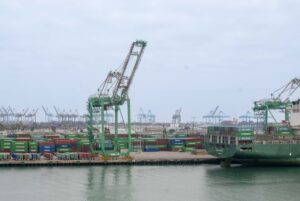 Thousands of US companies opened for business on Friday with no idea whether they had to pay tariffs. …In imposing the tariffs, Mr. Trump misused the 1977 International Emergency Economic Powers Act. Congress passed IEEPA to give presidents tools to respond quickly to emergencies like wars or terrorist attacks. …IEEPA has never been used for tariffs, and courts should rule that it can’t be. …US trade laws require the president to identify and investigate specific trade practices that harm the U.S. and then propose remedies, such as tariffs or negotiations. A president may impose tariffs on specific goods if fact-finding determines that imports threaten US national security. Mr. Trump’s reasons for imposing tariffs on Canada don’t appear to satisfy these standards. …Faced with Mr. Trump’s tariff threats, Canadian, Mexican and European officials have indicated that they are open to collective action against China, the world’s biggest exporter and a major source of US trade deficits. [to access the full story, a WSJ subscription is required]
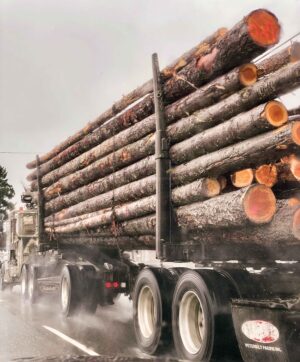 China suspended on Tuesday the soybean import licences of three U.S. firms and halted imports of U.S. logs, stepping up its retaliation for Donald Trump’s decision to impose an extra 10% duty on China. …The suspension of U.S. logs was a direct response to Trump’s move on March 1 to order a trade investigation on imported lumber. Trump had earlier told reporters that he was thinking about imposing a 25% tariff rate on lumber and forest products. “The announcement of import restrictions on U.S lumber and soybeans linked with phytosanitary issues follows a long history of similar measures by Beijing,” said Even Pay, agriculture analyst at Trivium China. …China is one of the world’s largest importers of wood products and the third-largest destination for U.S. forest products. It imported around $850 million worth of logs and other rough wood products from the U.S. in 2024, according to Chinese customs data.


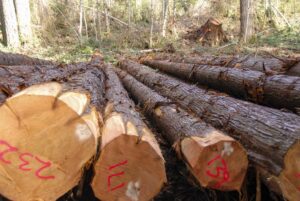 AUGUSTA, Maine — Tariffs on Canadian imports and Ottawa’s retaliation on American goods could sever—or at least strain—the close ties between the forest product industries of Maine and eastern Canada. The state exported $775 million in forest products to Canada in 2023. …Much of the wood Maine sends across the border is in the form of raw logs, according to Dana Doran of Professional Logging Contractors of the Northeast. The timber goes to Canada for processing… and the finished wood products are then frequently re-imported and sold in Maine. …Doran has doubts that these tariff efforts will achieve their intended effect of boosting domestic production. “Most of those Canadian manufacturers have already invested in the United States,” Doran said. …However, others acknowledge that—even if foreign companies benefit—shifting the processing of wood back into the U.S. aligns with the White House’s protectionist aims.
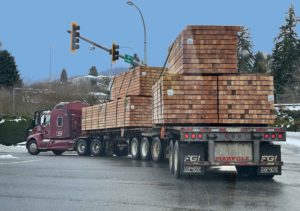 Now that a 25% tariff on lumber from Canada is looming, will this cause crazy wood pricing to return? To some extent, that is very probable, and here’s why. In 2024, our country got about 72% of its lumber from its own forests. The rest was imported from various countries, especially Canada, from which we purchased 28.1 million cubic meters last year. Canada accounts for 84.3% of all softwood lumber imports. …While it might be possible to switch to importing more lumber from other countries, none has Canada’s large production capacity. Also, supply chains — especially for lumber — are complex and costly to change, says Frederik Laleicke, at NC State University. …As long as demand for lumber doesn’t drop, a 25% tariff on Canada will likely make lumber—and therefore new houses and renovations—more expensive since US companies will raise the price of Canadian-sourced lumber to compensate for the tariffs.
 Lumber futures rebounded to around $650 per thousand board feet, nearing the two-and-a-half-year high of $658 touched earlier this month as escalating U.S. tariff threats on steel, aluminum, and dairy—along with the prospect of sharply higher auto tariffs—stoked fears of further trade restrictions, reversing the recent plunge. The renewed trade war tensions have heightened concerns that lumber could be the next target, prompting traders to reassess supply risks. Earlier, prices had dropped to around $600 after President Trump delayed a 25% tariff on Canadian softwood for the second time, temporarily easing supply concerns. The proposed levy, which would raise total duties to as much as 52%, could significantly strain North American production and push construction costs higher. However, the latest escalation in the trade war has reversed sentiment, with traders wary that lumber could still face new restrictions, driving speculative buying. [END]
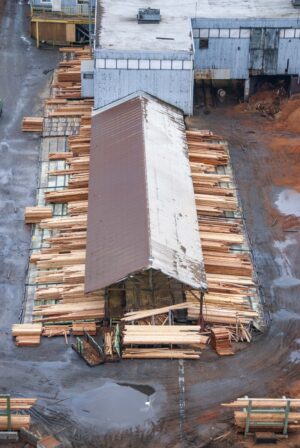 I have received several questions from owners and contractors regarding what to expect with lumber prices given the tariffs (or the potential of tariffs, depending on the day). The short answer is prices will go up. The long answer is much more complicated and hinges on a number of factors and considerations. 1. Almost 30 percent of the lumber used in the U.S. each year comes from Canada. …2. Any tariffs or potential for tariffs creates opportunistic price increases. …3. Demand, however, doesn’t seem to be particularly strong for new construction at this time. …4. Tariffs do help to onshore manufacturing (a long-term positive), but the trees aren’t all in America. …In the short-term, tariffs create more uncertainty and increased pricing, which only further adds to the inflation story. In the long-term, tariffs on lumber won’t achieve the level of onshoring that can happen in other industries.
  The Bank of Canada has cut its overnight lending rate by 25 basis points to 2.75 per cent, it announced on Wednesday. In a note explaining the decision, the bank said the economy started the year strong, with solid GDP growth and inflation within its two per cent target. But tariff uncertainty caused by the on-again, off-again trade war between Canada and the U.S. has weighed on business spending and hiring, and shaken consumer confidence, the decision said. It’s “against this backdrop” that the central bank decided to cut the rate by a quarter point, Bank of Canada governor Tiff Macklem wrote in his remarks. …Macklem has noted in the past that the bank cannot shield the Canadian economy from the financial impact of tariffs, but that it can instead use interest rates to manage a potential surge in inflation.
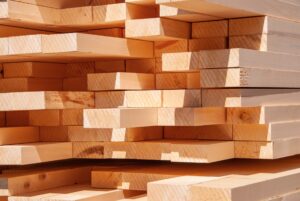 US lumber futures have fallen from their all-time highs after president Trump’s delay to tariffs on Canada this week halted a surge in prices. Contracts tracking a truckload of lumber hit the highest point in their 30-month history this week. …Trump initially planned to impose 25% tariffs on critical Canadian imports, boosting prices, but Thursday’s pause for a month pushed prices for delivery in May down more than 6% over two days, to $651 per MBF. Even so, prices remain elevated as Trump also ordered a federal investigation into Canadian companies potentially dumping excess supplies into the US market. …Together with potential tariffs, the total duty on Canadian imports could rise from 14.5 per cent to 52 per cent. “This is going to be devastating for Canadian producers,” said Dustin Jalbert, senior economist for wood products at price reporting agency Fastmarkets. “No Canadian producer is making the margin to be able to absorb that.”
 VANCOUVER, BC — Canfor Corporation reported its fourth quarter of 2024 results. Highlights include: Q4 2024 operating loss of $46 million; shareholder net loss of $63 million; Supply-driven uptick in North American lumber markets and pricing through the fourth quarter led to improved results from the Company’s Western Canadian and US South operations; another quarter of solid earnings from Europe; Improved


 VANCOUVER — Conifex Timber reported results for the fourth quarter and year ended December 31, 2024. EBITDA from continuing operations was negative $2.1 million for the quarter and negative $13.6 million for the year, compared to EBITDA of negative $3.5 million in the fourth quarter of 2023 and negative $25.8 million for the year. Net loss was $29.8 million for the quarter while it was $11.8 million for the full year. …While there are signs that the macro-environment for the lumber industry is starting to improve, Conifex continues to review its options to improve liquidity. …Since January 6, 2025, we have been operating our sawmill complex on a two-shift basis and capturing the dual benefits of higher shipments and lower unit costs that a two-shift operation provides over a single-shift configuration.


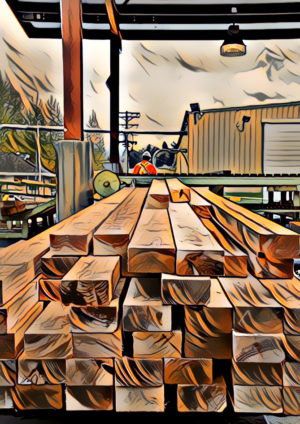 President Trump’s push for tariffs on Canada – and his subsequent delays and exemptions – are frustrating efforts to import lumber from the country and putting the building supply market on edge. The back-and-forth over whether tariffs will be imposed or not has businesses unable to trust price stability, and risks backing up the supply chain for US homebuilders. The reluctance to pay a tariff, which could be changed or cancelled any day, “freezes these markets up,” according to Don Magruder, who runs a building material company based in Florida. …Andy Rielly, president of Rielly Lumber in British Columbia, said he’s been in talks with long-term customers on how to divvy up the extra costs, but not everyone has been able to strike deals. …The US’s National Association of Home Builders chairman Buddy Hughes said tariffs risk worsening housing affordability. …The US Lumber Coalition said that lumber prices are only a fraction of homebuilding costs.
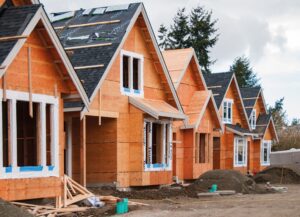 The Trump administration is moving at a record pace on a varied list of priorities, but insiders hope a focus on housing will remain at the top of the agenda in 2025. With housing affordability a central focus, bills addressing zoning, permitting, workforce development, and taxes are taking shape. …Despite all these areas of concern, one concern looms largest – tariffs. Approximately 22% of the products used in the average home are imported from China, 70% of lumber used in construction is sourced from Canada, and Mexico is the largest provider of gypsum. …The NAHB has advocated for an exemption for building materials, and the association continues to engage in conversations with lawmakers about the harmful effects these tariffs could have on housing affordability. NAHB’s Karl Eckhart says “These Canadian and Mexican tariffs are going to have a direct and painful impact on the price to build a house.”
 Lumber producers have migrated from Canada to the US South. Now lumber-futures trading is heading to the Southern pineries as well. The exchange operator CME Group said it would launch trading in Southern yellow pine futures on March 31, a response to rising export taxes on Canadian lumber. The futures contracts—ticker: SYP—will give the South’s loblolly planters, loggers, sawmills, pressure treaters and builders a mechanism to manage their exposure to price swings that is more in line with the local market than existing futures. …Traders and the exchange have for years discussed Southern yellow pine futures as the region’s production grew. Now that Northern lumber is a lot more expensive, they are saying the time is right. …Southern yellow pine doesn’t always work as a substitute for the Northern species favored by home builders. But executives said the growing price difference is prompting pockets of buyers to swap.
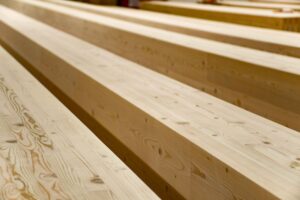 Planning, design and construction must adapt to this new world of tariffs and trade barriers. Canada has already imposed its own tariffs on products made in the US… but it is not just about materials and products; we must change what we build and where we build it. Some ideas for a Patriotic Canadian Built Environment: 1) More Mass Timber. Nordic, Element 5, Structurecraft and others have made major investments in mass timber, much of which is exported south. If the industry is to survive, we need a massive pivot to mass timber construction in Canada. …2) Make Canadian Wood Fibre Insulation. TimberHP in Maine has shown how a pulp and paper-based timber economy can pivot to insulation. …3) Electrify everything. Canada is an electricity powerhouse. Make every building Passivhaus to reduce demand and increase resilience. …4) Restructure from north-south to east-west. …5) More renovation and retrofit. …6) Design for a Sufficiency Economy. …7) Ban Sprawl.
 The full scope of the new investigation is not yet certain. The
  President Trump is promising to unleash the US timber industry by allowing companies to raze swaths of federally protected national forests. …His order — which calls for the ramping up of the domestic timber production to avoid reliance on “foreign producers” — was followed by sweeping 25% tariffs on Canadian products, including lumber. …However, it’s more complex than simply swapping out Canadian imports for homegrown timber, said industry experts. …Meanwhile, environmental groups say clearcutting national forests will pollute the air and water and exacerbate climate change. Anna Kelly, White House deputy press secretary, referred to multiple organizations that have released statements of support about opening up federal land for logging, including the American Loggers Council, the American Forest Resource Council and the Forest Landowners Association. Increasing logging on federal lands would increase the supply of logs for US industry, said FEA’s Rocky Goodnow… but it won’t replace Canadian imports in the near term.
 Are clear-cuts in forestry bad? I would say no. Nature demands that there is a mosaic of age classes to support conservation of biodiversity. …Wildfire “clearcuts” following insect invasion, disease, wind or old old trees aging out in many forests. …Logging and tree planting have proven logged clear-cuts are a gentler treatment for refreshing forests when compared to traumatic wildfires. On top of the biodiversity and conservation benefits, we get socioeconomic benefits of forest products and employment and resulting government services and infrastructure. …In certain areas where trees are shade tolerant, such as in Interior Douglas Fir areas, various types of selection may be prescribed to fit the ecology of the site. Biodiversity provides for all species in a mosiac of different types across the landscape. Look outside, it is not one continuous environment.
 Federal officials are preparing to disband an advisory committee tasked with guiding policies for millions of acres of national forests in the Pacific Northwest. …The 21 members of the Northwest Forest Plan federal advisory committee… have been meeting since summer 2023, hashing out how to tackle wildfires, pests and diseases across nearly 25 million acres of national forests in Oregon, Washington and Northern California. On Thursday, officials with the US Forest Service told committee members the agency was likely to dissolve the group in the coming weeks. Some members said they had been expecting this news. …The Forest Service pulled the committee together to help amend the decades-old Northwest Forest Plan, a set of policies that came out of the timber wars of the 1980s and ’90s. …The committee delivered its recommendations to the Forest Service last year.

 The European Union Deforestation Regulation (EUDR) aims to prevent deforestation-linked products from entering the EU market. This study assesses the potential impacts of the EUDR on global forest product markets using the FOrest Resource Outlook Model (FOROM). We simulate two scenarios: the baseline EUDR, focused on commodity-driven deforestation and urbanization, and an extended EUDR+ scenario, which includes shifting agriculture. The results indicate that high-deforestation countries, such as Brazil, Indonesia, and Malaysia, are expected to face significant reductions in roundwood production and exports, with downstream effects on sawnwood and panel prices. In contrast, low-deforestation countries like Canada and the United States may experience slight increases in production to meet EU demand, but their impact is limited by moderate deforestation rates. The study also highlights the potential for market leakage, where deforestation-linked products may shift to non-EU markets, potentially undermining global environmental goals.
 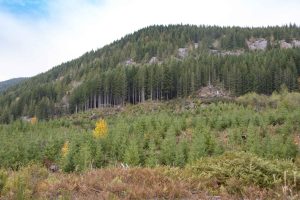 Eastwood Forests has deployed slightly more than half of its debut fund through deals that have included acquisitions in Costa Rica, Panama and Canada. North Carolina-headquartered Eastwood announced its acquisition of 14,500 ha of northern Vancouver Island timberland from Western Forest Products for $69.2 million in February. …Eastwood VP for transactions Prab Dahal said “Western has done a good job in managing the forests but our philosophies are slightly different in that we probably would not have as much openings and as much clear-cuts as Western did in the past,” said Dahal. …“It has more versatility than the typical natural forest that we look for elsewhere,” said Dahal. “We can manage this purely for carbon and still do good, or manage purely as a plantation and continuously manage with a harvesting level that is sustainable and can do good, financially, for our investors.” …Eastwood was established in 2022.