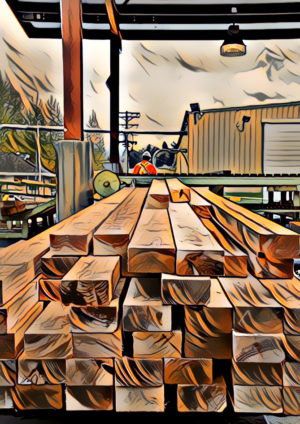
 The BC Lumber Trade Council is warning that threatened US tariffs stacked on top of duties against Canadian softwood could lead to soaring costs for residential construction, including in American states seeking to rebuild after natural disasters. Hurricane Helene damaged or destroyed an estimated 73,000 homes in North Carolina last fall, and wildfires burned more than 15,000 structures in California in January, the BC council said in a submission this month to the US Department of Commerce. “Significant hurricane reconstruction efforts are also underway in Florida, Georgia, South Carolina, Virginia and Tennessee,” the council’s 55-page filing says. The submission was a response to a March 1 executive order… which also threatened new lumber tariffs, cited Section 232 of the Trade Expansion Act, allowing him to connect the softwood file with national security. The probe into softwood and other wood products is scheduled to be completed by the end of this year. [to access the full story a Globe and Mail subscription is required]
 An appeal contesting a 12-month notice period awarded to an operations specialist who had been recruited from a long-term, secure position
 As tariffs reshape supply chains, more Americans may be checking packaging for the “Made in USA” label, either to sidestep import taxes or to support domestic businesses. …According to the Federal Trade Commission, to qualify for the label, US authorities must determine that a product’s final assembly or processing has taken place in the US, and that a significant portion of its manufacturing costs must also be incurred domestically. …That said, some foreign components are allowed to still qualify as “Made in USA.” — as long as they don’t substantially transform the product. …However, bilateral trade agreements can override these rules. Under the United States-Mexico-Canada Agreement, a one-time importation of a commercial product valued under $2,500 is exempt from country of origin labeling requirements.
 Once Oregon’s largest manufacturing industry, employment in the wood product manufacturing industry has gone through large, well-publicized losses since the early 1990s. Its employment has dropped below that of computer and electronic manufacturing and food manufacturing in recent years, but it remains the third largest manufacturing industry. Despite the losses, wood product manufacturing is still a large industry in Oregon and is especially important to rural areas of the state. Over the long term, between 1990 and 2020, annual average employment in wood product manufacturing dropped 24,100, or 52%. Similar losses were experienced in all its subsectors. Sawmills and wood preservation dropped 5,900 (49%); plywood and engineered wood products dropped 9,500 (53%). …Even with the long-term decline, wood product manufacturing is still a large industry in Oregon. In 2024, there were 22,400 jobs and roughly $1.5 billion in total payroll in the industry.
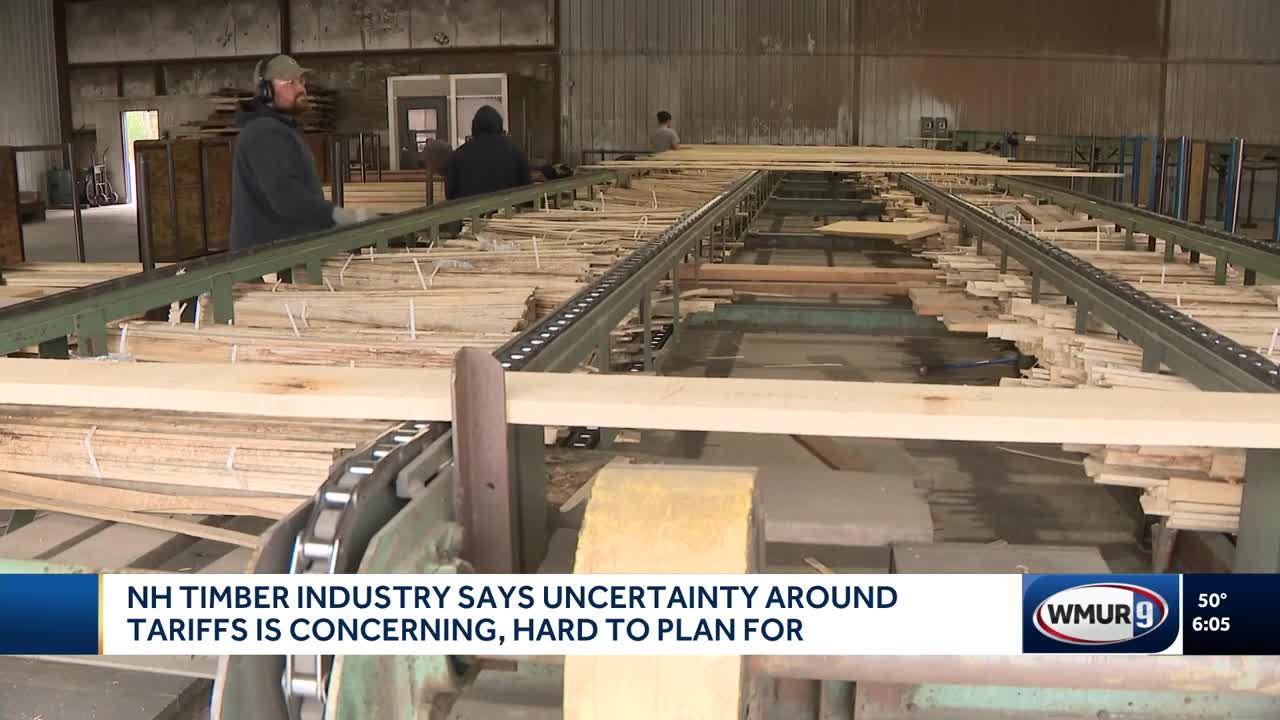
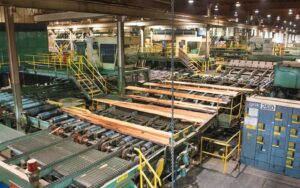 President Trump is reshaping America’s timber industry, directing federal agencies to boost domestic lumber production while investigating whether foreign imports pose a national security threat. The US construction market consumes more than 50 billion board feet of lumber annually, with domestic production currently meeting only 70% of demand. Canada fills most of the gap, supplying roughly a quarter of America’s lumber needs. …His executive order instructs the Forest Service and Department of Interior to increase timber sales from public lands. Industry experts, however, question the feasibility of such rapid transformation. Pete Stewart, of ResourceWise, points out significant challenges: “The U.S. would have to build 70 new sawmills to make up the difference.” The geographic reality also presents obstacles. While Southern forests from Virginia to eastern Texas grow 30% more trees than local sawmills demand, forests in the Northwest are already harvesting at capacity. …Critics also question the national security rationale.
 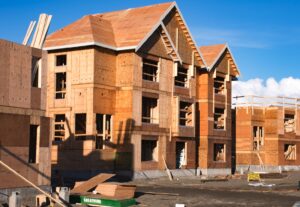 This is the USD 64,000 question. …What we currently know is that Canadian softwood lumber carries a 14.5% tariff rate, which could expand to 34.45% later in 2025. …If we split the difference between the NAHB’s and FEA’s estimates, the average sized new home consumes 34,000 bf of lumber. As such, should the tariff increase to 34.45%. …,Should the administration levy an additional 25% “immigration and Fentanyl tariff” on Canadian lumber (which is currently exempt), the cost/home would rise to approximately USD 1,100/home. …In reality, total wood usage in home construction includes a variety of wood types including softwood lumber, oriented strand board, engineered lumber and plywood. Each category has its own pricing and supply dynamics. One additional point… It is estimated that the repair and remodel (R&R) market accounts for 35-40% of lumber demand while single-family home construction accounts for an additional 35%. …For more on the latest real estate trends,
  The Bank of Canada held its benchmark interest rate steady at 2.75 per cent on Wednesday, ending a run of seven consecutive cuts. The decision, for which the market had given roughly even odds, comes following weakening inflation data published yesterday, and as Canadian and global economies contend with U.S. President Donald Trump’s twisting trade war. In its decision, the Bank noted various signs of the Canadian economy slowing, and outlined two possible scenarios that underline the uncertainty of the trade war. “Consumption, residential investment and business spending all look to have weakened in the first quarter,” the central bank said in a statement alongside the decision. “Trade tensions are also disrupting recovery in the labour market. Employment declined in March and businesses are reporting plans to slow their hiring. Wage growth continues to show signs of moderation.”
 President Trump is forging ahead with his aggressive tariff campaign, moving on from “reciprocal” tariffs to the sector-specific tariffs he promised. To do so will involve Trump’s continued application of Section 232 of the Trade Expansion Act of 1962, which allows a president to impose tariffs to protect or bolster domestic industries if there are deemed potential national security threats. What used to be a rarely employed trade provision has been a favorite instrument. The Commerce Department previously launched Section 232 probes into copper and lumber. And earlier this month, the administration started investigating pharmaceuticals and semiconductors. …Softwood lumber is a critical and preferred ingredient for homebuilding, and 30% of it is imported by the US. Homebuilders warn that tariffs on softwood lumber and other materials could further exacerbate the housing affordability crisis. Higher costs of lumber imports could also affect other products, such as furniture and even toilet paper.
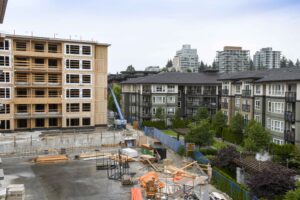 A BC economist says policy proposals from the federal parties do not measure up to the scope of Canada’s housing problem. “(Much) of the policy shift is shifting in the right direction. We still have the problem that the concrete policies on the table don’t match the scale of the housing crisis,” Alex Hemingway, with BC Society for Policy Solutions, said. …Hemingway said he vetted the platforms through two questions: what are plans doing to significantly increase the supply of more affordable housing in the non-market sector; and how to address exclusionary zoning that exists in the biggest, most expensive cities. …Despite all the funding promises, it is still difficult to increase density in areas currently zoned for single-family homes. …If Canada is looking for ways to reduce its economic dependence on the US, “dealing with these fundamental issues of housing and exclusionary zoning, should be an economic priority.”
 Tariff uncertainty continued to weigh on Vancouver’s housing market in March, deepening the slowdown in activity. Escalating US trade actions have fuelled fears of a recession, job losses and equity market volatility, pushing many potential buyers to the sidelines. The latest data from the Greater Vancouver and Fraser Valley real estate boards showed a deepening of the sales pullback in March. MLS sales fell 17.6% year over year. …The severe drop in home sales aligns with declining business confidence, which has plunged to record lows—a pretty good bet that weak confidence is playing out in housing. With sales held back, inventory has ballooned. Active listings were up 43% year over year and marching higher. …Meanwhile, after recording a surplus in merchandise trade balance for two consecutive months, Canada’s trade balance shifted to a deficit in February as exports retreated significantly following a frontloading of US imports.
 February 2025 Southern Pine lumber exports (treated and untreated) were up 4.7% to 40.8 Mbf over January but were down 15% over February 2024, according to February 2025 data from the USDA’s Foreign Agriculture Services’ Global Agricultural Trade System. When looking at the report by dollar value, Southern Pine exports are down 4% compared to the first two months of 2024 at $32 million. Mexico led the way at $8.4 million, followed by the Dominican Republic at $6.7 million, and Canada at $3.3 million. The total global value in February, however, hit a five-month high of $16.5 million. Treated lumber exports, meanwhile, were down 8% to $18.3 million through the first two months of 2025 compared to a year ago led by Jamaica at $3 million, the Leeward-Windward Islands at $2.6 million, and the Netherlands Antilles with $2 million.
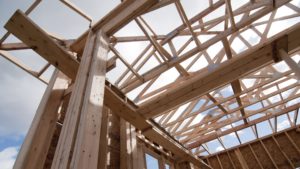 NEW YORK — Associated General Contractors of New York State CEO Mike Elmendorf says that under the tariffs proposed by President Trump, the cost for any kind of construction could further skyrocket. “When tariffs go on a material that is sourced from outside the United States, a funny thing happens,” Elmendorf said. “In many cases, domestic producers or suppliers of that material raise their price too because they can. Not as much as the tariff, but it sort of, it pushes everything up.” …Canadian lumber is one of the most critical imports needed for U.S. construction. “Especially the builders up in Western New York are concerned it’s going to affect them quicker and harder than the rest of the state,” said New York State Builders Association Executive Director Mike Fazio. Elmendorf said what might be an even bigger issue than the tariffs themselves is the uncertainty surrounding them.”
 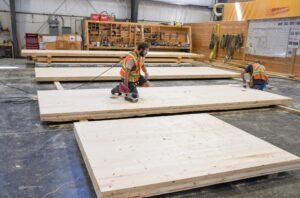 To reach Ontario’s bold goal of 1.5 million homes by 2031… we have a proven solution — and much of what we need, from innovative building techniques to mass timber and Canadian steel, is right here in Ontario’s backyard. …The Ontario Real Estate Association (OREA) released a new policy report, titled Building More, Building Faster, outlining the importance of embracing factory-built homes as a key part of the solution to address Ontario’s ongoing housing supply and affordability crisis. …Factory-built, or prefabricated housing, is a fast-growing area of homebuilding where homes are constructed in a factory — often using prefabricated 3D components — and assembled at their final address. …OREA’s new report highlights five policy recommendations that would cut red tape and create favourable conditions for investment to significantly boost factory-built housing construction with “Made-in-Ontario” solutions that can eventually scale nationally.
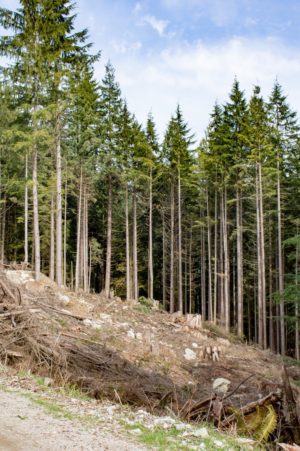 The Trump administration plans to eliminate habitat protections for endangered and threatened species in a move environmentalists say would lead to the extinction of critically endangered species because of logging, mining, development and other activities. At issue is a long-standing definition of “harm” in the Endangered Species Act, which has included altering or destroying the places those species live. Habitat destruction is the biggest cause of extinction, said Noah Greenwald, endangered species director at the Center for Biological Diversity. The US Fish and Wildlife Service and National Marine Fisheries Service said in a proposed rule issued Wednesday that habitat modification should not be considered harm because it is not the same as intentionally targeting a species, called “take.” Environmentalists argue that the definition of “take,” though, has always included actions that harm species, and the definition of “harm” has been upheld by the US Supreme Court.
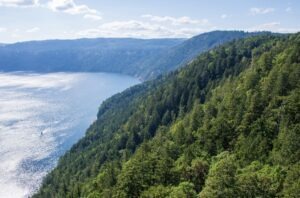 In an emergency directive issued late last week, U.S. Department of Agriculture Secretary Brooke Rollins announced her department’s plan to expand logging and timber production by 25% and, in the process, dismantle the half-century-old environmental review system that has blocked the federal government from finalizing major decisions concerning national forest lands without public insight. Under Rollins’s direction and following an earlier executive order signed by President Donald Trump, the U.S. Forest Service would carry out the plan that designates 67 million acres of national forest lands as high or very high wildfire risk, classifies another 79 million acres as being in a state of declining forest health, and labels 34 million acres as at risk of wildfire, insects, and disease. All told, the declaration encompasses some 59% of Forest Service lands. …Environmentalists say the administration’s plans are likely to only escalate wildfire risk and contribute more to climate change. …A
 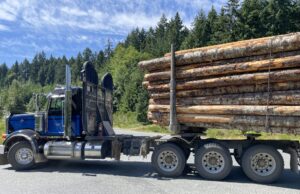 Logging is not necessarily a dirty word in the environmental dictionary. There, I said it. Provided sustainable practices are used, namely the careful choice over what trees get chopped down, logging can have a positive impact on the health of our forests as part of an effective management strategy that includes mechanical thinning and prescribed burning. Selective logging can also mitigate the risk and destructive power of wildfires. …This is my way of saying logging shouldn’t automatically be perceived as an environmental threat – despite what history tells us is the result when chainsaws and bulldozers are employed by the wrong hands. …Environmental groups reacted with outrage to Trump’s order, calling it a thinly veiled attempt to bypass environmental laws in order to justify widespread commercial logging under the false pretense that such actions will reduce wildfire risk.
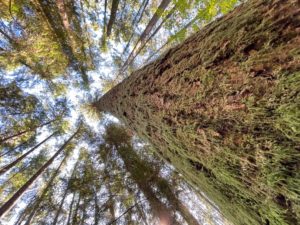 From the summit of Katahdin, the view is of forests stretching in all directions. …Forty-five years ago this scene would have been quite different. A voracious insect called the spruce budworm was ravaging Maine’s North Woods, killing mountainsides of balsam fir and red spruce. …Today, foresters and landowners are nervously tracking a renewed spruce budworm presence in the North Woods. The insects have already stripped hundreds of thousands of forest acres in Quebec and Ontario. After decades of heavy logging, scattered tracts are being managed with ecological timbering methods that strive to maintain natural systems — but most are not. Questions abound over how the state’s forests, both the northern timberlands and smaller, privately owned tracts throughout the state, will fare in a world beset by climate change. …And there’s the coming spruce budworm invasion.