An NDP government has had no small part in breaking B.C.’s forest industry… but can an NDP government now fix it? …Premier David Eby pledged to work towards an assured harvest of 45 million cubic metres annually, which would be an improvement of the current harvest levels, and last week, Forests Minister Ravi Parmar announced a new task force tasked with reforming BC Timber Sales, which manages 20% of the province’s AAC. …B.C.’s forest sector faces a plethora of challenges, including current softwood lumber duties, a threat of additional 25-per-cent tariffs on lumber exports and metastasizing government rules and regulations that have increasingly restricted access to timber, the supply of which had already been reduced by past pine beetle infestations and wildfires. More than a dozen sawmill and pulp mills have permanently shuttered in B.C. in the past four years. B.C. lumber producers face the prospect of softwood lumber duties doubling next year, and there’s now the added fear of 25% tariffs being imposed by the Donald Trump administration.
Domestically, the threat to B.C.’s struggling forest sector comes from federal and provincial policies that increasingly restrict access to the working forests. …Since coming to power in 2017, the BC NDP has implemented a rash of new policies and regulations crimping the timber supply, including old growth harvesting moratoria, new forest landscape plans, ecosystem-based land management, increasing parks and protected areas, shared land-use decision-making with First Nations and caribou habitat protection plans. …The shrinkage in the timber supply has not only put sawmills out of business, but has also affected secondary manufacturing, such as pulp and paper mills. …In an attempt to address some of concerns with access to fibre, Parmar last week announced a six-month review of BC Timber Sales. One of the goals of the review is to provide “predictable and reliable market access to fibre.”
 We’re proud to share that in 2024 the Tree Frog Forestry News readership surged by an impressive 44%, reaching 105,411 unique users (per Google Analytics)! This remarkable growth far outpaces our average annual increase of ~20% over the past decade. Even more, our audience is becoming increasingly continental: in 2020, 22% of our readers were US-based, but by 2024, that number climbed to 39%. Canada still leads at 51%, with the remaining 10% representing international readers from the UK, Australia, Japan, India, and beyond.


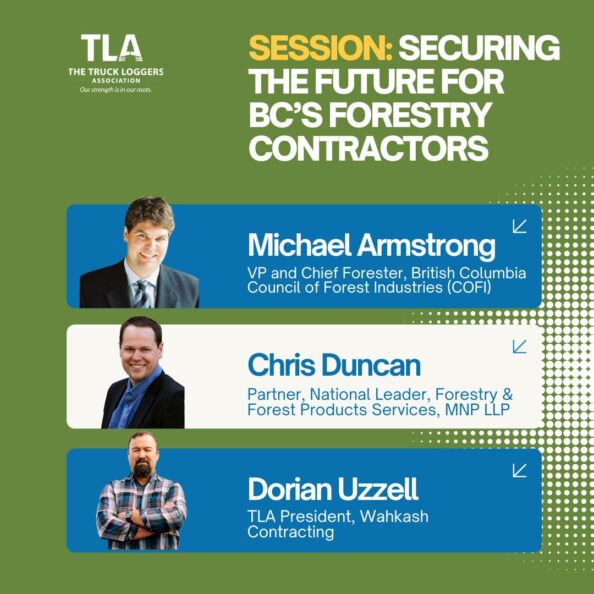 At the TLA Conference, the Securing the Future for BC’s Forestry Contractors panel addressed critical challenges facing contractors amidst declining allowable annual cuts (AAC) and rising operational costs. Moderated by Vaughn Palmer, the session featured Bob Brash, Executive Director of the TLA; Chris Duncan, Partner at MNP LLP; and Dorian Uzzell, TLA President and contractor. Brash, stepping in for Michael Armstrong, highlighted how reduced AAC and increasing costs strain contractors and communities reliant on forestry. Duncan shared insights on a project to establish a standardized framework for rate negotiations, emphasizing transparency and financial stability as vital for contractor sustainability. Uzzell provided firsthand perspectives, stressing the need for workforce development and stronger contractor representation in policy discussions.
 The TLA panel Public and Political Influence focused on strategies to connect the forestry sector with the public and policymakers. Moderated by Vaughn Palmer, it featured Derek Nighbor of FPAC, radio host Simi Sara, and content creator Bob Kronbauer. Nighbor emphasized the need to “meet people where they are” using relatable storytelling and digital campaigns, highlighting FPAC’s efforts to counter misinformation and advocate for sustainable forestry. Sara highlighted the media’s role in making forestry narratives accessible and engaging. She critiqued the industry’s lack of outreach and urged it to embrace social media to reach younger audiences. Kronbauer underscored the power of authentic storytelling. Drawing on examples like “Potato Ty,” he urged industry professionals to use platforms like Instagram to share unfiltered stories that resonate with audiences, fostering appreciation and countering negative stereotypes.
 Premier David Eby began his address to the Truck Loggers Association (TLA) Leader’s Luncheon by addressing the economic uncertainty posed by U.S. trade policies, both the existing softwood lumber duties and the proposed 25% tariff on all Canadian imports. He outlined the significant economic impact of the tariffs on BC, should they be implemented and last for four years, which is the loss of over 100,000 jobs and $60 billion in GDP. Working in concert with the rest of Canada, Eby said there are three components to BC’s response. First, retaliatory tariffs would target key U.S. political districts heavily reliant on Canadian goods. …Second, the strategy emphasizes strengthening BC’s economy by addressing bureaucratic delays, accelerating permitting processes, and improving infrastructure. …Third, the plan focuses on market diversification, with initiatives to deepen trade relationships in Asia and other international markets.
 Having already forced Colombia to accept deportees by threatening a 25% tariff, President Donald Trump is readying the same move against Canada and Mexico as soon as Saturday. But this time, the stakes are higher and many economists surveying the possible damage doubt Trump would be comfortable with self-inflicted wounds from the tariffs. Trump has repeatedly insisted that tariffs on Canada and Mexico are about illegal border crossings and the smuggling of fentanyl. But the Republican president is also motivated by the idea that tariffs would force other countries to “respect” the US. …The economics division of the insurance company Nationwide estimated that Trump’s proposed tariffs on Canada and Mexico would increase inflation by as much as 0.5 percentage points and pull down growth by 0.7 percentage points. The analysis noted it did not “account for potential retaliatory tariffs from Canada or Mexico, which could amplify the deleterious impact.”
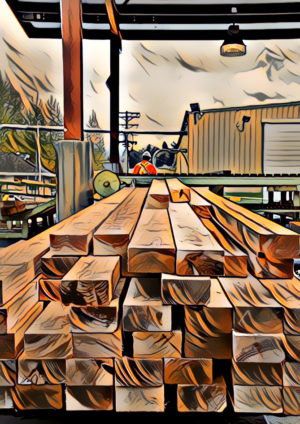 President Trump said, “We don’t need Canada to make our cars. We don’t need their lumber because we have our own forests,” he said. “We don’t need their oil and gas.” Mr. Trump is wrong on all three, but we’ll focus on lumber. The U.S. doesn’t produce enough lumber to meet domestic demand and thus imports about a third of the softwood used in home construction, mostly from Canada. …Mr. Trump’s tariff threat has created uncertainty for lumber wholesalers and contractors that could delay rebuilding. The U.S. can’t ramp up lumber production in the near term to meet domestic demand, so contractors will have to eat the tariff cost on lumber from Canada or import more from other countries, which would be expensive. If Mr. Trump wants to increase U.S. lumber production, he could open up more federal land for logging. …More tariffs will punish Americans trying to rebuild. [to access the full story a WSJ subscription is required]



 While Donald Trump has yet to act on his multiple tariff threats, it’s likely he will. So the fear lingers that the US president’s aggressive trade posture will sow global disorder, depressing growth and roiling markets, particularly if targeted nations retaliate. But retaliation is not the only or even the most likely response to Trump, no matter how broadly he finally delivers on his threats. The US has wielded tariffs as a weapon for eight years now. …Some nations retaliated; others offered concessions or challenged them before global trade arbiters. But most just quietly moved on, seeking trade with countries other than the US. Since 2017, trade has held more or less steady at just under 60% of global GDP. But there’s been a decline in the US share of trade flows offset by an increase in other regions. Trump 2.0 seems likely to bring more of the same: trade without America.
 The Bank of Canada is being pulled in a few different directions ahead of its first interest rate decision of the year on Wednesday. On one hand, there are signs of trouble bubbling up in underlying inflation that could make an argument for keeping borrowing costs higher for longer. On the other: Donald Trump has reiterated threats to impose tariffs of 25% on Canadian goods that could be set to take effect mere days after the central bank’s rate decision. …A trade blow like that would normally push the Bank of Canada towards steeper rate cuts in a bid to salvage economic growth. But dropping rates too quickly at a time when the loonie is already struggling risks fuelling more inflation on imports from the US. Economists say they’re betting the Bank of Canada will go ahead with another cut.
 OTTAWA — The Consumer Price Index (CPI) rose 1.8% on a year-over-year basis in December, down from a 1.9% increase in November. …The CPI excluding food rose 2.1% in December. A temporary GST/HST break on certain goods was introduced on December 14, 2024. …The shelter component grew at a slightly slower pace in December, rising 4.5% year over year following a 4.6% increase in November. Rent prices decelerated on a year-over-year basis in December (+7.1%) compared with November (+7.7%). However since December 2021, rent prices have increased 22.1%. The mortgage interest cost index decelerated for the 16th consecutive month, reaching 11.7% year over year in December 2024, the smallest increase since October 2022 (+11.4%) as interest rates continued to rise.
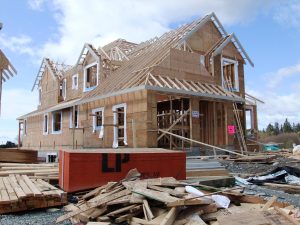 Calgary’s construction industry is hoping the threat of American tariffs doesn’t slow its momentum in 2025. …Bill Black, the head of the Calgary Construction Association, says when it comes to certain building materials, the tariffs could cause unrepairable damage. “Lumber suppliers selling are obviously going to feel a really significant impact on their volume that goes into the U.S.,” Black said. “The overall viability of the lumber business is based on a blend of the two markets, and if one market becomes unfeasible because of tariffs, that then puts pressure on the operating businesses. “That could impact their ability to service the Canadian market as well.” …The city has seen consecutive years of a record number of housing starts, and those in the sector don’t want to lose vital momentum. …Alberta’s forest ministry reiterated the importance of cross-border trade Friday, saying there’s still optimism a tariff-stopping solution can be found.
 Homeownership has long played a starring role in the American dream. …Nearly nine in 10 homeowners (88% / 81% in 2025) in a survey said the true cost of owning a home is more expensive than they’d expected. …Recent, unexpected hurricane-related floods in Western North Carolina and massive fires across Los Angeles County, which both occurred after the survey was conducted, will surely raise costs even more dramatically this year, and not just in the affected regions. This will be due to fierce competition for construction supplies and labor as disaster-stricken areas compete for resources and everyone else looks to maintain and improve their homes. Tariffs, depending on how they’re applied – e.g., Canadian lumber for rebuilding or across-the-board Chinese imports hitting home improvement store shelves – and potential disruption to the construction workforce can also surge homeownership costs.
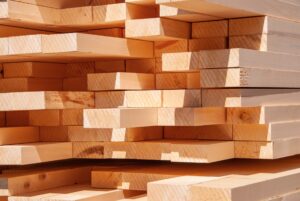 Looming tariffs could cause the cost of construction materials like lumber and mortar to skyrocket— if they actually happen. President Trump indicated these tariffs could go into effect as soon as Feb. 1. If a 25% tariff is imposed on both of the United State’s bordering neighbors, prices of imported goods will inevitably go up. This could be felt particularly keenly in the residential construction industry, which relies heavily on foreign imports for materials. Combined, nearly 20 percent of the total goods used in residential construction in the United States are imported from Canada and Mexico. …Lumber prices have already risen 17 percent in the last year, with much of that increase coming after tariffs on Canadian lumber were raised to nearly 15 percent in August. According to the NAHB, “Total imports of sawmill and wood products from Canada in 2023 was $5.8 billion.
 Lumber prices are 9.6% higher than they were one year ago. …Impact of wood and lumber prices on the cost of a new home: In addition to narrowly defined framing lumber, products such as plywood, OSB, particleboard, fiberboard, shakes and shingles make up a considerable portion of the total
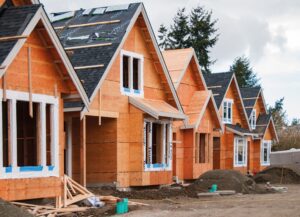 President Donald Trump’s proposal to implement significant tariffs on the country’s key trading partners could have ripple effects on the U.S. housing market. …The tariffs could drive up prices for new homes and renovations, further straining an already tight market. “The tariffs will raise the cost of materials, which could directly increase the cost of constructing new homes,” said Wayne Winegarden at Pacific Research Institute. Experts said tariffs are a tax that increases the costs of imported goods, including building materials. …Higher material and construction costs caused by the tariffs could make buying a home out of reach for many people. “The tariffs will slow down the economy and will also encourage the Federal Reserve to pursue a higher interest rate environment,” Winegarden said. …Together, the higher rates coupled with the rising cost of construction will significantly reduce housing affordability.”

 RUSS TAYLOR GLOBAL is pleased to provide the latest quarterly report from the
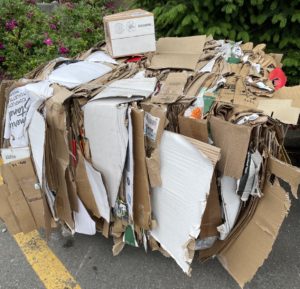 Volumes of OCC (old corrugated containers) and mixed paper are shifting with societal and economic trends, industry experts said during a paper industry update webinar presented by the Recycled Materials Association. Box shipments in 2025 are likely to get off to their usual slow start, said Ryan Fox, at Bloomberg. …For full-year 2025, Bloomberg estimates box shipments at 385 billion square feet and more than 31 million tons, an increase of 0.5%-1% over 2024 levels. …Fox added, paper company executives have largely said they don’t see “any observable things happening in 2025 that are going to cause a major inflection in demand.” …TetraPak makes the case for poly-coated paper. …Graphic Packaging provides update on Waco mill


 OTTAWA — Across the country, the impacts of climate change are becoming more severe and more frequent with extreme events like floods, wildfires and heatwaves on the rise. …Marc G. Serré, Parliamentary Secretary to the Honourable Jonathan Wilkinson, along with Member of Parliament Viviane Lapointe and Member of Parliament Anthony Rota, announced over $2.7 million in funding for five projects based in northern Ontario under Natural Resources Canada’s
  Georgia is the nation’s top forestry state, grappling with overproduction and the aftermath of severe storms which damaged timber supplies. Industry leaders and policymakers are turning to sustainable aviation fuel to boost the industry, create jobs and reduce carbon emissions. Sen. Larry Walker, R-Perry… said the growing demand for sustainable aviation fuel from companies like Delta Air Lines highlights its potential. However, he emphasized expanding production requires strategic federal policies and research to ensure long-term growth. “To invest in a facility that manufactures SAF, it’s a huge investment. It’s a long-term proposition,” Walker stressed. “We need some certainty out of Washington what the public policy is going to be, what the incentives to create this industry are.” …Walker added state lawmakers plan to introduce bills during the 2025 legislative session to support forestry innovation and expand sustainable aviation fuel production in the state.