 CALGARY, Alberta — Canadian Pacific Kansas City (CPKA) said that United Steelworkers (USW), representing approximately 600 clerical and intermodal employees in Canada, has ratified a new four-year collective agreement. …CPKC President and Chief Executive Officer Keith Creel said, “With this agreement and ratification, made possible through collaboration with the United Steelworkers, our railroaders remain focused on continuing to safely and efficiently serve our customers, moving Canada’s supply chain and supporting the North American economy.” This is the third new collective agreement ratified this year by CPKC employees in Canada. Teamsters Canada Rail Conference Maintenance of Way Employees Division representing approximately 2,300 engineering services employees in Canada and Unifor representing approximately 1,200 mechanical employees both ratified new four-year collective agreements in February.

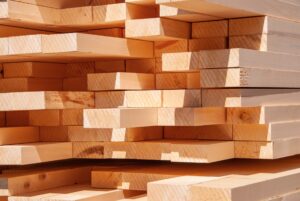 As the cross-border trade war escalates, Canada’s softwood lumber industry has an advantage on its side that no tariff can completely erase – its product is objectively better than much of the timber harvested from US forests. Softwood supplies, especially from BC and Alberta, are widely viewed as more desirable for wood framing because the growth rings are tighter than those found in lumber in the US South. In the milder climate of the U.S. South, the growing season is much faster. It takes about 35 years before southern yellow pine (SYP) trees are harvested. …Canada’s secret weapon, however, is hiding in plain sight. Tighter growth rings tend to result in quality two-by-four or two-by-six SPF boards for home builders, meaning walls that will stay straight. Compared with American SYP lumber, Canadian SPF is also lighter in weight. …Eastern SYP is currently selling at lower prices when compared with SPF. “SYP is an imperfect substitute for SPF,” RBC Capital Markets analyst Matthew McKellar said. [to access the full story a Globe & Mail subscription is required]
 Ravi Parmar, Minister of Forests, celebrated the official opening of Canoe Forest Products’ new kiln. The new kiln was made possible with funding from the Province’s BC Manufacturing Jobs Fund (BCMJF). …Canoe received more than $2.2 million in November 2023 to commission a new kiln, boosting both production and sustainability at its operation in Salmon Arm and help protect 200 jobs. …Parmar accompanied Canoe employees, community guests, and Nick Arkle, CEO of the Gorman Group, at an opening ribbon-cutting ceremony. …Parmar is also visited Tolko Industries who received $8 million to help expand Tolko’s Heffley Creek operation. Family-run Gilbert Smith Forest Products in Barriere received $1.1 million to support facility modernization and new equipment. AcuTruss Industries in Vernon received $100,000 to support the purchase and commissioning of equipment to manufacture precision cut I-joists through automation.
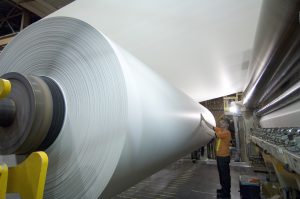 Following the US government’s imposed tariffs on steel and aluminium, Cepi has called on the European Commission to continue negotiations, citing the potential for future tariffs including pulp and paper and aiming to avoid supply chain disruptions. Cepi is currently taking part in a consultation launched by the European Commission. …The confederation asks the Commission to exclude from such EU retaliation list products that risk being in short supply in the EU. …According to Cepi, the EU imports around 900,000 tonnes of pulp per year from the US and close to 600,000 tonnes of paper and board, while the EU exports about 1600,000 tonnes of paper and board to the US and around 350,000 tonnes of pulp. It states that since a multilateral agreement of all major pulp and paper producers in January 2004, there have been no import tariffs on both sides of the Atlantic.
 WASHINGTON — A gobsmacked planet is wondering what’s next from President Donald Trump on the tariff spree he’s set in zigzag motion. In recent weeks, Trump has announced punishing tariffs against allies and adversaries alike, selectively paused and imposed them, doubled and then halved some, and warned late in the week that he’ll tax European wine and spirits a stratospheric 200% if the European Union doesn’t drop a 50% tariff on U.S. whiskey. His ultimate stated goal is clear: to revive American manufacturing and win compromises along the way. But people and nations whose fortunes rise and fall on trade are trying to divine a method to his machinations. So far, he’s spurred fears about slower growth and higher inflation that are dragging down the stock market and consumer confidence. “His tariff policy is erratic,” Robert Halver, at Germany’s Baader Bank, said. “So, there is no planning certainty at all.”
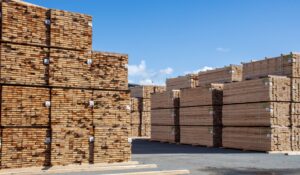 The Commerce Department’s Bureau of Industry and Security (BIS) has formally launched two Section 232 investigations that could lead to import restrictions on copper and lumber and timber, according to Federal Register notices scheduled for publication on Thursday. Trump signed an executive order on Feb. 25 ordering the copper probe and another on March 1 for lumber and timber. Both instructed Commerce Secretary Howard Lutnick to start the investigations, which threaten to further strain trade relations with Canada and other trading partners. The Section 232 law allows up to 270 days for a probe, but White House officials said they expect Lutnick to move faster. In one sign of that, BIS set an extremely short period for public comment in the two investigations, ending on April 1. that coincides with the deadline for executive branch agencies to compete a number of trade reports for the White House. [to access the full story a PoliticoPro subscription is required]



 KUALA LUMPUR, Malaysia — The proposed classification of two timber species commonly found in Malaysia as unsustainable by the United States and the European Union (EU) under the Convention on International Trade in Endangered Species of Wild Fauna and Flora (CITES) will result in the cancellation of Malaysian timber exports to the US and the EU. The Timber Exporters’ Association of Malaysia (TEAM) treasurer Wong Kar Wai said that in addition to impending tariffs, the US and the EU are proposing to classify certain timber species common to Southeast Asia, including Malaysia – namely Shorea, locally known as Meranti, and Apitong, known as Keruing – under CITES despite being sustainably harvested and processed. “Keruing is a special type of timber primarily used for floorboards, with the US being its main market. A major buyer is the US military, which uses Keruing for the flooring of trucks and tanks due to its durability and strength.
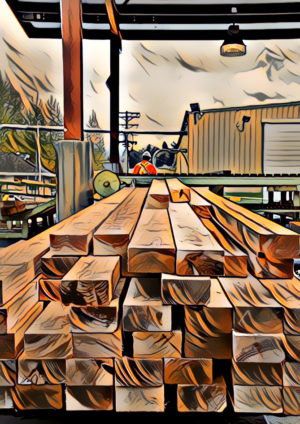 US President Donald Trump’s tariff threat could motivate more Canadian lumber producers to shift to the US southern border while accelerating efforts to find new markets, industry experts said. The levies are the latest in a nearly four-decade dispute between the neighbors over softwood lumber, used in construction, furniture and paper production. Levies on Canadian lumber could hit 40% if current duties of 14.54%, and Trump’s proposed 25% tariffs are added. …”Disparity in log costs and availability are the major drivers here, but Canadian investment in the region has certainly been partially motivated to moving operations where they avoid the impact of duties,” said Dustin Jalbert at FastMarkets. …”In 2004, there were only two sawmills owned by a Canadian manufacturer. Today, we have more than 50,” said Kyle Little, at Sherwood Lumber.” Canadian companies now produce more than a third of the volume of the largest producing region in the US – the US South.”
 A surprise jump in inflation and a flood of “noise” in the economy may push the Bank of Canada to pause its interest rate cuts next month, some economists argue. Statistics Canada said that the annual rate of inflation accelerated sharply to 2.6% in February as the federal government’s temporary tax break came to an end mid-month. That marks a sizeable jump from the 1.9% increase seen in January, when Canadians saw GST and HST taken off a variety of household staples. …Economists expect Ottawa’s move to strike the consumer carbon price as of April 1 will take some steam out of the inflation figures next month. But Nguyen argued the pressure from the trade dispute — Trump has threatened another wave of tariffs on April 2 — will “outweigh” the benefits of eliminating the carbon price for consumers.


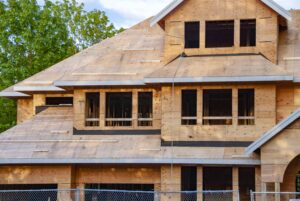 The Trump administration’s tariffs on imported goods from Canada, Mexico and China — some already in place, others set to take effect in a few weeks — are already driving up the cost of building materials used in new residential construction and home remodeling projects. The tariffs are projected to raise the costs that go into building a single-family home in the U.S. by US$7,500 to US$10,000, according to the NAHB. We Buy Houses in San Francisco, which purchases foreclosed homes and then typically renovates and sells them, is increasing prices on its refurbished properties between 7% and 12%. That’s even after stockpiling 62% more Canadian lumber than usual. …The timing of the tariffs couldn’t be worse as this is typically the busiest time of year for home sales. …Confusion over the timing and scope of the tariffs, and their impact on the economy, could have a bigger chilling effect on the new-home market than higher prices.
 Trump’s escalating trade tariffs will hit world growth and raise inflation, the OECD has predicted. Canada and Mexico are forecast to see the biggest impact as they have had the harshest tariffs imposed on them, but US growth is also expected to be hit. …Trump has imposed 25% tariffs on all steel and aluminium imports. The US has also imposed 25% tariffs on other imports from Mexico and Canada – with some exemptions – and a 20% levy on Chinese goods. Canada and the EU have announced retaliatory tariffs. …Canada’s economy is predicted to grow by just 0.7% this year and in 2026, compared with the previous forecast of 2% for both years. Mexico is now forecast to contract by 1.3% this year and shrink a further 0.6% next year, instead of growing by 1.2% and 1.6%. Growth in the US has also been downgraded, with growth of 2.2% this year and 1.6% in 2025, down from previous forecasts of 2.4% and 2.1% China’s growth forecast will fall slightly to 4.8%.

 Trump administration officials are roiled in debate over how to implement the president’s pledge to equalize U.S. tariffs with those charged by other nations, with aides scrambling to meet the president’s self-imposed deadline of April 2 to debut a plan. Officials have recently weighed whether to simplify the complex task of devising new tariff rates for hundreds of U.S. trading partners by instead sorting nations into one of three tariff tiers, according to people close to the policy discussions, who emphasized that the situation remains fluid and could evolve in the coming weeks. The proposal was later ruled out, said an administration official close to the talks, adding that Trump’s team is still trying to sort how to implement an individualized rate for each nation. …The reciprocal tariff plan is expected to be introduced on April 2, along with additional 25% duties on a handful of industries, such as autos, semiconductors and pharmaceuticals.
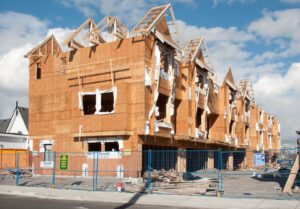 The US housing market showed mixed signals in February, with a sharp rise in housing starts contrasting with a decline in building permits. According to the latest data from the U.S. Census Bureau, new residential construction activity picked up, but future construction intentions weakened, raising questions about the sector’s near-term strength. Privately-owned housing starts surged to a seasonally adjusted annual rate of 1.501 million in February, marking an 11.2% increase from January’s revised figure of 1.350 million. The single-family sector led the gains, with starts rising 11.4% to 1.108 million units. However, despite this strong monthly performance, overall starts remained 2.9% below February 2024 levels, signaling ongoing challenges in year-over-year growth. …This decline extended the downward trend, with permits now 6.8% below year-ago levels. Single-family authorizations remained relatively stable at 992,000, down just 0.2% from January.
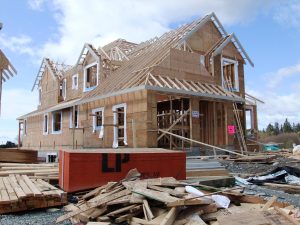 President Trump’s tariffs could increase material costs for the average new home by as much as $10,000, according to the National Association of Home Builders. The trade group said it has received anecdotal reports from members that Trump’s plan would raise material prices by between $7,500 and $10,000 for the average new single-family home. …The NAHB said softwood lumber is mainly sourced from Canada, while gypsum, a component of drywall, comes primarily from Mexico. Other materials like steel and aluminum — in addition to completed home appliances — are imported to the U.S. from China, the group said. An implementation of the 25% tariff on Canada and Mexico as previously laid out by Trump would raise total costs for imported construction materials by more than $3 billion, according to the NAHB.

 WASHINGTON STATE is one of the most productive parts of the country for growing timber. Most of the timber is west of the Cascades and its annual production in the United States is only second to Oregon. However, harvesting faces significant constraints according to the Department of Natural Resources (DNR). DNR manages about two million acres of timberlands, but only half can be harvested due to challenging terrain or environmental protections, such as endangered species habitats. …Federal lands in Washington state currently produce minimal timber, and changing protected land status would require congressional action, not just presidential directives. Upthegrove, a Democrat, anticipates any attempts to increase federal timber harvesting would face lengthy legal challenges. In Washington state, over 70% of the timber harvested comes from privately owned forestland. …For these reasons, state officials believe Washington cannot realistically offset the costs associated with Canadian lumber tariffs.
 The US president recently suggested that domestic lumber production could be significantly increased by opening federal lands to logging. This move, he argued, would reduce US dependence on lumber imports from Canada and Europe. …At first glance, tapping into federal timber resources might seem like a logical solution. However, the reality is far more complicated. A combination of declining forestry expertise, legal challenges, labor shortages, infrastructure limitations, and lack of private investment incentives makes this an unrealistic path to reduce lumber imports to the US. …While the US president suggests that opening federal lands for logging could boost domestic lumber production, this is an unrealistic expectation. …Despite claims that the US no longer needs Canadian lumber, the reality is that imports from Canada and Europe will continue to play a crucial role in meeting US domestic wood demand in the future.
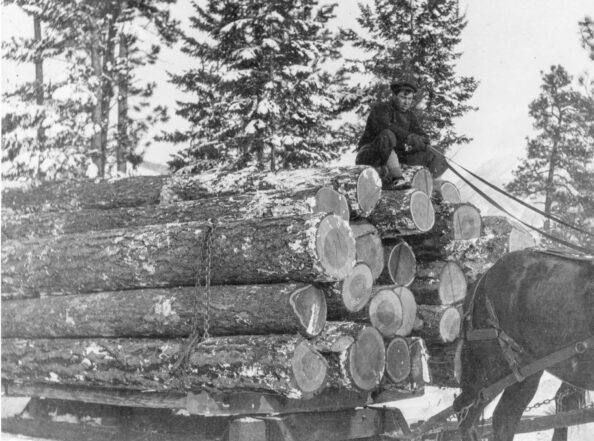 Among the wave of humanity that came to Canada in the 19th century were hundreds of thousands of Irish, some of whom ended up in Bradford. …Between 1815 and 1840, about 450,000 Irish migrated to the British North American colonies. Cheap labour was needed in lumber camps and for construction of the Welland Canal and the Rideau Canal. Canada represented a new hope. Irish migration was encouraged by leaflets circulated by Canadian lumber merchants and the British government. For their part, lumber merchants realized money could be made in loading their vessels with would-be settlers on the return trip from Britain. …Irish migration to Canada increased when Ireland was struck by the Potato Famine due to widespread starvation. During this period, more than one million Irish died from starvation and resultant diseases. Even more fled overseas, many to Canada. …In 1847 alone, at least 110,000 Irish left Irish and British ports for Canada. The tragedy is many didn’t make it. …On this St. Patrick’s Day, raise a toast to them.