 BC’s Premier and forest industry leaders demand Ottawa treat lumber tariffs as a national priority. In related news: Gorman’s Nick Arkle is pushing for “equal treatment”; BC Conservatives say “BC should get tougher”; The Conversation argues that tariffs won’t drive much US investment, and Realtor.com and the Wall Street Journal focus on rising lumber and homebuilding costs.
In other news: Canadian Forest Owners support carbon storage research; Ontario launches Boreal Springboard to grow the sector; BC First Nations push to reshape forestry; and the University of Idaho has a new Forest Innovations Institute. Meanwhile: six UBC forestry faculty receive Canada Foundation for Innovation awards; UBC’s Malcolm Knapp Research Forest is recognized by the CIF; registration opens for the TLA’s 81st convention; and the latest market news from Canada Wood.
Finally, how China’s pulp and paper overcapacity is reshaping global competitiveness.
Kelly McCloskey, Tree Frog News Editor
 Canada’s forest sector
 The Forest Products Association of Canada (FPAC) is extremely frustrated and deeply concerned by the U.S. government’s decision to impose Section 232 tariffs on Canadian softwood lumber and derivative products. These unjustified measures, which take effect today, threaten the livelihoods of more than 200,000 Canadians and the stability of hundreds of towns and cities that rely on a strong forest sector. “For eight years, forest workers and communities across Canada have borne the brunt of increasing duties—now exceeding 45 percent with the addition of these new tariffs,” said Derek Nighbor, President and CEO of FPAC. “These are punitive, protectionist measures with no basis in fact. They ignore decades of evidence that Canadian lumber strengthens, rather than threatens, U.S. national security and economic resilience.” Targeting responsibly managed, sustainably sourced Canadian wood products under the pretense of national security is both unjustified and deeply damaging. These actions undermine one of the most integrated, mutually beneficial trade relationships in the world, increasing costs for American families and homebuilders while jeopardising Canadian mills and workers.
 Prime Minister Mark Carney said Canadian and American officials are currently “negotiating terms” of a deal on tariffs a day after he met with the U.S. president to try and bring the trade war to a close — and Canada will come out ahead when the two sides come to an agreement. Speaking in question period … about what he accomplished out of his Oval Office sit-down with U.S. President Donald Trump, Carney said Canada already “has the best deal with the Americans” — most products are still being sold into the U.S. tariff-free despite Trump’s trade action — and “we will get an even better deal.” …Conservative Leader Pierre Poilievre said Carney “pathetically” offered up “a trillion-dollar gift” to Trump when speaking with the president, and it was an instance of him “bowing before the president in weakness.” …Daniel Smith said Carney is developing a rapport with the president…

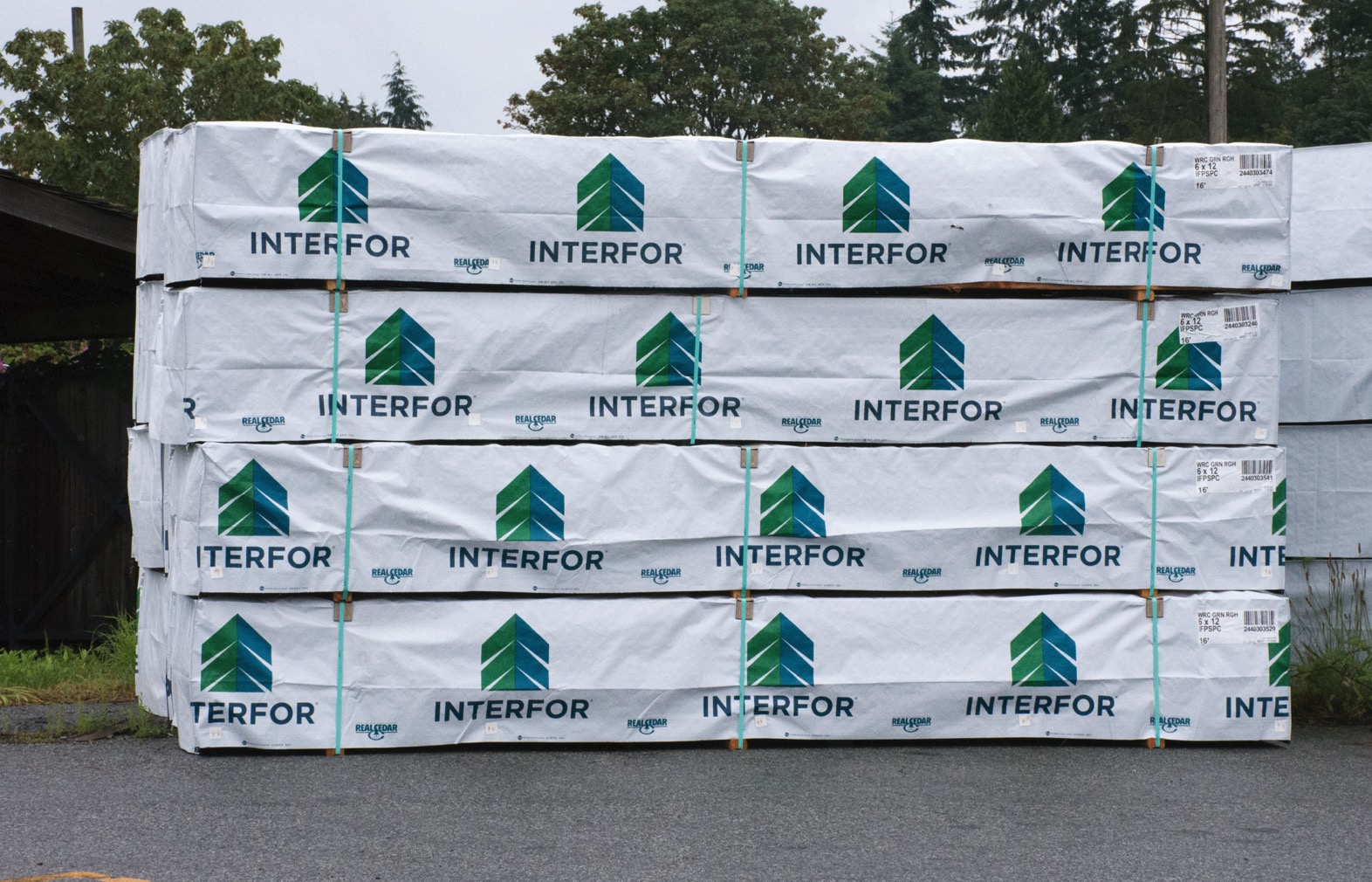 Plans to institute an “extended maintenance shutdown” of the Interfor lumber mill in Grand Forks is not a permanent shutdown, according to the company. On Sept. 4 Interfor Corporation announced plans to reduce its lumber production by approximately 145 million board feet at all operations between September and December of 2025, representing approximately 12 per cent of its normal output. The temporary curtailments will be through a combination of reduced operating hours, prolonged holiday breaks, reconfigured shifting schedules and extended maintenance shut-downs. The curtailments are expected to impact all of Interfor’s operating regions, with both the Canadian and U.S. operations expected to reduce their production levels by approximately 12 per cent each. “The curtailments are in response to persistently weak market conditions and ongoing economic uncertainty,” read a statement from the company.

 WASHINGTON, D.C. — On Oct. 1, 2025, nine presidents and CEOs representing American manufacturers of hardwood plywood, engineered wood flooring, and hardwood veneer asked President Trump to add their products to the recently announced Section 232 tariffs on wood products. The current 232 tariff proposal focuses on cabinets, vanities, lumber, upholstered furniture, and other products. Section 232 tariffs are trade restrictions, such as import duties, that the President of the United States can impose on goods that are found to threaten national security. According to the group of companies, more than 100,000 American manufacturing jobs are threatened by the “flood of dumped and subsidized decorative hardwood product imports from outside of North America.” The group pointed to the news that Roseburg Forest Products had closed its last hardwood plywood mill and exited the hardwood plywood market as a result of these imports, which the company said dominate 80% of the U.S. market.
 From October 14, wooden furniture exported to the United States will continue to be subject to a new import tariff of up to 25 percent. This has come as a “shock” at a time when enterprises are accelerating production, raising concerns over the feasibility of maintaining Vietnam’s 2025 wood export targets. In the long term, aside from adapting to frequently changing tariff policies, enterprises in the wood industry are working to improve product quality. Expanding markets and building the Vietnamese wood brand are considered key solutions for the sector’s sustainable development. On September 29, U.S. President Donald Trump signed a decree imposing a 25 percent tariff on wooden furniture, effective from October 14. The tariff rate may increase to 50 percent for dressing tables and kitchen cabinets, and 30 percent for upholstered products early next year. This move is regarded as a “shock” to Vietnam’s wood industry.
 On 31 July 2025, Metsä Group announced it would launch the planning of a EUR 300 million cost savings and profit improvement programme. Planning is now complete, and Metsä Group will initiate statutory negotiations concerning its personnel as part of it. “Our profitability has been undermined by three factors. First, increased uncertainties in global trade have reduced demand for our products. Second, changes in exchange rates have weakened our result and will continue to do so. Third, the increase in raw material costs and the general cost level has eroded our profitability,” says Jussi Vanhanen, President and CEO of Metsä Group. …According to preliminary assessments, the planned measures may lead to a permanent reduction of 800 permanent jobs. A significant share – 540 jobs – are expected to be in Finland. In addition to redundancies, the planned changes may lead to changes in duties.


 HUNTSVILLE — The Ontario government is investing $10 million through the Forest Sector Investment and Innovation Program to help Daiken North America upgrade its laminated board production line at its manufacturing facility in Huntsville. This investment will help the company bring a first-of-its-kind wood panel product to market, create jobs and boost productivity. As part of its plan to protect Ontario, the government is making strategic investments to help forest sector businesses adapt, compete and grow to stay resilient in the face of U.S. tariffs. …Daiken’s $70 million project will equip them to manufacture a new type of wood panel used in flooring, recreational vehicles and modular housing, while supporting 128 existing jobs and creating 10 new jobs. This made-in-Ontario forest product is the first of its kind in the world, offering a higher-performance, lower-cost alternative to imported material.


 Maple Ridge’s greenery is being recognized and awarded on a national scale. Malcolm Knapp Research Forest is one of two forests operated by the University of B.C. (UBC) that was recently acknowledged with a Canadian Institute of Forestry – Canadian Forest Management Group Achievement Award. …The award recognizes outstanding achievements by teams of managers in the field of natural resource management in Canada, and the local forest was praised for its “pivotal role” in advancing forest education, research, and management across B.C. and beyond, explained Helene Marcoux, local research forest director who was on hand for the recent awards presentation. …Through the coordination of more than 1,400 research projects and the delivery of experiential learning programs to thousands of students and professionals, the research forests have significantly shaped forest policy, sustainable management practices, and public understanding of forestry, said presenters of the national awards.


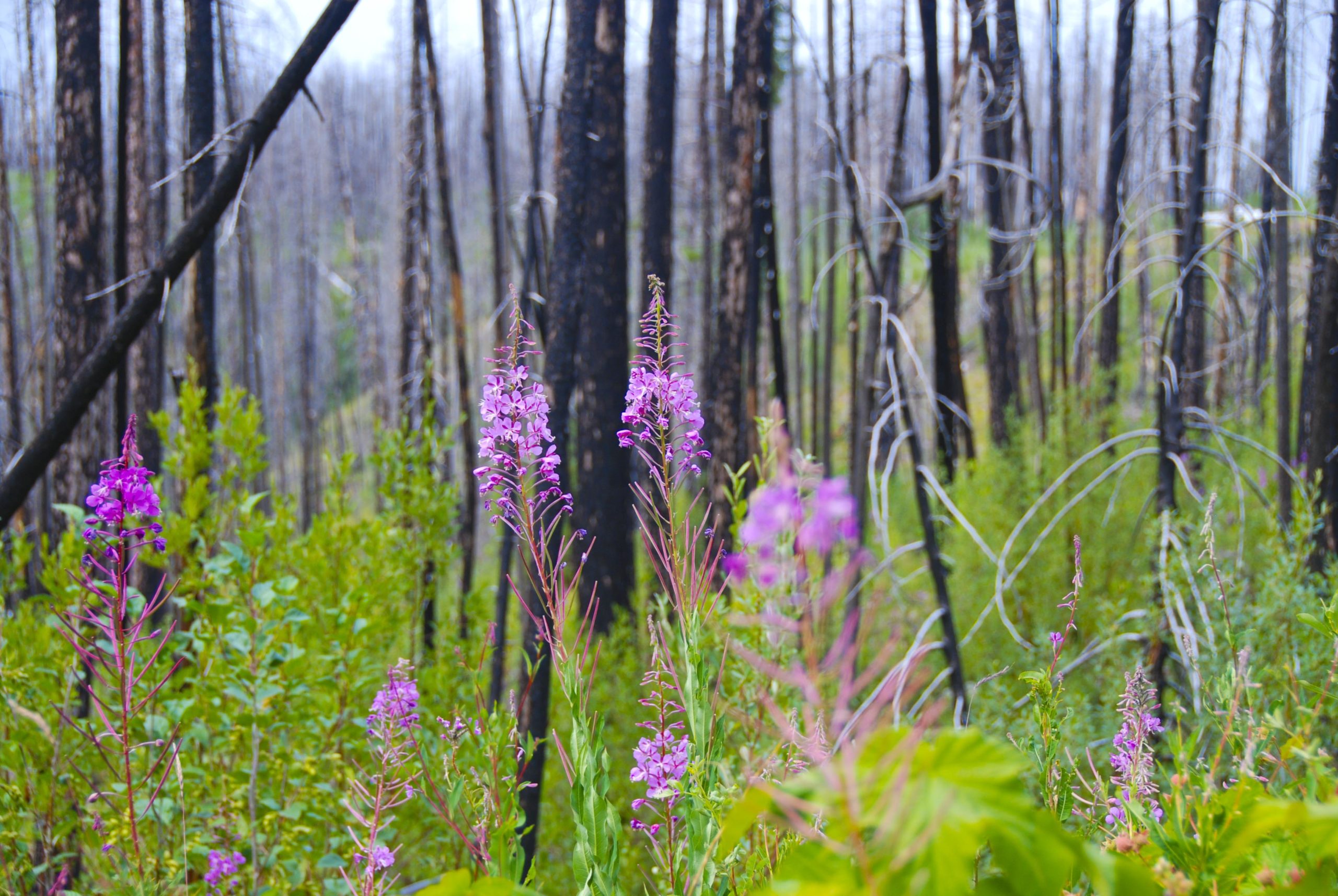 Wildfire is part of the natural lifecycle of a forest; but as Manitoba continues to battle the embers of its most devastating fire season in more than 30 years, its leaders are starting to consider a more active role in managing this critical resource to stave off the flames. In early October, as more than 70 wildland fires still smouldered across the province, Premier Wab Kinew and a handful of cabinet ministers released Manitoba’s first all-encompassing plan to slash carbon emissions in the next 25 years. Among the promised initiatives was a
  NANAIMO, B.C. – Mosaic Forest Management addressed community concerns about alternative road access following an incident on October 5th that halted safety work at the Bamfield Main Road worksite. The Ministry of Transportation and Transit has assumed control of the Bamfield Main Road repairs under Section 8 of the Transportation Act, with Mosaic providing technical support. The project is targeted for completion by month’s end. The Brenner Main/Museum Main corridor … remains restricted to limited Mosaic crews and one industrial user with pre-existing access. …“We understand people are frustrated seeing what appears to be a drivable road,” said D’Arcy Henderson, Senior Vice President, Timberlands and Chief Operating Officer. “But we’ve identified dangerous trees and boulders that could fall at any time. Making the Brenner corridor safe for public use would require the same weeks of intensive work currently underway on Bamfield Main. We cannot split our resources and double the timeline.”
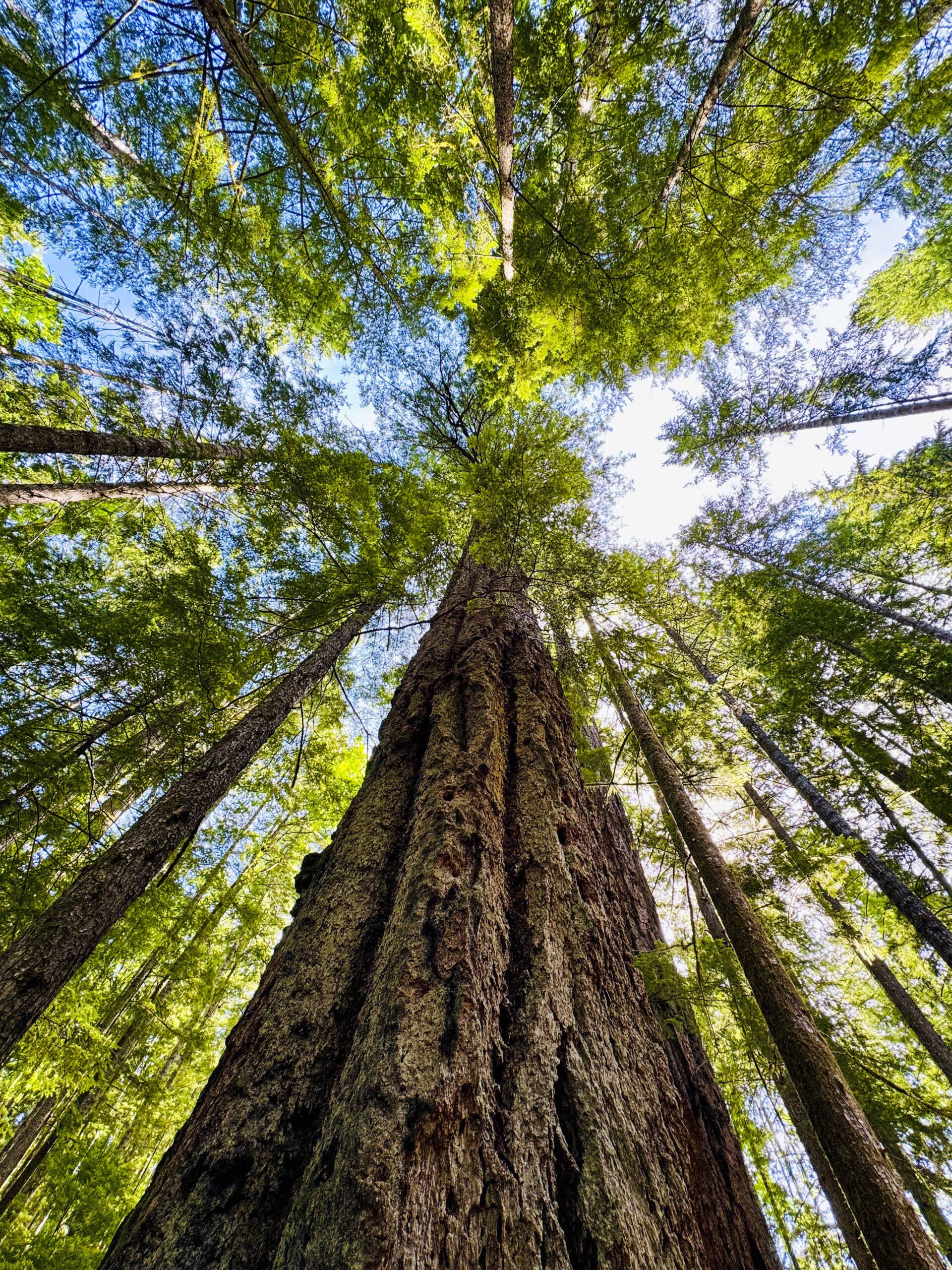 Last week, the Wildwood Ecoforest, located in Yellow Point just north of Ladysmith, got considerably closer to its original size. A successful campaign to raise $850,000 has allowed the


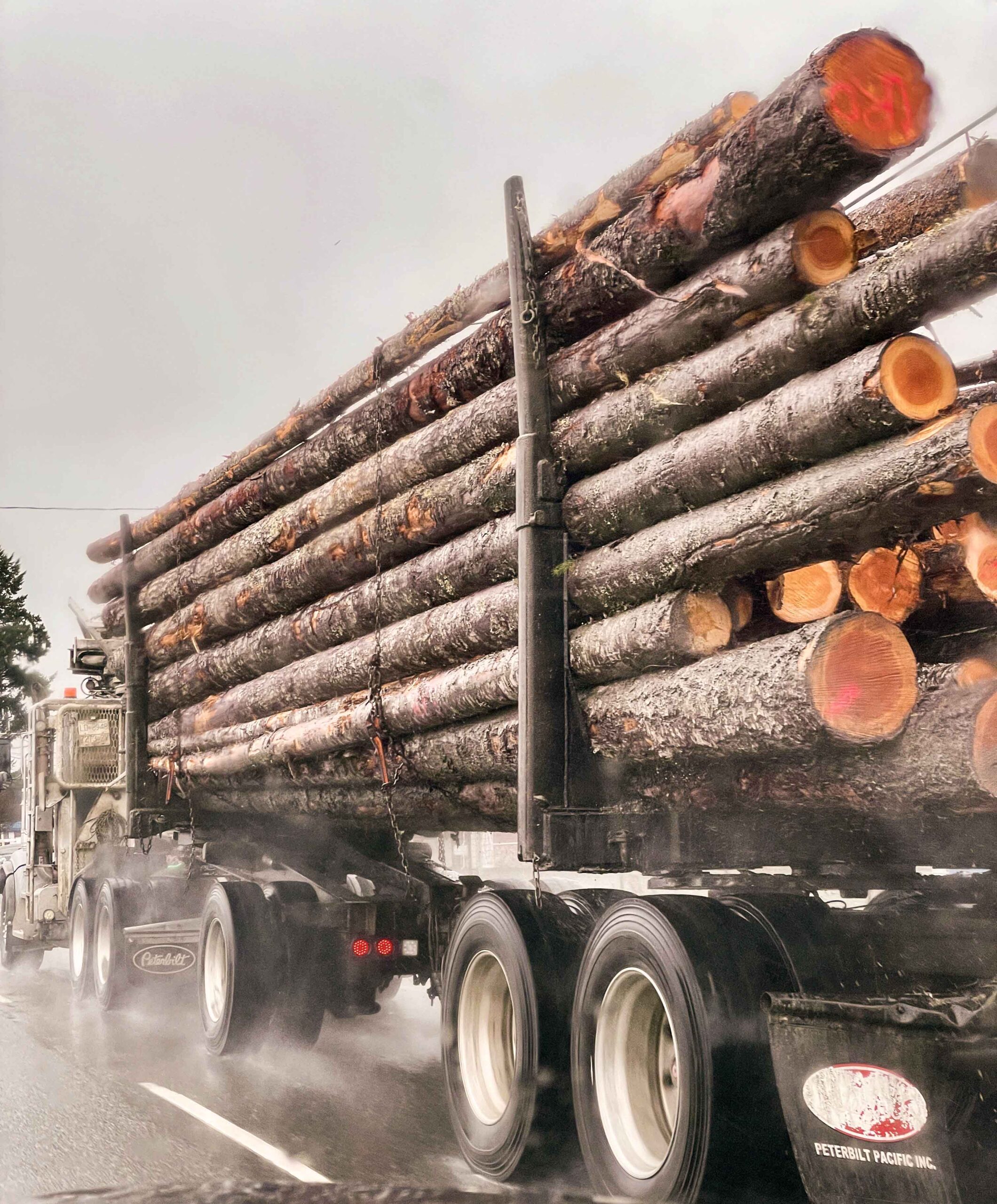 Anderson Creek Timber is currently hauling logs from its property located just south of Nelson above the Rail Trail at Mountain Station. The work will continue for another three-to-four weeks, said Doug Thorburn, a forester with Monticola Forest Ltd. that manages Anderson Creek’s forest properties. … The 600-hectare Anderson Creek Timber property is private land and is therefore governed by B.C.’s Private Managed Forest Land Act, which provides much less regulation than the Forest Act in areas such as biodiversity, watershed protection, wildlife protection and harvest guidelines. …Anderson Creek Timber and Kalesnikoff, which has a public Crown land tenure over much of the Anderson Creek watershed, are working on a watershed assessment for the area… The reason the company has not done public information sessions about its logging plans … is that on privately owned land, compared with public land, there is less obligation to do so.
 ʼNa̱mǥis First Nation and the Province are one step closer to a joint decision-making agreement that will support predictable harvesting, job creation and sustainable forestry operations on the north Island. “The best way to move fibre is by working together and that is what we are accomplishing with the ʼNa̱mǥis First Nation,” said Ravi Parmar, Minister of Forests. “I am optimistic that this draft agreement will create good-paying jobs and help us in our efforts to provide stability and certainty for our coastal forestry sector, as we deal with Donald Trump’s attack on our forestry sector.” ʼNa̱mǥis First Nation and the Province have developed a first-of-its-kind draft Section 7 joint decision-making agreement for the forestry sector under the Declaration on the Rights of Indigenous Peoples Act (Declaration Act) and Forest Range and Practices Act.
  The Forest Enhancement Society of BC (FESBC) is accepting expressions of interest (EOI) for projects to assist the Province of British Columbia in advancing the environmental and resource stewardship of British Columbia’s forests. These projects must occur on provincial crown land and support one or more of the core purposes of the Society, which include:
 Don’t miss the September BCCFA newsletter with these headlines and more:
 Look for these stories and more in the Woodlots BC News:
 US civil society groups are urging the European Commission to resist Washington’s pressure to delay the EU’s deforestation regulation (EUDR) or tweak the rules to grant the country preferential treatment, according to a letter seen by Euractiv. The missive, sent this morning to Commission President Ursula von der Leyen and the Commissioners responsible for green rules, the economy and trade, warns against any backtracking. “We are particularly concerned by the Commission’s apparent willingness to offer the U.S. special treatment under the EUDR as part of ongoing EU-U.S. trade negotiations,” the letter reads. The organisations refer to the joint statement issued by Brussels and Washington in September, which labels the US as posing “negligible risk to global deforestation.” Rick Jacobsen, senior manager for commodities policy at the US NGO Environmental Investigation Agency, told Euractiv that US interests have “ramped up the pressure campaign” to weaken the law before it even comes into force.
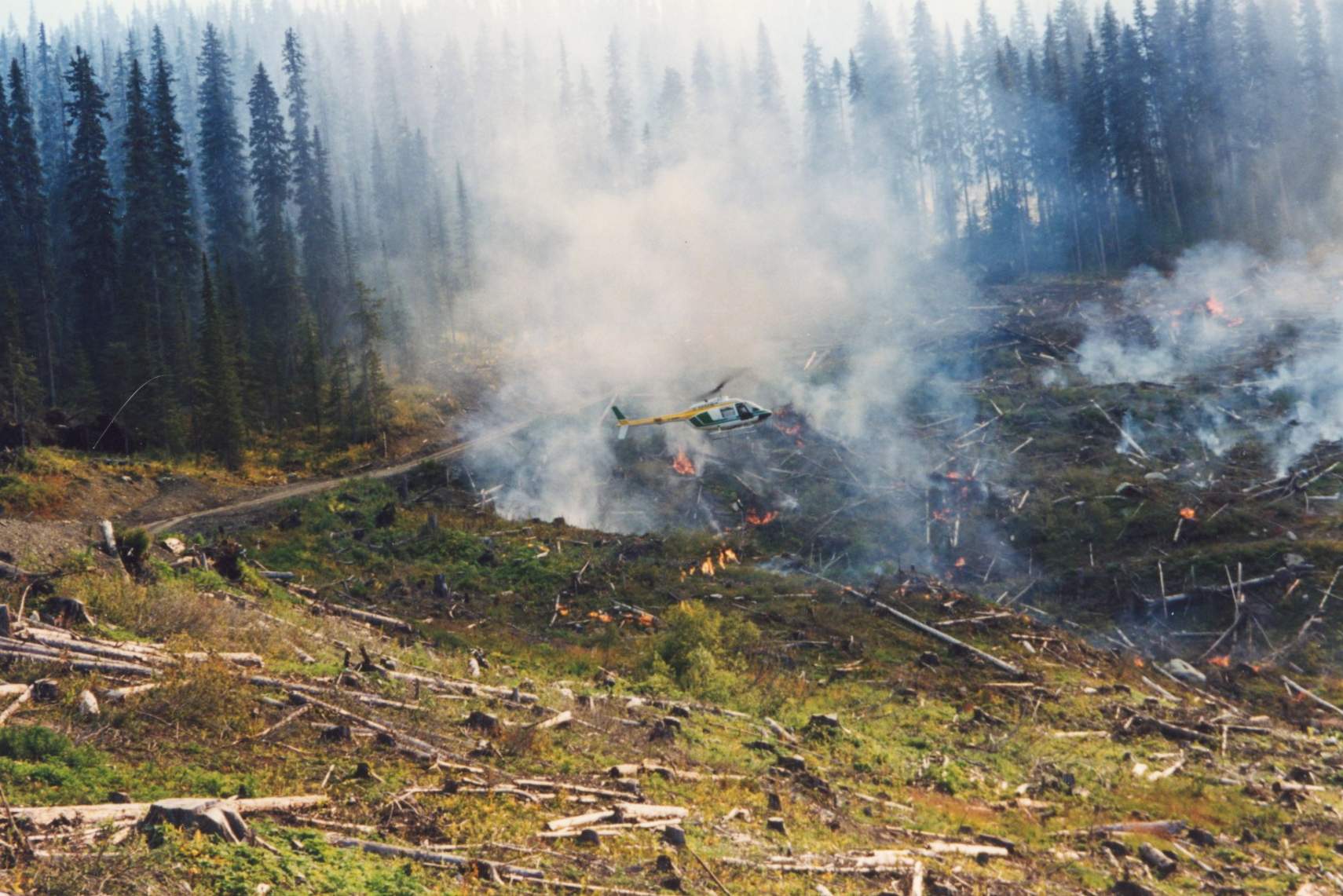 Despite the Trump administration’s pledge to aggressively clear overgrowth from national forests, the U.S. Forest Service is falling significantly short on wildfire mitigation work. By mid-September, the agency had only treated about 2.2 million acres through thinning and prescribed burns. That’s far short of the over 4 million acres treated during the last year of the Biden administration, and it’s also behind the agency’s annual average over the past decade. Forest Service Chief Tom Schultz blamed “operational challenges” and said agency resources were diverted to help battle blazes in Canada. However, Senator Ron Wyden of Oregon is blaming the slowdown in fuel treatments on the Trump administration firing thousands of Forest Service employees earlier this year. …the government shutdown has stopped wildfire prevention efforts across the country’s entire 193 million acres of national forest land [at] the ideal time for the agency to conduct safe prescribed burns across the West.
 Last April, a pair of teenage boys … set fire to wooden pallets someone had dumped in the woods. Within a few hours it became one of the fastest-moving and most destructive wildfires on record in the New Jersey Pinelands. By the time it was brought under control three weeks later, about 15,000 acres of preserved forest were destroyed, and thousands of people were forced to flee their homes and businesses. Most official accounts of what became known as the Jones Road Fire attribute its ferocious power to the intensifying cycles of drought and heat linked to climate change that continue to affect coastal areas. But forestry experts in New Jersey point to another cause. …On Sept. 18, the New Jersey Pinelands Commission took a big step toward more aggressive management of the state’s Pinelands National Preserve voting to thin out a 12,000-acre stretch of pine and oak woodland adjacent to the wildfire site.

 In 2024, the Amazon Rainforest underwent its most devastating forest fire season in more than two decades. According to a new study by the European Commission’s Joint Research Centre, the fire-driven forest degradation released an estimated 791 million metric tons of carbon dioxide in 2024, a sevenfold increase compared with the previous two years. The carbon emissions from fires in 2024 surpassed those from deforestation for the first time on record. Brazil was the largest contributor, accounting for 61% of these emissions, followed by Bolivia with 32%, the study found. “The escalating fire occurrence, driven by climate change and unsustainable land use, threatens to push the Amazon towards a catastrophic tipping point,” the authors write. …The researchers estimated that the total emissions from deforestation and fire-driven degradation in the Amazon in 2024 was 1,416 million metric tons of CO2. This is higher than Japan’s CO2 emissions in 2022, which ranked fifth after China, the U.S., India and Russia.