 FPAC’s Derek Nighbor expressed deep concern over the economic impact of US tariffs. In related news: Canada’s US allies push back, border talks seek to avoid tariffs, why tariffs will raise the cost of living without impacting trade balances; and US consumer sentiment declines; while housing starts are at risk. Meanwhile: California will require more fire resistant homes; and Drax touts partnership on sustainable aviation fuels.
In Forestry/Climate news: Canada reduces its GHG ambitions; Oregon may change how it chooses its state forester; how biochar can help fight climate change; Canadian Liberal hopefuls defend alternatives to carbon pricing; Malaysia develops carbon credits for forestry; and Norway moves to zero-emission transportation vessels.
Finally, on the innovation front, bio-based hair conditioners and tree sap water-beverages.
Kelly McCloskey, Tree Frog News

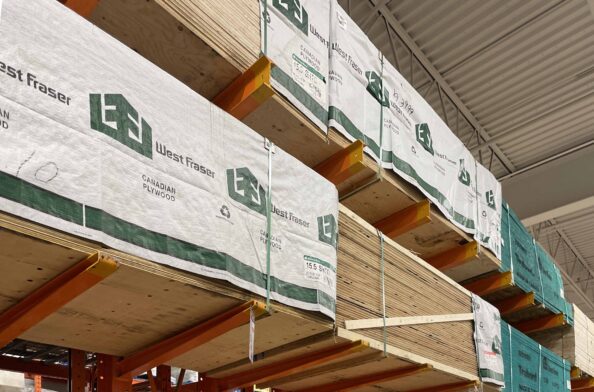 Production at High Prairie Forest Products would be impacted by potential tariffs on forest products going to the United States. General manager Brandon Marsh addressed Big Lakes County council about the negative impacts at its regular meeting Feb. 12. …“Here in High Prairie, we rely on our southern neighbours for roughly 50 per cent of our trade,” said Marsh, “This 25 per cent tariff would greatly reduce our ability to move the volume of product we produce here in our community. With the existing solid wood lumber agreements with the U.S., we already have varying levies of penalty applied to our product, which gets compounded with an additional dumping duty. …Part of West Fraser Forest Products Co. Ltd., the High Prairie operation has a staff of about 140 full-time employees while also supporting a large contractor base for other services. Those people rely an a strong market for their jobs to support families and communities, he said.
 Hinton Town Council will add its voice in support of the Alberta Forest Products Association (AFPA) advocacy efforts. Nicole Galambos of the AFPA – of which both West Fraser and Mondi are members – appeared as a delegation before council with a presentation called Trade Barriers and Albert’s Forest Industry. “Today [there are] some pressing trade challenges facing our sector, particularly some of the softwood lumber duties and tariffs, in addition to emerging US trade barriers and global competition,” Galambos told council, asking for their help. …AFPA suggested there are six steps the Government of Alberta can take to support the forest industry, the first of which is advocate for Alberta forest products in the US. The second is keep Alberta’s regulatory costs low, with Galambos pointing out that high costs have led to mill closures in BC. The third is … a Build With Alberta Wood Act similar to those in BC and Quebec.
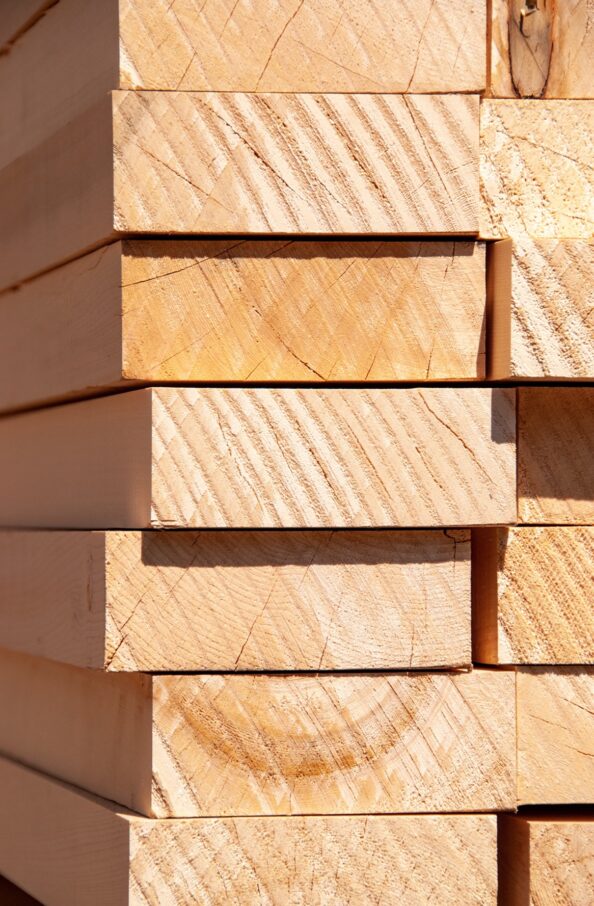 VICTORIA — B.C.’s Forests Minister Ravi Parmar says the expectation of more duties and additional tariffs piled onto Canadian softwood lumber would “absolutely be devastating” for the country’s industry. Parmar says the government expects the U.S. Commerce Department will issue anti-dumping duties by Friday of as much as 14 per cent, on top of the current 14.4 per cent duty. It comes after U.S. President Donald Trump told media on Air Force 1 that his administration was eyeing a 25 per cent tariff on lumber some time around April. Parmar says he knows many forestry workers are going to be worried about their jobs and he’ll continue to fight for them. He says the extra tariffs are “very likely” and Canada should take Trump at his word. …He said provincial and federal governments need to continue to make the case that while such tariffs hurt Canadians, they will also hurt Americans.
 B.C.’s rookie forests minister Ravi Parmar had a strong case to make as he travelled to Sacramento last week to meet with California business and government representatives. The state lost more than 16,000 structures in the recent wildfires … and California’s construction industry knows it will need B.C. and Alberta lumber for a rebuild that will take years. …Parmar says U.S. insurance companies confirmed that high-sticking Canada with more border fees for lumber will drive up costs for California fire claims and other new construction. A classic case for this dysfunctional relationship is Interfor Corp. …now one of the biggest lumber producers in the world, with a strategy to respond to trade attacks by expanding U.S. production. …Canadian forest companies shifting their investment to the U.S. involves other factors, such as pine beetle damage and governments restricting timber supply to satisfy often overblown environmental protests. But the effect is what Trump is after, moving jobs from Canada to the U.S.
 WASHINGTON —
  High Point, N.C. — After a successful first year, British Columbia wood expert
  The Government of British Columbia recently approved and enacted changes to the BC Building Code to enable just a single staircase for new small multi-unit residential buildings. However, in response to Vancouver City Council’s approved directive requesting City staff to consider similar changes to the separate Vancouver Building Code, City staff are strongly opposing such a flexible allowance, primarily due to safety concerns. This negative recommendation to City Council takes into account critical feedback previously provided by fire rescue departments in BC during the provincial government’s consultation on its proposed changes. The provincial government’s new regulations enable residential buildings up to six storeys — designed for no more than 24 residents per floor — to have just one egress staircase. Previously, such buildings with three or more storeys required at least two egress staircases.
 In the February newsletter you’ll find these stories and more:
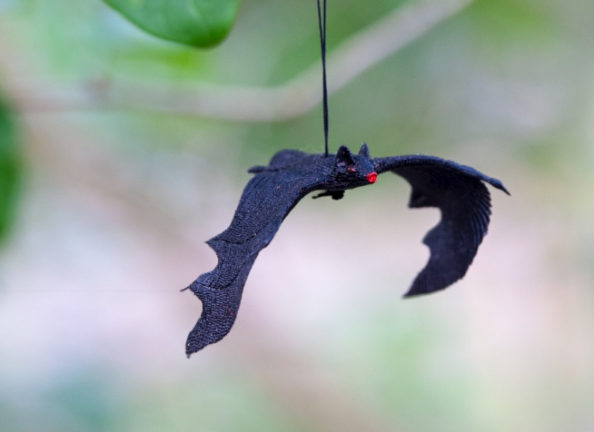 Bat species considered to be at risk seem to be in “relative abundance” on the east coast of Vancouver Island. Scott Wilson, wildlife research biologist with Environment and Climate Change Canada, gave a first look into data he’s been gathering during a presentation Feb. 20 hosted by Nanaimo and Area Land Trust and Nature Nanaimo. “I’ve worked on migratory birds most of my life and the bats a bit more recently, and we know so much less about bats in comparison to migratory birds,” said Wilson. “I’d say we’re where we were 30 years ago with birds in terms of understanding their habitat needs and their ecology.” …The data shows that in the Nanaimo area, wetlands were significantly preferred by the myotis species, with a relative abundance 6-10 times higher compared to non-wetlands. They were also preferred by the silver-haired hoary and big brown group, but less significantly, with the species also frequenting meadow bluffs.


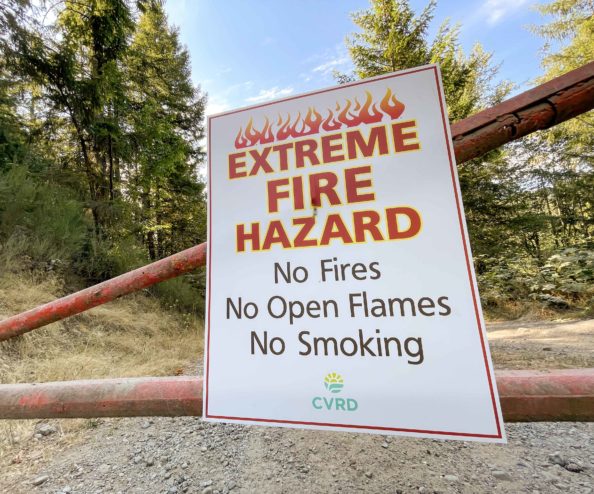 Big, dense forests full of highly flammable wildfire fuel surround Hope. But the town itself isn’t as doomed to fiery destruction as one might initially fear. While there is plenty of potential for wildfires in the area, a new report presented to Hope council says Hope itself benefits from several geographic features that keep the risk to homes and businesses to moderate levels. The wildfire risks facing Hope have been comprehensively catalogued in the community’s first wildfire resilience plan, a draft of which was presented to council earlier this month. The report warns that a severe wildfire could burn wide swaths of the forests surrounding the town. The forests are dense and full of coniferous trees that bake in hot, dry summer weather. In Hope, the highest risk areas are those that buttress the nearby woods.
 PORTLAND, Ore. — An environmental nonprofit is sounding the alarm over the federal funding cuts and hiring freeze instituted by President Donald Trump’s administration, which it said could threaten the population of Oregon’s endangered spotted owl. The widespread layoffs and cuts instituted by the Trump administration have set off a series of protests across the country and around Portland, some of which have focused specifically on the thousands of U.S. National Parks and Forest Service workers who have been fired. The Northwest Forest Plan and the U.S. Bureau of Land Management (BLM) require the endangered owl population to be monitored, but the Center for Biological Diversity said in a news release that the federal freeze means the monitoring “either won’t occur or will be greatly reduced.”
 Fewer wildfires occur in North American forests today than in past centuries, but this decline has increased the risk of more intense wildfires, according to a study published in Nature Communications. While it may seem unexpected, frequent low-intensity surface fires help maintain forest health by naturally reducing fuel buildup over large areas. Researchers from the Cooperative Institute for Research in Environmental Sciences at the University of Colorado Boulder and the U.S. Forest Service’s Rocky Mountain Research Station compared wildfire frequency across two periods: 1600 to 1880 and 1984 to 2022. Using data from 1,850 tree-ring records in historically burned areas, they assessed past fire activity and compared it with modern fire perimeter maps from Canada and the United States. The findings show modern-day fires are much less frequent than they were in past centuries, despite recent record-breaking fire years, such as 2020.
 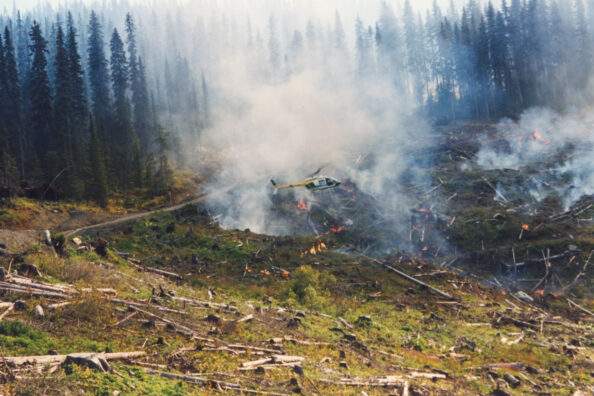 SEATTLE — The termination letters that ended the careers of thousands of U.S. Forest Service employees mean fewer people and less resources will be available to help prevent and fight wildfires, raising the specter of even more destructive blazes across the American West, fired workers and officials said. The Forest Service firings …are part of a wave of federal worker layoffs, as President Donald Trump’s cost-cutting measures reverberate nationwide. Workers who maintained trails, removed combustible debris from forests, supported firefighters and secured funds for wildfire mitigation say staffing cuts threaten public safety, especially in the West, where drier and hotter conditions linked to climate change have increased the intensity of wildfires. …U.S. Rep. Kim Schrier, a Washington state Democrat, said on the social platform X that the Forest Service layoffs are already hurting the state, “and it is only going to get worse. Fire season is coming.”
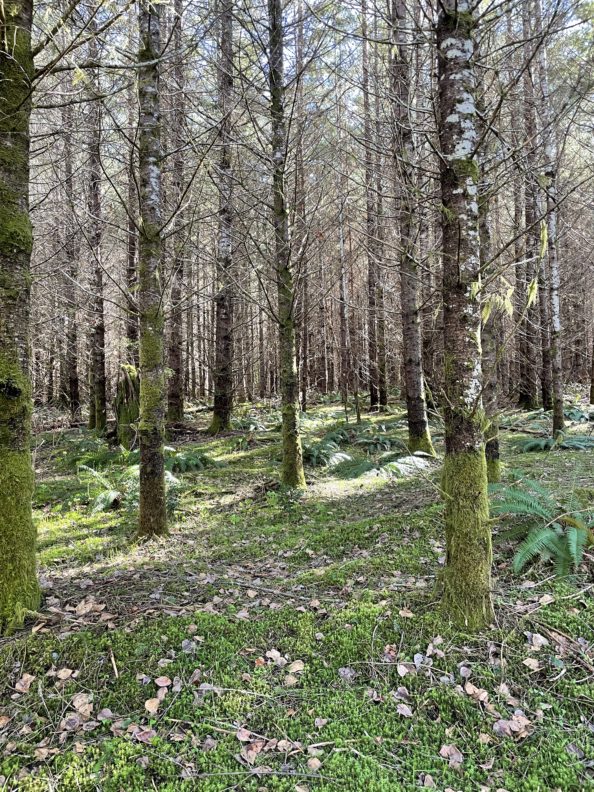 There’s no two ways about it: the U.S. Forest Service is at an impasse, seized by uncertainty like hardly ever before. In its quest for a supposedly leaner, more decentralized government, the Trump administration, led by DOGE chieftain Elon Musk, is taking an ax to the federal workforce. The Forest Service in particular is hemorrhaging manpower: it was reported on Friday that Trump had pink-slipped 3,400 workers. That is roughly one-tenth of USFS personnel. “These cuts are particularly impactful for the Northwest because we have vast expanses of national forest and public land,” says Rep. Kim Schrier. However much the PNW has to lose, this is no mere regional issue. It’s an affront to Mother Nature herself, Schrier says, because “we’re taking away people who do what we call ‘wildfire mitigation’: they do the work that thins the forests to prevent catastrophic wildfires. They do that year-round so we aren’t choking on smoke all summer.”
 Carbon offsets are unreliable, fraud-ridden financial tokens that often fail to make any environmental impact at all. And if Mark Carney gets his way, they’re going to be Canada’s next big industry. In his carbon reduction pitch, Carney
 Are you ready for a workplace emergency? In this month’s newsletter you’ll find all this and more: