 Mercer International, Clearwater Paper and Rayonier Inc. reported Q1, 2025 net losses. In related news: BC-based Cedar Valley Holdings will close in June; Millar Western is temporarily curtailing its BC and Alberta pulp mills; and Smurfit Westrock announced capacity reductions in the US and Germany. In other Business news: Drax abandons AGM due to protests—says pellet production is up; and advice for Prime Minister Carney courtesy of BC’s Premier Eby and the BC Real Estate industry.
In Climate Change news: Canada’s supreme court will not intervene in an Ontario climate case; BC admits its climate goals are out of reach; and the US is suing four states over their GHG reduction laws. In Forestry news: BC invests to address invasive plants; a BC First Nation acquires Interfor forest tenure; new research on how logging impacted Australia’s native forests; and California’s insurance industry wants reforms to prevent massive wildfires.
Finally, Harvard is building a new conference centre – and it’s made entirely of wood.
Kelly McCloskey, Tree Frog News Editor




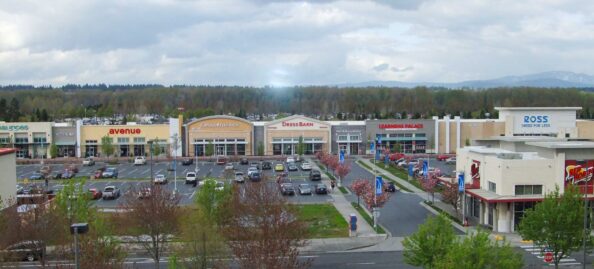 New York — Some of the last cargo ships carrying Chinese goods without crippling tariffs are arriving at US ports. Come next week, that will change. Cargo on ships from China loaded after April 9 will carry with them the 145% tariff President Donald Trump slapped on goods from that nation last month. Next week there will be fewer ships carrying less cargo. For many importers, it is too expensive to do business with China. Yet China is still one of America’s most important trading partners. It’s where we get most of our clothes, footwear, electronics and microchips, which power appliances, thermostats and anything else that beeps. …Forty-five percent of supply chain leaders expect they’ll pass the higher cost from tariffs down to their customers, according to a new survey by Gartner, a corporate research firm. …With fewer cargo ships expected at US ports, local economies will suffer immediately, Gene Seroka, executive director of the Port of Los Angeles said.
 Drax Group plc on May 1



 The April Monthly Update includes these stories and more:
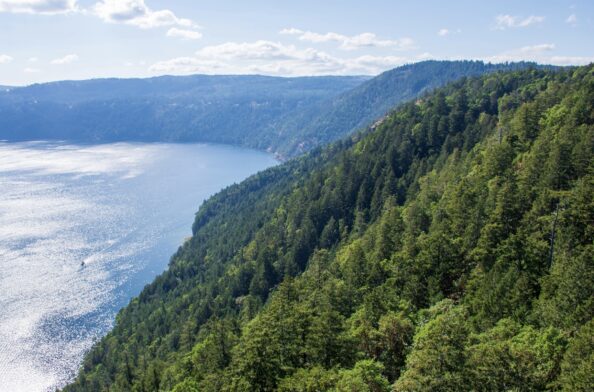 More than 80 per cent of the critical habitat for at-risk species in B.C. fails to meet federal protection standards, according to a government briefing document. The
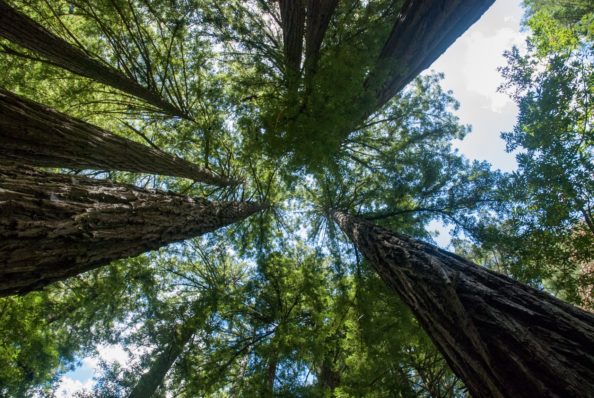 After we marked Earth Day last week, the significance of forests for conservation, community benefits and human health has never been more urgent to acknowledge. Forests play many critical roles for nature and people: they provide habitat for hundreds of species, act as water filters, reduce air pollution, and are places of community connection, recreation and refuge. However, many pressures, including severe storms and wildfires, invasive alien species and habitat loss threaten these ecosystems, the benefits they provide and the relationships they support. …The economic value of our forests is just as vital as their ecological importance. According to the Forest Products Association of Canada, more than 200,000 Canadians earn their livelihood directly from forestry, sustainable agriculture and eco-tourism, contributing an impressive $87 billion in annual revenue. …The call is clear: safeguarding Canada’s forests means safeguarding ourselves. Our natural resiliency, our economic prosperity and our health require us to do our part.
 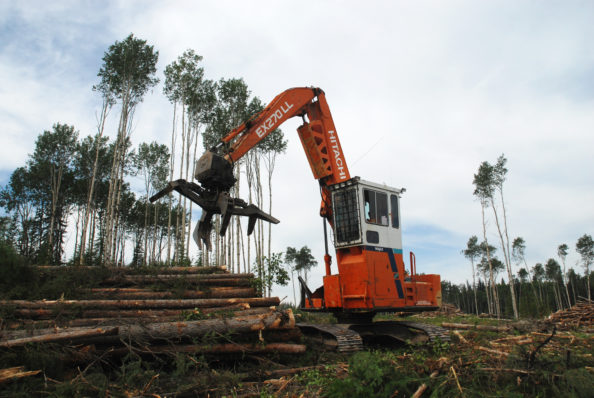 …As northern B.C. sawmills have closed over the past few years, a common refrain has been in each company press release. Punishing tariffs, high log costs, lack of access to B.C.’s plentiful timber and uncertainty in permitting processes… Is this the opening we need to dispense with the notion we need to begin turning B.C. into one big park for the world to enjoy? …Although B.C. has lost many of our lumber manufacturing facilities, our main ingredients are still here – our forests, its trees and a workforce, which when combined, provides for some of the best quality forest products in the world. Despite the economic hit our rural communities and residents have sustained with the loss of our forest industry, it is only a temporary setback, if we treat it as such, and do not let our governments succumb to the “end the forest industry” ideology that is so prevalent today.
 The Trump administration’s attempt to weaken the Endangered Species Act is easy to criticize. This month, it proposed a rule that would limit what constitutes “harm” under the law to only direct actions against wildlife, such as hunting, wounding or trapping. Destroying their habitats would no longer count. …As scientists warn that the world is entering a period of mass extinction, lawmakers would be wise to rethink federal conservation strategies. This means reforming the Endangered Species Act to better incentivize citizens to protect the country’s precious biodiversity. …The government could, for instance, turn protected species into assets by giving landowners financial incentives to assist in conservation efforts. …President Donald Trump and his party are unlikely to embrace these reforms. But Congress in recent years has shown that there is strong bipartisan appetite to strengthen protections for endangered species. The best way forward is to embrace market-oriented strategies.
 The Washington State Department of Natural Resources recently began a multi-faceted forest restoration project across approximately 150 acres of the Mount Baker-Snoqualmie National Forest near Verlot. The Pilchuck Restoration Project is led by the Department of Natural Resources (DNR) Federal Lands Program under the agency’s Good Neighbor Authority agreement with the USDA Forest Service. Established in 2014, the GNA allows DNR to leverage its resources with federal and local partners to perform a variety of restoration activities on federal lands. Operators are following a carefully designed prescription focused on thinning out the small-diameter, younger trees that, due to past management practices, are overcrowding tree stands to the detriment of the larger, older trees.
 A big change could be coming to U.S. wildlife conservation policy. In mid-April, the National Oceanic and Atmospheric Administration and U.S. Fish and Wildlife Service announced a proposal to change how the term “harm” would be defined in the Endangered Species Act. …According to Paula Swedeen, policy director at Conservation Northwest, the goal of the change is to bring the definition of “harm” in the ESA closer to what the Trump administration believes is its originally-intended meaning. …Washington state has its own conservation plans that are already in place on state lands. According to Swedeen, there’s reason to think that the changes to the ESA won’t impact those too much. …According to Swedeen, the spotted owl is one of the best examples of how endangered species could be put at risk by the proposed new ESA reading. …changes could also impact other endangered species in Washington, like the grizzly bear
 BRUSSELS – For fashion companies grappling with the EU’s ambitious anti-deforestation law, a recent tweak from the European Commission may appear to offer some relief. As the December deadline looms for the landmark EU Deforestation Regulation (EUDR), Brussels has eased what some companies claimed were daunting reporting requirements. Instead of the initially mandated declaration for every shipment of goods linked to forest destruction, companies now only need to submit a single annual due diligence statement. …The Commission hopes this new simplification – which also includes allowing authorised representatives to file for company groups and enabling reuse of statements for re-imported goods – will shave off a significant 30% in reporting burdens and associated costs for affected businesses. However, the EU Commission’s simplification is being met with concern by environmental campaigners. As Reuters reported, the streamlining of paperwork has sparked fears that the teeth of the EUDR might be blunted.
 The
The 
 Israel asked Greece, Bulgaria, Cyprus, Italy and Croatia to help extinguish major wildfires that broke out Wednesday morning in several locations near Jerusalem and along Highway 1 leading to the city as communities along the road were instructed to evacuate. At least one man suspected of involvement in igniting the fires was arrested, according to Israeli broadcaster Kan, which reported that the suspect is now detained at the Oz police station in east Jerusalem. Israel police did not confirm or give any details on what started the fires. …Foreign Minister Gideon Saar asked his counterparts in the four countries to send firefighting airplanes and helicopters to Israel, including supertankers. Ynet reported that Greece and Italy are sending supertankers and that the Palestinian Authority offered to send firefighters, though Israel has not yet responded to the offer. International aid is expected to arrive Thursday morning.