 Despite President Trump’s 30-day tariff pause, uncertainty looms over the Canadian and US economy. In related news: Canadians grapple with a sense of betrayal, as Canada’s forestry stocks fall, and the sector faces uncertainty; Maine’s industry is impacted due to Canadian ties; and Colorado, Maine and Illinois homebuilders fear cost increases. Meanwhile: The Wood Manufacturing Council names Audra Denny president; Canada Wood’s latest market news: and the Pacific Lumber Inspection Bureau pays tribute to Bradley E. Shelley.
In other news: Domtar’s Arkansas mill to employ carbon capture and storage technology; Ackerman Mississippi sawmill is expanding; the US Forest Service website faces mass deletions; BC wildfire crews return from California; an Arkansas study sheds light on post-fire recovery; and Los Angeles home insurance rates increase 22% after fires.
Finally, the last fragments of ancient Irish rainforests may face a new threat—trees.
Kelly McCloskey, Tree Frog Editor

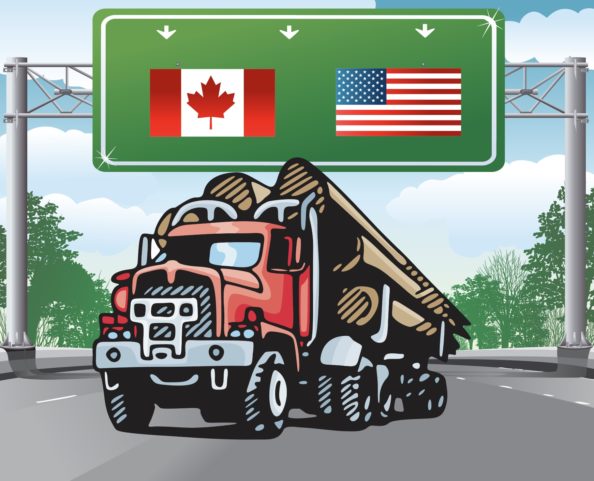 Stocks in B.C.’s three major publicly traded forestry companies were predictably down this morning (February 3), when stock markets opened after this weekend’s declaration of a trade war between the U.S., Canada and Mexico. U.S. stock markets were jolted, too, Monday morning, as was the S&P TSX composite Index. The Canadian dollar fell to $0.68 to the American dollar following Saturday’s confirmation that Trump will hit Canadian imports with 25 per cent tariffs, and 10 per cent tariffs on Canadian energy imports, beginning Tuesday. North American stocks fell sharply in early morning trading before recovering somewhat. Canadian companies that are highly exposed to the U.S. were jolted, with companies like West Fraser Timber, Canfor Corp and Interfor Corp. experiencing early morning drops of four, five and six per cent respectively, before correcting somewhat later in the morning.
 Don’t miss these headlines and more in the February Market News and Insights:


 One of the biggest policy changes needed in B.C. is to forestry policy. B.C. policy for the last 50 years has resulted in a rapid clear-cutting of a large part of our forests even as all the research indicates that: Within a 60-80 year time span, only 20-30 per cent of forests can be cut in any one area without harming the hydrological cycle. On this basis, most BC commercial forests have been severely over-cut making a mockery of the Annual Allowable Cut. …Clear-cutting results in increased risk of forest fires up to 30 years when replanted. …Re-planting is a form of green-washing giving companies cover for the forest damage they do. …Due to the increase in forest fires partially due to logging, BC forests have [become a] carbon source. …The Power of Forests: Protecting Communities and Nature with a New Forest Act effort was launched by the




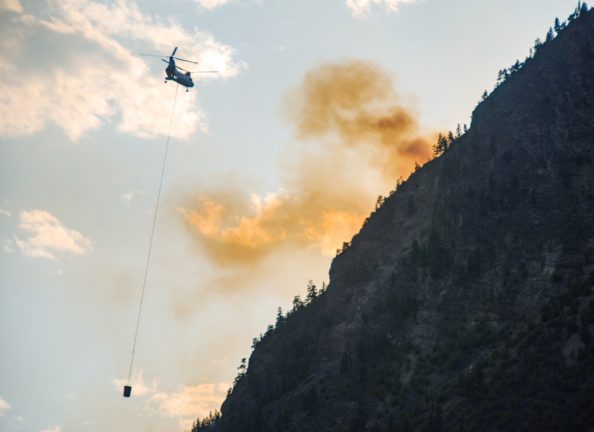 WASHINGTON – U.S. Senators Martin Heinrich (D-N.M.) and Tim Sheehy (R-Mont.) introduced the bipartisan Aerial Firefighting Enhancement Act of 2025 to strengthen the aerial wildfire suppression fleet and better combat the year-round threat of catastrophic wildfire. “I have worked to expand the operations of Very Large Air Tankers that have proven absolutely essential to firefighters battling wildfires in New Mexico, Los Angeles, and across the West,” said Heinrich. …“As a former Navy SEAL and the only aerial firefighter in the Senate, I understand government’s most solemn duty is to keep the American people safe,” said Sheehy. The bill reauthorizes the Secretary of Defense’s authority to sell excess Department of Defense aircraft and aircraft parts, acceptable for commercial sale, to persons or entities that contract with the government for the delivery of fire retardant or water by air to suppress wildfires…
