 Canada says Canadian forestry investments in the US South should be viewed positively by US Section 232 investigation. In related news: US trade policies create uncertainty for Canada’s forest sector; amid uncertainty—BC invests $11M in four wood product manufacturers; and a webinar to help contractors manage tariff impacts. Meanwhile: a look inside Gorman’s West Kelowna mill; what the closure of IP’s Georgetown mill says about fluff pulp; and US roofing contractors say they are delaying projects.
In Forestry/Wildfire news: Canadian Forest Owners seek clarity from the political parties; firefighting drones could change the way BC fights wildfires; ENGO’s want BC to refocus on old-growth; Trump and California find common ground on forestry; New Jersey lifts its wildfire evacuation order; and the US Fix Our Forests Act called forest malpractice.
Finally, Wood Solutions Conference comes to Halifax, and the Softwood Lumber Board’s 2024 Annual Report.
Kelly McCloskey, Tree Frog News Editor
 Canadian Forest Owners (CFO) reached out to the five federal political parties with current representation in parliament to ask how their party would support the thousands of rural communities across Canada where these forest owners live. Canadian Forest Owners represents 480,000 private forest owners from Prince Edward Island to Vancouver Island. These forest owners are largely family owned, small business, who own over a tenth of Canada’s managed forests, supporting every mill across the country, and accounting for nearly 20 percent of Canada’s total forest production. Private forest landowners provide solutions to climate change and real socio-economic development opportunities in rural communities from coast to coast. Here’s what they had to say…
 New support for forestry-sector manufacturers in the province is creating sustainable jobs, strengthening local supply chains, establishing new made-in-B.C. products and reinforcing B.C.’s position as a leader in mass-timber innovation. …Through the BC Manufacturing Jobs Fund (BCMJF), the Government of B.C. is contributing as much as $11 million toward four forestry-sector capital projects in the province. The projects are helping B.C.-based forestry-product manufacturers grow their businesses by constructing new production facilities, purchasing new equipment and adding new high-value product lines, while creating and protecting hundreds of jobs.
 The FSC Leadership Awards recognize excellence in the use of FSC-certified products, materials, and commitment to responsible forest management across industries, as well as in advocacy, conservation and individual leadership in the FSC community. Submissions are due Friday, July 25, 2025. Categories for submissions for people, organizations, and projects in the United States and Canada:

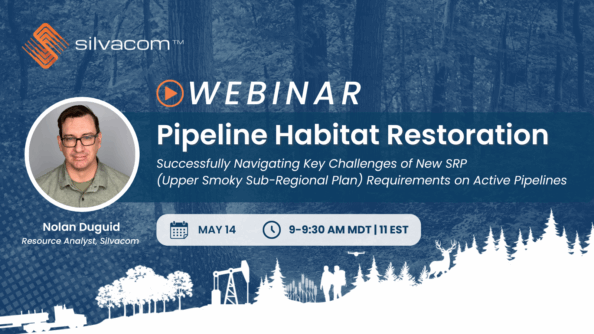 Silvacom is hosting a free webinar titled “Pipeline Habitat Restoration: Strategies and Innovations” MAY 14, 2025 9:00 AM MDT | 11 EST. This event will bring together industry experts, environmental scientists, and key stakeholders to discuss the latest developments and best practices in habitat restoration in areas affected by pipeline projects. Join Our Webinar on Pipeline Habitat Restoration: Successfully Navigating Key Challenges of New SRP Requirements on Active Pipelines (Upper Smoky Sub-Regional Plan). With Alberta’s Sub-Regional Planning Process introducing new regulatory requirements for caribou habitat restoration, the energy sector must adapt and implement habitat restoration on active pipeline corridors. Unlike decommissioned or abandoned pipelines, active right-of-ways (ROW) present unique operational, regulatory, and ecological challenges. This webinar will explore the complexities of meeting habitat restoration objectives while balancing: Ecological restoration goals; Operational efficiencies; Regulatory requirements; and Indigenous community and stakeholder values.
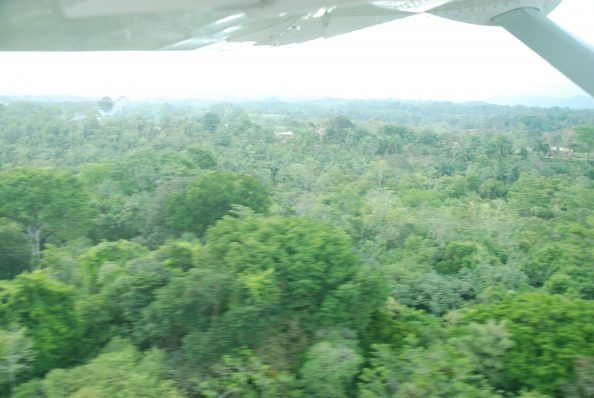 The assessment singled out Brazil and Australia, and warned a lack of rules around accounting for forests and other land-based carbon sinks meant countries could “game the system” when reporting their national greenhouse gas emissions. Scientists are still unclear about how carbon sinks might behave as the planet warms in future, and exactly how much heat-trapping carbon dioxide they might soak up from the atmosphere. But that has not stopped countries from making their own assumptions and using those numbers in their national climate plans, which are due to be finalised to 2035 before the next UN climate talks in Brazil in November. Climate Analytics, a policy institute that independently assesses these plans, said overly optimistic assumptions about how much CO2 forests might draw down was “masking the scale and pace of the fossil fuel emissions cuts needed”.