
BC announced support for the forest-sector with $5.1 million for valued-added manufacturing. In related news: BC Timber Sales is being reviewed; lumber prices hit a 6-week high; and the US housing market moderates amid higher energy costs. Meanwhile, Canadian premiers say nothing is off the table in response to US tariff threats; and the world’s 4th largest global forestry fund secures new investors.
In Forestry/Wildfire news: a much needed break for the wildfires in California; students can enrol in BC’s first wildfire studies program; Alaskan bears become internet sensations; the costs of Hurricane Helene are totalled; and the best places to plant 2 billion trees are probably not where you think they are.
Finally, why US National Park advisors make sequoias look like ‘giant baked potatoes’.
Suzanne Hopkinson, Tree Frog Editor
 Even as fires continue to burn across Los Angeles, many of those who lost their houses are already making plans to rebuild. To overcome labor shortages and speed up the process, some are turning to prefabricated homes… Michael Wara, senior research scholar at Stanford University’s Woods Institute for the Environment, said much of Paradise, California, was rebuilt with prefabricated homes after the devastating 2018 Camp Fire. He expects the same in Los Angeles. “There are not enough general contractors in Los Angeles to rebuild 12,000 structures in addition to all the other work,” he said. “Solutions where you can build most of the homes somewhere else not subject to the labor constraint that will affect Los Angeles could be particularly attractive.”
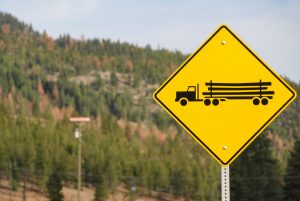 The B.C. government has tasked new Forest Minister Ravi Parmar with reviewing its lead timber agency, B.C. Timber Sales. The Jan. 15 news release announcing the review, and Premier David Eby’s mandate letter to Parmar, both downplay the environment in favour of the business side of forestry… There is no mention of watersheds, biodiversity, wildlife, and climate change in either the news release announcing the review or in the mandate letter, which mentions old growth once in passing. Asked why it is not mentioned in the above six reasons for the BCTS review, or in Eby’s mandate letter, Parmar said, “I’m fully committed to fulfilling my obligations on the old growth action plan. … Biodiversity, taking care of our lands, being good stewards of our land, is critical to me, and it’s going to be a huge part of this review.”
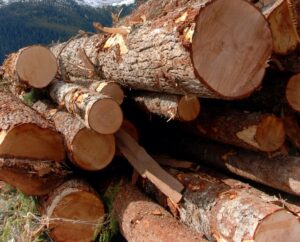 The provincial government is injecting cash into early-stage planning for a potential forestry project by Sḵwx̱wú7mesh Úxwumixw (Squamish Nation) and its economic development arm, Nch’Kay Development Corporation, it was announced last week. With $50,000 from the BC Manufacturing Jobs Fund, the Nation will conduct pre-construction engineering and site assessments to determine the potential for a future capital project… Though details of the project haven’t been finalized, it represents a larger push in the forestry sector to use resources more efficiently, shift away from old-growth timber reliance, and invest in high-value manufacturing. The BC Manufacturing Jobs Fund is partnering with forestry companies throughout the province to grow and stabilize their operations and get the most out of our fibre supply, while producing more made-in-B.C. engineered wood products.
 Rhonda Millikin, an award-winning ecologist who has questioned Whistler’s approach to wildfire mitigation, was issued a cease-and-desist letter last month from Forest Professionals British Columbia (FPBC), which said she is not certified to offer forestry advice. The FPBC said in its Dec. 14 letter that Millikin was unlawfully engaged in the reserved practice of professional forestry by providing advice and recommendations to the RMOW to limit or cease forest fuel-thinning efforts. “On principle, we don’t have an issue with people, whether a member of the public or someone from a different profession, researching or holding opinions or even talking about those opinions,” explained Casey Macaulay, the FPBC’s registrar and director of act compliance, who authored the cease-and-desist letter. “Where it’s an issue is when they start to advocate for a particular practice, and in this case, where that practice is so out of sync with the current science and the current practice of protecting communities from wildfires.”
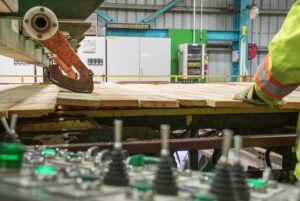 A lumber producer in Thessalon, Ont. that has been active for more than seven decades quietly shuttered its operations late last month — resulting in the layoff of roughly 40 employees in the weeks leading up to its impending closure. Midway Lumber Mills Ltd. first notified employees of plans to shut down the mill and lay off its workforce in October of last year, the soon-to-be former chair of USW Local 8748 told SooToday on Monday. “We got nine weeks advance notice that it was going to happen,” said Derrick Bookman, who has worked in a number of roles at the mill over the years. “They went above and beyond.”
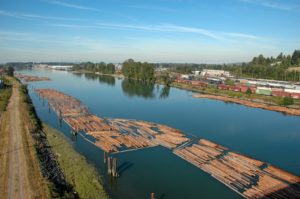 For the second time this decade, Weyerhaeuser Co.’s Longview lumber mill has been hit with a serious state fine for violating state stormwater control regulations. On Monday, the state Department of Ecology announced it has fined the company $145,000 for 36 stormwater discharge violations, 15 monitoring requirements violations, and 16 reporting requirement violations, all of which occurred between July 2022 and May 2024… “We believe strongly in permit compliance and invest significant time and resources to ensure we are meeting all environmental standards,” Weyerhaeuser Co. spokeswoman Mary Catherine McAleer said in an e-mailed statement Thursday. The latest penalty follows another related to stormwater that Ecology issued to Weyerhaeuser‘s Longview lumber mill in 2022, when the agency fined the facility $40,000 for repeated water quality violations.
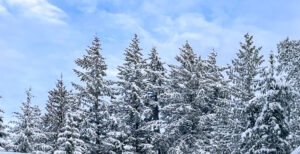 Nearly half of the global boreal forests — spanning Canada, Alaska and Siberia — are undergoing major transitions due to climate change, making them increasingly vulnerable to forest fires and altering their role as a key carbon sink, a new study has revealed. These forests are vast and found in the cold, northern regions. However, they are warming four times faster than the global average and are expected to shift into a new ecological regime. This transformation could impact global climate regulation by triggering biome shifts and changes in tree cover dynamics, according to the study published in the journal